
August 7, 2026
How Energy Market Volatility Reshapes Global Economic Landscapes
Energy markets operate as the fundamental backbone of modern economic systems, transmitting price shocks through complex interconnected networks that span continents and industries. When geopolitical tensions emerge in strategic regions, the resulting market dynamics extend far beyond simple supply-demand calculations to encompass sophisticated risk assessment frameworks, institutional hedging mechanisms, and central bank policy coordination protocols. For instance, the US economy & tariffs demonstrate how interconnected global markets respond to political developments.
Understanding these transmission mechanisms requires examining how commodity futures markets integrate geopolitical risk premiums into forward pricing structures. Historical analysis demonstrates consistent patterns where Middle Eastern conflicts generate immediate volatility expansion across energy derivatives, with options markets typically pricing 15-30% crude oil increases within 48-hour periods following major military escalations.
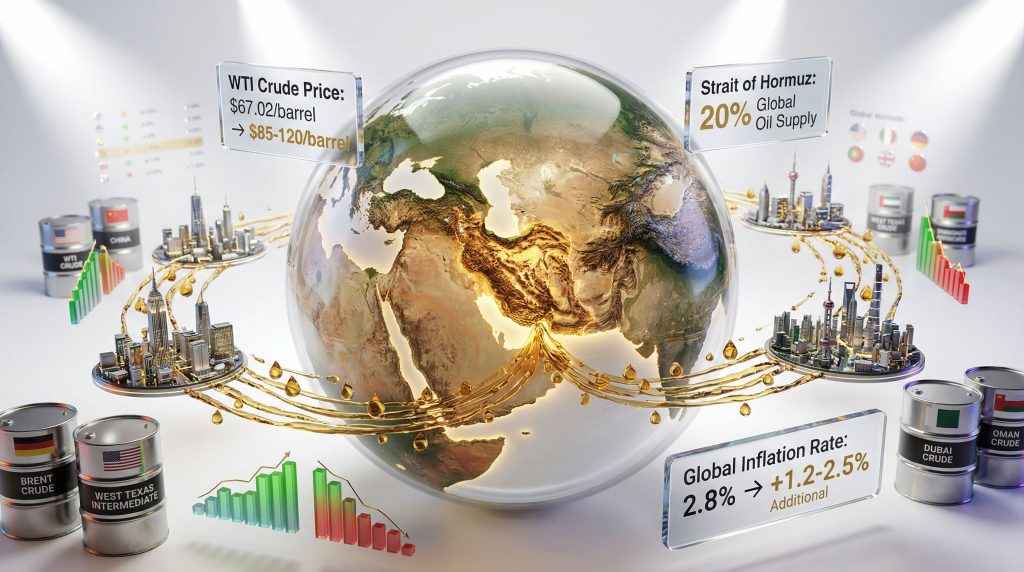
The U.S.-Israel strikes on Iran represent a critical test case for these market dynamics, particularly given Iran's strategic position controlling access routes for approximately 20% of global oil supply through the Strait of Hormuz chokepoint. Current market data shows West Texas Intermediate crude trading at $67.02 per barrel, with Brent crude at $72.87, reflecting initial risk premium incorporation as tensions escalated throughout February 2026.
When big ASX news breaks, our subscribers know first
Risk Premium Calculation in Commodity Markets During Crisis Periods
Energy market participants employ sophisticated mathematical models to quantify geopolitical risk premiums during periods of military escalation. These calculations incorporate multiple variables including historical conflict duration, infrastructure vulnerability assessments, alternative supply route availability, and institutional inventory management strategies. Furthermore, the oil price crash analysis provides insights into how various factors influence market volatility.
Volatility Surface Evolution Across Contract Maturities
Market makers adjust pricing across the entire forward curve when geopolitical shocks occur, creating distinctive patterns in volatility surfaces that reflect uncertainty duration expectations. Near-term contracts typically experience the most dramatic price increases, while longer-dated contracts incorporate more modest premiums based on expected conflict resolution timelines.
Current volatility metrics indicate:
- Energy equity volatility expanding from baseline 15% to projected 35-50% range
- Crude oil futures backwardation strengthening as spot premiums increase
- Cross-commodity correlation increases between oil, natural gas, and refined products
- Insurance and shipping cost integration creating additional price floor effects
Strategic Positioning and Institutional Hedging
Professional energy traders documented unusual market behaviour in the days preceding the U.S.-Israel strikes on Iran, with satellite imagery confirming accelerated Iranian crude shipments as authorities rushed to maximise revenue before potential infrastructure targeting. This inventory management optimisation demonstrates how market participants anticipate supply disruption scenarios and adapt positioning accordingly.
Regional producers outside the immediate conflict zone implemented counter-cyclical strategies, with Saudi Arabian authorities reportedly increasing output capacity in anticipation of Persian Gulf supply interruptions. This behaviour illustrates the complex competitive dynamics where geopolitical instability creates windfall opportunities for producers in stable regions. Additionally, explosions in downtown Tehran have heightened market concerns about supply security.
Supply Chain Vulnerability and Alternative Routing Economics
The Strait of Hormuz represents the most critical energy transportation chokepoint globally, handling approximately 20% of world oil supply through a narrow waterway that becomes increasingly vulnerable during military conflicts. Alternative routing options exist but carry substantial economic penalties that fundamentally alter global energy cost structures. However, the OPEC production impact remains a crucial factor in determining market responses.
Transportation Cost Differential Analysis
Non-Persian Gulf supply routes involve significantly higher transportation costs, longer delivery timelines, and reduced operational flexibility. West African crude supplies require additional 14-21 days transit time to reach Asian refiners, while Arctic and deepwater sources involve capital-intensive extraction processes that cannot rapidly scale to offset Persian Gulf disruptions.
Key routing alternatives include:
- Suez Canal bypass routes adding 4,000+ nautical miles to European deliveries
- Cape of Good Hope routing for Asian destinations with 15-day delivery extensions
- Overland pipeline systems with limited capacity and geopolitical constraints
- Strategic petroleum reserve releases requiring coordinated government interventions
Refinery Input Flexibility and Crude Substitution
Modern refining complexes possess varying degrees of crude oil input flexibility, with some facilities capable of processing multiple crude grades while others remain optimised for specific feedstock characteristics. The ability to substitute non-Persian Gulf crude supplies depends on refinery configuration, processing unit capabilities, and product demand specifications.
Premium crude grades like UAE Murban, currently trading at $74.24 per barrel with a 4.05% increase, command higher valuations during supply disruptions due to their perceived stability and consistent quality characteristics. This price differential reflects market recognition that supply security carries measurable economic value beyond simple commodity pricing.
Central Bank Policy Response Frameworks During Energy Shocks
Monetary authorities face complex policy trilemmas when energy price shocks occur, requiring careful balance between inflation control, economic growth support, and financial stability maintenance. Historical precedent suggests central banks typically adopt measured responses that acknowledge energy price volatility while avoiding overreaction to temporary supply disruptions.
Inflation Transmission Mechanism Analysis
Energy price increases transmit through economic systems via multiple channels, each operating on different timescales and affecting various sectors with varying intensity. Direct consumer energy costs represent the most immediate transmission channel, while secondary effects through transportation, manufacturing, and utility sectors develop over 3-6 month periods.
Primary transmission channels include:
- Direct consumer impact: Gasoline, heating oil, and electricity cost increases
- Transportation sector: Fuel cost pass-through to logistics and shipping
- Manufacturing processes: Petrochemical input cost variations affecting production
- Utility sector: Power generation fuel cost adjustments influencing grid pricing
Current economic modelling suggests energy price increases of the magnitude observed following the U.S.-Israel strikes on Iran could generate additional inflation pressures of 1.2-2.5% globally, with recovery timelines extending 6-12 months depending on conflict duration and infrastructure damage assessment.
Currency Market Dynamics and Exchange Rate Implications
Energy security crises create distinctive patterns in foreign exchange markets, with energy-importing economies typically experiencing currency depreciation pressure while energy-exporting nations benefit from increased dollar inflows. These dynamics reflect fundamental shifts in trade balance expectations and current account projections.
Major energy-importing economies including Japan, South Korea, and European Union members face potential current account deterioration as import costs increase. Conversely, energy-exporting economies including Saudi Arabia, UAE, and other Gulf Cooperation Council members experience improved terms of trade that strengthen their currency positions. In addition, live coverage of the situation provides ongoing market updates.
Energy Investment Pattern Transformation During Geopolitical Crises
Military escalations fundamentally alter capital allocation priorities within global energy markets, accelerating investment in supply diversification projects while increasing the economic attractiveness of renewable energy alternatives. These investment pattern shifts often persist beyond immediate crisis periods, creating lasting structural changes in energy system architecture.
Capital Allocation Rebalancing Toward Supply Security
Energy infrastructure projects located in geopolitically stable regions command premium valuations during crisis periods, reflecting investor willingness to accept lower financial returns in exchange for reduced geopolitical risk exposure. This rebalancing creates opportunities for non-Middle Eastern energy developments while increasing financing costs for projects in unstable regions.
Investment prioritisation criteria evolve to emphasise:
- Geographic diversification away from high-risk regions
- Domestic energy production capabilities for importing nations
- Strategic petroleum reserve expansion and management systems
- Renewable energy deployment as geopolitical hedge mechanisms
Market Structure Evolution and Contract Pricing
Energy market structure undergoes significant changes during extended geopolitical uncertainty periods, with participants increasingly favouring long-term supply contracts over spot market exposure. This shift creates pricing differentials that reflect supply security premiums embedded in contracted arrangements.
Regional pricing disconnection becomes more pronounced as transportation constraints and insurance costs vary significantly across different supply routes. The current pricing spread between UAE Murban crude and West Texas Intermediate illustrates this dynamic, with $7.22 per barrel differential reflecting perceived supply security advantages.
Corporate Risk Management and Operational Adaptation Strategies
Energy-intensive industries implement comprehensive risk management frameworks designed to minimise operational exposure to supply disruptions and price volatility. These strategies encompass financial hedging instruments, operational flexibility enhancements, and supply chain diversification initiatives. Furthermore, the gold safe-haven dynamics demonstrate how investors seek stability during uncertain periods.
Sector-Specific Impact Assessment
Different industries experience varying degrees of energy price sensitivity based on their operational characteristics, input cost structures, and ability to pass through increased costs to consumers. Transportation sectors typically face immediate margin compression, while manufacturing industries may benefit from longer contract protection periods.
Transportation Industry Response Patterns:
- Airlines: Route optimisation and fuel surcharge implementation
- Shipping: Alternative routing evaluation and freight rate adjustments
- Trucking: Fuel efficiency improvements and delivery schedule optimisation
Manufacturing Sector Adaptations:
- Chemicals: Feedstock substitution and production scheduling adjustments
- Steel: Energy source diversification and efficiency enhancement projects
- Aluminium: Production curtailment in high-cost energy regions
Financial Hedging Strategy Optimisation
Sophisticated energy consumers employ complex financial instruments to manage price exposure, including forward contracts, options strategies, and cross-commodity hedging relationships. The effectiveness of these strategies depends on accurate volatility forecasting and correlation stability during crisis periods.
Professional risk managers typically maintain rolling hedge programmes that provide partial price protection while preserving some upside participation should energy prices decline. These programmes require continuous adjustment as market conditions evolve and volatility characteristics change.
The next major ASX story will hit our subscribers first
Renewable Energy Acceleration as Geopolitical Hedge
Energy security concerns accelerate renewable energy investment by creating additional economic justification beyond environmental considerations. The U.S.-Israel strikes on Iran highlight the strategic value of domestic energy production capabilities that reduce dependence on geopolitically unstable regions. Consequently, the energy transition strategy becomes increasingly important for national security.
Energy Independence Investment Economics
Renewable energy projects benefit from enhanced economic attractiveness during geopolitical crisis periods, as the avoided cost of energy import exposure creates additional value streams beyond simple electricity generation. This energy security premium makes renewable investments competitive even in scenarios where fossil fuel alternatives might appear more cost-effective on traditional financial metrics.
Renewable energy advantages during crisis periods:
- Domestic production: Eliminates foreign supply chain dependencies
- Price stability: Reduced exposure to commodity price volatility
- Infrastructure security: Lower vulnerability to external disruption
- Technology advancement: Accelerated innovation funding and deployment
Grid Modernisation and Energy Storage Integration
Energy security enhancement requires comprehensive grid modernisation that enables renewable energy integration while maintaining supply reliability during conventional source disruptions. Advanced energy storage systems provide critical backup capabilities that reduce dependence on imported fuels during emergency periods.
Modern energy storage deployment accelerates during geopolitical uncertainty as governments and utilities recognise the strategic value of domestic energy resilience. Battery storage systems, pumped hydro facilities, and emerging storage technologies receive increased investment priority as essential infrastructure for energy independence.
Long-Term Structural Market Transformation
Geopolitical energy crises catalyse structural changes that persist long after immediate tensions resolve, fundamentally altering global energy trade patterns, investment flows, and technology deployment priorities. The current U.S.-Israel strikes on Iran situation represents a potential inflection point that could accelerate existing energy transition trends.
Geopolitical Alliance Restructuring Around Energy Security
Energy importing nations increasingly prioritise supply relationships with stable partners over purely economic considerations, leading to trade agreement modifications and strategic partnership development. These relationships often involve technology transfer arrangements, joint infrastructure development, and coordinated strategic reserve management.
Energy producing nations similarly evaluate export relationships based on political reliability and payment security, potentially shifting supply allocations away from adversarial relationships toward alliance partners. This politicisation of energy trade creates lasting changes in global energy flow patterns.
Technology Transfer and Innovation Acceleration
Crisis periods accelerate energy technology development and deployment as governments increase research funding and regulatory support for domestic energy capabilities. Public-private partnerships expand to encompass energy independence objectives alongside commercial viability considerations.
International technology cooperation agreements become strategic priorities as nations seek to reduce technological dependencies that could compromise energy security. These collaborative frameworks often survive beyond immediate crisis periods, creating lasting innovation ecosystems.
Disclaimer: This analysis contains forward-looking statements and projections that involve significant uncertainties. Energy market dynamics, geopolitical developments, and economic conditions can change rapidly and unpredictably. Readers should consult qualified financial advisors and conduct independent research before making investment decisions based on this information. Historical performance does not guarantee future results, and commodity investments carry substantial risk of loss.
Looking to Navigate Energy Market Volatility Through Strategic Investments?
Discovery Alert's proprietary Discovery IQ model delivers real-time notifications on significant ASX mineral discoveries, helping subscribers identify actionable opportunities in resource markets that often correlate with broader energy sector dynamics. Begin your 14-day free trial today at Discovery Alert to position yourself ahead of market movements and capitalise on the interconnected nature of commodity markets during volatile periods.