June 28, 2026
Understanding the Structural Forces Behind Energy Market Volatility
The global petroleum industry operates within intricate webs of supply chains, geopolitical tensions, and financial mechanisms that can transform market conditions within hours. Complex pricing dynamics between different crude oil grades reflect broader economic patterns, infrastructure constraints, and political developments that extend far beyond simple supply and demand equations. These interconnected systems create amplification effects where localized events can trigger cascading price movements across regional markets, revealing the sophisticated nature of modern commodity trading.
Medium-sour crude grades represent a critical component of the global energy matrix, serving as both feedstock for specialised refining operations and barometers of market sentiment during periods of geopolitical uncertainty. Understanding how mars crude premium swings down affects energy market dynamics provides valuable insights into the mechanisms that drive energy market volatility and the strategic considerations facing market participants across the petroleum value chain.
When big ASX news breaks, our subscribers know first
What Drives Premium Volatility in US Gulf Coast Crude Markets?
Understanding Medium-Sour Crude Quality Premiums
The technical specifications that differentiate Mars crude from benchmark grades create distinct value propositions for refiners operating complex processing units. Mars crude, classified as a medium-sour grade, typically contains API gravity between 28-30 degrees and sulfur content ranging from 1.5-2.0 percent, making it particularly suitable for refineries equipped with hydrodesulfurisation units and coking capacity.
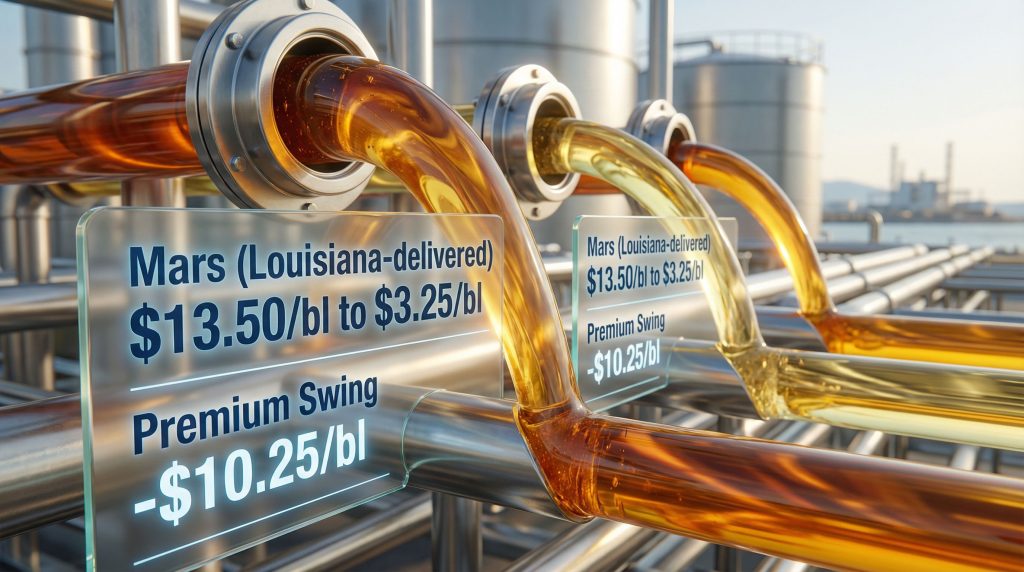
Recent market data demonstrates the dramatic volatility potential within these quality differentials. Mars crude premiums collapsed by over $10.25 per barrel between March 9-10, 2026, declining from a $13.50 per barrel premium to the Cushing basis down to just $3.25 per barrel within a single trading session. This extreme price movement reflects the heightened sensitivity of medium-sour grades to geopolitical developments and supply disruption scenarios.
| Crude Grade | Monday High Premium | Tuesday Low Premium | Premium Swing |
|---|---|---|---|
| Mars (Louisiana-delivered) | $13.50/bl | $3.25/bl | -$10.25/bl |
| Southern Green Canyon (Texas) | $7.07/bl VWAP | Parity to DSW | -$7.07/bl |
| WTI Magellan East Houston | $1.95/bl VWAP | $1.25-1.35/bl | -$0.60-0.70/bl |
The quality arbitrage opportunities between domestic and imported crudes become particularly pronounced during supply disruptions. Medium-sour crude grades possess higher distillate yields than lighter grades, making them especially valuable when traditional supply sources for jet fuel and diesel face constraints. This technical advantage explains why mars crude premium swings down during geopolitical crises affecting major oil-producing regions can create such dramatic market movements.
Regional Supply-Demand Imbalances and Price Discovery
Gulf Coast refinery configurations create specific demand patterns that influence crude premium structures. The region's 3.4 million barrels per day of processing capacity includes substantial coking units designed to handle heavier, higher-sulfur feedstocks. When supply disruptions affect imported medium-sour crudes, domestic grades like Mars become critical substitutes, driving significant premium adjustments.
Pipeline infrastructure constraints amplify these price movements by limiting the ability to quickly redirect crude flows between production areas and refining centres. The Magellan pipeline system and related transportation networks experience throughput limitations during volatile periods, creating physical bottlenecks that translate into price differentials between various delivery points.
Furthermore, storage terminal dynamics at Gulf Coast facilities influence spot market premiums through inventory management decisions. When refiners anticipate supply disruptions, they may increase crude purchases for strategic storage, creating temporary demand surges that drive premium expansion. Conversely, when geopolitical tensions ease rapidly, these same terminals may experience oversupply conditions as previously secured cargoes arrive simultaneously.
How Do Geopolitical Risk Premiums Impact Domestic Crude Differentials?
Middle East Supply Disruption Effects on US Markets
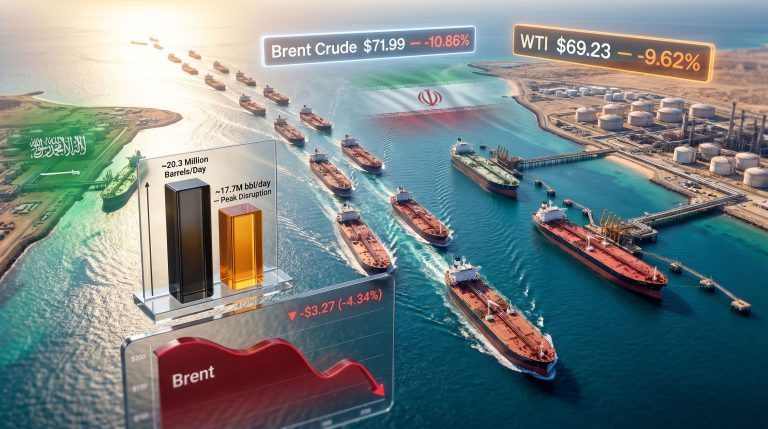
The Strait of Hormuz corridor typically facilitates the export of approximately 17 million barrels per day of petroleum products, including 14 million barrels per day of crude and condensate plus 3 million barrels per day of refined products. When this critical chokepoint faces disruption, global markets experience immediate supply constraint concerns that disproportionately affect certain crude grades.
Medium-sour crudes from the Middle East region share similar technical specifications with US Gulf Coast production, creating direct substitution relationships during supply interruptions. This quality similarity means that domestic grades like Mars crude become immediate beneficiaries of import displacement, experiencing rapid premium adjustments as refiners seek alternative feedstock sources.
However, understanding these oil price rally dynamics becomes crucial when analysing how geopolitical events translate into domestic market movements. The risk premium transmission mechanism operates through several interconnected pathways:
• Direct substitution demand for similar-quality domestic grades
• Inventory building strategies by refiners anticipating prolonged disruptions
• Financial hedging activities that link physical and futures markets
• Transportation cost adjustments reflecting alternative routing requirements
Presidential Policy Signals and Market Reaction Patterns
Political communications from executive leadership create immediate market reactions through their influence on supply disruption expectations. The March 2026 crude market collapse illustrates this dynamic, when April Nymex WTI futures dropped 10.24 percent to $85.08 per barrel following presidential statements suggesting potential conflict resolution.
Market participants demonstrated extreme sensitivity to mixed policy signals, with additional volatility triggered by erroneous social media posts from government officials. When US Energy Secretary communications incorrectly suggested naval escort operations had begun, crude futures experienced further downward pressure before official corrections restored some stability.
According to Seeking Alpha analysis, market volatility reached extreme levels as traders grappled with rapidly changing policy signals.
The Energy Information Administration noted that risk premiums will persist in an evolving and uncertain environment, even as shut-in Middle East production potentially peaks in early April.
Historical precedents suggest that presidential policy statements affecting energy markets typically generate initial overreactions followed by technical corrections as traders reassess fundamental supply-demand balances. The speed of these adjustments has accelerated with electronic trading platforms, creating opportunities for sophisticated market participants whilst amplifying volatility for traditional physical crude traders.
What Economic Factors Explain the $10/Barrel Premium Swing?
Futures Market Structure and Physical Crude Relationships
The relationship between Nymex WTI futures and physical crude differentials creates complex pricing mechanisms that amplify volatility during periods of market stress. WTI futures contracts reflect the value of Domestic Sweet crude delivered at Cushing, Oklahoma, establishing a baseline against which all other US crude grades are priced through differential structures.
During the March 2026 volatility period, the May WTI-Brent spread narrowed by $1.33 per barrel to a $6.15 per barrel discount, reflecting changing expectations about North American crude values relative to international benchmarks. This basis relationship adjustment created cascading effects throughout regional crude pricing structures.
Volume-weighted average premium calculations revealed the intensity of trading activity during the volatile session. Southern Green Canyon crude traded at a $7.07 per barrel volume-weighted average premium on Monday before declining to parity with Domestic Sweet crude by Tuesday, representing a complete elimination of quality premiums within 24 hours.
In addition, analysts studying oil price crash insights note that mars crude premium swings down patterns often precede broader market corrections, making them important indicators for energy traders.
Refinery Economics and Crack Spread Optimisation
Processing margin calculations drive crude purchasing decisions during volatile periods, with refiners optimising their feedstock selection based on expected product yields and market prices. Medium-sour crude grades like Mars offer superior distillate yields compared to lighter alternatives, making them particularly valuable when diesel and jet fuel markets experience supply constraints.
The crack spread optimisation process involves continuous evaluation of:
- Crude acquisition costs including quality premiums and transportation
- Product yield patterns specific to individual refinery configurations
- Processing costs including utilities, catalyst consumption, and maintenance
- Product pricing expectations across gasoline, diesel, and jet fuel markets
Seasonal demand patterns further influence these calculations, with winter heating oil requirements and summer driving season gasoline demand creating cyclical opportunities for crude grade arbitrage. During the March 2026 period, concerns about Middle East jet fuel and diesel supply disruptions created additional value for domestic medium-sour crudes capable of producing similar product slates.
How Do Transportation Infrastructure Bottlenecks Amplify Price Swings?
Pipeline Capacity Constraints and Crude Flow Optimisation
Transportation infrastructure limitations create physical constraints that translate directly into price differentials during volatile market conditions. The Magellan East Houston terminal system experiences throughput limitations that become particularly pronounced when refiners simultaneously attempt to increase crude acquisitions for strategic inventory building.
WTI trading at the Magellan East Houston terminal demonstrated these constraints through differential compression during the volatile period. Premiums declined from $1.95 per barrel volume-weighted average on Monday to a $1.25-1.35 per barrel bid-ask range on Tuesday, reflecting reduced competition for pipeline capacity as geopolitical risk premiums dissipated.
Alternative transportation mechanisms including rail and marine vessels provide limited short-term flexibility due to scheduling constraints and equipment availability. Rail transportation typically requires 7-14 days advance booking for unit train movements, whilst marine vessel availability depends on charter market conditions and terminal berthing schedules.
Regional Arbitrage Opportunities and Cross-Basin Price Relationships
Permian Basin crude production creates ongoing arbitrage opportunities relative to Gulf Coast pricing, with transportation economics determining the viability of cross-regional movements. WTI at Midland traded at a $1.07 per barrel volume-weighted average premium to Cushing on Monday, declining to a 35-45 cent per barrel bid-ask spread on Tuesday as overall crude values collapsed.
Export terminal access premiums reflect the strategic value of waterborne crude shipment capabilities, particularly during periods when domestic refinery demand experiences sudden changes. Gulf Coast export facilities provide critical price discovery mechanisms for domestic crude grades, establishing floor values based on international market conditions.
Consequently, understanding trade war oil movements becomes essential for comprehending how infrastructure constraints interact with policy developments. The Permian-to-Gulf Coast pipeline capacity utilisation rates directly influence basis relationships between inland production areas and coastal refining centres.
What Role Does Algorithmic Trading Play in Crude Premium Volatility?
High-Frequency Trading Impact on Physical Crude Markets
Electronic trading platforms facilitate rapid price discovery during volatile market sessions, with algorithmic trading systems responding to news developments and technical price signals within milliseconds. The Argus Crude Market Ticker (ACMT) provides real-time bid-ask spreads that reflect this electronic market activity, enabling sophisticated participants to capitalise on short-term pricing inefficiencies.
Argus Media reports detailed the mars crude premium swings down during this period, highlighting how electronic systems processed geopolitical developments instantaneously.
Prompt bid-ask spreads during the March 2026 volatility demonstrated the interaction between algorithmic systems and physical crude trading. Midland crude spreads compressed from over $1.00 per barrel premiums to 35-45 cent ranges as electronic trading systems processed geopolitical news developments and adjusted pricing algorithms accordingly.
Market maker participation in spot crude price discovery has increased substantially with electronic platform adoption, providing enhanced liquidity during normal trading conditions whilst potentially amplifying volatility during stress periods. These systems typically employ momentum-following strategies that can accelerate price movements once technical thresholds are breached.
Risk Management Strategies for Crude Premium Exposure
Hedging mechanisms for managing crude premium volatility have evolved beyond traditional futures contracts to include sophisticated derivative instruments targeting specific quality spreads and location differentials. Refiners increasingly utilise these tools to manage feedstock cost exposure whilst maintaining operational flexibility.
Key risk management approaches include:
• Crude quality spread swaps that hedge differential relationships between grades
• Location basis swaps that manage transportation cost variations
• Calendar spread strategies that address seasonal premium patterns
• Options structures providing downside protection with upside participation
Producer revenue optimisation during extreme premium fluctuations requires sophisticated marketing strategies that balance immediate cash flow needs against longer-term price expectations. The $10+ per barrel premium swings observed in Mars crude create significant revenue variance that necessitates active hedging programmes for production planning purposes.
The next major ASX story will hit our subscribers first
How Will Evolving Supply-Demand Fundamentals Shape Future Premium Patterns?
US Production Growth Scenarios and Quality Mix Changes
US crude oil production forecasts project continued growth through 2027, with the Energy Information Administration predicting 13.61 million barrels per day in 2026 and 13.83 million barrels per day in 2027. These upward revisions of 100,000 barrels per day and 510,000 barrels per day respectively reflect the resilience of domestic production despite volatile price environments.
However, concerns about us oil production decline in certain basins could affect long-term crude quality mix availability. Permian Basin output expansion continues to influence crude quality mix available to Gulf Coast refiners, with most Permian production classified as light-sweet crude rather than medium-sour grades.
This quality evolution creates ongoing structural support for medium-sour premium levels as refiners maintain demand for heavier feedstocks to optimise their complex processing units. Gulf of Mexico deepwater development timelines extend 5-7 years from discovery to first production, limiting near-term additions to domestic medium-sour crude supply.
Refinery Configuration Changes and Crude Demand Patterns
Coking capacity additions at Gulf Coast facilities enable increased processing of heavier crude grades, potentially expanding demand for medium-sour domestic production. These capital investments, typically requiring $500 million to $1.5 billion in expenditures, represent long-term commitments to processing flexibility that support medium-sour crude premium structures.
Renewable diesel production growth presents both opportunities and challenges for traditional crude demand patterns. Whilst renewable diesel facilities compete with petroleum diesel markets, they typically require hydrogen production that can utilise heavy crude processing capabilities, creating indirect demand support for complex refinery operations.
Moreover, opec production impact decisions continue influencing global crude availability, affecting domestic premium structures through international supply dynamics. Export refinery development affects domestic crude consumption patterns through their focus on international product markets rather than domestic gasoline and diesel demand.
What Investment Implications Emerge from Crude Premium Volatility Analysis?
Energy Sector Valuation Metrics During Volatile Periods
Integrated oil company margins demonstrate significant sensitivity to crude differential movements, particularly for companies with substantial Gulf Coast refining operations. The $10+ per barrel Mars crude premium swings translate directly into processing margin variations that can impact quarterly earnings by $50-100 million for major integrated producers.
Independent refiner profitability shows even greater sensitivity to premium volatility due to their focused operational profiles and limited crude production offset capabilities. Companies with medium-sour crude processing optimisation may experience earnings volatility exceeding 20-30 percent during extreme premium swing periods.
Midstream infrastructure utilisation rates fluctuate with premium volatility as shippers adjust transportation volumes based on economic viability of moving crude between regions. Pipeline companies with Gulf Coast connectivity may experience throughput variations affecting fee-based revenue streams.
Portfolio Risk Assessment for Energy-Exposed Investments
Correlation analysis between crude premiums and equity performance reveals complex relationships that extend beyond simple commodity price exposure. Energy sector investments demonstrate amplified volatility during periods of extreme crude differential movements, requiring sophisticated risk management approaches for diversified portfolios.
Fixed-income implications of energy sector credit quality changes become particularly relevant during sustained premium volatility periods. Companies with high leverage ratios and crude differential exposure may experience credit spread adjustments that affect bond valuations independent of broader credit market conditions.
Commodity-linked investment vehicles including master limited partnerships and commodity ETFs show varying sensitivities to crude premium movements depending on their underlying asset composition and operational characteristics. Investors should evaluate these exposures carefully during volatile market environments.
Disclaimer: This analysis is based on publicly available market data and industry reports. Crude oil markets involve substantial risks, and past performance does not guarantee future results. Investors should conduct their own research and consider their risk tolerance before making investment decisions. Market forecasts and projections are speculative and subject to change based on evolving economic, political, and technical factors.
Could You Be Missing the Next Major Energy Discovery?
Discovery Alert's proprietary Discovery IQ model provides instant notifications on significant ASX mineral discoveries, including critical energy commodities that power global markets. While geopolitical volatility creates opportunities in traditional energy markets, mineral discoveries can generate exceptional returns as major discoveries have historically demonstrated with companies achieving substantial value appreciation within months of announcement.