
August 26, 2026
Global energy markets face unprecedented structural challenges as traditional settlement mechanisms encounter systemic disruptions. The convergence of geopolitical tensions, supply chain vulnerabilities, and currency volatility has created conditions that force major importing nations to reassess fundamental assumptions about energy procurement strategies. While conventional wisdom suggests dollar-denominated transactions provide optimal price discovery and settlement efficiency, current market dynamics reveal the brittle nature of systems overly dependent on singular payment infrastructures. Furthermore, these oil price rally insights demonstrate how alternative payment mechanisms are becoming increasingly relevant.
The Mechanics of Alternative Settlement Systems in Crisis Periods
Non-Dollar Energy Transaction Frameworks
Energy markets traditionally rely on established benchmarks and dollar-denominated pricing structures, yet disruptions to standard payment channels create immediate demand for alternative settlement mechanisms. When conventional banking infrastructure becomes unavailable, importing nations must rapidly develop bilateral arrangements that bypass traditional correspondent banking networks.
Key operational considerations include:
- Settlement timeline compression from standard 30-90 day terms to seven-day requirements
- Premium pricing structures that reflect increased operational complexity
- Enhanced due diligence protocols for counterparty verification
- Alternative banking channel development outside SWIFT networks
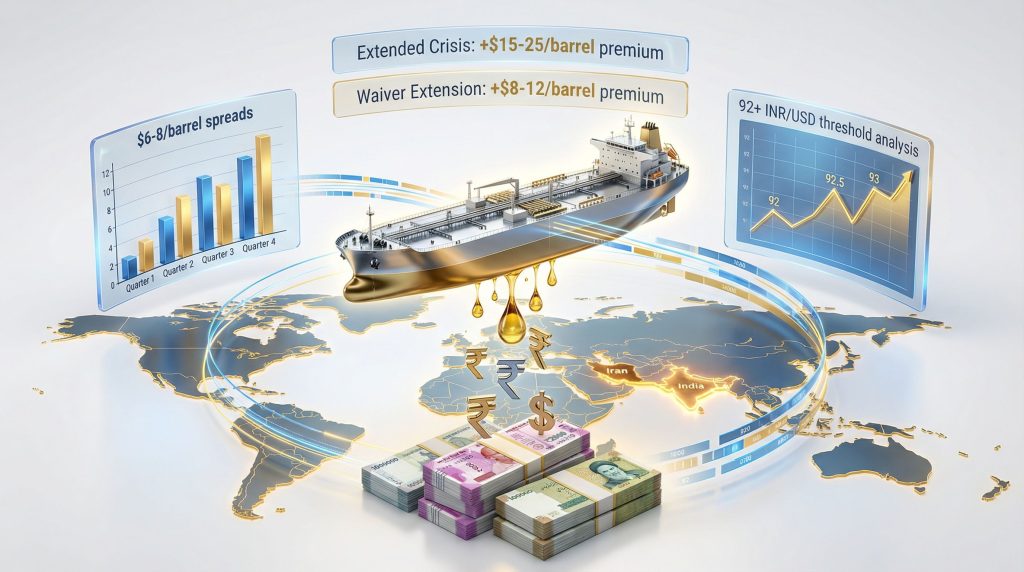
The payments in rupees for Iranian oil discussions exemplify these dynamics, where Indian refiners face pricing premiums of $6-8 per barrel over ICE Brent benchmarks while navigating complex settlement arrangements. These premium structures reflect not just supply scarcity but the operational costs associated with alternative payment infrastructure development.
Currency Risk Management in Sanctioned Markets
Traditional hedging mechanisms become inadequate when dealing with bilateral currency settlements outside established financial infrastructure. The exclusion of counterparties from SWIFT systems forces importing nations to develop novel risk management approaches that account for:
- Exchange rate volatility during extended settlement periods
- Counterparty credit risk assessment without traditional banking guarantees
- Legal framework uncertainty regarding enforcement mechanisms
- Operational risk from untested payment channels
Recent negotiations between Indian refiners and the National Iranian Oil Company highlight these challenges, where payment mechanism certainty becomes a prerequisite for contractual commitment. Moreover, trade war oil movements reflect the elevated risk profile associated with alternative settlement systems during crisis periods.
When big ASX news breaks, our subscribers know first
Supply Disruption Economics and Strategic Response Patterns
Quantifying Crisis-Driven Cost Structures
Energy supply disruptions create cascading economic effects that extend far beyond simple price increases. The current situation in the Strait of Hormuz, now in its fourth week, demonstrates how geographic chokepoints can reshape global energy economics within compressed timeframes.
Crisis impact metrics include:
| Impact Category | Measurement | Current Status |
|---|---|---|
| Premium Pricing | $6-8/barrel over Brent | Verified for Iranian crude |
| Settlement Timeline | 7 days vs 30-90 standard | Confirmed requirement |
| Supply Route Disruption | 4+ weeks duration | Ongoing Hormuz situation |
| Alternative Sourcing | Millions of barrels | Russian oil purchases |
The International Energy Agency's assessment that the current crisis exceeds the severity of 1970s oil shocks provides historical context for understanding the magnitude of current disruptions. This comparative framework suggests that traditional supply diversification strategies may prove insufficient for managing prolonged chokepoint closures.
Strategic Inventory Management During Access Windows
Temporary sanctions waivers create unique economic optimization challenges where importing nations must maximize procurement volume within strictly limited timeframes. The recent 30-day waiver issued by the Trump administration demonstrates these dynamics, with specific parameters requiring:
- Loading deadline: March 20, 2026 for vessel departure
- Discharge deadline: April 19, 2026 for cargo delivery
- Regulatory compliance: Office of Foreign Assets Control specification adherence
- Volume maximization: Geographic proximity advantage utilization
Indian refiners' immediate engagement with procurement opportunities during this window reflects sophisticated strategic planning capabilities that can rapidly respond to temporary market access opportunities. Additionally, these global trade tensions demonstrate how geographic proximity advantage becomes particularly valuable when transportation costs and delivery timelines face elevated uncertainty.
Currency Diplomacy and Bilateral Trade Mechanisms
Historical Precedent Analysis for Rupee Transactions
India's position as the world's third-largest oil importer creates significant leverage in bilateral currency negotiations, particularly when traditional suppliers face capacity constraints. The complete absence of Iranian cargo imports since May 2019 following US pressure demonstrates the economic impact of compliance with sanctions regimes on long-term trade relationships.
Strategic considerations for payments in rupees for Iranian oil include:
- Trade balance management through commodity-specific currency settlements
- Foreign exchange reserve conservation during currency depreciation periods
- Bilateral relationship maintenance despite multilateral sanctions frameworks
- Precedent establishment for future alternative currency arrangements
The willingness of traders and the National Iranian Oil Company to accept rupee payments alongside dollar transactions indicates flexibility in currency acceptance that reflects current market constraints rather than long-term strategic preferences. According to Reuters reporting on Iranian oil pricing, these arrangements demonstrate sophisticated risk management approaches.
Infrastructure Requirements for Alternative Payment Systems
Developing functional payment mechanisms outside SWIFT infrastructure requires substantial technical and regulatory framework development. The operational complexities extend beyond simple currency conversion to encompass:
- Correspondent banking arrangements with non-sanctioned institutions
- Legal framework development for dispute resolution mechanisms
- Regulatory compliance protocols across multiple jurisdictions
- Operational risk management for untested settlement channels
Indian refiners' emphasis on payment mechanism certainty before contractual commitment reflects practical recognition that operational risk can exceed traditional commercial risks during crisis periods. Consequently, energy transition challenges highlight the importance of developing robust alternative systems.
Market Structure Evolution Under Stress Conditions
Price Discovery Mechanisms in Fragmented Markets
Traditional energy price discovery relies on liquid markets with transparent settlement mechanisms, yet current disruptions reveal the emergence of parallel pricing structures that operate outside conventional benchmarks. The $6-8 premium over ICE Brent for Iranian crude represents not just supply scarcity but the development of alternative pricing mechanisms that account for:
- Settlement risk premiums for non-standard payment channels
- Operational complexity costs for alternative banking arrangements
- Time compression penalties for accelerated delivery requirements
- Counterparty risk adjustments for sanctioned entity transactions
These pricing differentials suggest the evolution of bifurcated energy markets where conventional and alternative settlement systems operate with distinct cost structures and risk profiles.
Long-term Implications for Global Energy Architecture
The development of alternative settlement systems during crisis periods may create permanent changes to global energy market structure. Key evolutionary trends include:
- Reduced dollar dependence through bilateral currency arrangements
- Enhanced supply chain resilience via diversified payment mechanisms
- Strategic relationship redefinition based on payment system compatibility
- Infrastructure investment in alternative financial channels
The current shortage of liquefied petroleum gas in India, primarily used for cooking, demonstrates how energy security considerations can drive rapid adaptation to alternative supply sources and payment mechanisms when conventional channels face disruption.
Investment Implications and Strategic Planning Considerations
Risk Assessment Frameworks for Alternative Energy Procurement
Investors and energy companies must develop sophisticated risk assessment capabilities that account for the operational complexities of alternative settlement systems. Traditional energy investment analysis typically focuses on price volatility and demand projections, but current market conditions require expanded risk frameworks that include:
- Payment system reliability assessment for non-traditional channels
- Regulatory compliance costs across multiple jurisdictions
- Currency risk management for bilateral settlement arrangements
- Operational efficiency impacts from alternative supply chains
However, US tariff impact analysis reveals how broader economic policies can influence energy procurement strategies.
Strategic Reserve Management During Market Fragmentation
The development of parallel energy markets with distinct settlement mechanisms creates opportunities for strategic reserve optimization that can capitalize on price differentials between conventional and alternative supply sources. Sophisticated energy procurement strategies may involve:
- Inventory timing optimization during temporary access windows
- Currency hedging strategies for bilateral settlement arrangements
- Supply source diversification across different payment mechanisms
- Infrastructure investment in alternative settlement capabilities
"The current energy crisis demonstrates that payment system diversity may become as critical as supply source diversification for maintaining energy security during geopolitical disruptions."
Regulatory and Compliance Framework Evolution
What Are the Key Sanctions Waiver Utilization Strategies?
Temporary sanctions relief creates compressed decision-making windows where energy companies must rapidly assess commercial viability within strictly defined regulatory parameters. The Office of Foreign Assets Control's specific requirements for vessel loading and discharge deadlines create operational constraints that require:
- Accelerated due diligence processes for counterparty verification
- Logistics optimization for time-constrained cargo movements
- Legal compliance verification across multiple regulatory jurisdictions
- Commercial risk assessment within compressed evaluation timeframes
Sujata Sharma's characterization of Iranian fuel purchases as techno-commercial decisions reflects government-level recognition that energy procurement increasingly involves complex regulatory navigation alongside traditional commercial considerations.
Future Regulatory Framework Implications
The development of alternative payment systems during crisis periods may influence long-term regulatory approaches to energy trade sanctions. Key considerations include:
- Precedent establishment for temporary waiver utilization
- Bilateral arrangement recognition within multilateral sanctions frameworks
- Payment system classification for regulatory compliance purposes
- Strategic commodity exemption protocols during supply emergencies
Furthermore, analysis from the Indian Express on Iranian oil purchases demonstrates how government policy decisions impact energy market dynamics.
The next major ASX story will hit our subscribers first
Economic Scenario Planning and Market Outlook
Crisis Duration Impact Assessment
Extended supply disruptions create cumulative economic effects that exceed simple price multiplication over time. The fourth week of Strait of Hormuz disruptions suggests the development of structural market changes rather than temporary price spikes. Economic modeling must account for:
- Supply chain adaptation costs that increase over time
- Alternative infrastructure development requirements
- Strategic relationship redefinition based on payment capabilities
- Long-term price structure evolution in fragmented markets
Investment Strategy Adaptation Requirements
Energy market fragmentation creates both risks and opportunities that require sophisticated portfolio management approaches. Strategic considerations include:
- Geographic diversification across different payment system regions
- Currency exposure management for bilateral settlement arrangements
- Infrastructure investment in alternative energy procurement capabilities
- Regulatory compliance capacity development for multiple frameworks
The emergence of payments in rupees for Iranian oil as a viable commercial arrangement demonstrates the rapid evolution of energy market structure during crisis periods, suggesting that payment system flexibility may become a permanent feature of global energy trade rather than a temporary crisis response.
Disclaimer: This analysis is based on publicly available information as of March 2026. Energy market conditions and regulatory frameworks are subject to rapid change during crisis periods. Investors should conduct independent due diligence and consult qualified advisors before making investment decisions based on alternative energy procurement strategies or currency settlement mechanisms.
Want to Stay Ahead of Energy Market Shifts?
Discovery Alert's proprietary Discovery IQ model provides real-time alerts on significant ASX mineral discoveries, including energy-related opportunities that could benefit from evolving global payment mechanisms and supply disruptions. With energy markets experiencing unprecedented structural changes, subscribers gain immediate insights into actionable trading opportunities that position them ahead of broader market recognition of these shifting dynamics.