August 2, 2026
Global energy markets navigate complex terrain as diplomatic initiatives between major powers demonstrate the intricate relationship between geopolitical negotiations and commodity pricing mechanisms. When critical shipping routes face potential disruptions, the ripple effects extend far beyond immediate oil price movements, reshaping long-term supply chain strategies and regional economic partnerships.
Current Market Response to Extended Diplomatic Uncertainty
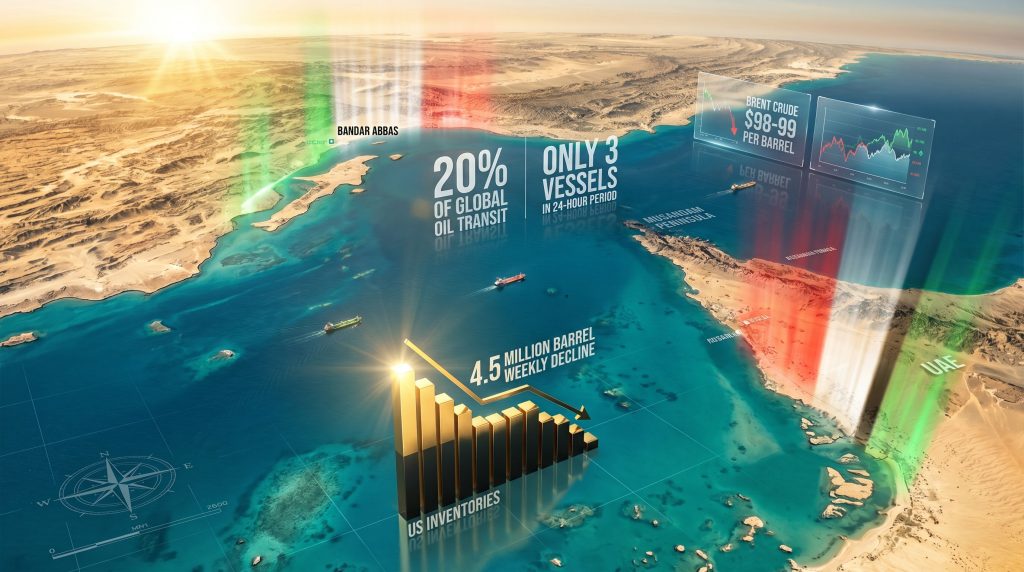
Energy traders face unprecedented volatility patterns as US-Iran peace talks extend beyond initial timeframes. Brent crude futures fluctuate within a narrow $98-99 per barrel range, reflecting market uncertainty about negotiation outcomes. This price stability masks underlying tension, with early trading sessions showing dramatic swings before settling into cautious consolidation.
The energy sector's risk assessment protocols have adapted to accommodate prolonged uncertainty scenarios. Unlike conventional supply disruptions with predictable timelines, open-ended diplomatic processes create unique challenges for hedging strategies and forward contract pricing. Market participants must balance immediate operational needs against potential future supply restoration.
Investor sentiment indicators reveal sophisticated algorithmic trading responses to diplomatic developments. High-frequency trading systems now incorporate real-time political sentiment analysis, creating feedback loops between diplomatic communications and price movements that amplify market volatility during uncertain periods.
When big ASX news breaks, our subscribers know first
Strategic Chokepoint Economics and Transit Disruptions
The Strait of Hormuz represents one of the world's most critical energy arteries, typically facilitating passage for approximately 20% of global oil and liquefied natural gas supplies. Current restrictions have reduced traffic to minimal levels, with shipping data indicating only three vessels transiting the waterway within a 24-hour period during active restrictions.
Alternative Route Cost Analysis
Shipping companies face substantial economic penalties when rerouting energy cargoes around traditional transit points. Cape of Good Hope routing adds approximately 3,500 nautical miles to typical Middle East-Europe journeys, increasing transportation costs by an estimated $2-3 per barrel for crude oil shipments.
Red Sea alternative routes present additional complications, with regional security concerns creating layered risk assessments for maritime operators. Insurance premiums for alternative routing have increased by 200-300% compared to pre-disruption levels, directly impacting delivered energy costs to end consumers.
Regional Energy Security Adaptations
Gulf state producers have activated contingency distribution networks, utilising overland pipeline systems and alternative port facilities to maintain export capabilities. These backup systems, while functional, operate at reduced capacity compared to primary shipping channels.
European energy importers accelerate diversification initiatives, with increased reliance on North African pipeline networks and expanded LNG import terminal utilisation. The Druzhba pipeline system gains strategic importance as continental Europe seeks supply chain resilience during Middle Eastern transit uncertainties.
Asian energy markets demonstrate remarkable adaptability, with major importers including Japan, South Korea, and India securing alternative supply agreements through long-term contracts with producers outside affected regions.
Oil Inventory Dynamics During Geopolitical Stress
US crude oil inventories experienced a 4.5 million barrel weekly decline following three consecutive weeks of increases, according to American Petroleum Institute data. This inventory reduction occurs despite declining US oil production, suggesting strong domestic demand and potential strategic reserve management activities.
Gasoline and distillate fuel stocks also declined during the same reporting period, indicating downstream market strength that supports crude oil pricing fundamentals. These secondary indicators provide crucial insights into broader energy market health beyond headline crude oil metrics.
Market Psychology and Trading Pattern Evolution
Volatility clustering analysis reveals that geopolitical uncertainty creates momentum-driven price movements distinct from supply-demand fundamentals. Options markets show elevated implied volatility across multiple expiration dates, suggesting traders anticipate continued price swings regardless of immediate diplomatic developments.
Technical resistance levels establish new trading parameters within the $90-99 range, creating psychological anchoring points for market participants. Furthermore, futures curve analysis indicates forward pricing incorporates extended uncertainty premiums, with longer-dated contracts showing significant backwardation patterns.
The correlation between diplomatic communications and intraday price movements has strengthened considerably. However, this creates opportunities for sophisticated trading strategies that capitalise on sentiment-driven volatility rather than fundamental supply-demand imbalances.
Maritime Security Framework and Commercial Impact
Naval blockade enforcement requires substantial resource allocation, with operational costs estimated at $50-100 million daily for maintaining effective maritime restrictions. These expenses ultimately influence broader regional economic calculations and diplomatic negotiation strategies.
Insurance premium adjustments reflect maritime risk pricing evolution, with Lloyd's of London syndicates implementing dynamic pricing models that adjust coverage costs based on real-time security assessments. War risk insurance rates have increased by 400-500% for vessels transiting affected waterways.
International Legal Framework Considerations
Maritime law complexities surrounding blockade legitimacy create additional uncertainty layers for commercial operators. International shipping companies must navigate competing legal interpretations while maintaining operational continuity and stakeholder obligations.
Trade agreement disruptions extend beyond immediate parties, affecting World Trade Organisation frameworks and multilateral commerce arrangements. Regional trade partnerships require modification to accommodate altered shipping patterns and extended supply chain timelines.
Multi-Regional Stability Assessment
Lebanon-Israel border tensions introduce additional complexity to regional stability calculations. Ceasefire violations and escalation risks create interconnected threat matrices that influence broader Middle Eastern economic planning and energy market confidence.
Ukrainian pipeline operations maintain European energy security relevance despite Middle Eastern focus. The interconnected nature of global energy systems means disruptions in one region amplify vulnerabilities elsewhere, creating cascading risk scenarios.
Kazakhstan export disruptions through the Druzhba pipeline system beginning May 1st demonstrate how regional conflicts affect distant supply chains. Central Asian energy producers face strategic decisions about alternative export routes and long-term infrastructure investments.
Economic Contagion Modelling
Regional GDP impact projections suggest prolonged uncertainty could reduce Middle Eastern economic growth by 2-3 percentage points annually if current conditions persist beyond six months. Tourism, trade, and foreign investment flows all face substantial headwinds during extended diplomatic negotiations.
Currency stability analysis reveals significant pressure on regional exchange rates. Energy-dependent economies face particular challenges maintaining monetary stability during volatile energy market conditions, consequently affecting tariff economic implications for international trade.
Investment flow disruptions affect foreign direct investment patterns, with energy sector capital expenditure decisions increasingly incorporating extended uncertainty scenarios into project evaluation frameworks.
Energy Transition Acceleration Under Crisis Conditions
Sustained energy price volatility drives accelerated alternative energy investment, with renewable energy projects receiving enhanced financing priority due to improved economic competitiveness against volatile fossil fuel alternatives.
Strategic petroleum reserve policies undergo reassessment globally, with nations reconsidering optimal inventory levels and release mechanisms designed to buffer against extended supply disruptions rather than temporary price spikes.
LNG market development gains strategic importance as natural gas provides transitional energy security during oil market volatility. Flexible LNG supply agreements offer diversification benefits that traditional long-term oil contracts cannot match during geopolitical uncertainty, with significant LNG market implications for global energy security.
Supply Chain Resilience Building
Diversification strategies extend beyond alternative suppliers to encompass multiple transportation routes, storage facilities, and processing capabilities. Energy companies invest in redundant infrastructure specifically designed to maintain operations during single-point-of-failure scenarios.
Regional energy hub development accelerates, with strategic locations outside traditional chokepoints receiving increased infrastructure investment. These alternative distribution networks provide long-term insurance against future disruptions.
Technology innovation acceleration focuses on enhanced extraction and processing capabilities that reduce dependence on specific geographic regions or transportation routes.
The next major ASX story will hit our subscribers first
Scenario-Based Economic Projections
Successful Negotiation Resolution Pathway
Oil price normalisation following successful US-Iran peace talks would likely occur over 3-6 months, with initial price declines followed by gradual market adjustment as normal shipping patterns resume. Regional economic recovery projections suggest GDP growth resumption within 12-18 months of conflict resolution.
Investment return patterns indicate capital flow restoration to affected regions would begin immediately upon resolution announcement. Energy sector investments leading broader economic recovery efforts would benefit from reduced trading volatility.
Prolonged Stalemate Implications
Sustained high energy costs create inflationary pressure modelling scenarios suggesting 2-4% additional inflation in energy-import-dependent economies if current conditions persist beyond one year.
Alternative supply chain establishment becomes permanent rather than temporary, fundamentally altering global energy trade patterns and reducing future dependence on traditional routing systems. For instance, Middle Eastern suppliers may permanently redirect export flows to Asian markets.
Geopolitical realignment effects include shifting regional economic partnerships, with energy importers developing stronger ties to suppliers offering greater routing security and supply reliability.
Escalation Risk Assessment
Energy market shock scenarios incorporate extreme price movement possibilities, with modelling suggesting $150-200 per barrel pricing during acute supply disruption phases. The ongoing US-Iran negotiations remain critical to preventing such extreme scenarios.
Global recession probability increases substantially if energy price shocks coincide with existing economic vulnerabilities in major consuming nations. Additionally, diplomatic developments continue to influence market sentiment.
Emergency response protocols require international coordination mechanisms that can rapidly deploy strategic reserves and alternative supply arrangements during crisis escalation.
Critical Market Indicators for Ongoing Assessment
Short-Term Monitoring Framework (1-3 months)
• Daily Strait of Hormuz shipping traffic data through maritime tracking systems
• Weekly US Energy Information Administration inventory reports and deviation analysis
• Regional currency exchange rate stability measurements against major trading partners
• Insurance premium adjustments for Middle Eastern maritime operations
Medium-Term Trend Analysis (3-12 months)
• Alternative energy infrastructure investment flows and project approval rates
• Regional trade agreement modifications and renegotiation timelines
• Strategic petroleum reserve policy changes across major consuming nations
• Energy sector capital expenditure patterns and geographical allocation shifts
Long-Term Structural Change Assessment (1-3 years)
• Global energy supply chain redesign and redundancy implementation
• Renewable energy adoption acceleration rates and grid integration progress
• Regional economic partnership evolution and trade route diversification
• Maritime security framework development and international cooperation mechanisms
The ongoing US-Iran peace talks will ultimately determine whether current market volatility represents a temporary adjustment or the beginning of a fundamental restructuring of global energy trade patterns. Consequently, market participants must prepare for multiple scenarios whilst monitoring diplomatic progress.
Disclaimer: This analysis contains forward-looking projections and scenario-based assessments that involve significant uncertainty. Energy market dynamics, geopolitical developments, and economic conditions can change rapidly, affecting actual outcomes. Investors and stakeholders should conduct independent analysis and consider multiple scenarios when making strategic decisions.
Looking to Capitalise on Energy Market Volatility?
Discovery Alert's proprietary Discovery IQ model delivers real-time alerts on significant ASX mineral discoveries, instantly empowering subscribers to identify actionable opportunities ahead of the broader market during periods of heightened energy sector uncertainty. Begin your 14-day free trial today and secure your market-leading advantage whilst energy markets navigate these complex geopolitical developments.