May 12, 2026
Understanding the Energy Profits Levy Framework
The United Kingdom's petroleum taxation landscape underwent radical transformation following geopolitical disruptions that reshaped global energy markets. This transformation centers on a supplementary profits mechanism targeting extraordinary returns generated during commodity price volatility periods, creating one of the world's most aggressive taxation frameworks for hydrocarbon extraction activities. The North Sea windfall tax has fundamentally altered investment dynamics across the region's energy sector.
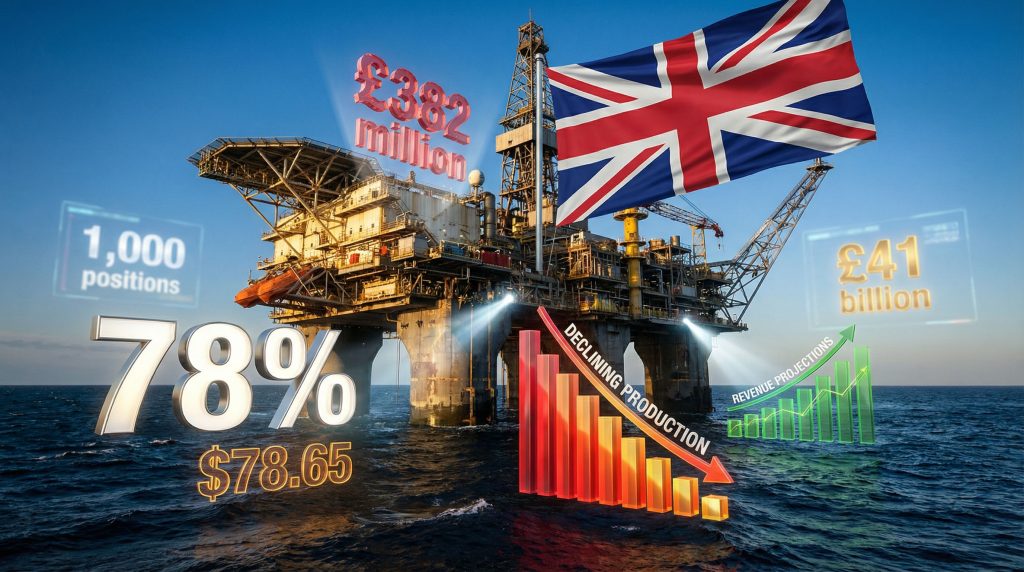
The current Energy Profits Levy (EPL) establishes a 38% windfall tax rate that combines with existing corporate taxation structures to generate a 78% headline tax rate on North Sea oil and gas profits. This supplementary taxation mechanism operates beyond traditional volumetric or ad-valorem models, specifically targeting profit margins that exceed historically established baselines rather than production volumes or gross revenues.
Unlike permanent taxation structures, the EPL contains statutory expiration provisions scheduled for March 2030, creating defined policy review timelines. This temporal limitation distinguishes the mechanism from standard corporate tax frameworks, establishing it as an emergency fiscal measure with predetermined sunset clauses unless extended through Parliamentary action.
Price Threshold Activation System
The taxation framework operates through sophisticated threshold-based triggers that activate EPL application only when commodity prices exceed predetermined levels. For the 2026-2027 fiscal period, these thresholds establish $78.65 per barrel for crude oil and 61 pence per therm for natural gas, creating binary tax outcomes dependent on market conditions.
The threshold calculation employs six-month averaging methodologies to prevent daily volatility from triggering constant policy adjustments. This smoothing mechanism creates approximately 12-month response lags between sustained price movements and corresponding tax policy impacts, balancing stability against responsiveness to genuine market disruptions.
When big ASX news breaks, our subscribers know first
How Geopolitical Events Shaped UK Energy Taxation
Energy security concerns following Russia's invasion of Ukraine catalyzed emergency fiscal interventions that fundamentally altered North Sea taxation dynamics. The September 2022 implementation of windfall taxation represented government attempts to capture unexpected commodity price premiums while funding extensive energy support programs for consumers and businesses.
The original 25% EPL rate underwent multiple escalations through successive budget cycles, reaching the current 38% level through 2022-2026 policy adjustments. Each escalation corresponded with sustained energy price elevation and government assessments of operator profitability during crisis periods.
Recent geopolitical developments demonstrate ongoing policy sensitivity to supply disruption scenarios. Furthermore, recent analyses of oil price movements and global conflicts have shown how the tension in Iran triggered renewed price volatility that invalidated Office for Budget Responsibility forecasts released in March 2026, forcing Chancellor Rachel Reeves to abandon planned EPL termination announcements scheduled for that week.
Revenue Generation Versus Industry Stability
Treasury officials articulated complex balancing requirements between multiple policy objectives during EPL development and implementation periods. Primary considerations included capturing windfall revenues during price volatility, maintaining investment incentives for domestic production, and managing fiscal pressures from concurrent energy support schemes. Additionally, considerations of tariff economic implications have influenced broader fiscal policy decisions.
The emergency nature of EPL introduction reflected government prioritization of immediate revenue generation over long-term industry development considerations. This temporal focus created tension between short-term fiscal benefits and sustained investment attraction for North Sea operations.
Economic Consequences for North Sea Operations
The implementation of aggressive windfall taxation generated immediate operational adjustments across North Sea petroleum activities, with employment reductions representing the most visible industry response to fiscal pressure intensification. However, these impacts must be viewed alongside broader industry challenges, including US oil production decline trends affecting global markets.
Harbour Energy experienced particularly acute impacts, implementing 700 total job cuts across three redundancy rounds directly attributed to EPL policy. The December 2024 announcement of approximately 100 additional position eliminations followed government statements regarding levy retention, demonstrating direct correlation between policy uncertainty and workforce adjustments.
Major Operator Financial Impacts
BP's 2024 EPL obligations totaled £411 million, representing approximately 33% of the company's total UK tax burden for that fiscal period. This single-year payment exceeded the complete annual capital expenditure budgets for numerous smaller operators, illustrating the material impact on major integrated companies with significant North Sea exposure.
Shell reported £382 million in additional costs attributable to EPL implementation, including project deferrals and operational adjustments necessitated by compressed profit margins. These adjustments affected discretionary capital commitments and influenced asset development timing across the operator's UK portfolio.
Asset Consolidation Strategies
European petroleum majors responded to EPL-induced profitability pressures through extensive asset consolidation initiatives designed to achieve operational synergies and cost reduction benefits:
| Consolidation Transaction | Participants | Announcement Date | Strategic Rationale |
|---|---|---|---|
| UK Assets Combination | Repsol, Neo Energy Group | March 2025 | Operational integration, cost synergies |
| North Sea Unit Merger | Equinor, Shell | 2024 | Efficiency gains, overhead reduction |
| Upstream Business Integration | Eni, Ithaca Energy | 2024 | Portfolio rationalization |
| Operations Combination | TotalEnergies, Repsol, HitecVision | December 2025 | Financial resilience enhancement |
These consolidation activities represent strategic responses to windfall taxation rather than normal market-driven merger activities. Operators achieved improved financial resilience against fiscal pressures while maintaining operational capabilities through integrated structures.
Production Decline Acceleration
Industry analysis indicates monthly job losses approaching 1,000 positions across North Sea operations, reflecting sustained workforce reduction pressures beyond individual company announcements. These reductions affect both direct operator employment and supporting supply chain activities throughout the regional petroleum ecosystem.
Undeveloped reserves totaling £150 billion in potential value face development risk due to compressed project economics under current taxation frameworks. Marginal field developments encounter particular challenges when combined EPL and corporate tax obligations approach or exceed project profit margins.
Supply chain migration toward international markets accelerated as service providers and contractors sought opportunities in jurisdictions with more favorable fiscal terms. This migration affects equipment utilization, technical expertise availability, and regional economic multiplier effects throughout North Sea-dependent communities.
Price Thresholds and Policy Effectiveness
The threshold-based activation mechanism creates automated policy responses that avoid Parliamentary votes on tax rate adjustments while maintaining sensitivity to genuine commodity price disruptions. This design addresses political friction concerns while establishing objective criteria for windfall tax application.
Averaging Methodology Impact
The six-month averaging system for threshold calculations creates temporal disconnection between current market conditions and policy outcomes. During the 12-month implementation lag period, sustained price movements may occur without corresponding tax policy adjustments, creating planning challenges for operators managing volatile input costs.
Recent Iran conflict impacts demonstrated threshold mechanism responsiveness to supply disruption scenarios. In addition, OPEC production impact decisions have influenced these dynamics. Pre-conflict Office for Budget Responsibility forecasts projected EPL revenue cessation in 2027 as prices declined below threshold levels, but geopolitical developments invalidated these assumptions and maintained taxation activation status.
"The Office for Budget Responsibility analysis projects tax receipt overestimates by £10 billion through 2030 due to falling output, indicating forecasting challenges in volatile commodity markets combined with production decline pressures."
Binary Tax Outcome Implications
The threshold system generates discontinuous tax treatment where small price movements around trigger levels create significant fiscal impact differences. Operators above threshold levels face 78% headline tax rates while those below thresholds operate under standard corporate taxation frameworks, creating competitive disparities within the same basin.
This binary structure affects operator hedging strategies and financial planning approaches, as commodity price exposure directly determines effective tax rates rather than simply affecting revenue streams. Long-term development projects face particular uncertainty regarding applicable tax rates over multi-year development and production periods.
Alternative Taxation Models and Reform Proposals
Offshore Energies UK developed comprehensive taxation reform proposals designed to balance government revenue requirements with industry investment incentive preservation. These proposals establish permanent taxation mechanisms rather than temporary windfall approaches, creating predictable fiscal environments for long-term capital allocation decisions.
OEUK Permanent Mechanism Framework
The industry association's alternative framework proposes reducing headline tax rates to 40% while maintaining price-based activation mechanisms above predetermined thresholds. This approach preserves windfall capture capabilities during genuine price spike periods while reducing baseline taxation burdens during normal market conditions.
| Metric | Current System | OEUK Proposal | Projected Impact |
|---|---|---|---|
| Headline Tax Rate | 78% | 40% | Improved competitiveness |
| Activation Mechanism | Temporary, price-triggered | Permanent, profit-based above thresholds | Predictable planning |
| Investment Impact | Capital flight observed | +£41 billion additional investment | Enhanced development activity |
| Employment Generation | Declining (700 cuts at Harbour Energy) | +23,000 positions by 2030 | Regional economic benefits |
| Economic Contribution | Production decline acceleration | £137 billion by 2050 | Long-term value creation |
| Tax Revenue (2050) | Below baseline projections | +£12 billion additional revenue | Enhanced fiscal outcomes |
Long-Term Revenue Optimisation
The alternative framework projects enhanced government revenue generation through increased production volumes and sustained investment activity rather than relying on high tax rates applied to declining output. This approach recognises the relationship between fiscal competitiveness and basin-wide economic activity levels.
Economic modelling suggests £137 billion in total economic contribution by 2050 under reformed taxation structures, compared to accelerating decline under current frameworks. These projections incorporate investment multiplier effects, employment generation impacts, and sustained production capabilities through enhanced development activity.
Implementation Timeline Considerations
Industry representatives advocate for 2026 implementation of alternative frameworks to address immediate investment planning requirements. The four-year period before statutory EPL expiration in March 2030 provides sufficient transition time for policy development and Parliamentary consideration of permanent replacement mechanisms.
Political Dynamics and Policy Development
Multiple political parties maintain distinct positions regarding North Sea taxation policy, creating complex dynamics for future policy development beyond the 2030 statutory expiration date. These debates increasingly intersect with broader discussions about energy transition challenges facing developed economies.
Reform UK advocates complete EPL abolition, viewing windfall taxation as counterproductive to domestic energy security objectives. This position emphasises energy independence benefits from sustained North Sea production over government revenue generation priorities.
Green Party representatives support permanent windfall tax implementation as part of broader fossil fuel industry taxation strategies. This approach prioritises revenue generation for renewable energy transition funding while accepting reduced hydrocarbon production activity.
Scottish National Party concerns focus on regional employment and economic impacts, reflecting the concentrated geographic effects of North Sea industry changes on Scottish communities, particularly Aberdeen and surrounding supply chain locations.
Treasury Balancing Considerations
Government officials face competing pressures between immediate revenue requirements, long-term energy security objectives, and regional economic stability concerns. The Treasury's position reflects attempts to optimise across these multiple objectives while managing Parliamentary and constituent pressures.
However, recent developments have complicated these plans. According to industry reports from the Scotsman, Chancellor Rachel Reeves has engaged in discussions with North Sea executives regarding the future of the North Sea windfall tax. Furthermore, analysis from This is Money highlights increasing pressure on the Chancellor to act ahead of crucial industry discussions.
Spring Statement consultation processes provide structured forums for industry input on policy development, though recent geopolitical developments demonstrate the responsiveness of policy positions to external events and commodity market volatility.
The next major ASX story will hit our subscribers first
What Are the Long-Term Energy Security Implications?
Sustained windfall taxation implementation creates strategic vulnerabilities through accelerated domestic production decline and increased import dependency for UK energy requirements. These security considerations extend beyond immediate fiscal impacts to encompass grid stability, supply chain resilience, and strategic petroleum reserve adequacy.
Import Dependency Risks
Declining North Sea output increases UK reliance on international petroleum imports during periods when global supply chain disruptions and geopolitical tensions affect availability and pricing. Recent Iran conflict impacts demonstrate ongoing supply disruption potential in key producing regions.
The acceleration of decommissioning activities for marginal fields compounds long-term supply security challenges, as infrastructure removal eliminates future production potential even if commodity prices or fiscal terms improve substantially.
Grid Stability and Supply Chain Vulnerabilities
Natural gas production decline affects grid stability during renewable energy intermittency periods, creating backup power generation challenges. The loss of North Sea gas production capability reduces domestic flexibility for managing seasonal demand variations and renewable energy output fluctuations.
Supply chain expertise migration to international markets diminishes UK technical capabilities for future energy transition projects, including offshore wind development, carbon capture implementation, and hydrogen production initiatives requiring similar maritime engineering expertise.
Policy Resolution Timeline and Implementation
The statutory March 2030 expiration date creates defined policy development timelines for EPL replacement or extension decisions. Parliamentary consideration requirements necessitate policy resolution well in advance of expiration dates to provide industry planning certainty.
Spring Statement consultation processes through 2026-2029 periods will establish stakeholder input mechanisms for replacement policy development. These consultations balance government revenue requirements against industry competitiveness and energy security considerations.
Post-2030 Replacement Mechanism Development
Alternative taxation frameworks require extensive development periods incorporating economic modelling, Parliamentary review processes, and industry consultation requirements. The complexity of threshold mechanisms, price averaging calculations, and international competitiveness assessments necessitates multi-year policy development timelines.
Industry advocacy for 2026 implementation of alternative frameworks reflects urgent investment planning requirements and the multi-year development periods typical for North Sea petroleum projects. Consequently, early policy resolution reduces investment uncertainty and enables improved capital allocation decisions across operator portfolios.
Disclaimer: This analysis involves forecasts, projections, and speculation about future policy developments, commodity prices, and economic outcomes. Actual results may differ materially from projections due to changing political priorities, geopolitical events, commodity market volatility, and unforeseen economic factors. Investment and business decisions should not be based solely on these projections and should incorporate comprehensive risk assessment and professional advisory consultation.
Ready to Capitalise on Energy Sector Volatility?
Discovery Alert's proprietary Discovery IQ model delivers real-time alerts on significant ASX mineral discoveries, including energy-related commodities that benefit from geopolitical tensions and supply disruptions like those reshaping UK North Sea taxation. Subscribers gain immediate insights into actionable trading opportunities during volatile market periods, positioning themselves ahead of broader market recognition of discovery-driven investment potential.