May 16, 2026
Strategic Framework for Energy Recovery Assessment
The recovery of energy output in the Middle East following regional conflicts represents a multidimensional challenge requiring comprehensive analysis across technical, economic, and geopolitical dimensions. Recovery trajectories vary significantly based on infrastructure complexity, operational resilience, and external support mechanisms.
Infrastructure restoration follows predictable patterns but with substantial variability based on asset characteristics and damage severity. Production facilities demonstrate different recovery curves depending on their technical specifications and operational complexity. Pipeline networks typically require systematic pressure testing and integrity verification before resuming normal operations.
Primary Recovery Variables Include:
- Infrastructure damage severity assessment protocols
- Operational workforce availability and training requirements
- Equipment sourcing and replacement lead times
- Regulatory approval and safety certification processes
- Financial resources and insurance claim processing
The International Energy Agency has provided authoritative guidance on recovery expectations. According to IEA Director Fatih Birol, regional recovery timelines will vary significantly between countries, with Iraq requiring substantially longer periods than Saudi Arabia. The overall regional recovery is estimated to require approximately two years to reach pre-conflict production levels.
Furthermore, these insights align with broader oil price rally insights that demonstrate how supply disruptions influence global energy markets.
Critical Recovery Dependencies:
Technical infrastructure complexity directly influences restoration duration. Conventional oil production facilities typically demonstrate faster recovery capabilities compared to specialised processing operations. Gas processing plants require more complex restart procedures due to safety protocols and equipment specifications.
Reservoir management presents unique challenges during extended shutdown periods. Different hydrocarbon types require varying restart procedures to maintain optimal production characteristics. Light crude operations generally demonstrate faster recovery compared to heavy oil or gas condensate fields.
When big ASX news breaks, our subscribers know first
Infrastructure Vulnerability and Regional Variations
Recovery timelines differ dramatically across Middle Eastern producers based on infrastructure sophistication, operational redundancy, and strategic planning capabilities. The recovery of energy output in the Middle East depends heavily on each country's technological infrastructure and preparedness frameworks.
High-Resilience Producers:
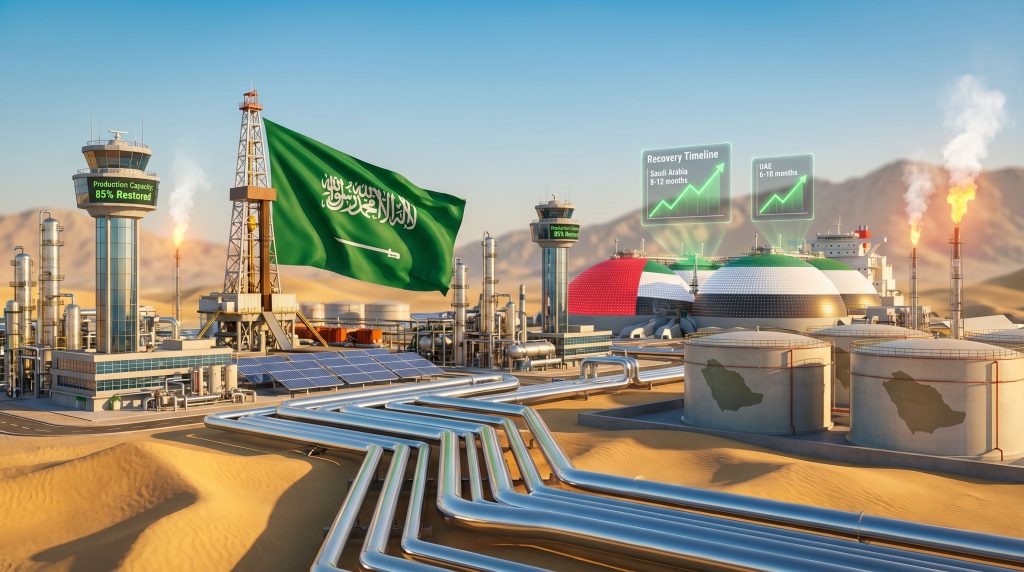
Saudi Arabia maintains sophisticated infrastructure management systems with built-in redundancy capabilities. The kingdom's advanced maintenance protocols and strategic reserve utilisation contribute to relatively faster recovery expectations. Industry analysis suggests Saudi facilities could achieve substantial capacity restoration within 8-12 months under optimal conditions.
The United Arab Emirates demonstrates modern facility designs and diversified production portfolios that enhance recovery capabilities. Technical workforce expertise and infrastructure modernisation programmes support accelerated restoration timelines, with estimated recovery periods ranging from 6-10 months for major facilities.
Moderate Recovery Scenarios:
Qatar's LNG infrastructure presents unique complexity challenges that extend restoration timelines. Specialised cryogenic equipment requirements and integrated facility dependencies create longer recovery periods, potentially requiring 18-24 months for full capacity restoration. LNG train rebuilding involves sophisticated technical specifications that cannot be rapidly replaced.
Kuwait faces infrastructure modernisation requirements that influence recovery duration. Limited storage capacity and ageing facility challenges create additional complexity factors. Technical upgrade needs could extend recovery periods to 15-20 months depending on modernisation requirements.
Extended Recovery Challenges:
Iraq presents the most complex recovery scenario according to IEA assessments. Infrastructure vulnerability, operational complexity, and security considerations create substantial restoration challenges. Industry estimates suggest 24-36 month recovery periods may be required for full capacity restoration.
The IEA's Birol emphasised that market participants have historically underestimated the consequences of prolonged Strait of Hormuz closures, indicating the critical importance of maritime chokepoint security for regional recovery success. These considerations also impact natural gas price trends across global markets.
Sectoral Recovery Patterns and Technical Complexity
Different energy sectors demonstrate varying recovery characteristics based on operational complexity and technical requirements. The recovery of energy output in the Middle East varies significantly across crude oil, natural gas, LNG, and refined products sectors.
| Energy Sector | Typical Recovery Period | Primary Constraints | Technical Complexity |
|---|---|---|---|
| Crude Oil Production | 8-15 months | Reservoir pressure, pipeline integrity | Moderate |
| Natural Gas Processing | 12-20 months | Safety protocols, equipment complexity | High |
| LNG Operations | 18-48 months | Cryogenic systems, train specifications | Very High |
| Refined Products | 6-12 months | Process optimisation, quality control | Moderate-High |
| Petrochemicals | 15-30 months | Integrated dependencies, catalyst replacement | High |
What are the Main Crude Oil Sector Recovery Challenges?
Oil production facilities typically demonstrate faster recovery compared to gas operations due to simpler technical requirements. However, reservoir management during extended shutdowns requires careful pressure maintenance protocols. Production ramping must follow graduated increases to prevent formation damage or equipment stress.
Natural Gas Complexity:
Gas processing requires more complex restart procedures due to safety protocols and equipment sensitivity. Processing plants must undergo comprehensive safety inspections and equipment calibration before resuming operations. Pipeline pressurisation follows systematic protocols to ensure system integrity.
LNG Infrastructure Challenges:
Liquefied natural gas facilities present the most complex recovery scenarios due to specialised cryogenic equipment and integrated train systems. Individual LNG trains require months for proper cooldown and startup procedures. Replacement of specialised equipment can require 12-18 month lead times from international suppliers.
Economic Impact Quantification
Extended energy recovery periods create substantial economic consequences across both regional and global markets. The recovery of energy output in the Middle East directly influences international energy pricing, trade balances, and macroeconomic stability indicators.
Regional Economic Consequences:
Middle Eastern economies face significant fiscal revenue impacts during extended recovery periods. Oil and gas revenues typically represent 70-90% of government income in major producing countries. Recovery delays directly translate to budget constraints and economic planning challenges.
GDP impacts follow predictable patterns based on recovery duration. Six-month disruptions typically create 2-4% regional economic contractions, while 12-month periods can generate 5-8% GDP declines. Extended 24-month recovery scenarios may result in 10-15% economic output reductions.
Global Market Dynamics:
Recovery uncertainty creates sustained price premiums across energy commodities. The IEA has warned that prolonged Strait of Hormuz closures would necessitate preparation for significantly higher energy prices globally. These dynamics are closely connected to broader energy export challenges facing major producing regions.
Historical precedent indicates that oil prices typically maintain 15-25% premiums above baseline levels during uncertain recovery periods. Natural gas markets demonstrate 20-40% price elevations in affected regions, whilst LNG spot markets can experience 30-60% premiums during supply constraint periods.
Market Psychology Factors:
Energy markets demonstrate heightened volatility during recovery periods due to uncertainty about restoration timelines. Traders typically price in worst-case scenarios until clear recovery progress becomes evident. Forward curve patterns reflect extended uncertainty with elevated prices for 12-24 month delivery periods.
The IEA noted that shipments already in transit before conflicts began help mitigate initial shortage impacts. However, the absence of new loading operations creates supply gaps that become apparent as existing shipments reach their destinations.
Technology-Driven Recovery Acceleration
Modern technology applications can significantly reduce energy infrastructure recovery periods through advanced monitoring, modular replacement strategies, and predictive maintenance capabilities.
How Can Digital Infrastructure Solutions Accelerate Recovery?
Real-time damage assessment systems enable rapid evaluation of infrastructure status without requiring extensive physical inspections. Drone-based monitoring and satellite imagery provide comprehensive facility assessments that accelerate planning processes.
Remote operational management systems allow technical experts to guide recovery operations without requiring on-site presence. Digital twins and simulation software help optimise restart procedures and identify potential complications before they occur.
Modular Replacement Strategies:
Pre-fabricated infrastructure components enable faster replacement of damaged systems. Standardised equipment specifications reduce sourcing lead times and simplify installation procedures. Container-based processing units can provide interim capacity whilst permanent facilities undergo restoration.
Rapid deployment protocols utilising modular systems can reduce traditional construction timelines by 20-30%. Pre-positioned emergency equipment allows immediate response to critical infrastructure failures.
International Cooperation Benefits:
Technical assistance programmes facilitate knowledge transfer and specialised expertise sharing. Equipment pooling agreements enable rapid access to replacement components that might otherwise require extended procurement periods.
Emergency reconstruction funding mechanisms accelerate project implementation by removing financial constraints. Expedited insurance claim processing reduces delays associated with damage assessment and compensation procedures. These coordination efforts complement renewable energy solutions that support overall infrastructure resilience.
Historical Recovery Analysis and Lessons Learned
Previous regional conflicts provide valuable insights for optimising future energy infrastructure recovery strategies. The recovery of energy output in the Middle East has varied significantly across different historical contexts.
What Did the Gulf War Recovery Teach Us?
The 1991 Gulf War demonstrated both challenges and successes in energy infrastructure recovery. Kuwait's oil infrastructure suffered extensive damage requiring 8-12 months for major facility restoration. International cooperation proved critical for accelerating recovery through technical expertise and equipment provision.
Key success factors included pre-positioned emergency equipment, international technical assistance, and coordinated reconstruction planning. The experience highlighted the importance of redundant pipeline systems and backup processing capabilities.
Libya Conflict Recovery (2011-2014):
Libya's energy sector recovery following the 2011 conflict required 24-36 months for full capacity restoration. Security constraints and workforce displacement created significant challenges beyond technical infrastructure repair requirements.
The Libya experience demonstrated that political stability represents a prerequisite for effective energy infrastructure recovery. Technical solutions alone cannot address recovery challenges without adequate security frameworks and workforce availability.
Yemen Infrastructure Disruption (Ongoing):
Yemen's ongoing infrastructure challenges illustrate the complexity of recovery during extended conflict periods. Energy facilities remain significantly disrupted despite multiple attempted restoration efforts. The situation demonstrates how continued security threats prevent sustained recovery progress.
Critical Recovery Lessons:
- Infrastructure redundancy significantly reduces recovery timelines
- International cooperation accelerates technical solution implementation
- Security stabilisation must precede major infrastructure investments
- Workforce training and retention programmes prove essential for sustained operations
- Standardised equipment specifications enable faster replacement and maintenance
The next major ASX story will hit our subscribers first
Risk Management and Preparedness Strategies
Future energy infrastructure resilience requires comprehensive risk management frameworks that address both technical vulnerabilities and operational dependencies.
How Can Infrastructure Resilience Be Enhanced?
Multiple pipeline route options reduce single-point-of-failure risks that can completely halt operations. Distributed processing capabilities prevent total production shutdowns when individual facilities experience disruptions.
Backup power generation systems ensure continued operation of critical safety and monitoring systems during extended outages. Emergency response equipment positioning enables rapid deployment to address infrastructure failures.
Strategic Reserve Utilisation:
Strategic petroleum reserves provide 60-90 days of supply buffer capacity that allows markets to stabilise whilst production recovery proceeds. Reserve deployment timing requires careful coordination to maximise market stabilisation benefits.
The IEA maintains readiness for additional emergency reserve releases following previous deployment actions. Reserve coordination between major consuming countries helps optimise global supply stabilisation efforts.
Regional Cooperation Mechanisms:
Shared recovery resources through equipment pooling agreements enable rapid response to infrastructure failures. Technical expertise sharing reduces dependency on individual country capabilities during emergency situations.
Coordinated reconstruction planning prevents resource competition and optimises recovery sequencing across multiple affected facilities. Financial risk mitigation through insurance cooperation frameworks reduces individual country exposure to reconstruction costs. These frameworks must also consider global trade implications affecting international cooperation mechanisms.
Renewable Energy Integration:
Solar and wind installations can provide interim power generation that reduces pressure on traditional energy infrastructure during recovery periods. Distributed renewable generation creates less vulnerable energy supply options that support overall system resilience.
Battery storage systems enable grid stabilisation during transition periods when traditional generation capacity remains limited. Microgeneration capabilities support essential services whilst larger infrastructure undergoes restoration.
Investment Strategy Implications
Energy infrastructure recovery dynamics create significant implications for investment strategies across both regional and international portfolios.
What Are the Risk-Adjusted Return Considerations?
Recovery uncertainty creates elevated risk premiums for Middle Eastern energy investments. Investors require higher returns to compensate for potential disruption impacts and extended recovery periods.
Diversification strategies should account for correlated risks across regional producers. Geographic concentration in Middle Eastern energy assets increases portfolio vulnerability to systematic recovery delays.
Infrastructure Investment Priorities:
Resilience-focused infrastructure investments demonstrate superior long-term value compared to traditional efficiency-optimised designs. Redundancy capabilities justify higher initial capital costs through reduced vulnerability to extended disruptions.
Technology investments in monitoring, automation, and modular systems provide measurable recovery acceleration benefits that enhance overall asset values. Emergency response capabilities represent essential infrastructure components rather than optional safety additions.
Market Psychology and Timing:
Recovery periods create investment opportunities through temporary asset value dislocations. However, timing considerations require careful analysis of actual versus perceived recovery progress.
Forward market positioning should account for recovery timeline uncertainty and potential delays beyond initial estimates. Option strategies can provide downside protection whilst maintaining upside exposure to successful recovery outcomes.
Future Recovery Enhancement Strategies
Looking ahead, several emerging trends will shape energy infrastructure recovery capabilities. Artificial intelligence systems are increasingly being deployed for predictive maintenance and automated recovery coordination. These technologies can reduce human error and accelerate decision-making during critical recovery phases.
Furthermore, international coordination mechanisms are evolving through multilateral energy frameworks that standardise emergency response protocols. These developments promise to enhance future recovery efficiency and reduce overall timeline requirements.
The complexity of energy infrastructure recovery in the Middle East requires sophisticated analytical frameworks that account for technical, economic, and geopolitical variables. Understanding these multidimensional challenges enables better preparation for future disruption scenarios and more effective response strategies when they occur.
Regional cooperation, technology deployment, and strategic planning can significantly improve recovery outcomes, but the fundamental timeline requirements for complex energy infrastructure restoration remain substantial. Successful navigation of these challenges requires sustained commitment to resilience investment and international coordination mechanisms.
Disclaimer: This analysis incorporates forward-looking assessments and recovery timeline estimates that involve significant uncertainty. Actual recovery periods may vary substantially from projections due to unforeseen technical, political, or economic factors. Readers should conduct independent analysis and consult relevant experts before making investment or operational decisions based on this information.
Ready to Capitalise on Energy Market Disruptions?
The recovery of energy output in the Middle East creates significant investment opportunities as supply disruptions influence global commodity prices. Discovery Alert's proprietary Discovery IQ model delivers instant alerts on ASX mineral and energy discoveries, empowering subscribers to identify actionable trading opportunities during volatile market conditions. Begin your 14-day free trial today and position yourself ahead of evolving energy markets.