May 17, 2026
The Energy Revolution in Heavy Industry: Understanding Ultra-Class Hybrid Mining Systems
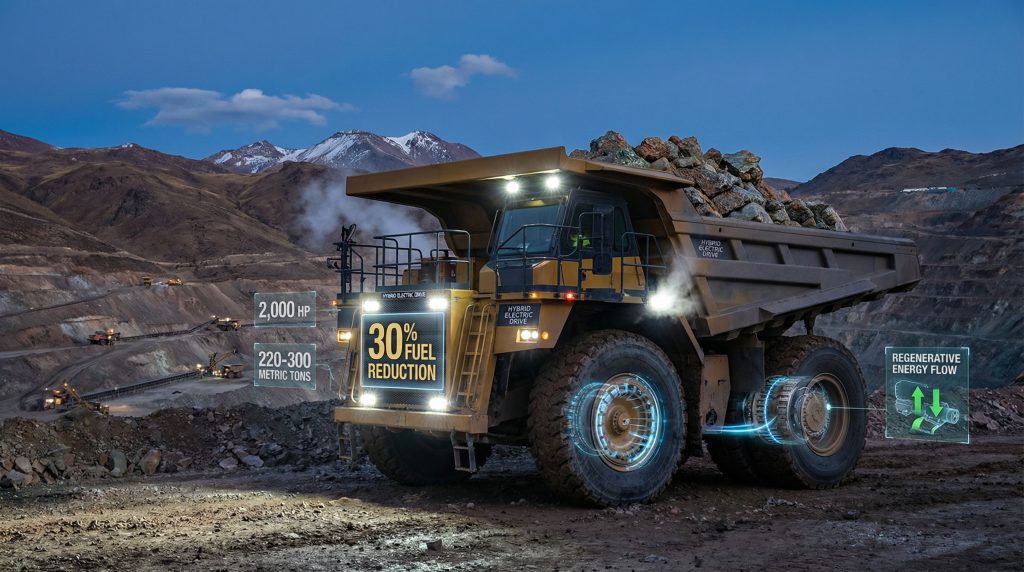
Mining operations face mounting pressure to reduce carbon emissions while maintaining the productivity levels required for global commodity supply chains. The introduction of hybrid-electric technology into ultra-class mining vehicles represents a significant shift in how the industry approaches environmental responsibility without sacrificing operational efficiency. The Cummins hybrid-electric ultra-class mining truck exemplifies this transformation, offering massive machines capable of hauling 300 metric tons or more whilst addressing traditional concerns around diesel fuel consumption and emissions.
Furthermore, the transition to hybrid-electric systems offers immediate environmental benefits through advanced energy recovery mechanisms and intelligent power management. Unlike complete fleet replacement programs that require massive capital investments, retrofit solutions enable mining operators to upgrade existing equipment while maintaining familiar operational procedures and maintenance protocols.
When big ASX news breaks, our subscribers know first
Key Performance Characteristics of Modern Hybrid Mining Systems
The latest hybrid-electric mining trucks deliver measurable improvements across multiple operational metrics. Field testing at high-altitude copper mining operations has demonstrated the practical viability of these systems under extreme operating conditions, including elevations exceeding 4,000 metres where atmospheric pressure and temperature variations challenge conventional mechanical systems.
Primary Performance Metrics:
- Fuel efficiency improvements targeting up to 30% reduction in diesel consumption
- Payload capacity maintaining 300 metric tons for ultra-class configurations
- High-altitude operational capability proven at extreme elevations
- Regenerative energy capture during loaded downhill hauls
- Seamless integration with existing fleet management systems
The regenerative braking technology captures energy that would otherwise be lost during downhill loaded hauls, storing it in onboard battery systems for immediate reuse during acceleration or uphill climbs. This energy recovery mechanism becomes particularly effective in mountainous mining environments where steep terrain profiles maximise the potential for energy capture during braking events.
Economic Drivers Behind Hybrid Technology Adoption
Mining companies increasingly view hybrid-electric systems as strategic investments rather than regulatory compliance measures. The economic benefits extend beyond immediate fuel savings to encompass broader operational advantages including extended equipment lifecycle, reduced maintenance requirements, and improved operational flexibility. These mining evolution trends reflect the industry's commitment to sustainable practices.
Financial Considerations:
| Cost Factor | Traditional Systems | Hybrid-Electric | Impact |
|---|---|---|---|
| Fuel Consumption | Baseline diesel usage | Up to 30% reduction target | Significant operational savings |
| Equipment Lifecycle | Standard depreciation | Extended through intelligent power management | Improved asset utilisation |
| Maintenance Intervals | Regular service schedules | Reduced wear through regenerative systems | Lower maintenance costs |
| Retrofit Compatibility | Not applicable | Adaptable to existing fleets | Faster implementation |
The retrofit approach offers particular advantages for mining operations with substantial investments in existing ultra-class truck fleets. Rather than requiring complete fleet replacement, these systems integrate with current equipment, minimising disruption to established maintenance protocols and operator training programmes.
Environmental and Regulatory Alignment:
Mining operations worldwide face increasing scrutiny regarding emissions output and environmental impact. Hybrid-electric systems provide a measurable pathway toward emissions reduction goals whilst maintaining the operational capacity required for continued production. This alignment supports long-term business sustainability as environmental regulations continue evolving globally, driving the need for renewable energy solutions across the sector.
Technical Architecture and System Integration
The Cummins hybrid-electric ultra-class mining truck system represents a sophisticated integration of diesel and electric power technologies specifically adapted for mining applications. The core system utilises a QSK60 diesel engine paired with modular battery technology designed to withstand the extreme conditions encountered in mining environments.
Engine and Power Management
The QSK60 diesel engine provides primary power whilst integrated battery systems deliver supplemental power during high-demand operations. Intelligent control software continuously optimises power distribution between diesel and electric systems based on real-time operational requirements, load conditions, and terrain characteristics.
The modular battery design enables flexible configuration options and simplified maintenance procedures. These interchangeable high-power battery systems support various operational profiles whilst maintaining consistent performance across different mining environments and duty cycles.
Regenerative Energy Recovery
The regenerative braking system captures kinetic energy during loaded downhill hauls, converting this energy into electrical power stored in onboard batteries. This process significantly improves overall system efficiency whilst reducing wear on traditional braking components.
"The extreme conditions of the Andes and steep haul profiles provide an ideal proving ground for regenerative energy capture and reliable performance in demanding mining environments."
The energy recovery process operates seamlessly without requiring operator intervention, automatically engaging during braking events and storing captured energy for immediate reuse during acceleration or uphill climbs.
Real-World Validation and Performance Testing
The deployment of hybrid-electric technology at Caserones copper-molybdenum mine in Chile's Tierra Amarilla region provides critical real-world validation data for ultra-class mining applications. Operating at elevations exceeding 4,000 metres, this installation demonstrates the technology's capability to function reliably under extreme atmospheric conditions.
High-Altitude Performance Factors
Mining operations at extreme elevations present unique challenges for hybrid systems including reduced atmospheric pressure, temperature variations, and increased stress on electrical components. The Caserones deployment specifically addresses these challenges through specialised system adaptations designed for high-altitude mining environments, demonstrating how the energy transition in mining can be successfully implemented.
The steep terrain profiles characteristic of Andean mining operations maximise the effectiveness of regenerative braking systems, providing optimal conditions for energy capture during loaded downhill hauls. These operational characteristics create ideal testing conditions for validating both system durability and energy recovery efficiency.
Integration Success Metrics:
- Zero production disruption during retrofit installation
- Seamless compatibility with existing maintenance protocols
- Proven reliability under continuous heavy-duty operation
- Effective performance across full duty cycles
- Successful adaptation to high-altitude operating conditions
Optimal Deployment Scenarios for Hybrid Mining Technology
Mining operations benefit differentially from hybrid-electric technology depending on their operational characteristics, geographic location, and fleet composition. Understanding these variables enables mining companies to assess the potential return on investment and operational benefits specific to their circumstances.
Geographic and Operational Factors
Terrain Profile Optimisation:
- Steep haul gradients maximising regenerative braking benefits
- Extended haul distances increasing fuel efficiency impact
- Continuous operation cycles optimising energy recovery opportunities
- High-altitude locations requiring proven performance validation
Fleet Characteristics:
- Existing ultra-class truck fleets suitable for retrofit integration
- Operations pursuing measurable emissions reduction targets
- Companies with established maintenance infrastructure capabilities
- Organisations implementing systematic environmental, social, and governance improvements
The retrofit compatibility enables mining companies to upgrade existing fleets incrementally rather than requiring wholesale equipment replacement. This approach supports gradual technology adoption whilst maintaining operational continuity and leveraging existing operator expertise.
The next major ASX story will hit our subscribers first
Comparative Analysis: Retrofit Technology Versus New Fleet Investment
The decision between retrofitting existing equipment versus purchasing new hybrid-electric vehicles involves multiple strategic considerations including capital requirements, implementation timeline, and long-term operational benefits. However, the integration of data-driven operations can significantly enhance decision-making processes.
Retrofit Implementation Advantages
Retrofit solutions offer lower initial capital investment compared to complete fleet replacement whilst enabling faster implementation timelines. Mining companies can leverage existing operator expertise and maintenance infrastructure, reducing training requirements and operational disruption.
Performance Comparison Framework:
| Operational Metric | Conventional Diesel | Hybrid-Electric Target | Projected Improvement |
|---|---|---|---|
| Fuel Efficiency | Standard consumption baseline | 30% reduction target | Substantial cost savings |
| Emissions Output | Conventional diesel emissions | 30% reduction target | Environmental compliance |
| Energy Recovery | No regenerative capability | Active energy capture | Enhanced operational range |
| System Integration | Existing infrastructure | Retrofit compatibility | Minimal disruption |
The modular design of hybrid systems enables phased implementation across mining fleets, allowing operators to validate performance and optimise deployment strategies before committing to comprehensive fleet upgrades.
Technical Challenges and Engineering Solutions
Implementing hybrid-electric technology in ultra-class mining applications requires addressing specific technical challenges related to system integration, environmental adaptation, and operational reliability under extreme conditions.
System Integration Complexities
Power Management Optimisation:
- Intelligent distribution between diesel and electric power sources
- Dynamic battery charging and discharge cycle management
- Performance optimisation across varying load conditions and terrain profiles
- Real-time system monitoring and diagnostic capabilities
Environmental Adaptation Requirements:
Mining environments present unique challenges including dust exposure, extreme temperature variations, vibration resistance requirements, and high-altitude atmospheric conditions. Hybrid systems require specialised engineering solutions to maintain reliability and performance under these demanding circumstances.
Maintenance Protocol Evolution:
The introduction of hybrid technology necessitates updated maintenance procedures and technician training programmes. Mining operations must develop competencies in both traditional mechanical systems and advanced electrical components to ensure optimal system performance and reliability.
Market Adoption Trajectories and Technology Scaling
The broader adoption of hybrid-electric technology across the mining industry depends on multiple factors including technology maturation, cost reduction, regulatory requirements, and demonstrated operational success in diverse mining environments.
Industry Transformation Indicators
Partnership Development:
- Expanding collaboration between technology providers and original equipment manufacturers
- Increased testing and validation across diverse mining environments globally
- Development of standardised hybrid retrofit solutions for major truck platforms
- Growth in specialised technical support and service capabilities
Technology Evolution Pathways:
Future developments in hybrid mining technology include enhanced battery energy density, improved regenerative braking efficiency, integration with autonomous vehicle systems, and connectivity with renewable energy infrastructure at mining sites. For instance, the green iron metal project demonstrates how mining operations can integrate sustainable technologies across their operations.
The progression from pilot deployments to commercial-scale implementation requires continued validation across different mining environments, operational profiles, and geographical locations to establish comprehensive performance data supporting broader industry adoption.
Strategic Implementation Considerations for Mining Operators
Mining companies evaluating hybrid-electric technology must conduct comprehensive assessments covering operational requirements, financial implications, and strategic alignment with long-term business objectives.
Pre-Deployment Assessment Framework
Operational Evaluation Requirements:
- Current fleet composition and equipment age analysis
- Haul profile and terrain characteristic assessment
- Fuel consumption baseline establishment and tracking systems
- Maintenance infrastructure capability and capacity review
- Operator training programme development requirements
Financial Planning Considerations:
- Initial retrofit investment requirements and financing options
- Projected fuel savings calculations based on operational profiles
- Maintenance cost impact analysis and lifecycle planning
- Regulatory compliance benefits and potential incentive programmes
Risk Management Framework
Technology implementation requires careful risk assessment including reliability validation, supplier support capabilities, integration timeline planning, and comprehensive operator training programme development.
The successful deployment of the Cummins hybrid-electric ultra-class mining truck at Caserones demonstrates practical implementation possibilities whilst highlighting the importance of strategic partnerships between technology providers, equipment manufacturers, and mining operators. Furthermore, Cummins' advanced power solutions showcase the company's commitment to developing comprehensive mining industry solutions.
Mining companies pursuing hybrid technology adoption benefit from phased implementation approaches that enable performance validation and operational optimisation before committing to comprehensive fleet upgrades. This measured approach supports informed decision-making whilst minimising operational risk during the technology transition process.
The advancement of hybrid-electric mining technology represents a significant step toward sustainable mining operations that balance environmental responsibility with operational efficiency requirements. As this technology continues maturing through real-world deployments and validation programmes, mining operators gain access to proven solutions supporting both immediate operational improvements and long-term strategic environmental objectives.
Ready to Capitalise on Mining Technology Breakthroughs?
Discovery Alert's proprietary Discovery IQ model delivers real-time alerts on significant mining and technology discoveries across the ASX, instantly empowering subscribers to identify actionable opportunities ahead of the broader market. Begin your 14-day free trial today and secure your market-leading advantage in the evolving mining sector.