July 19, 2026
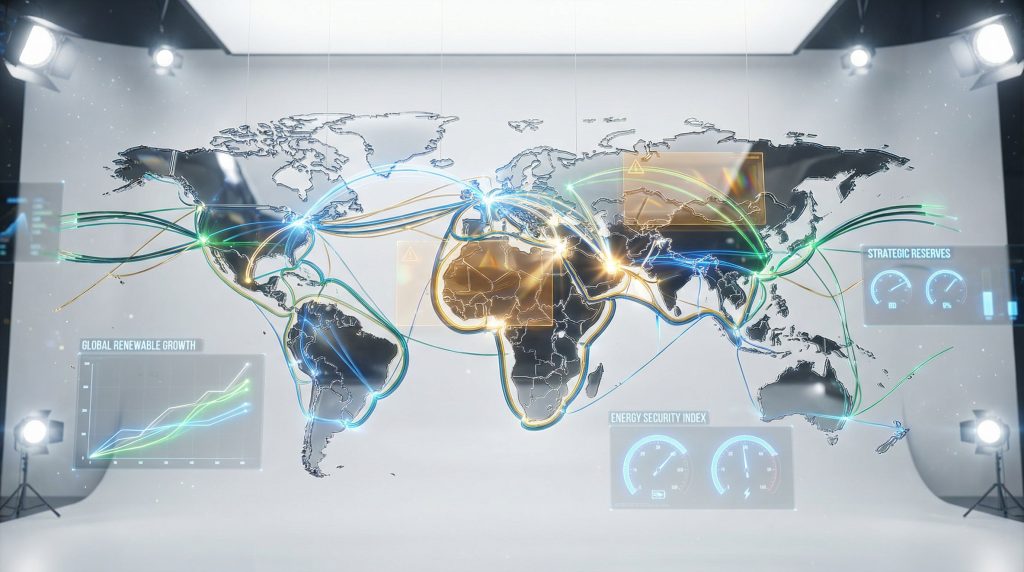
The evolving landscape of international security reveals unprecedented challenges that extend far beyond traditional military concerns. Modern conflicts operate through interconnected systems where energy infrastructure, economic stability, and technological dependencies create cascading vulnerabilities that reshape how nations approach strategic planning. Furthermore, the complex environment of global conflicts and energy security demands sophisticated analytical frameworks that account for multiple risk vectors simultaneously.
Contemporary security paradigms recognize that energy systems represent both critical infrastructure and strategic weapons, fundamentally altering how nations evaluate threats and opportunities. The interconnected nature of global energy markets means that localised conflicts can trigger worldwide economic disruptions within hours, while long-term strategic positioning increasingly depends on energy independence capabilities.
Energy Security Foundations in Multi-Threat Environments
Energy security has transcended simple supply-demand calculations to encompass comprehensive resilience frameworks that evaluate infrastructure vulnerability, supply chain diversification, and strategic autonomy. The International Energy Agency identifies four critical pillars: availability (ensuring adequate supply), accessibility (maintaining affordable pricing), reliability (consistent delivery mechanisms), and acceptability (environmental and social sustainability standards).
Modern assessment methodologies employ real-time monitoring systems that track 24 distinct vulnerability factors including import dependency ratios, reserve adequacy periods, interconnection redundancy levels, and cyber-resilience ratings. The Oxford Institute for Energy Studies developed the Energy Security Risk Index, which provides quantitative measurements of national energy vulnerabilities across multiple threat scenarios.
Critical Components of Contemporary Energy Security:
- Supply Chain Resilience: Capability to maintain energy flows despite multiple simultaneous disruptions
- Infrastructure Protection: Comprehensive safeguarding against physical attacks, cyber intrusions, and natural disasters
- Strategic Reserve Management: Maintaining adequate stockpiles across petroleum, natural gas, and critical minerals
- Diversification Metrics: Reducing dependencies through geographic, technological, and temporal spread
Strategic petroleum reserves now require multi-layered approaches: national reserves (typically 30-90 days consumption coverage), regional hub reserves at major transmission points, and facility-level emergency supplies. The European Union revised protocols mandate 90-day strategic reserves, representing a 50 percent increase from previous requirements, reflecting heightened threat assessment priorities.
Reserve adequacy calculations have become increasingly sophisticated, incorporating probabilistic modelling of multiple disruption scenarios occurring simultaneously. Countries must now plan for compound crisis events where traditional backup systems may themselves become compromised through coordinated attacks or cascading infrastructure failures.
When big ASX news breaks, our subscribers know first
Regional Conflict Impact Assessment on Global Energy Stability
Geographic concentration of energy resources creates structural vulnerabilities that modern conflicts exploit with increasing sophistication. The Middle East contains 48 percent of proven crude oil reserves, while Russia and Central Asian nations control 37 percent of natural gas reserves. Critical minerals essential for renewable energy technology are concentrated in fewer than five countries, creating new dependency vectors.
| Conflict Region | Primary Energy Risk | Global Impact Magnitude | Infrastructure Recovery Time |
|---|---|---|---|
| Eastern Europe | Natural gas supply disruption | High (affects 27% of European supply) | 6-18 months for full restoration |
| Middle East Transit Routes | Oil transportation chokepoints | Critical (21% of petroleum trade) | 2-6 months for alternative routing |
| South China Sea | LNG shipping corridors | Medium-High (30% of maritime trade) | 3-12 months for route diversification |
| North African Pipelines | Gas pipeline infrastructure | Medium (affects 15% of European gas) | 4-8 months for repairs |
The Strait of Hormuz represents the most critical single-point-of-failure in global energy systems, with approximately 21 million barrels per day transiting this chokepoint. In addition, closure scenarios would force alternative routing through extended sea routes, increasing transit time by 45 days and costs by 35-50 percent, while creating capacity bottlenecks that could persist for months.
Recent tensions in Eastern Europe demonstrated how conflicts affect global conflicts and energy security through multiple channels simultaneously. The Australian government's response to fuel security highlighted concerns about regional disruptions affecting supply chains. Beyond direct supply disruptions, these conflicts create risk premiums that increase energy costs globally, alter long-term procurement strategies, and accelerate infrastructure investment in alternative supply routes.
However, the South China Sea dispute affects approximately $5.3 trillion in annual maritime commerce, including substantial LNG shipments critical for Asian energy security. LNG supply chains involve highly specialised infrastructure including liquefaction facilities, specialised vessels costing $200-300 million each, and regasification terminals. Disruption at any point creates recovery periods measured in months due to infrastructure specificity and limited alternative capacity.
Maritime chokepoint vulnerabilities extend beyond military conflicts to include cyber attacks on shipping systems, environmental disasters affecting navigation channels, and infrastructure degradation in politically unstable regions. The 2023-2024 Red Sea disruptions demonstrated how regional conflicts immediately affect global energy pricing, with crude oil experiencing $15-20 per barrel volatility during acute incident periods.
National Policy Restructuring for Energy Vulnerability Mitigation
Nations worldwide are implementing comprehensive energy policy overhauls that prioritise security considerations alongside economic efficiency. These restructuring efforts involve massive capital investments, regulatory framework changes, and strategic planning horizon extensions that fundamentally alter energy sector development patterns.
Strategic reserve expansion represents the most immediate policy response mechanism. The United States Strategic Petroleum Reserve maintains approximately 727 million barrels, with policy discussions targeting expansion to 1 billion barrels. The IEA coordinates International Energy Programme requirements for member nations to maintain minimum 90-day emergency stocks, representing approximately 1.6 billion barrels of combined global reserve capacity.
Policy Implementation Categories:
-
Infrastructure Hardening Programmes
- Underground transmission networks resistant to physical attacks
- Distributed generation systems reducing single-point failures
- Enhanced cybersecurity protocols for energy control systems
- Emergency response capabilities with rapid deployment features
-
Supply Diversification Initiatives
- Multi-sourcing strategies accepting higher costs for security benefits
- LNG terminal expansion creating alternative supply routes
- Renewable energy acceleration reducing import dependencies
- Critical mineral supply chain development
-
Regional Cooperation Frameworks
- Cross-border interconnection projects
- Emergency mutual assistance agreements
- Coordinated strategic reserve management
- Joint infrastructure protection protocols
Germany's energy transformation following 2022 supply disruptions illustrates comprehensive policy restructuring. German energy policy shifted from cost optimisation toward energy security and critical minerals through aggressive diversification: reducing Russian gas dependency from 55 percent to under 8 percent, developing 17 LNG regasification facilities, and scaling renewable capacity to 62 percent of electricity generation by 2026.
Furthermore, India's lithium supply strategy emphasises managed transition strategies that maintain conventional energy capabilities while scaling renewable infrastructure. With 178 GW of renewable capacity installed as of early 2026 (representing 43 percent of total installed capacity), India demonstrates policy frameworks that balance security imperatives with economic development requirements.
Renewable energy deployment acceleration reflects security-driven policy prioritisation: global renewable capacity additions reached 520 GW in 2025, with wind and solar representing 95 percent of new generation capacity. This acceleration occurs despite higher short-term costs because domestic renewable resources cannot be weaponised by foreign adversaries, creating compelling national security arguments for clean energy transitions.
What Challenges Do Countries Face During Energy Transitions?
Countries implementing rapid energy transitions encounter significant obstacles that must be carefully managed. Energy transition challenges in Canada demonstrate the complex balance between maintaining current energy security whilst building future capacity.
The primary challenges include maintaining grid stability during technology transitions, managing stranded asset risks in conventional energy sectors, and coordinating massive infrastructure investments across multiple sectors simultaneously. Additionally, workforce retraining requirements and community acceptance issues create implementation complexities that extend beyond technical considerations.
Economic Consequences of Conflict-Driven Energy Insecurity
Energy price volatility has increased substantially across all major commodities, with crude oil experiencing $40-50 per barrel ranges in 2024-2025 compared to $15-25 ranges in stable periods. This volatility reflects permanent incorporation of conflict risk premiums into energy pricing mechanisms, fundamentally altering industrial production costs, transportation expenses, and consumer energy expenditures.
Economic Impact Analysis Framework:
| Impact Category | Short-term Effects (0-6 months) | Medium-term Implications (6-24 months) | Long-term Structural Changes (2+ years) |
|---|---|---|---|
| Energy Pricing | 20-40% volatility increases | Risk premium institutionalisation | Permanent price level elevation |
| Investment Patterns | Capital flight from unstable regions | Infrastructure investment acceleration | Supply chain geographic redistribution |
| Trade Relationships | Emergency supply route activation | Long-term contract renegotiation | Permanent trade pattern alteration |
| Industrial Competitiveness | Production cost increases | Location decision factor changes | Manufacturing geography reshaping |
Strategic reserve economics involve complex cost-benefit calculations: maintaining 90-day petroleum reserves costs approximately $3-5 billion annually for major developed economies, including storage facilities, security infrastructure, and opportunity costs. However, preventing a 30-day supply disruption preserves approximately $100-200 billion in economic output, demonstrating substantial positive return on investment despite carrying costs.
Energy transition acceleration creates paradoxical economic effects. While conflicts increase short-term energy costs and infrastructure investment requirements, they also generate compelling economic arguments for domestic renewable energy development. For instance, oil price rally analysis shows how market volatility drives investment toward more stable renewable alternatives. Solar and wind installations provide long-term cost stability compared to volatile fossil fuel markets, creating economic incentives that align with security imperatives.
Critical mineral supply chains have become new sources of economic vulnerability as renewable energy deployment accelerates. Battery components, solar panel materials, and wind turbine elements depend on concentrated supply sources that conflicts can disrupt. This creates economic interdependencies that require sophisticated risk management strategies extending across multiple commodity markets simultaneously.
Investment capital allocation patterns reflect permanent shifts toward resilience prioritisation. Private sector investment increasingly incorporates geopolitical risk assessments, supply chain vulnerability analysis, and infrastructure resilience evaluation into project selection criteria, accepting lower returns for enhanced security profiles.
Global Conflicts and Energy Security Transformation Dynamics
Paradoxically, conflicts simultaneously accelerate and impede energy transition processes through competing mechanisms that create complex policy trade-offs. Security imperatives drive rapid renewable energy adoption by creating compelling national security arguments for domestic energy production, while conflicts also disrupt international cooperation essential for technology transfer and supply chain development.
Acceleration Mechanisms:
- Domestic energy security becomes military strategic priority
- Import dependency reduction drives policy urgency
- Critical mineral supply vulnerability recognition
- Technology development acceleration through security funding
Impediment Factors:
- Reduced international cooperation on clean technology sharing
- Supply chain disruptions affecting renewable component availability
- Capital allocation toward immediate security infrastructure needs
- Delayed long-term infrastructure projects in conflict zones
Critical mineral security represents emerging vulnerability vectors as energy systems transition toward renewable technologies. Lithium, cobalt, rare earth elements, and other materials essential for batteries, solar panels, and wind turbines exhibit geographic concentration patterns similar to fossil fuels. Conflicts affecting mineral-rich regions create supply disruptions that propagate through renewable energy supply chains.
"Energy diplomacy increasingly functions as both conflict resolution mechanism and strategic weapon, creating opportunities for cooperation while generating risks of economic coercion through supply manipulation."
Submarine cable infrastructure vulnerability demonstrates new attack vectors targeting energy system control and monitoring capabilities. Approximately 40 percent of energy data transmission and control systems depend on undersea cable networks vulnerable to physical damage through military action or sabotage, creating systemic risks beyond traditional supply disruption scenarios.
Energy Diplomacy and Conflict Resolution Mechanisms
Energy relationships increasingly serve diplomatic functions that extend beyond commercial transactions to encompass security cooperation, regional stability frameworks, and conflict prevention mechanisms. Countries leverage energy partnerships as diplomatic tools, creating both opportunities for peace-building and risks of economic warfare through supply manipulation.
Multilateral energy security initiatives are developing new frameworks for collective security that address modern threat vectors including cyber attacks, climate disruptions, and hybrid warfare targeting energy infrastructure. The International Energy Agency expanded coordination mechanisms beyond traditional oil supply disruptions to encompass natural gas, electricity grid stability, and critical mineral supply chains.
Energy Diplomacy Applications:
- Confidence-building measures through joint infrastructure projects
- Economic incentives for peaceful conflict resolution
- Regional stability frameworks based on energy interdependence
- Crisis communication channels during supply disruptions
Long-term energy agreements increasingly incorporate security provisions, dispute resolution mechanisms, and emergency cooperation protocols that extend beyond commercial terms. These agreements create institutional frameworks for managing energy-related conflicts while maintaining supply stability during political tensions.
Consequently, energy transit infrastructure development requires multilateral cooperation that can serve broader diplomatic purposes. Pipeline projects, transmission interconnections, and LNG terminal development create shared interests that provide foundations for broader political cooperation while generating economic interdependencies that discourage aggressive behaviour.
The next major ASX story will hit our subscribers first
Business and Investment Risk Navigation Strategies
Companies operating in energy-intensive industries must develop sophisticated risk assessment frameworks that integrate geopolitical analysis, supply chain vulnerability mapping, and scenario planning methodologies. Traditional business continuity planning proves inadequate for addressing compound crisis events where multiple risk factors activate simultaneously.
Investment Risk Mitigation Strategies:
| Strategy Category | Implementation Methods | Risk Reduction Benefits | Implementation Complexity |
|---|---|---|---|
| Geographic Diversification | Multi-region sourcing networks | Reduces single-country exposure | High (requires multiple relationships) |
| Technology Portfolio Approach | Mixed renewable/conventional assets | Minimises technology-specific risks | Medium (requires diverse expertise) |
| Infrastructure Resilience | Hardened systems with backup capabilities | Enhances operational continuity | High (significant capital requirements) |
| Strategic Partnership Development | Long-term supply alliances | Shares risks across multiple entities | Medium (requires negotiation capabilities) |
Portfolio diversification strategies must account for correlation effects during crisis periods when traditional risk management assumptions may fail. Energy supply disruptions often coincide with financial market volatility, currency fluctuations, and transportation system breakdowns, requiring integrated risk models that capture these interdependencies.
Supply chain resilience planning involves developing alternative sourcing capabilities that may remain dormant during normal operations but can activate rapidly during disruptions. This approach requires maintaining excess capacity and redundant relationships that increase operating costs but provide insurance against supply interruptions.
Investment strategy adaptation reflects permanent incorporation of geopolitical risk factors into financial decision-making. Asset allocation models increasingly weight political stability, infrastructure security, and regulatory predictability alongside traditional financial metrics when evaluating energy sector investments.
How Do Market Forecasts Account for Geopolitical Risks?
Modern energy market analysis increasingly incorporates complex geopolitical risk assessments. US natural gas forecasts now routinely include conflict scenario modelling alongside traditional supply-demand fundamentals. This reflects recognition that geopolitical events can fundamentally alter market dynamics within days.
Forecasting methodologies now employ multiple scenario frameworks that weight different probability outcomes for various conflict escalation or resolution pathways. These models help investors and policymakers understand potential price ranges under different geopolitical conditions, enabling more robust decision-making processes.
Future Scenario Planning for Energy System Evolution
Energy security planning requires sophisticated scenario modelling that accounts for multiple uncertainty vectors including conflict escalation patterns, technology development timelines, climate impact acceleration, and economic disruption possibilities. These scenarios inform infrastructure investment decisions, policy framework development, and international cooperation priorities.
Primary Scenario Frameworks:
Diplomatic Resolution Pathway (Probability: 35-40%)
- Successful conflict de-escalation enables restored energy cooperation
- Reduced security premiums allow renewed focus on efficiency optimisation
- Accelerated international collaboration on clean energy technology development
- Normalised investment patterns return to pre-conflict risk assessments
Managed Tensions Environment (Probability: 45-50%)
- Ongoing but contained conflicts require permanent adaptation to elevated security costs
- Alternative supply routes and redundant infrastructure become standard features
- Energy systems develop increased resilience capabilities at higher operational costs
- Regional energy blocs emerge with reduced global integration
Escalated Disruption Scenario (Probability: 10-15%)
- Multiple simultaneous conflicts severely disrupt global energy supply chains
- Emergency rationing and demand destruction become temporary stabilisation mechanisms
- Rapid acceleration of domestic energy production capabilities across all technologies
- Fundamental reorganisation of global energy trade patterns and relationships
Long-term structural implications suggest energy security considerations will remain elevated even after current conflicts resolve. Nations have recognised strategic importance of energy independence and supply chain resilience, creating permanent changes in energy system design priorities that emphasise security alongside efficiency and sustainability.
Infrastructure investment patterns reflect these changed priorities: new energy projects increasingly incorporate redundancy features, hardening specifications, and emergency response capabilities that were previously considered optional. These features increase construction costs by 15-25 percent but provide insurance against multiple disruption scenarios.
Technology development acceleration occurs across all energy sources, driven by security imperatives that provide compelling arguments for research and development investment. Governments increasingly fund energy technology development as national security spending rather than environmental or economic programmes, changing funding priorities and development timelines.
What Role Do International Organisations Play in Energy Security?
International organisations are expanding their mandates to address complex security challenges. The IEA's analysis of Russia's war impact demonstrates how multilateral institutions adapt to provide coordination during major supply disruptions. These organisations increasingly serve as platforms for emergency coordination, information sharing, and collective response mechanisms.
Their evolving role includes developing early warning systems for supply disruptions, coordinating strategic reserve releases, and facilitating alternative supply arrangements during crisis periods. This institutional evolution reflects recognition that energy security increasingly requires multilateral solutions to complex challenges.
Building Resilient Energy Architectures
The convergence of global conflicts and energy security has catalysed fundamental transformations in how nations, corporations, and investors approach energy system design. While conflicts create immediate challenges requiring costly adaptations, they also accelerate innovations and policy developments that may ultimately produce more resilient and sustainable energy frameworks.
Success in this transformed environment demands sophisticated risk management capabilities, strategic diversification across multiple dimensions, and long-term planning perspectives that integrate security imperatives with economic efficiency and environmental sustainability goals. Organisations that develop comprehensive resilience strategies while maintaining operational flexibility will be best positioned to navigate continuing uncertainties.
Energy system evolution increasingly reflects recognition that security, sustainability, and economic efficiency must be simultaneously optimised rather than treated as competing objectives. This integration requires new analytical frameworks, investment approaches, and policy mechanisms designed for an environment where energy security represents both immediate operational necessity and long-term strategic foundation.
The intersection of global conflicts and energy security continues reshaping international relations, economic development patterns, and technological innovation priorities. Understanding these dynamics becomes essential for anyone seeking to navigate successfully in an increasingly complex and interconnected global energy environment.
This analysis represents assessment of publicly available information and should not be considered investment advice. Energy security dynamics involve complex interactions between political, economic, and technical factors that may evolve rapidly based on changing circumstances. Readers should consult qualified professionals for specific investment or policy decisions.
Looking for High-Impact Mining Investment Opportunities?
Discovery Alert's proprietary Discovery IQ model delivers real-time notifications on significant ASX mineral discoveries, transforming complex geological data into actionable investment insights. Explore Discovery Alert's comprehensive discoveries page to understand how major mineral finds can generate substantial market returns, then begin your 14-day free trial to position yourself ahead of the market before the next breakthrough announcement.