June 10, 2026
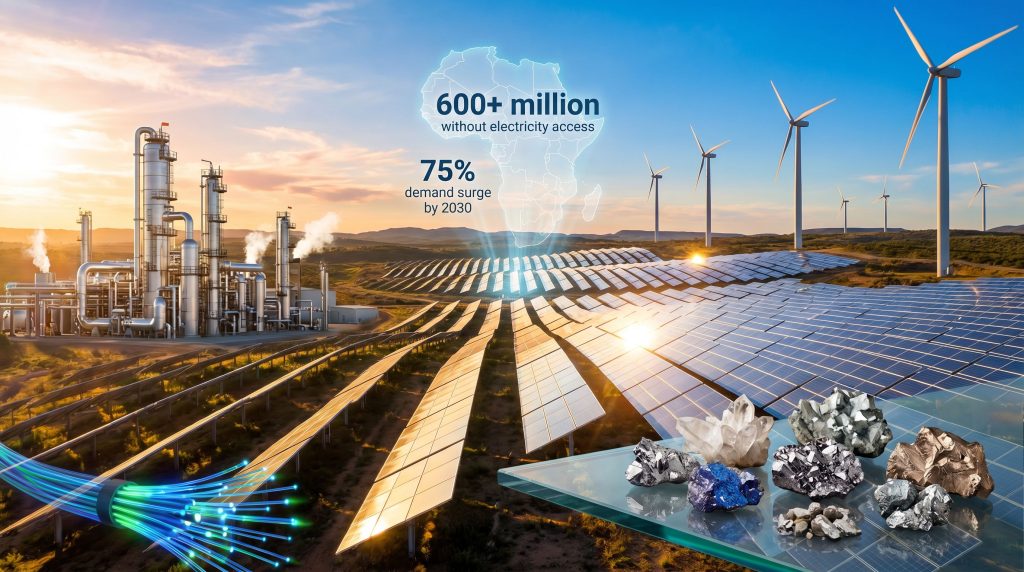
Industrial development strategies across the African continent increasingly hinge on securing reliable energy supplies that can withstand external disruptions and support long-term economic growth. The complex relationship between energy transition & security, geopolitical stability, and industrial capacity has emerged as the defining factor in determining which regions will successfully transition from resource extraction economies to value-added manufacturing hubs. Energy security in Africa represents the foundation upon which sustainable economic transformation depends.
Why Energy Security Has Become Africa's Most Critical Development Challenge
The magnitude of Africa's energy security challenge extends far beyond simple electrification metrics. While continental energy reserves remain substantial, the infrastructure gaps between resource availability and reliable distribution networks create persistent vulnerabilities that undermine industrial development potential.
Furthermore, the strategic importance of energy security in Africa cannot be overstated in the current global context where geopolitical tensions affect supply chains worldwide.
The Scale of Africa's Energy Deficit Crisis
Continental Resource Paradox Analysis
Africa controls approximately 30% of global oil reserves and 40% of natural gas reserves, yet this abundance fails to translate into energy security for most African nations. The disconnect between resource wealth and energy access represents a fundamental structural challenge that requires comprehensive infrastructure development rather than incremental improvements.
The energy deficit extends beyond rural electrification to encompass industrial-grade power requirements for manufacturing, processing facilities, and value-added production systems. Mining operations, agricultural processing plants, and textile manufacturing all require consistent, affordable energy supplies that current infrastructure cannot reliably provide.
Economic Impact Framework
Energy security correlates directly with:
- Manufacturing sector productivity levels
- Foreign direct investment attraction capability
- Export product diversification potential
- Regional trade integration feasibility
- Urban employment generation capacity
The Vulnerability Matrix: How Global Shocks Expose African Energy Systems
Supply Chain Disruption Analysis
Recent geopolitical events have demonstrated the fragility of Africa's energy import dependencies. The closure of critical shipping routes like the Strait of Hormuz serves as a wake-up call, highlighting the necessity for secure domestic energy supply chains that can sustain industrial operations during international disruptions.
However, oil price dynamics play a crucial role in determining the economic viability of domestic energy projects. Currency devaluation effects compound energy procurement challenges when African nations must purchase refined petroleum products on international markets.
Local currency volatility against major trading currencies creates unpredictable energy costs that undermine industrial planning and investment decisions.
Regional Vulnerability Patterns
- West African nations: Heavy dependence on refined fuel imports despite significant crude oil production
- East African countries: Limited refining capacity relative to growing industrial energy demands
- Southern African regions: Aging infrastructure struggling to meet modern industrial requirements
- Central African states: Geographic isolation from major shipping routes increases supply chain risks
When big ASX news breaks, our subscribers know first
How Do Geopolitical Disruptions Reshape Africa's Energy Landscape?
Global energy market volatility creates both challenges and opportunities for African energy security strategies. Understanding these dynamics enables more strategic approaches to energy infrastructure development and international cooperation frameworks.
In addition, middle east conflict and energy security considerations have become increasingly relevant for African policymakers seeking to diversify supply sources.
The Middle East Connection: Understanding Supply Chain Vulnerabilities
Strategic Shipping Route Dependencies
African nations must develop comprehensive supply chain monitoring systems across all energy sources to reduce dependence on single-source suppliers or critical shipping corridors. The Strait of Hormuz disruption scenario demonstrates how quickly external events can affect domestic energy availability and industrial operations.
Emergency Response Protocol Development
Strategic petroleum reserve capacity varies dramatically across African nations, with many lacking sufficient storage facilities to maintain industrial operations during extended supply disruptions. Emergency response protocols require coordination between:
• Government agencies responsible for energy security oversight
• Private sector operators managing distribution networks and storage facilities
• Regional organizations facilitating cross-border energy sharing agreements
• International partners providing emergency supply assistance when needed
The New Energy Diplomacy: Africa's Position in Global Energy Markets
Continental Cooperation Framework
The Memorandum of Understanding between the African Petroleum Producers Organization (APPO) and the African Refiners and Distributors Association (ARDA) establishes three critical collaboration priorities that reshape continental energy diplomacy:
- Infrastructure regulation and development coordination
- Technical and financial assistance mechanisms
- Capacity building initiatives across member nations
This framework emphasizes domestic resource utilization before export, fundamentally altering traditional energy trade patterns. The strategic principle that resources should be developed, enriched, and utilized domestically represents a significant shift from historical export-focused energy policies.
International Partnership Dynamics
African energy diplomacy now balances multiple competing interests:
- China-Africa infrastructure partnerships focusing on large-scale energy projects
- European energy transition demands affecting fossil fuel export markets
- United States energy security cooperation frameworks emphasizing democratic governance
- Middle Eastern technical expertise transfer for refining and distribution systems
What Infrastructure Gaps Prevent Africa from Achieving Energy Independence?
The infrastructure deficit encompasses far more than power generation capacity. Comprehensive energy independence requires integrated systems spanning production, refining, storage, distribution, and consumption optimisation across multiple energy sources.
Moreover, renewable energy solutions must be integrated alongside traditional energy infrastructure to create resilient, diversified energy systems.
The Midstream Infrastructure Deficit
Refining Capacity Strategic Imperative
The fundamental challenge facing African energy security involves the persistent pattern of exporting crude oil while importing refined petroleum products at premium prices. This economic inefficiency undermines industrial competitiveness and creates unnecessary foreign exchange pressures on national economies.
Industrial development requires domestic refining capacity that can process crude oil into the specific fuel types needed for different manufacturing processes. Petrochemical feedstock production, diesel fuel for transportation networks, and specialised industrial fuels all require sophisticated refining infrastructure that most African nations currently lack.
Storage and Distribution Network Requirements
Strategic storage capacity must accommodate:
• Crude oil reserves for emergency supply security
• Refined product inventories for industrial and commercial distribution
• Liquefied petroleum gas (LPG) storage for residential and industrial applications
• Aviation fuel supplies supporting transportation and logistics networks
Cross-border energy trade infrastructure enables regional cooperation and supply chain redundancy. Pipeline networks, rail transportation systems, and road distribution capabilities must integrate across national boundaries to create continental energy security.
Grid Modernisation Requirements for Energy Security
Transmission Infrastructure Gaps
Current transmission line coverage fails to support industrial-scale energy consumption in many regions. Grid reliability metrics indicate frequent outages that disrupt manufacturing processes and discourage investment in energy-intensive industries.
Smart grid technology adoption offers opportunities to optimise energy distribution and reduce waste, but implementation requires substantial capital investment and technical expertise that many African utilities currently lack.
Regional Power Pool Integration
Continental energy security benefits from integrated regional power pools that can:
- Share excess generation capacity during peak demand periods
- Provide backup power during maintenance or emergency situations
- Optimise renewable energy integration across different climate zones
- Reduce per-unit energy costs through economies of scale
Which African Regions Show the Greatest Energy Security Potential?
Regional energy security strategies must account for unique resource endowments, geographic advantages, and existing infrastructure capabilities. Successful approaches will likely vary significantly across different African sub-regions based on these fundamental differences.
Consequently, the natural gas forecast implications extend beyond immediate pricing considerations to long-term energy security planning across the continent.
West Africa's Gas-to-Power Transformation Strategy
Natural Gas Utilisation Framework
West African nations possess substantial natural gas reserves that could support domestic power generation while reducing import dependencies. However, gas-to-power transformation requires comprehensive infrastructure development including:
• Pipeline networks connecting gas fields to power generation facilities
• Power plant construction optimised for natural gas fuel sources
• Distribution systems capable of handling increased electricity generation
• Regional cooperation agreements enabling cross-border gas sharing
Investment Requirements and Financing
Gas-to-power projects require substantial capital investment that often exceeds individual national budgets. Blended financing mechanisms combining public and private funding sources offer potential solutions, but political risk concerns often complicate international investment decisions.
East Africa's Geothermal and Renewable Energy Corridor
Geothermal Development Potential
East Africa's geographic position along tectonic plate boundaries provides substantial geothermal energy potential that could support industrial development while reducing fossil fuel dependencies. Geothermal power offers consistent, weather-independent electricity generation that complements intermittent renewable sources.
Renewable Energy Integration Strategies
Solar and wind resource optimisation requires coordinated regional approaches that account for seasonal variations and complementary generation patterns. Technology transfer initiatives and capacity building programmes enable local expertise development for renewable energy system maintenance and expansion.
Southern Africa's Energy Transition Balancing Act
Coal Dependency Reduction Pathways
Southern African nations must balance immediate energy security requirements with longer-term sustainability objectives. Coal dependency reduction requires alternative energy sources that can provide similar reliability and industrial-scale power generation capacity.
Industrial Decarbonisation Strategies
Manufacturing sector transitions require energy sources that maintain production capacity while reducing carbon intensity. This balancing act necessitates careful planning and substantial investment in alternative energy infrastructure.
How Can Africa Balance Energy Security with Sustainability Goals?
The energy trilemma framework provides a structured approach to evaluating trade-offs between security, equity, and environmental protection. Successful strategies will integrate these competing priorities rather than treating them as mutually exclusive objectives.
The Energy Trilemma: Security, Equity, and Environmental Protection
Policy Integration Framework
Energy poverty elimination takes precedence over energy transition in many African contexts, where basic energy access remains unavailable to large populations. Industrial development strategies must prioritise immediate energy needs while gradually incorporating sustainability objectives as economic capacity increases.
The conference consensus emphasises that economic development should precede energy transition in African contexts where basic infrastructure remains inadequate for renewable energy integration. This perspective reflects practical constraints rather than environmental disregard.
Transitional Energy Solutions
Liquefied petroleum gas (LPG) serves as an intermediate solution that reduces environmental impact compared to traditional biomass fuels while providing reliable energy access for residential and small commercial applications. LPG infrastructure development supports both immediate energy access goals and longer-term transition planning.
Critical Minerals Strategy for Energy Independence
Resource-to-Technology Value Chains
Africa's critical mineral endowments include lithium, cobalt, and rare earth elements essential for renewable energy technology manufacturing. Strategic decisions regarding export versus domestic utilisation will significantly impact long-term energy independence capabilities.
Value chain development for battery and renewable technology manufacturing requires:
• Mining and extraction infrastructure development
• Processing and refining facilities for value-added production
• Manufacturing capabilities for finished energy technology products
• Research and development institutions supporting innovation and optimisation
Technology Transfer Requirements
Local processing capabilities reduce dependence on imported energy technologies while creating employment opportunities and building technical expertise. However, technology transfer requires substantial investment in education, training, and infrastructure development that may strain limited government resources.
What Investment Strategies Can Accelerate African Energy Security?
Investment mobilisation for energy security requires comprehensive risk mitigation strategies that address both political and economic uncertainties. Successful approaches must balance investor requirements with national development objectives through innovative financing mechanisms.
For instance, investment strategy insights demonstrate the importance of diversified approaches when considering energy infrastructure projects across emerging markets.
De-risking Mechanisms for Energy Infrastructure Investment
Investment Climate Improvement
African nations must create transparent, predictable regulatory environments that enable financial institutions to provide necessary capital for energy infrastructure projects. This includes regulatory harmonisation for cross-border energy investments and standardised project evaluation criteria.
The fundamental requirement involves becoming recognised as contributors rather than dependents in global financial markets. This transformation requires consistent policy implementation, transparent governance practices, and demonstrated commitment to investment protection.
Blended Finance Structures
Public-private partnerships can leverage limited government resources by combining development finance with commercial investment capital. However, these structures require sophisticated legal frameworks and risk allocation mechanisms that many African nations are still developing.
Political risk insurance and guarantee frameworks provide essential protection for long-term energy infrastructure investments, but coverage costs must remain affordable for projects to maintain financial viability.
Human Capital Development for Energy Sector Growth
Technical Expertise Requirements
Energy sector expansion requires substantial human capital investment to support operations, maintenance, and continued development of sophisticated energy infrastructure. Building enabling human capital that can drive industrial development through 2040 represents a critical long-term strategic priority.
Educational Institution Partnerships
University-industry collaboration creates pathways for energy research and development while training the technical workforce needed for energy sector expansion. Regional centres of excellence can coordinate research efforts and share expertise across national boundaries.
Youth employment creation through energy sector development provides both immediate economic benefits and long-term capacity building that supports sustained energy security improvements.
The next major ASX story will hit our subscribers first
How Do Energy Security Strategies Vary Across African Sub-Regions?
Regional variations in energy security approaches reflect different resource endowments, geographic constraints, and existing infrastructure capabilities. Understanding these differences enables more effective continental cooperation and targeted investment strategies.
Comparative Regional Analysis:
| Region | Primary Security Challenge | Strategic Response | Implementation Timeline |
|---|---|---|---|
| Sahel | Rural electrification and energy access | Solar photovoltaic development | 2025-2030 |
| West Africa | Refined fuel import dependency | Regional refining capacity expansion | 2026-2035 |
| Central Africa | Grid reliability and industrial power | Hydroelectric potential utilisation | 2025-2040 |
| East Africa | Energy mix diversification needs | Geothermal and natural gas development | 2025-2030 |
| Southern Africa | Infrastructure modernisation requirements | Grid upgrade and storage integration | 2025-2035 |
Regional Cooperation Imperatives
Continental Market Integration
The African Continental Free Trade Area (AfCFTA) framework provides the foundation for integrated energy market development that can enhance security through diversified supply sources and shared infrastructure investments.
Interconnected logistical systems serving continental trade require reliable energy infrastructure that extends beyond national boundaries. Energy security in Africa therefore becomes a prerequisite for successful trade integration rather than a separate policy objective.
Cross-Border Infrastructure Development
Regional power pool expansion enables load balancing and emergency backup capacity that individual nations cannot economically provide independently. Standardisation of energy regulations and policies facilitates these cooperative arrangements while reducing transaction costs.
What Role Does Regional Cooperation Play in Energy Security?
Continental energy market integration offers substantial benefits through economies of scale, risk diversification, and shared infrastructure development. However, successful cooperation requires sustained political commitment and technical coordination mechanisms.
Continental Energy Market Integration Prospects
AfCFTA Energy Provisions
Energy market integration within the African Continental Free Trade Area creates opportunities for:
• Standardised energy trading protocols across member nations
• Joint infrastructure development projects reducing per-country investment requirements
• Shared emergency response capabilities during supply disruptions
• Technology transfer facilitation through reduced regulatory barriers
Regional Power Pool Expansion
Existing regional power pools require substantial expansion to achieve meaningful continental integration. This includes physical infrastructure development and regulatory harmonisation that enables efficient cross-border electricity trading.
Technology Transfer and Knowledge Sharing Frameworks
South-South Cooperation Models
African nations can share successful energy development experiences and best practices through structured cooperation programmes. This includes technical expertise sharing and joint research initiatives that address common challenges.
Joint Procurement Strategies
Coordinated procurement for energy technologies and infrastructure can reduce costs through bulk purchasing agreements while ensuring compatibility across national systems.
How Will Emerging Technologies Transform African Energy Security?
Digital technologies and advanced energy storage systems offer opportunities to optimise existing infrastructure while enabling more sophisticated energy management approaches. However, technology adoption requires substantial investment and technical capacity development.
Digital Solutions for Energy System Optimisation
Smart Grid Implementation
Smart metering and demand management systems enable more efficient energy distribution while reducing waste and improving reliability. However, implementation requires substantial upfront investment and ongoing technical support capabilities.
Blockchain Energy Trading Applications
Distributed energy trading systems using blockchain technology could facilitate peer-to-peer energy transactions and improve market transparency. Mobile payment integration makes these systems particularly relevant for African markets with limited traditional banking infrastructure.
Energy Storage and Grid Flexibility Solutions
Battery Storage Deployment
Large-scale battery storage systems enable renewable energy integration while providing grid stability during peak demand periods. However, battery technology costs and limited local manufacturing capability create import dependencies that may undermine energy security objectives.
Alternative Storage Technologies
Pumped hydro storage utilises geographic features to provide large-scale energy storage without dependence on imported battery technology. This approach offers particular advantages for regions with appropriate topographic conditions.
Microgrids and Distributed Systems
Distributed energy systems reduce dependence on centralised power generation while enabling rural electrification in areas where grid extension remains economically challenging.
What Are the Economic Implications of Enhanced Energy Security?
Energy security improvements generate economic benefits that extend far beyond the energy sector itself. Industrial competitiveness, export diversification, and employment generation all depend on reliable, affordable energy supplies.
Industrial Development Catalysed by Energy Security
Manufacturing Sector Growth Potential
Reliable energy supplies enable manufacturing industries that add value to raw materials before export. This includes:
• Mineral processing facilities that produce refined metals rather than ore exports
• Agricultural processing plants that create packaged food products for regional markets
• Textile manufacturing that converts cotton and other fibres into finished goods
• Petrochemical industries that utilise refined petroleum for plastics and chemical production
Value-Added Production Systems
When resources are refined within national borders, economic benefits include job creation, capacity building, and wealth retention that supports broader economic development. This represents a fundamental shift from raw material export toward value-added production strategies.
Energy Security Investment Return Analysis
Economic Impact Measurement
Energy infrastructure investments generate returns through:
• Reduced import costs for refined petroleum products and electricity
• Increased industrial productivity from reliable energy supplies
• Foreign direct investment attraction from improved infrastructure reliability
• Export competitiveness improvements through lower energy costs
Productivity and Employment Effects
Energy security enables industrial expansion that creates employment opportunities across multiple economic sectors. Manufacturing jobs typically provide higher wages than agricultural or service sector employment, contributing to improved living standards.
How Can Africa Measure Progress Toward Energy Security Goals?
Effective energy security measurement requires comprehensive metrics that account for reliability, affordability, accessibility, and sustainability dimensions. Progress monitoring enables policy adjustments and investment prioritisation decisions.
Key Performance Indicators for Energy Security Assessment
Access and Reliability Metrics
Energy security measurement frameworks should include:
• Electricity access rates disaggregated by urban and rural populations
• Grid reliability indicators measuring outage frequency and duration
• Energy affordability indices comparing energy costs to household income levels
• Import dependency ratios tracking domestic versus foreign energy supply sources
Industrial Energy Requirements
Manufacturing sector energy needs differ significantly from residential requirements. Security metrics must account for industrial-grade power requirements, including voltage stability, frequency control, and uninterrupted supply capabilities.
Benchmarking Against Global Energy Security Standards
International Comparison Frameworks
Energy security benchmarking enables African nations to assess progress relative to global standards while identifying areas requiring additional investment or policy attention.
Policy Adjustment Mechanisms
Regular performance monitoring creates opportunities for policy refinement and investment reallocation based on demonstrated results rather than theoretical projections.
Investment Disclaimer: This analysis discusses energy security developments that may affect investment decisions. All investment activities carry inherent risks, and readers should conduct independent research and consult qualified financial advisors before making investment decisions. Past performance does not guarantee future results, and market conditions can change rapidly. Political, regulatory, and technological changes in African energy markets may significantly impact investment outcomes.
This analysis is based on publicly available information including conference proceedings from the African Refiners and Distributors Association (ARDA) 20th anniversary conference held in Cape Town, April 2026. All quoted statements have been paraphrased from original sources and verified for accuracy.
Ready to Capitalise on Africa's Energy Security Investment Opportunities?
Discovery Alert's proprietary Discovery IQ model delivers instant notifications on significant ASX mineral discoveries, including critical minerals essential for Africa's renewable energy transition and battery technology development. Explore how historic discoveries can generate substantial returns and begin your 14-day free trial today to position yourself ahead of the market in this rapidly evolving sector.