
May 15, 2026
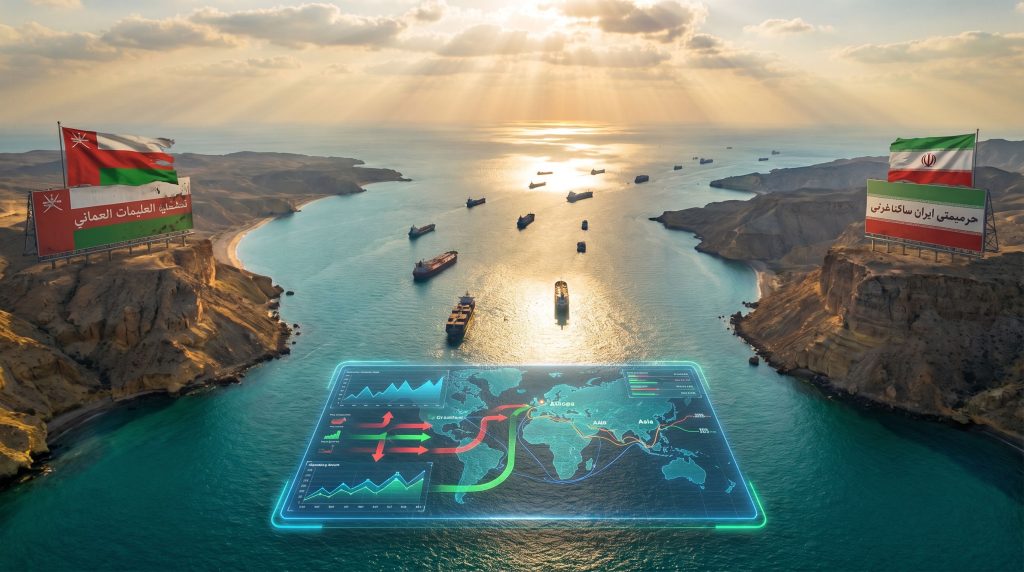
Contemporary energy security challenges require sophisticated risk management frameworks that balance immediate supply needs against long-term resilience objectives. Strait of Hormuz disruptions represent the most significant chokepoint vulnerability facing global energy markets, with cascading effects that extend far beyond petroleum pricing into industrial supply chains, regional economic stability, and international trade relationships.
Market participants demonstrate substantial uncertainty regarding disruption resolution timelines and long-term probability assessments. Furthermore, the complexity of modern energy infrastructure has created dependencies that amplify localized disruptions into global systemic risks, reshaping fundamental assumptions about supply chain resilience.
Understanding the Strategic Chokepoint Crisis
The Strait of Hormuz serves as the world's most critical energy transit corridor, creating a singular point of vulnerability for global commodity flows. This narrow waterway, spanning approximately 21 miles at its narrowest point, facilitates the passage of roughly one-fifth of global petroleum liquids and significant volumes of liquefied natural gas.
Recent industry surveys reveal substantial uncertainty regarding Strait of Hormuz disruptions recovery prospects. According to Federal Reserve Bank of Dallas Energy Survey data from Q1 2026, based on responses from 120 oil and gas firms, executive expectations vary dramatically. Only 20 percent of respondents anticipate normalization of shipping conditions by May 2026, while the largest cohort representing 39 percent expects recovery to extend until August 2026.
What Makes the Strait of Hormuz Critical to Global Energy Markets?
The strait's strategic importance stems from its role as the primary export route for Persian Gulf producers, including Saudi Arabia, Iran, Iraq, Kuwait, and the United Arab Emirates. These nations collectively represent approximately 40 percent of global oil exports and hold roughly 60 percent of proven petroleum reserves.
However, the geographical constraints intensify vulnerability. The shipping channel requires vessels to navigate through Iranian and Omani territorial waters, with the deepwater channel measuring only two miles wide in each direction. This configuration means that relatively modest military action could effectively halt maritime traffic, forcing lengthy rerouting through alternative corridors.
Analysis of oil price rally analysis demonstrates how quickly routine commercial shipping transforms into a geopolitical chess piece. For instance, Saudi exploration licenses become strategically crucial during such disruptions, highlighting the interconnected nature of regional energy security.
Current Disruption Timeline and Escalation Patterns
Industry analysis reveals concerning patterns regarding future disruption probability. The Dallas Fed survey indicates that 48 percent of energy executives characterise future disruptions as "very likely" within the next five years, with an additional 38 percent classifying such disruptions as "somewhat likely".
These expectations reflect learning from previous tension periods, including the 2011-2012 Iranian nuclear programme sanctions and the 2019 tanker attacks. Each incident demonstrated how OPEC market influence shapes global energy security considerations beyond simple supply-demand calculations.
Immediate Supply Chain Vulnerabilities Exposed
Current disruptions expose critical weaknesses in global energy logistics that extend beyond simple supply volume calculations. The industry expects persistent elevation of shipping costs from the Persian Gulf even after normal flows resume, with the most commonly cited estimate placing post-conflict transportation premiums between $2 and $4 per barrel.
The vulnerability extends to timing and coordination mechanisms. Modern energy supply chains operate on just-in-time principles with minimal inventory buffers. Consequently, even temporary disruptions create immediate shortages in consuming regions, as industrial facilities typically maintain only 30-90 days of feedstock inventory.
When big ASX news breaks, our subscribers know first
What Are the Cascading Economic Impacts Beyond Oil?
Regional economies face differentiated exposure based on their import dependencies and industrial structures. European nations with limited domestic energy resources confront immediate challenges in maintaining industrial production. Meanwhile, Asian manufacturing hubs must navigate input shortages that threaten export competitiveness.
Multi-Commodity Supply Shock Analysis
LNG and Natural Gas Distribution Networks Under Stress
Qatar's position as the world's largest LNG exporter creates concentrated risk for global natural gas markets. The nation exports approximately 80 million tons per year of LNG, representing roughly 20 percent of global trade, with the majority transiting through the strait.
European utilities have increased their dependence on Qatari supplies following reduced Russian pipeline deliveries. This makes alternative sourcing critical during disruptions, particularly given the technical constraints of LNG shipping.
Industrial Raw Materials at Risk: Fertilizers, Methanol, and Aluminum
Persian Gulf producers dominate several industrial commodity markets beyond energy. Saudi Arabia and Iran represent major exporters of ammonia and urea fertilizers, while Qatar and Iran produce significant methanol volumes used in chemical manufacturing.
Fertilizer markets face particular vulnerability given the seasonal nature of agricultural demand. Spring planting seasons in the Northern Hemisphere create concentrated demand periods when supply disruptions have amplified impact on food production costs.
Specialized Commodity Disruptions: Helium and Graphite Supply Chains
Qatar produces approximately 25 percent of global helium supply as a byproduct of natural gas processing. Medical imaging, semiconductor manufacturing, and scientific research applications face immediate shortages when Gulf helium exports cease.
Additionally, innovations in battery recycling breakthrough technologies become increasingly important as supply chain vulnerabilities affect critical material availability for energy storage systems.
Regional Economic Vulnerability Assessment
European Energy Security and Strategic Reserve Depletion
European Union member states maintain strategic petroleum reserves equivalent to 90 days of net imports, as required by International Energy Agency agreements. However, these reserves provide limited protection during extended disruptions, particularly when coupled with existing constraints on Russian energy imports.
Germany and Italy face particular vulnerability given their industrial energy intensity and limited domestic production capacity. Furthermore, the European gas storage system provides additional complexity during disruptions affecting summer refill periods.
Asian Manufacturing Hub Exposure to Input Shortages
South Korea, Japan, and Taiwan demonstrate concentrated vulnerability to Gulf energy disruptions given their import dependence and industrial structures. These economies import 80-95 percent of their petroleum requirements while hosting energy-intensive industries including petrochemicals, steel, and semiconductor manufacturing.
China's energy import profile creates different but significant exposure. While the nation maintains substantial domestic coal production and growing renewable capacity, petroleum imports represent approximately 70 percent of consumption.
Developing Economy Debt Stress Under Commodity Price Inflation
Emerging market economies face compound stress during energy price spikes, as commodity import costs increase whilst export revenues may decline due to global economic slowing. Countries with substantial external debt denominated in foreign currencies experience particular difficulty.
Sub-Saharan African nations demonstrate this vulnerability pattern, importing refined petroleum products while exporting agricultural commodities. Energy price increases create immediate fiscal pressure through fuel subsidies and transportation costs.
How Are Global Shipping Networks Adapting to Extended Closures?
Maritime transportation systems face fundamental restructuring as traditional routing assumptions prove vulnerable to geopolitical disruption. Shipping companies must balance immediate operational necessities against long-term strategic positioning. Moreover, the adaptation process reveals both the resilience and limitations of global maritime networks.
Alternative Route Economics
Cape of Good Hope Routing: Cost and Time Implications
Vessels avoiding the strait must navigate around the southern tip of Africa, adding approximately 6,600 nautical miles compared to Suez Canal routing. This detour increases voyage time by 15-20 days depending on vessel speed and weather conditions.
The additional voyage time creates multiple cost layers beyond fuel consumption. Daily charter rates for large crude carriers range from $15,000 to $75,000 depending on market conditions. Therefore, extended voyages impose substantial direct costs on operators.
Fuel consumption increases represent another significant cost component. A typical Very Large Crude Carrier (VLCC) consumes 80-100 tons of marine fuel daily, with extended routing adding approximately 1,200-1,500 tons of fuel consumption per voyage.
Insurance Market Response and Risk Premium Calculations
Marine insurance markets distinguish between commercial risks and war risks, with the latter covering losses due to hostilities, terrorism, and political violence. Tensions typically trigger war risk declarations, requiring vessel operators to purchase additional coverage at premium rates that can exceed $1 million annually per vessel.
Lloyd's of London and other major marine insurers maintain Joint War Committee assessments that designate high-risk areas requiring additional insurance coverage. These designations immediately increase operational costs and can restrict vessel availability.
Port Capacity Constraints in Alternative Corridors
Redirected shipping volumes create congestion at alternative ports not designed to handle surge capacity. Singapore, the world's largest bunkering port, faces increased demand for fuel supplies as vessels undertake longer voyages.
Rotterdam, Europe's largest petroleum port, demonstrates the constraints facing alternative routing. The facility can handle approximately 550 million tons of cargo annually, but surge capacity is limited by berth availability, storage tank capacity, and inland transportation links.
What Strategic Response Options Exist for Energy Importers?
Energy importing nations possess various policy tools and strategic mechanisms to manage supply disruptions, ranging from immediate tactical responses to long-term structural adaptations. Implementation success varies significantly based on economic structures and existing policy frameworks.
Short-Term Crisis Management Frameworks
Strategic Petroleum Reserve Deployment Strategies
The United States maintains Strategic Petroleum Reserve (SPR) facilities with approximately 650-700 million barrels of crude oil storage capacity. Release mechanisms allow for emergency drawdowns of up to 4.4 million barrels daily, providing substantial short-term supply augmentation.
International Energy Agency (IEA) coordination mechanisms enable synchronised reserve releases across member countries. The collective strategic reserves of IEA members exceed 1.5 billion barrels, though actual deployment requires consensus decision-making and coordination.
Demand Rationing and Industrial Priority Systems
Emergency demand management protocols enable governments to reduce consumption during severe supply constraints. Industrial rationing systems typically prioritise essential services including medical facilities, food production, and transportation infrastructure.
Fuel allocation systems require sophisticated administrative mechanisms and enforcement capabilities. Successful programmes combine price controls, quantity restrictions, and alternative fuel incentives to manage demand whilst maintaining economic functionality.
Emergency Bilateral Supply Agreements
Pre-negotiated supply agreements with alternative producers enable rapid activation during disruptions. These arrangements typically specify volume commitments, pricing mechanisms, and delivery terms that take effect when normal supply sources become unavailable.
The effectiveness of bilateral agreements depends on global supply conditions and alternative producer capacity. During widespread disruptions affecting multiple importers simultaneously, alternative suppliers may face capacity constraints.
Medium-Term Supply Diversification Models
Alternative Supplier Development and Contract Restructuring
Supply diversification requires developing relationships with producers outside traditional source regions whilst building infrastructure to accommodate different crude grades and delivery patterns. U.S. shale producers have emerged as significant alternative suppliers.
According to Dallas Fed survey data, energy executives anticipate modest U.S. production gains in response to current disruptions, with the most common outlook for 2026 representing production increases of up to 250,000 barrels per day.
Infrastructure Investment for Supply Route Redundancy
Pipeline development projects enable alternative routing options that bypass maritime chokepoints, though implementation requires years of planning, construction, and international coordination. Existing projects including various Central Asian corridors demonstrate potential for overland energy transportation networks.
Port and terminal infrastructure investments enhance receiving capacity for alternative suppliers whilst providing operational flexibility during disruptions. LNG regasification terminals, petroleum product storage facilities, and specialised berths all contribute to supply chain resilience.
How Might Different Scenario Outcomes Affect Market Recovery?
Market recovery patterns depend fundamentally on disruption duration and the extent of infrastructure damage or political accommodation reached between conflicting parties. Historical precedent suggests that brief disruptions create temporary price spikes followed by rapid normalisation.
Industry expectations reveal substantial uncertainty regarding recovery timelines and mechanisms. Survey evidence indicates that roughly two-thirds of energy executives expect at least 90 percent of shut-in Gulf production volumes to eventually return to market.
Rapid Resolution Scenarios (2-3 Months)
Market Normalisation Timelines and Price Adjustment Patterns
Historical analysis of previous Gulf disruptions suggests that markets typically require 30-60 days to fully normalise following conflict resolution, though price volatility may persist longer as inventory rebuilding occurs.
Price adjustment velocity depends on inventory levels and seasonal demand patterns at the time of resolution. Spring and summer periods typically allow faster market normalisation as driving demand increases and refiners rebuild inventories.
Shipping markets normalise more rapidly than commodity prices, as vessel availability immediately improves when alternative routing becomes unnecessary. Charter rates typically decline 40-60 percent within weeks of normal routing restoration.
Extended Disruption Scenarios (6+ Months)
Structural Market Transformation and New Trade Patterns
Extended disruptions force permanent changes in energy trade patterns as importers develop alternative supply relationships and exporters redirect production to accessible markets. These changes often persist following conflict resolution due to contract commitments and infrastructure investments.
Alternative supplier development accelerates during extended disruptions as importers invest in processing infrastructure and supply chain modifications. U.S. Gulf Coast and North Sea producers benefit from these shifts, whilst Middle Eastern exporters may permanently lose market share.
Industrial Capacity Migration and Supply Chain Redesign
Energy-intensive industries may relocate production capacity to regions with more secure energy supplies, particularly if disruptions persist beyond 12-18 months. Petrochemical, aluminium, and steel production facilities require long-term energy price certainty.
Supply chain redesign extends beyond energy inputs to encompass raw materials, intermediate products, and transportation networks. Manufacturers may establish dual-sourcing arrangements or increase inventory holdings.
The next major ASX story will hit our subscribers first
What Investment and Policy Implications Emerge?
Strategic planning under supply uncertainty requires fundamental reassessment of energy security priorities and infrastructure investment frameworks. Traditional approaches emphasising cost optimisation must balance efficiency considerations against resilience requirements.
Furthermore, the broader implications of US-China trade impacts on global energy markets highlight the interconnected nature of geopolitical risks and supply chain vulnerabilities.
Infrastructure Investment Priorities
Pipeline Network Expansion for Route Diversification
Overland pipeline development provides the most secure alternative to maritime transportation for energy imports, though implementation requires years of planning and substantial capital commitments. Current projects under consideration include Trans-Caspian routes connecting Central Asian supplies to European markets.
Cross-border pipeline development necessitates complex international negotiations addressing transit fees, security arrangements, and regulatory coordination. Successful projects typically require multilateral development bank financing and political risk insurance.
Storage Capacity Enhancement for Crisis Resilience
Strategic petroleum reserve expansion provides government-controlled supply buffers, whilst commercial storage development enhances operational flexibility and market stability. Optimal reserve sizing depends on import dependence levels and alternative supplier availability.
Underground storage development in salt caverns, depleted oil fields, or purpose-built facilities requires geological surveys, environmental assessments, and substantial capital investment. Construction timelines typically span 3-5 years for major facilities.
Port and Terminal Development in Secure Corridors
Alternative port development focuses on regions with political stability, strategic location advantages, and existing maritime infrastructure that can support expansion projects. West African, North American, and Southeast Asian facilities represent priority development regions.
Terminal specialisation for different commodity types enhances operational efficiency and crisis response capabilities. LNG regasification facilities, petroleum product terminals, and specialised berths for various vessel sizes all contribute to supply chain flexibility.
Policy Framework Adaptations
International Cooperation Mechanisms for Energy Security
Multilateral coordination frameworks enhance individual national responses through shared resources, coordinated policies, and mutual assistance arrangements. The International Energy Agency provides existing mechanisms for crisis response.
Regional energy partnerships enable specialised cooperation arrangements tailored to geographic proximity and shared supply vulnerabilities. Asian LNG buyers have developed joint procurement mechanisms, whilst European Union members maintain mutual assistance provisions.
According to the UN report on global energy security, international cooperation becomes increasingly critical as supply chain vulnerabilities multiply across interconnected energy networks. Additionally, analysis from the Center for Strategic and International Studies demonstrates how chokepoint vulnerabilities require coordinated policy responses at the international level.
Strategic Reserve Coordination and Sharing Protocols
International reserve sharing arrangements enable more effective crisis response through coordinated releases and optimised allocation mechanisms. Current IEA protocols provide frameworks for joint action, though implementation requires consensus decision-making.
Reserve management coordination includes inventory level targets, release trigger mechanisms, and restoration procedures that balance individual national interests with collective security benefits. Standardisation of reserve specifications enhances operational effectiveness.
Trade Agreement Restructuring for Supply Resilience
Energy security provisions in trade agreements can establish supply priority arrangements, infrastructure development commitments, and dispute resolution mechanisms that enhance supply reliability during geopolitical tensions.
Diversification requirements in government procurement and strategic supply contracts can incentivise alternative supplier development whilst reducing concentration risk. Implementation requires careful balance between security benefits and potential cost increases.
Investment protection frameworks encourage infrastructure development in alternative supply regions through legal protections, dispute resolution mechanisms, and political risk mitigation arrangements. These frameworks must address both commercial investment protection and national security considerations.
The current disruptions underscore the interconnected nature of global energy security, where regional conflicts create worldwide implications for energy supply chains, industrial operations, and economic stability. As markets navigate these challenges, the emphasis on resilience, diversification, and international cooperation becomes paramount for maintaining energy security in an increasingly complex geopolitical environment.
Looking to Invest in Energy Security Opportunities?
Discovery Alert's proprietary Discovery IQ model delivers real-time alerts on significant mineral discoveries across Australia's mining sector, instantly identifying actionable opportunities in energy metals and strategic commodities. With growing focus on supply chain resilience and energy security, subscribers gain crucial market insights to position themselves ahead of major mineral discoveries that could reshape global commodity markets. Begin your 14-day free trial today to secure your market-leading advantage.