May 13, 2026
Energy Security in an Era of Perpetual Volatility
Modern energy markets operate through interconnected systems where small disruptions cascade into major price movements. The petroleum industry exemplifies this fragility, where diplomatic tensions between major powers can trigger immediate responses across global trading floors. When oil prices rise due to us iran tensions, it demonstrates how geopolitical risk premiums accumulate within futures contracts and how strategic chokepoints amplify regional conflicts into worldwide economic concerns.
Investment professionals increasingly recognise that oil price volatility represents more than temporary market disruptions. These fluctuations signal fundamental shifts in global power balances, supply chain resilience, and energy security frameworks. The recurring pattern of diplomatic breakdowns leading to price spikes demonstrates how interconnected modern energy systems have become with international political stability.
When big ASX news breaks, our subscribers know first
Critical Maritime Passages and Supply Vulnerabilities
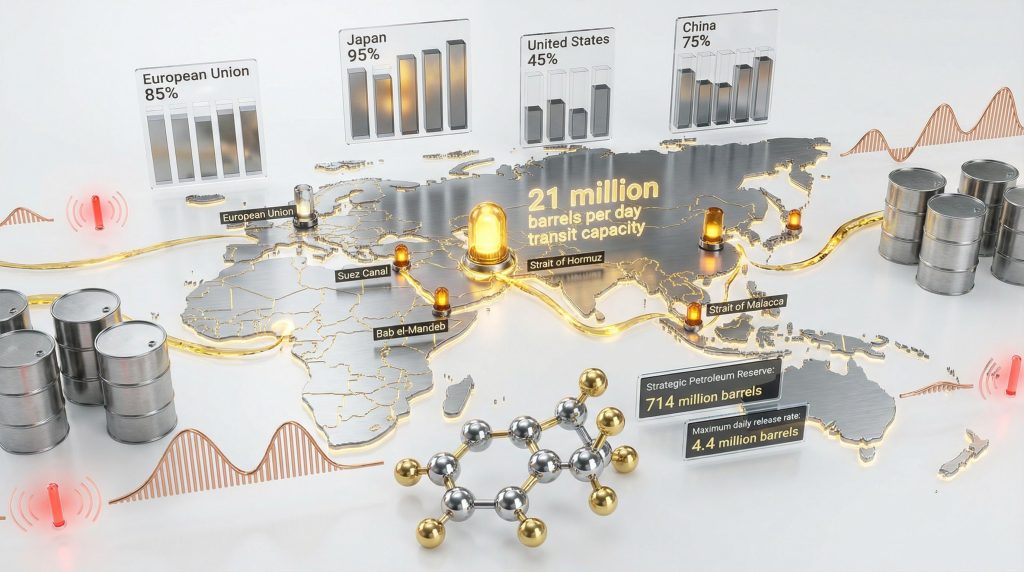
The global petroleum transport system relies heavily on narrow maritime passages that concentrate enormous volumes of energy flows through geographically constrained areas. The Strait of Hormuz represents the most critical vulnerability, facilitating approximately 20-27% of global oil supply according to recent maritime traffic analyses. This narrow waterway's strategic importance extends beyond simple transit volumes to encompass the broader regional security architecture of the Middle East.
Recent events demonstrate how quickly these chokepoints can become focal points for international tensions. When Iranian authorities temporarily restricted access to the Strait of Hormuz, petroleum futures immediately incorporated risk premiums reflecting potential supply disruptions. Market participants recognise that even brief closures can trigger inventory drawdowns and alternative supply route activations that reshape global energy flows for extended periods.
Strategic Chokepoint Analysis:
• Strait of Hormuz controls access to Persian Gulf petroleum exports
• Suez Canal facilitates Middle Eastern and North African crude movements
• Strait of Malacca connects Asian consumers with global suppliers
• Bab el-Mandeb links Red Sea shipping with Indian Ocean routes
These passages create systemic vulnerabilities where localised conflicts can generate worldwide economic impacts. Energy traders monitor diplomatic communications and military posturing around these areas as leading indicators of potential price volatility.
Financial Market Amplification Mechanisms
Oil futures markets demonstrate extreme sensitivity to geopolitical developments due to structural factors that amplify initial price responses. Modern petroleum markets operate with minimal spare production capacity buffers, creating conditions where supply disruption fears generate immediate price premiums that often exceed the scale of actual supply impacts.
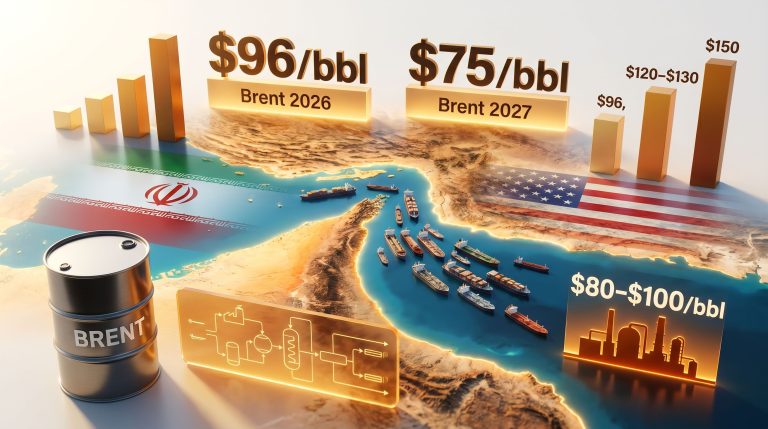
The relationship between perceived risk and actual market fundamentals becomes particularly pronounced during diplomatic crises. Recent market movements illustrate this dynamic, with Brent crude advancing $1.11 per barrel (+1.58%) to $71.46 during a single trading session. Furthermore, West Texas Intermediate rose $1.05 (+1.6%) to $66.24 per barrel in response to escalating tensions.
Market Response Patterns:
• Immediate risk premium incorporation: $1-5 per barrel within hours
• Extended uncertainty periods: $5-15 per barrel sustained premiums
• Actual supply disruption events: $15-40 per barrel spike potential
• Long-term conflict scenarios: $25-80 per barrel maximum impact range
These price movements reflect position hedging activities as institutional traders implement risk management strategies anticipating potential supply interruptions. The magnitude of these responses often exceeds the mathematical probability of actual supply disruptions, indicating how market psychology amplifies geopolitical tensions into economic volatility.
Diplomatic Framework Impacts on Price Stability
The correlation between diplomatic engagement progress and petroleum price stability follows predictable patterns that sophisticated market participants monitor closely. Successful negotiation frameworks typically reduce oil price volatility by providing clearer policy pathways and diminishing uncertainty premiums embedded within futures contracts.
Recent diplomatic developments demonstrate these dynamics in practice. When the White House reported limited progress in Geneva negotiations with Iranian representatives, petroleum markets maintained elevated price levels reflecting continued uncertainty. Simultaneously, the acknowledgment that significant differences persist on central issues prevented any meaningful risk premium reduction.
The timeline-dependent nature of diplomatic outcomes creates additional market complexity. However, statements indicating expectations for "more detailed responses in coming weeks" extend uncertainty periods. Consequently, this maintains elevated volatility expectations among futures traders who must price contracts across extended timeframes without clear resolution dates.
Diplomatic Communication Effects:
• Concrete agreement frameworks reduce uncertainty premiums
• Vague timeline commitments extend volatility expectations
• Policy alternative discussions amplify risk perceptions
• Simultaneous negotiation processes create compounded uncertainty
The interconnection between multiple diplomatic processes further complicates market analysis. When Ukraine-Russia peace negotiations conclude without progress while Iran-United States nuclear discussions remain inconclusive, energy markets face compounded geopolitical uncertainty that prevents risk premium normalisation.
Economic Transmission Mechanisms
When oil prices rise due to us iran tensions, these increases propagate through economic systems via multiple transmission channels that affect inflation rates, industrial production costs, and consumer spending patterns. The speed and magnitude of these effects depend on regional energy import dependencies and economic structural characteristics.
Transportation sector impacts typically manifest first, as fuel cost increases immediately affect logistics operations and freight pricing. In addition, manufacturing industries with energy-intensive production processes experience secondary impacts through elevated input costs that eventually translate into consumer price adjustments.
Inflation Transmission Timeline:
• Direct energy costs: Immediate price adjustments (0-30 days)
• Transportation impacts: Supply chain cost increases (30-90 days)
• Industrial input effects: Manufacturing cost adjustments (60-180 days)
• Secondary inflation: Broader price level changes (120-540 days)
Regional economies exhibit varying sensitivity to petroleum price shocks based on energy import dependence ratios and diversification capabilities. For instance, European Union economies, with approximately 85% oil import dependence, demonstrate higher vulnerability compared to more energy-independent regions.
Strategic Reserve Coordination and Market Stabilisation
Strategic petroleum reserves function as critical market stabilisation mechanisms during supply disruption scenarios. However, their effectiveness depends heavily on coordination between major consuming nations and timing of deployment decisions. These reserves provide temporary supply buffers that can offset regional disruptions while alternative supply sources activate.
The United States Strategic Petroleum Reserve, containing approximately 714 million barrels, represents the world's largest emergency oil stockpile. Combined with International Energy Agency member reserves totalling approximately 1.5 billion barrels, coordinated release mechanisms can theoretically offset supply disruptions exceeding 4 million barrels per day for 90-180 day periods.
Reserve Release Effectiveness Factors:
• Coordination timing between consuming nations
• Scale of supply disruption relative to release capacity
• Alternative supply source activation periods
• Market psychology regarding reserve adequacy
Recent inventory data contradicted market expectations, with American Petroleum Institute figures showing reserve drawdowns exceeding Reuters projections by significant margins. These discrepancies highlight how actual supply-demand fundamentals can diverge from analytical forecasts during periods of elevated geopolitical tensions.
The next major ASX story will hit our subscribers first
What Investment Strategies Work During Volatility Periods?
Energy market volatility creates distinct investment opportunities across asset classes while simultaneously generating portfolio risks that require active management strategies. Institutional investors employ various hedging mechanisms to manage petroleum price exposure during geopolitical tension periods. Consequently, understanding these dynamics becomes crucial for navigating oil price rally scenarios effectively.
Petroleum futures contracts and options provide direct hedging capabilities, while energy sector equity positions offer exposure to companies that benefit from elevated commodity prices. Furthermore, currency hedging becomes particularly important for oil-importing nations experiencing exchange rate pressures during price spike events.
Portfolio Positioning Strategies:
• Long petroleum futures positions for inflation hedging
• Energy infrastructure equity exposure for sustained volatility
• Currency hedging for oil-importing economy exposure
• Alternative energy investments for long-term diversification
Market participants recognise that geopolitical petroleum volatility often accelerates structural changes in energy markets. This creates opportunities for strategic positioning in emerging technologies and alternative supply chains that reduce dependence on traditional chokepoint-vulnerable transportation routes.
Alternative Energy Market Responses
Petroleum price increases typically accelerate investment flows into renewable energy projects and alternative fuel technologies. These investment flows create secondary market effects that extend beyond traditional hydrocarbon sectors, reflecting both economic competitiveness improvements and strategic energy security considerations.
Solar and wind power project economics improve significantly when petroleum prices sustain elevated levels. In addition, the relative cost advantages of renewable technologies increase during these periods. Electric vehicle adoption rates also demonstrate correlation with sustained gasoline price increases, as consumer purchasing decisions incorporate total ownership cost calculations.
Renewable Energy Investment Response Patterns:
• Solar installation acceleration: 15-25% capacity increases during price spikes
• Wind power development: 10-20% project advancement acceleration
• Battery storage deployment: 25-40% capacity expansion during volatility
• Electric vehicle sales: 20-30% growth correlation with fuel price increases
These investment pattern changes create long-term structural shifts in energy systems that persist beyond individual geopolitical crisis resolution. Strategic investors recognise these cyclical opportunities for positioning in alternative energy infrastructure during petroleum volatility periods.
How Do Trade Wars Affect Oil Markets?
The intersection of trade policies and energy markets becomes particularly complex when examining how us economic tariffs influence petroleum flows. Trade tensions can disrupt established supply chains and create new pricing dynamics that compound geopolitical tensions.
Furthermore, oil trade movements during trade disputes often reflect broader economic uncertainties. When combined with diplomatic tensions, these factors create multi-layered market pressures that amplify price volatility beyond typical geopolitical risk premiums.
OPEC's Role in Market Stabilisation
International oil organisations play crucial roles during periods when oil prices rise due to us iran tensions. The opec meeting impact becomes magnified during geopolitical crises, as production decisions can either stabilise or exacerbate market volatility.
Additionally, opec tariff effects demonstrate how trade policy intersects with traditional oil diplomacy. These interactions create complex market dynamics that require sophisticated analysis to understand fully.
Long-Term Energy Security Architecture Development
Recurring geopolitical petroleum price shocks drive permanent structural changes in energy systems, supply chains, and economic policies that reduce import dependence vulnerabilities. Nations experiencing repeated oil price volatility typically implement comprehensive energy security strategies incorporating domestic production incentives, renewable energy mandates, and supply chain diversification requirements.
Energy security policy evolution follows predictable patterns where short-term crisis responses develop into long-term strategic frameworks. These policies include strategic reserve expansion, infrastructure redundancy development, and international cooperation agreements that provide alternative supply mechanisms during disruption scenarios.
Multi-Layered Security Framework Components:
• Domestic production capacity development and maintenance
• Strategic petroleum reserve expansion and modernisation
• Renewable energy capacity targets and deployment incentives
• Energy efficiency standards across industrial and consumer sectors
• Alternative transportation fuel infrastructure development
The integration of these policy components creates resilient energy systems capable of managing supply disruptions while maintaining economic stability during extended geopolitical tensions.
Scenario Planning for Future Market Disruptions
Strategic scenario modelling helps stakeholders identify potential disruption patterns and develop appropriate preparation strategies for various crisis severities. High-probability scenarios provide frameworks for understanding likely market responses and policy interventions when oil prices rise due to us iran tensions escalate further.
Extended Diplomatic Breakdown Scenario
Duration expectation: 6-18 months of elevated tensions
Price impact projection: $15-30 per barrel sustained premium
Economic effect estimates: 0.3-0.8% GDP reduction across major economies
Policy response mechanisms: Strategic reserve releases, production increase negotiations
Limited Military Engagement Scenario
Duration expectation: 3-9 months of active conflict
Price impact projection: $25-50 per barrel risk premium
Economic effect estimates: 0.8-1.5% GDP impact across affected regions
Policy response mechanisms: Emergency supply protocols, alternative supplier agreements
Major Supply Disruption Scenario
Duration expectation: 12-36 months of significant capacity offline
Price impact projection: $40-80 per barrel sustained increases
Economic effect estimates: 1.5-3.0% GDP reduction with recession risk
Policy response mechanisms: Demand rationing, emergency production authorisation
These scenarios provide decision-making frameworks for both government policy development and private sector investment strategies during uncertain periods.
Building Comprehensive Resilience Systems
Effective energy security requires coordination between government policy initiatives, private sector investment decisions, and international cooperation mechanisms. Multi-layered security architectures combine diversified supply sources, strategic reserve capabilities, alternative energy capacity, and demand flexibility mechanisms.
The development of resilient energy security frameworks necessitates long-term thinking that extends beyond individual crisis cycles. Investment in infrastructure redundancy, technology innovation, and international cooperation agreements creates foundations for managing future disruption scenarios regardless of their specific geopolitical origins.
Resilience Framework Implementation:
• Supply source geographical and political diversification
• Transportation route redundancy and alternative pathway development
• Emergency response protocol establishment and regular testing
• International cooperation agreement negotiation and maintenance
• Technology innovation investment in efficiency and alternatives
These comprehensive approaches recognise that energy security represents a continuous process of adaptation and improvement rather than a static defensive posture against specific threats.
Disclaimer: The analysis presented includes forward-looking scenarios and projections based on current market conditions and historical patterns. Actual outcomes may vary significantly due to unforeseen geopolitical developments, technological changes, or economic factors not accounted for in these assessments. Investment decisions should be made with appropriate professional consultation and risk management considerations.
Looking to Navigate Energy Market Volatility?
Discovery Alert's proprietary Discovery IQ model delivers real-time alerts on significant ASX mineral discoveries, helping subscribers identify actionable opportunities in the energy and resources sector during periods of geopolitical uncertainty. Begin your 14-day free trial today to position yourself ahead of volatile markets and discover why major mineral discoveries can lead to substantial returns.