May 20, 2026
Energy Security and Strategic Maritime Routes Drive Arctic Cooperation
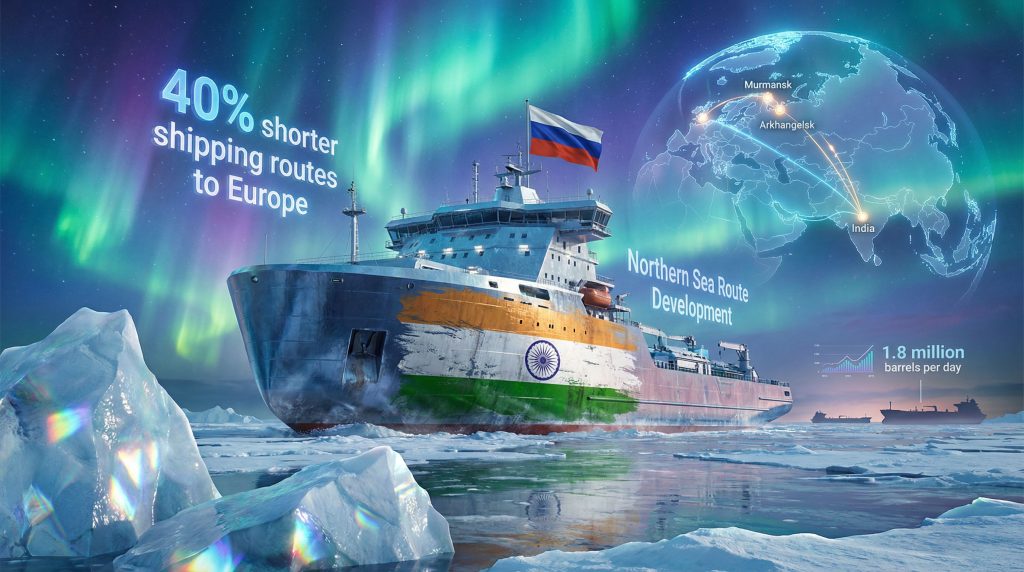
Global supply chain vulnerabilities continue reshaping international partnerships as nations seek alternatives to traditional trade corridors. The Northern Sea Route represents a fundamental shift in maritime logistics, potentially reducing shipping distances between Europe and Asia by approximately 35-40% compared to conventional Suez Canal routing. This geographical advantage translates to transit times of 25-30 days versus the standard 48-50 days, alongside fuel savings of approximately 20-30% for commercial vessels.
Recent developments in polar geopolitics demonstrate how non-Arctic states increasingly challenge established frameworks through strategic partnerships. While traditional Arctic governance centered on eight core nations through the Arctic Council, emerging bilateral arrangements create operational pathways that bypass consensus-based multilateral structures. This evolution reflects broader trends in international relations where countries pursue multiple alignment strategies rather than exclusive partnerships.
The India and Russia Arctic partnership exemplifies this strategic diversification, combining energy security objectives with maritime route optimization and military logistics coordination. Such arrangements potentially transform regional power dynamics while creating new precedents for non-Arctic engagement in polar affairs.
When big ASX news breaks, our subscribers know first
Strategic Framework Transformation in Arctic Governance
Non-Arctic Powers Reshaping Polar Dynamics
Traditional Arctic Council membership comprises Canada, Denmark, Finland, Iceland, Norway, Russia, Sweden, and the United States. Observer status within this framework includes approximately 46 permanent and ad-hoc observers as of recent cycles, representing roughly 575% more entities than core voting members. India gained permanent observer status in 2013, marking its formal entry into Arctic governance structures.
The recent RELOS (Reciprocal Exchange of Logistics Support) agreement transcends traditional observer limitations by creating operational military cooperation channels. Unlike observer participation in Arctic Council proceedings, which permits attendance without voting rights, RELOS establishes bilateral operational access bypassing consensus-based frameworks entirely.
Key Strategic Mechanisms:
- Direct port access for refueling and maintenance operations
- Joint training exercises in extreme Arctic conditions
- Real-time maritime intelligence sharing capabilities
- Coordinated naval presence in strategic chokepoints
Operational Integration Beyond Traditional Models
China's Arctic engagement through infrastructure investment under the Belt and Road Initiative contrasts sharply with India's militarized logistics approach. Where China emphasized economic corridors and declared itself a "near-Arctic state," India's lithium strategy focuses on operational military integration through shared Russian facilities.
This distinction creates a two-tier Arctic governance structure: formal multilateral frameworks (Arctic Council) alongside functional bilateral arrangements (RELOS). Such parallel systems potentially complicate traditional decision-making processes while providing participating nations with strategic autonomy independent of Western-mediated channels.
Economic Architecture of Arctic Resource Access
Infrastructure Investment and Development Timeline
Russian Arctic infrastructure modernization requires $15-20 billion capital investment across 2025-2035, encompassing critical port facility upgrades and Northern Sea Route navigation infrastructure. The investment framework operates across multiple phases:
| Development Phase | Investment Focus | Timeline | Strategic Impact |
|---|---|---|---|
| Port Modernization | Murmansk, Arkhangelsk upgrades | 2024-2028 | Ice-free access capabilities |
| NSR Infrastructure | Navigation, monitoring systems | 2025-2035 | Year-round operational capacity |
| Shipbuilding Partnerships | Ice-class vessel technology | 2025-2030 | Indigenous polar navigation |
| Resource Extraction | Arctic oil/gas projects | Ongoing | Energy supply diversification |
Murmansk Port Specifications:
- Location: 67°N latitude, ice-free year-round due to Gulf Stream influence
- Current capacity: 12-15 million metric tons annually
- Required upgrades: Deep-water berth construction, expanded container handling
- Strategic value: Primary Russian Arctic port for resource evacuation
Energy Supply Chain Transformation
Arctic energy reserves represent substantial untapped resources: 35,700 billion cubic meters of natural gas and 2,300 million metric tons of oil and condensate, primarily located in Yamal and Gydan peninsulas. These figures represent approximately 30% of global undiscovered natural gas reserves according to U.S. Geological Survey assessments.
Furthermore, current Russian energy flows demonstrate the partnership's immediate significance:
- Crude oil imports to India: 1.8 million barrels per day (2024 data)
- Market share: 36% of India's total crude imports
- Pricing advantage: Steeply discounted compared to global benchmarks
- Strategic resilience: Alternative to Persian Gulf dependency (traditionally 60-70% of imports)
However, this energy relationship operates within the context of the Russian uranium import ban imposed by Western nations, highlighting the significance of alternative supply arrangements.
Multi-Corridor Integration Strategy
The India and Russia Arctic partnership connects three major transportation networks:
1. Northern Sea Route (NSR)
- Distance: 9,000-11,000 km (seasonal variation)
- Transit time: 25-30 days
- Operational window: Generally June-October for conventional vessels
- Cost savings: 30-40% compared to traditional routing
2. International North-South Transport Corridor (INSTC)
- Route: 7,200 km via Iran
- Transit time: 40-45 days
- Cost reduction: 30% versus Suez Canal routing
- Constraint factor: Iran sanctions volatility
3. Chennai-Vladivostok Maritime Corridor
- Function: Bilateral India-Russia direct shipping
- Strategic value: Reduced dependency on third-party chokepoints
- Operational benefit: Predictable bilateral logistics coordination
Military Logistics and Regional Security Implications
Nuclear Force Integration and Strategic Assets
The Kola Peninsula represents Russia's primary Arctic nuclear infrastructure, hosting approximately 12 strategic nuclear submarines (SSBNs) carrying up to 192 nuclear-capable ballistic missiles. This concentration includes:
- Borei-class SSBNs: 16 Bulava missiles per vessel
- Typhoon-class SSBNs: 20 missiles per submarine
- Combined capacity: Strategic second-strike capability
- Supporting infrastructure: Nuclear-powered icebreaker fleet operations
Indian military participation in the September 12-16, 2025 Russian "Zapad" exercises marked unprecedented operational integration. These maneuvers included tactical nuclear weapons rehearsals, representing significant strategic coordination between the two militaries, as reported by defense analysts tracking Arctic military cooperation.
Advanced Defense Technology Collaboration
Ice-Class Vessel Technology Transfer:
- Hull design: Advanced pressure ice resistance capabilities
- Propulsion systems: High-powered diesel-electric configurations
- Navigation technology: Sophisticated Arctic condition systems
- Ballast systems: Specialized ice navigation requirements
Current Indian shipbuilding focuses primarily on non-ice-class commercial and military vessels. Partnership with Russian yards (Baltic Shipyard, Zvezdochka in Arctic regions) represents substantial technological capability expansion for India's maritime industry.
Regional Power Balance Modifications
NATO Arctic deterrence strategies historically presumed Russian nuclear forces operated within predictable geographic constraints. Indian operational integration creates new strategic complexities:
Strategic Implications:
- Extended Russian nuclear force operational range through Indian logistical support
- Combined operational procedures challenging NATO planning assumptions
- Implicit endorsement of Russian Arctic nuclear posture through operational partnership
- Reduced effectiveness of Western diplomatic pressure regarding Russian military presence
Critical Mineral Resources and Supply Chain Security
Strategic Resource Distribution in Arctic Regions
Arctic territories contain substantial reserves of materials essential for renewable energy transitions and modern technology applications. These resources form a crucial component of the broader critical minerals energy transition that many nations are pursuing.
Critical Resource Categories:
- Rare Earth Elements: Wind turbine and solar panel components
- Lithium deposits: Electric vehicle battery production systems
- Nickel and Cobalt: Advanced energy storage applications
- Copper reserves: Electrical infrastructure development requirements
The India and Russia Arctic partnership provides alternative sourcing mechanisms outside Chinese-dominated supply chains, supporting India's "Make in India" manufacturing initiatives while reducing dependency on potentially volatile suppliers.
Supply Chain Resilience Through Geographic Diversification
Traditional shipping routes face increasing operational vulnerabilities:
Comparative Route Analysis:
| Shipping Route | Distance | Transit Time | Vulnerability Factors |
|---|---|---|---|
| Suez Canal (Traditional) | 12,000+ km | 48-50 days | Political disruptions, capacity constraints |
| Strait of Malacca | Variable | Standard | Piracy concerns, strategic chokepoint risks |
| Panama Canal | Variable | Standard | Water level restrictions, transit delays |
| Northern Sea Route | 9,000-11,000 km | 25-30 days | Seasonal limitations, ice conditions |
The 2021 Ever Given incident in the Suez Canal demonstrated single-chokepoint vulnerabilities, disrupting approximately 10% of global trade. Arctic alternatives provide structural redundancy reducing India's exposure to such systemic risks.
Competitive Response Patterns and Strategic Adjustments
Chinese Strategic Calculations
China's Polar Silk Road initiative encounters potential competition from the India and Russia Arctic partnership. Key competitive dynamics include:
- Alternative development models: Bilateral logistics versus multilateral infrastructure investment
- Arctic Council influence: Shifted dynamics with strengthened Russia-India operational ties
- Central Asian realignment: Modified influence patterns affecting Belt and Road connectivity
European Union Policy Adaptations
EU Arctic strategies require adjustment accounting for increased Asian involvement. This comes at a time when Canada's energy transition is also creating new dynamics in North American Arctic policy.
Policy Framework Modifications:
- Green Deal implementation: Accounting for new energy supply realities
- Arctic Strategy expansion: Broader stakeholder engagement requirements
- Sanctions effectiveness: Diminished impact through alternative partnership networks
United States Strategic Challenges
The India and Russia Arctic partnership complicates multiple U.S. strategic frameworks, particularly in light of the recent US critical minerals order which aims to secure domestic supply chains.
Containment Strategy Implications:
- Indo-Pacific Strategy: Multi-alignment challenges versus exclusive partnership models
- Arctic Security: Expanded deterrence concepts beyond traditional NATO frameworks
- Alliance Management: Partner preference divergences requiring diplomatic coordination
Recent U.S. efforts include COMPACT (Catalyzing Opportunities for Military Partnership, Accelerated Commerce & Technology) initiatives targeting $500 billion bilateral trade by 2030. However, established military, political, economic, and energy relationships between India and Russia may prove resilient to alternative partnership offers.
The next major ASX story will hit our subscribers first
Future Scenarios and Strategic Implications
Accelerated Western Sanctions Scenario
Probability Assessment: High
Trigger Mechanisms:
- Escalated Ukraine conflict developments
- Expanded secondary sanctions implementation
- Increased economic pressure coordination
Projected Outcomes:
- Deeper India-Russia integration across multiple sectors
- Alternative payment systems development and implementation
- Increased Chinese involvement in Arctic partnerships
- Timeline: 2025-2027 critical development period
Arctic Climate Transformation Scenario
Probability Assessment: Medium
Environmental Triggers:
- Rapid ice loss acceleration beyond current projections
- Year-round Northern Sea Route navigation capability
- Fundamental Arctic ecosystem changes
Strategic Consequences:
- Massive infrastructure investment surge requirements ($50+ billion regional estimates)
- New territorial disputes emergence over accessible resources
- Enhanced international environmental regulation frameworks
- Timeline: 2028-2035 potential realization window
BRICS Arctic Initiative Development
Probability Assessment: Medium-High
Institutional Triggers:
- Expanded BRICS membership integration
- Alternative governance structure establishment
- Coordinated Arctic development funding mechanisms
Multilateral Outcomes:
- Collective Arctic resource development projects
- Reduced Western institutional influence in polar governance
- New international legal frameworks for non-Arctic state participation
- Timeline: 2025-2028 institutional framework establishment
Arctic Governance Evolution and Legal Framework Development
Institutional Adaptation Requirements
Traditional Arctic Council structures may require fundamental modifications to accommodate increased non-Arctic state involvement:
Reform Considerations:
- Observer state influence expansion: Enhanced participation in decision-making processes
- Resource development oversight: Modified frameworks for external partner involvement
- Environmental protection standards: Negotiated responsibility sharing mechanisms
- Decision-making process modifications: Bilateral arrangements versus multilateral consensus
Technology Transfer and Innovation Dynamics
The India and Russia Arctic partnership accelerates specialized technology development across multiple domains:
Collaborative Development Areas:
- Polar navigation systems: Joint development of ice-capable shipping technology
- Resource extraction techniques: Shared knowledge for harsh environment operations
- Climate monitoring infrastructure: Collaborative Arctic research station networks
- Search and rescue capabilities: Coordinated emergency response systems
These technological collaborations potentially establish new standards for Arctic operations while creating intellectual property arrangements that benefit both partners outside traditional Western technology transfer mechanisms. Furthermore, experts analysing India's strategic Arctic approach suggest this represents a broader shift towards strategic autonomy.
Long-term Strategic Trajectory Assessment
Current partnership developments suggest fundamental shifts in Arctic geopolitical architecture. The combination of energy security objectives, military logistics coordination, and alternative trade route development creates sustainable strategic foundations extending beyond short-term tactical arrangements.
Structural Changes:
- Governance pluralization: Multiple overlapping frameworks rather than unified Arctic Council dominance
- Economic diversification: Asian energy demand reshaping Arctic resource development priorities
- Strategic autonomy enhancement: Reduced dependency on Western-mediated systems across multiple domains
Disclaimer: This analysis contains forward-looking assessments based on current geopolitical trends and publicly available information. Actual developments may vary significantly due to changing international circumstances, policy modifications, or unforeseen events. Readers should consider this content as educational material rather than predictive analysis for investment or policy decisions.
The India and Russia Arctic partnership represents more than bilateral cooperation; it exemplifies broader transformations in international system architecture where traditional Western-centric frameworks encounter alternative organisational models. Whether these developments enhance global stability through diversified partnerships or increase complexity through competing governance systems remains an evolving question requiring continued analytical attention.
Want to Capitalise on the Next Arctic Resource Discovery?
The evolving Arctic partnerships and resource developments highlighted above create new opportunities for mineral exploration investments. Discovery Alert's proprietary Discovery IQ model delivers real-time alerts on significant ASX mineral discoveries, helping investors identify actionable opportunities in critical minerals and resource companies before broader market awareness. Begin your 30-day free trial today to position yourself ahead of these emerging resource sector trends.