June 25, 2026
The Structural Foundation Behind America's Grid Transformation
The United States power sector stands at a technological crossroads where traditional grid infrastructure must adapt to unprecedented demand patterns and renewable energy integration challenges. The five trends in the US energy storage revolution extend beyond simple capacity additions, representing a fundamental reimagining of how electricity systems operate, store energy, and maintain stability across diverse regional markets. Furthermore, these developments support broader energy transition security initiatives across the globe.
Energy storage technologies have emerged as the critical enabler of this transition, providing grid operators with tools to manage volatility, optimise renewable resources, and ensure system reliability during extreme weather events. The convergence of declining technology costs, supportive policy frameworks, and urgent infrastructure needs has created market conditions enabling rapid deployment across residential, commercial, and utility-scale applications.
When big ASX news breaks, our subscribers know first
Market Fundamentals Driving the Storage Revolution
Record-Breaking Capacity Expansion
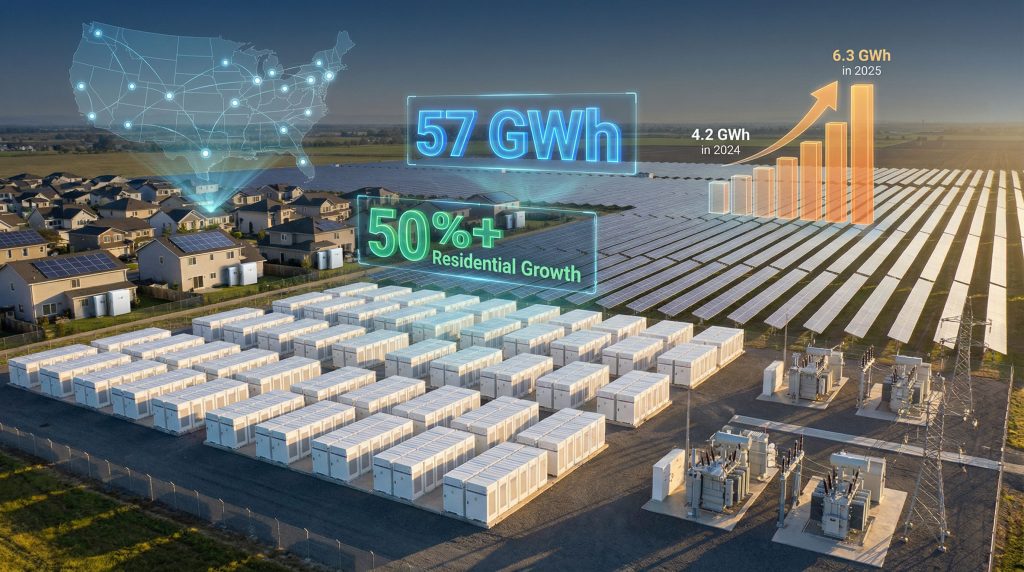
The United States energy storage sector achieved a milestone in 2025, adding 57 GWh of new capacity according to the inaugural Energy Storage Market Outlook from the Solar Energy Industries Association (SEIA) and Benchmark Mineral Intelligence. This deployment figure represents sufficient capacity to power approximately 5.1 million homes, establishing energy storage as a mainstream infrastructure investment rather than experimental technology.
Industry projections indicate continued acceleration, with 70 GWh of annual installations expected in 2026 and cumulative capacity potentially reaching 600 GWh by 2030. These targets reflect the sector's transition from supplementary grid services to essential infrastructure supporting grid reliability, renewable integration, and peak demand management.
Investment flows of $15 billion committed through 2027 demonstrate financial market confidence in storage economics and long-term growth prospects. This capital deployment spans utility-scale projects, commercial installations, and residential systems, indicating broad-based market adoption across customer segments.
Economic Fundamentals Reaching Grid Parity
Storage system economics have achieved viability through multiple revenue streams rather than single-purpose applications. Battery installations now participate in energy arbitrage (purchasing electricity during low-cost periods and selling during peak prices), demand charge reduction for commercial customers, and ancillary services providing grid stability support.
Federal tax credit extensions through the Inflation Reduction Act provide investment certainty, enabling project developers to secure long-term financing at competitive rates. State-level procurement mandates in markets including California, New York, and Massachusetts create guaranteed demand, reducing market risk for manufacturers and installers.
Technology cost curves continue declining as manufacturing scales increase and battery recycling breakthrough initiatives improve resource efficiency. Lithium-ion systems have achieved cost reductions exceeding 15% annually since 2022, while alternative technologies including sodium-ion and flow batteries are approaching commercial viability for specific applications.
Five Critical Market Shifts Transforming Energy Storage
Residential Energy Management Evolution
Home battery capacity experienced growth exceeding 50% in 2025, driven by power outage frequency increases and time-of-use electricity rate structures that reward energy shifting behaviour. SEIA projects the residential market will expand by 120% through 2030, fundamentally altering how homeowners interact with the electric grid.
Modern residential storage systems integrate smart inverter technology enabling bi-directional power flows and grid service participation. These capabilities allow homeowner systems to provide voltage support, frequency regulation, and peak shaving services while maintaining backup power functionality during outages.
| Residential Storage Trends | 2024 | 2025 | 2030 Projection |
|---|---|---|---|
| Annual Installations (GWh) | 4.2 | 6.3 | 13.9 |
| Average System Size (kWh) | 12.5 | 14.8 | 18.2 |
| Payback Period (Years) | 8.2 | 6.9 | 5.1 |
| Time-of-Use Savings (Annual) | $650 | $850 | $1,200 |
Virtual Power Plant (VPP) aggregation platforms now combine thousands of distributed batteries into utility-scale resources capable of providing grid services traditionally supplied by centralised power plants. These systems enable residential customers to earn additional revenue while supporting grid stability during peak demand periods. For instance, the US energy storage market is revolutionising America's power sector through such innovative approaches.
Market Insight: The emergence of Virtual Power Plants represents a paradigm shift where distributed residential batteries aggregate to provide utility-scale grid services, fundamentally changing the relationship between homeowners and electric utilities.
Commercial and Industrial Demand Acceleration
Commercial and industrial storage installations experienced 42% growth in 2025, with data centres accounting for 60% of new capacity additions. This deployment surge reflects artificial intelligence training workloads that create unprecedented power demand volatility, requiring instant scaling capabilities beyond traditional grid infrastructure capacity.
Data centre operators increasingly co-locate battery storage to manage training loads that can jump to 90% of facility capacity within milliseconds. Traditional uninterruptible power supply systems lack the duration and cycling capability required for these applications, creating new market demand for high-performance battery installations.
Peak shaving economics enable commercial customers to avoid demand charges ranging from $50 to $200 per kilowatt by using stored energy during facility peak consumption periods. Manufacturing facilities prioritise uptime guarantees, with storage systems providing seamless backup power during grid disturbances that could halt production processes.
Corporate sustainability initiatives drive clean energy procurement strategies, with storage enabling companies to maximise renewable energy utilisation and reduce reliance on fossil fuel generation during peak demand periods. Environmental, social, and governance (ESG) mandates increasingly include energy storage as a component of corporate decarbonisation commitments. This aligns with broader decarbonisation economic benefits across industrial sectors.
Solar-Plus-Storage Mainstream Adoption
Utility-scale solar-plus-storage configurations achieved a significant milestone in 2025, with 20 GWh of new storage directly paired with solar installations. This pairing represents approximately 35% of total annual storage deployments, indicating the combination has become standard practice rather than specialised application.
Technical advantages of solar-plus-storage integration include:
• Smoothing renewable energy intermittency through energy capture during peak solar production and evening dispatch
• Reducing transmission system stress by providing local generation and storage resources
• Enabling solar facilities to provide grid services including voltage support and frequency regulation
• Optimising renewable energy utilisation by storing excess daytime production for peak evening demand
DC-coupled system designs achieve round-trip efficiency exceeding 95% by minimising power conversion losses between solar panels and battery storage. Hybrid inverter technology reduces balance-of-system costs by approximately 20% compared to separate solar and storage installations.
Four-hour duration systems dominate utility procurement processes, reflecting optimal economics for energy arbitrage and grid service provision. These configurations capture solar energy during midday abundance and dispatch power during evening peak demand periods when electricity prices reach maximum levels.
Geographic Distribution Defying Political Expectations
Energy storage deployment patterns reveal bipartisan infrastructure development, with 67% of new capacity built in Republican-led states during 2025. This distribution reflects economic drivers transcending political rhetoric, as states prioritise grid reliability, job creation, and energy security regardless of renewable energy policy positions.
State-Level Deployment Analysis:
| State | 2025 Additions (GWh) | Political Environment | Primary Driver |
|---|---|---|---|
| Texas | 12.4 | Republican-led | Grid reliability/ERCOT independence |
| Florida | 8.9 | Republican-led | Hurricane resilience |
| Arizona | 6.7 | Competitive | Solar integration support |
| Georgia | 4.3 | Competitive | Manufacturing job creation |
Texas leads national deployment due to ERCOT grid independence and extreme weather resilience requirements. The state's energy-only market structure rewards storage for providing ancillary services and peak capacity during high-demand periods.
Florida's hurricane-prone geography drives storage adoption for emergency preparedness and grid hardening applications. Storage systems provide backup power during extended outages while supporting grid restoration following severe weather events.
Energy security messaging resonates across party lines, with storage framed as domestic infrastructure reducing reliance on volatile commodity markets and foreign supply chains. Job creation in manufacturing, installation, and maintenance sectors provides economic benefits that appeal to diverse political constituencies.
Growth Trajectory Acceleration
Industry forecasts indicate sustained momentum beyond 2025's record performance, with projected annual installations reaching 70 GWh in 2026 and cumulative capacity approaching 600 GWh by 2030. These projections reflect continued technology cost declines, supportive policy environments, and growing recognition of storage value across multiple applications.
Next-generation battery chemistries entering commercial deployment include sodium-ion systems offering cost advantages for longer-duration applications and flow battery technologies enabling 100+ hour energy storage for seasonal applications. Iron-air storage systems designed for ultra-long duration are progressing through pilot project phases toward commercial viability. Moreover, US energy storage market outlook for 2026 suggests continued expansion across diverse applications.
Technology diversification timeline:
• 2026-2027: Sodium-ion batteries gain utility-scale market share for 4+ hour applications
• 2027-2028: Flow battery systems exceed 100 MWh capacity installations
• 2028-2030: Iron-air and compressed air storage enable seasonal energy shifting
Supply Chain Adaptation and Technology Evolution
Manufacturing Strategy Transformation
The Foreign Entity of Concern (FEOC) regulations have accelerated supply chain diversification beyond Chinese manufacturing dominance. Battery manufacturers are implementing ownership restructuring strategies and establishing production facilities in Mexico, India, and Eastern Europe to maintain United States market access. Additionally, India's development of a battery-grade lithium refinery supports global supply chain resilience.
System pricing volatility is expected to stabilise by the second half of 2026 as alternative supply chains achieve production scale and quality standards comparable to established manufacturers. Enhanced testing protocols ensure non-Chinese supply chains meet performance and safety requirements for utility-scale deployments.
Geographic diversification strategies include:
• Mexico: Proximity to United States markets with USMCA trade advantages
• India: Cost-competitive manufacturing with established electronics industry
• Eastern Europe: European market access with skilled workforce availability
• Southeast Asia: Alternative Asian production bases with lower geopolitical risk
Quality assurance protocols have expanded to address supply chain transitions, with independent testing laboratories verifying performance specifications and safety compliance across diverse manufacturing sources. These standards ensure consistent product quality regardless of production location.
Alternative Technology Commercial Readiness
Sodium-ion battery technology is achieving bankability for utility-scale applications, particularly for systems requiring 4+ hour duration capabilities. These systems offer cost advantages over lithium-ion for applications prioritising energy capacity over power density, including renewable energy time-shifting and grid arbitrage.
Flow battery installations are scaling beyond demonstration projects, with utility-scale systems exceeding 100 MWh capacity entering commercial operation. These technologies provide advantages for long-duration applications, offering unlimited cycling capability and 20+ year operational lifespans.
Compressed air energy storage projects utilise underground geological formations to provide seasonal energy storage capabilities. These systems complement shorter-duration battery installations by addressing extended periods of renewable energy scarcity during adverse weather conditions.
Grid Integration and Technical Standards Evolution
Grid-Forming Technology Requirements
Advanced inverter capabilities have transitioned from optional features to mandatory requirements for utility-scale storage installations. Grid-forming technology enables battery systems to provide voltage and frequency support traditionally supplied by conventional power plants, particularly as renewable energy penetration increases.
Technical specifications for grid-forming inverters include:
• Autonomous voltage and frequency regulation without external grid reference signals
• Black-start capability enabling grid restoration following widespread outages
• Dynamic response to grid disturbances within millisecond timeframes
• Seamless transition between grid-connected and island operation modes
New IEEE standards mandate grid-forming capabilities for storage systems exceeding specified capacity thresholds, ensuring battery installations contribute to rather than detract from grid stability. These requirements reflect lessons learned from high renewable energy penetration scenarios in California and Texas.
Interconnection standards are evolving to address distributed resource participation in wholesale electricity markets, with FERC Order 2222 enabling aggregated distributed energy resources to compete alongside traditional generation resources.
Virtual Power Plant Market Development
Distributed battery aggregation platforms combine residential and small commercial storage systems into utility-scale resources capable of providing grid services. These Virtual Power Plants enable storage owners to earn revenue through wholesale market participation while maintaining local backup power capabilities.
AI-driven optimisation systems maximise revenue across multiple service stacks, including energy arbitrage, capacity markets, ancillary services, and transmission deferral applications. Machine learning algorithms predict optimal charging and discharging schedules based on electricity prices, weather forecasts, and grid conditions.
Control systems integrate thousands of distributed batteries through secure communication protocols, ensuring coordinated response to grid operator dispatch signals while respecting individual customer preferences and backup power requirements.
Investment Landscape and Financial Innovation
Financing Model Diversification
Tax equity partnerships enable utility-scale storage projects to monetise Investment Tax Credit benefits through established financial structures developed for renewable energy projects. These arrangements reduce project capital costs and accelerate deployment timelines for large-scale installations.
Green bond issuances provide corporate financing for commercial and industrial storage installations, with environmental benefits supporting favourable borrowing costs. Asset-backed securities are emerging as storage portfolios demonstrate consistent performance and revenue generation capabilities.
Power purchase agreements (PPAs) provide long-term revenue contracts reducing project financing risk, with utilities increasingly procuring storage services through structured agreements rather than asset ownership models. Performance-based contracts align developer incentives with operational excellence and grid service quality.
Investment structure evolution:
• Utility ownership: Direct asset ownership for rate base recovery
• Third-party operated: Service agreements with private developers
• Community solar: Shared storage serving multiple customers
• Merchant projects: Market-based revenue optimisation
Utility Procurement Strategy Changes
Electric utilities are integrating storage procurement with generation planning processes, recognising storage as both a generation and transmission/distribution asset. Portfolio optimisation considers storage alongside traditional generation resources for least-cost system planning.
Contract structures are shifting toward performance-based agreements measuring actual grid service delivery rather than simple capacity payments. These arrangements incentivise operational excellence and technology innovation while ensuring utilities receive contracted services.
Rate recovery mechanisms enable utilities to recover storage investment costs through regulated rate structures, with state public utility commissions developing frameworks treating storage as beneficial infrastructure investment similar to transmission and distribution assets.
The next major ASX story will hit our subscribers first
Future Market Evolution and Strategic Implications
Growth Challenges and Risk Factors
Interconnection queue delays averaging 3-4 years represent the primary constraint limiting faster storage deployment. Grid connection studies and approval processes have not scaled to accommodate the volume of storage and renewable energy projects seeking interconnection.
Skilled workforce availability constrains installation and maintenance capacity, with industry growth outpacing training programme development. Technical expertise requirements for storage systems exceed traditional electrical contractor capabilities, necessitating specialised education programmes.
Permitting bottlenecks vary significantly by jurisdiction:
• Local approval processes lacking standardised requirements
• Fire department safety concerns requiring specialised training
• Zoning restrictions limiting storage installation locations
• Environmental review requirements for utility-scale projects
Insurance and regulatory scrutiny following thermal events at battery installations have increased safety requirements and coverage costs. Industry standards continue evolving to address fire suppression, emergency response, and risk mitigation protocols.
Technology Roadmap Through 2030
Duration expansion toward 6-8 hour systems reflects deeper grid services requirements as renewable energy penetration increases. Longer duration storage addresses extended periods of renewable energy scarcity and provides backup power during prolonged grid outages.
Seasonal storage technologies including iron-air batteries and underground compressed air systems will address renewable intermittency across weeks and months rather than daily cycles. These applications become critical as solar and wind generation provide increasing percentages of annual electricity supply. Countries like India are focusing on securing lithium supply for long-term energy storage security.
Electrification integration connects storage systems with electric vehicle charging networks and heat pump installations, creating coordinated energy management systems optimising multiple end-use applications. Vehicle-to-grid technologies enable electric vehicles to provide storage services when not being driven.
Market evolution timeline:
• 2026-2027: Duration expansion to 6-8 hour standard configurations
• 2027-2028: Seasonal storage technologies enter commercial deployment
• 2028-2030: Integrated electrification platforms coordinate storage, EVs, and heat pumps
Strategic Investment Considerations
Technology differentiation opportunities exist for companies developing next-generation battery chemistries, advanced control systems, and integrated energy management platforms. Manufacturing scale advantages favour vertically integrated companies controlling supply chains from raw materials to installed systems.
Service capabilities including operations, maintenance, and asset management platforms represent growing revenue opportunities as installed storage capacity scales nationwide. Geographic expansion into high-growth markets offers first-mover advantages for experienced developers and installers.
Investment focus areas include:
• Battery chemistry innovation for cost and performance improvements
• Manufacturing scale to achieve cost leadership positions
• Software platforms optimising storage system performance
• Service capabilities for long-term asset management
Market positioning strategies should consider regulatory environments, utility relationships, and customer segment focus as competitive advantages. Companies successfully navigating the five trends in the US energy storage revolution will establish leadership positions in this rapidly expanding sector.
The transformation of America's electricity infrastructure represents one of the largest investment opportunities in the nation's history, with energy storage serving as the critical enabling technology for grid modernisation, renewable integration, and electrification across all sectors of the economy. Furthermore, the five trends in the US energy storage revolution demonstrate how innovation and policy alignment can accelerate clean energy transitions globally.
This analysis is based on industry reports and market data available as of March 2026. Energy storage markets continue evolving rapidly, and investors should consult current market research and financial advisors before making investment decisions. Forward-looking projections involve inherent uncertainties and may differ from actual outcomes.
Want to Capitalise on America's Energy Storage Revolution?
Discovery Alert's proprietary Discovery IQ model delivers instant alerts on significant mineral discoveries essential to battery technology and energy storage infrastructure, helping investors identify opportunities in lithium, cobalt, and other critical battery metals before market movements occur. Explore why major mineral discoveries drive substantial returns by visiting Discovery Alert's discoveries page, then begin your 14-day free trial to position yourself ahead of the energy storage supply chain transformation.