May 18, 2026
The Engineering Gauntlet Every Commercial DLE Project Must Survive
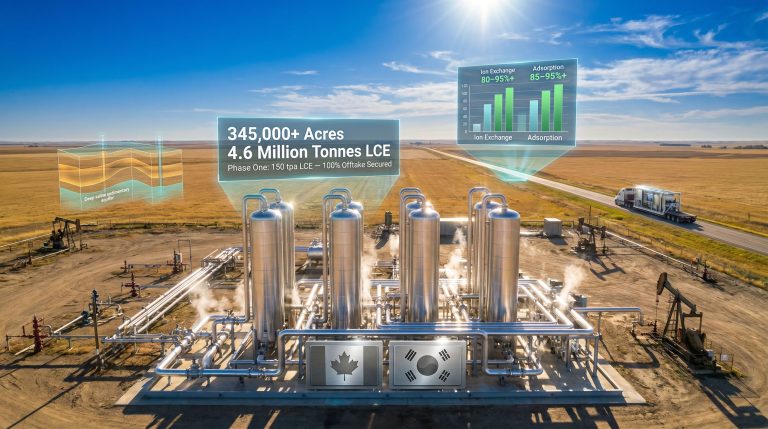
Before a single tonne of battery-grade lithium reaches a South Korean cathode manufacturer or an American electric vehicle assembly line, the extraction technology behind it must pass through a series of increasingly demanding validation stages. For direct lithium extraction technology projects, one of the most consequential of these stages happens not at the mine site, but inside a fabrication facility, under controlled conditions, long before the equipment ever touches brine.
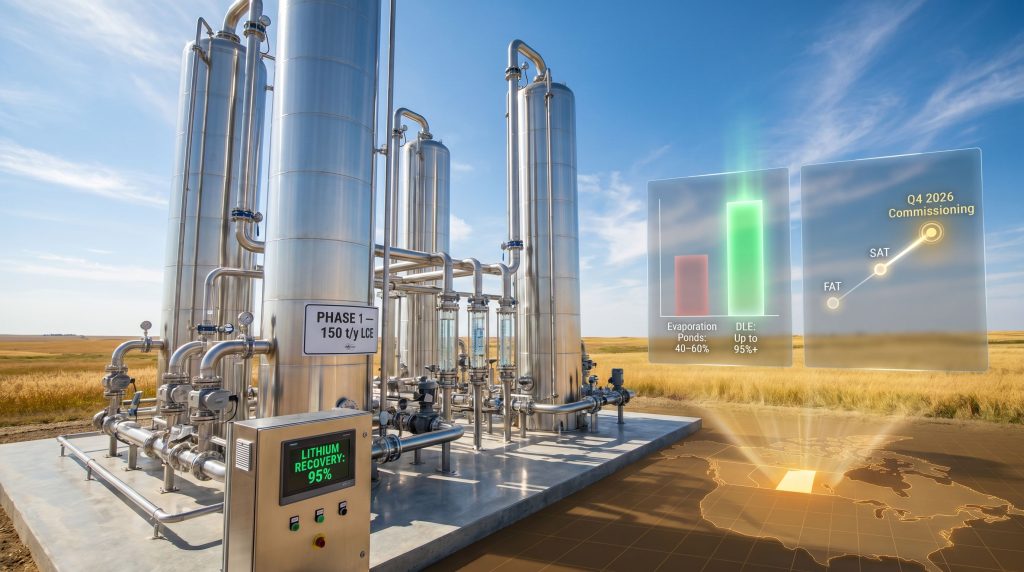
This is the world of Factory Acceptance Testing, and for Prairie Lithium DLE factory acceptance testing in Saskatchewan, successfully navigating this process represents far more than a routine quality check. It marks the point at which engineering ambition becomes verified hardware, and where the largest DLE unit ever built in North America transitions from blueprint to deployable asset.
When big ASX news breaks, our subscribers know first
What Factory Acceptance Testing Actually Involves for DLE Equipment
Factory Acceptance Testing (FAT) is a formal engineering verification protocol conducted at the manufacturing facility before equipment is shipped to its operational site. In the context of mineral processing, FAT serves as the final controlled environment in which developers can confirm that every component performs to design specifications before transport costs, site complexity, and real brine chemistry make remediation exponentially more expensive.
For DLE technology specifically, FAT is particularly demanding because the systems operate under tightly defined chemical and mechanical parameters. The key performance indicators typically assessed during a DLE factory acceptance test include:
- Lithium recovery efficiency across multiple simulated extraction cycles
- Brine throughput capacity measured in barrels per day
- Column structural integrity under varying pressure and temperature conditions
- Precision and responsiveness of automated process control systems
- Seal integrity and fluid containment across all column interfaces
It is worth understanding that FAT for a commercial-scale DLE unit is categorically different from validating a pilot-scale system. At pilot scale, variables can be manually managed and tolerances are forgiving. At commercial scale, the engineering interactions between multiple columns, flow control systems, and regeneration circuits become significantly more complex, and small deviations from design parameters can compound into material performance losses.
How Does FAT Differ From Site Acceptance Testing?
FAT should not be confused with Site Acceptance Testing (SAT), which occurs after the equipment has been transported and installed at the operational location. SAT validates performance under actual brine chemistry conditions specific to the reservoir being exploited, which introduces entirely new variables. Both FAT and SAT are required before a DLE system can be declared fully commissioned.
Key Insight: The distinction between FAT and SAT is critical for investors to understand. A successful FAT confirms the equipment works as designed. A successful SAT confirms it works as designed with the specific brine it will process for its operational life. Projects that rush from FAT to production without rigorous SAT face elevated technical risk.
How Direct Lithium Extraction Works, Step by Step
DLE technology represents a fundamental departure from the two dominant historical methods of lithium production: hard-rock spodumene mining and evaporation pond processing. Understanding the mechanics helps contextualise why FAT outcomes matter so profoundly for project timelines and capital efficiency.
The DLE extraction sequence operates as follows:
- Lithium-bearing brine is pumped from deep saline aquifers to surface processing infrastructure
- The brine passes through selective sorbent or ion-exchange media housed within DLE columns, which preferentially capture lithium ions while allowing other dissolved minerals to pass through
- The lithium brine extraction process reinjected the lithium-depleted brine into the aquifer, substantially reducing net water consumption compared to evaporation-based methods
- A wash or elution step strips the captured lithium from the sorbent material, producing a lithium-enriched eluate
- The eluate is further processed into an intermediate product, typically lithium chloride solution or a lithium carbonate equivalent (LCE) precursor
- The intermediate product is then refined into battery-grade lithium carbonate or lithium hydroxide for downstream cell manufacturing
Furthermore, the performance advantages of this approach over legacy methods are significant, as shown below:
| Method | Land Use | Processing Time | Water Consumption | Typical Recovery Rate |
|---|---|---|---|---|
| Hard-Rock Mining | High | Months (crushing/flotation) | Moderate | 60-75% |
| Evaporation Ponds | Very High | 12-24 months | Very High | 40-60% |
| Direct Lithium Extraction | Low | Hours to Days | Low | Up to 95%+ |
The recovery rate differential is particularly significant from a resource economics perspective. A DLE system achieving 95% lithium recovery from a given brine resource could theoretically yield more than double the saleable product of an evaporation pond operation processing equivalent volumes from the same aquifer.
Why Saskatchewan's Geology Creates a Natural DLE Advantage
Prairie Lithium's Saskatchewan operations sit within the Western Canadian Sedimentary Basin, a geological formation that has been producing economic resources for decades, primarily oil and natural gas. What is less widely understood outside the critical minerals sector is that the same Devonian-age brine formations that accompany hydrocarbon production in this basin also contain meaningful concentrations of dissolved lithium.
These deep saline aquifers possess several characteristics that make them particularly compatible with DLE processing:
- Consistent brine chemistry with relatively stable lithium concentrations, which supports predictable column loading and regeneration cycles
- High natural brine pressure in many formations, which can reduce pumping energy requirements compared to lower-pressure systems
- Extensive existing surface infrastructure from oil and gas operations, including wellbores, pipelines, and processing facilities, that can be repurposed or adapted for brine handling
- Established regulatory frameworks for subsurface fluid management, including brine injection, which reduces permitting complexity for the reinjection component of DLE operations
This geological and infrastructure inheritance is a material competitive advantage that is frequently underappreciated in market discussions focused primarily on lithium grade. A project with moderately concentrated brine but excellent infrastructure access and geological consistency can deliver better project economics than a higher-grade resource requiring expensive greenfield infrastructure development.
Prairie Lithium's Four-Column Architecture and What It Represents at Scale
Prairie Lithium DLE factory acceptance testing in Saskatchewan incorporates four processing columns operating as a unified system. The engineering significance of this configuration extends beyond simple capacity multiplication. According to recent coverage on Proactive Investors, this marks a significant milestone in North American DLE development.
A useful industry reference point exists in Standard Lithium's single-column DLE installation at its Arkansas project, where a single commercial-scale column was deployed in March 2024. That installation has since completed approximately 15,000 DLE extraction cycles, processing over one million barrels of brine and achieving average lithium recovery rates of approximately 95%. These figures represent the current industry performance benchmark for commercial DLE operations in North America.
What Makes Multi-Column Architecture More Complex?
Prairie Lithium's four-column unit is designed to operate at approximately four times the scale of that benchmark installation. However, scaling from one column to four is not a linear engineering exercise. The technical challenges of synchronising multiple columns in a continuous extraction cycle include:
- Managing simultaneous loading, elution, and regeneration phases across different columns without throughput gaps
- Balancing brine distribution across parallel flow paths to prevent preferential channelling that reduces contact efficiency
- Coordinating automated control systems across a multi-column architecture to maintain consistent recovery rates at aggregate scale
- Engineering the interconnections between columns so that the system can continue operating at reduced capacity if one column requires maintenance
This multi-column redundancy is itself a significant de-risking feature. A single-column system that requires maintenance effectively halts production. In contrast, a four-column system with appropriate isolation valving can maintain partial throughput during scheduled or unscheduled maintenance windows.
Technical Callout: The jump from single-column to four-column DLE is not simply about processing more brine faster. It fundamentally changes the operational management complexity and introduces system-level engineering challenges that do not exist at single-column scale. Successful FAT completion for a four-column integrated system is therefore a materially more significant engineering achievement than validating individual column performance.
The Phase 1 Production Model and Its Capital Efficiency Logic
Prairie Lithium's Phase 1 is structured as a commercial-scale proof of concept rather than a full production ramp, and this distinction carries important implications for how investors should assess the project's risk-adjusted value proposition.
The pad-by-pad development strategy means that each production pad functions as a semi-independent operational unit with its own brine access, DLE processing capability, and product output. The logic is analogous to modular construction in other industrial contexts: validate the template at small scale, then replicate it with confidence rather than committing full capital to an unproven design at maximum scale from the outset.
The sequential pathway from FAT completion to first production involves the following stages:
- FAT completion at the fabrication facility, confirming equipment meets all design specifications
- Transport and logistics of the commercial-scale DLE unit to the Saskatchewan Phase 1 site
- Mechanical and process integration with existing surface infrastructure at the pad location
- Site Acceptance Testing (SAT) under actual Saskatchewan brine chemistry conditions
- System commissioning to achieve steady-state operational performance
- First production of lithium intermediate product for delivery against the offtake agreement
The company is targeting commissioning in the fourth quarter of 2026, with first production expected shortly thereafter. Consequently, commercial DLE development of this scale represents a pivotal moment for the broader North American lithium sector.
The next major ASX story will hit our subscribers first
The Hydro Lithium Offtake Agreement and Its Structural Significance
Securing 100% of Phase 1 production under a binding offtake agreement before the DLE unit is even installed on site represents a meaningful de-risking achievement that materially changes the project's financial profile.
The key terms of the Hydro Lithium arrangement are worth examining in detail:
| Parameter | Detail |
|---|---|
| Offtake Partner | Hydro Lithium, South Korea |
| Volume Commitment | 100% of Phase 1 production |
| Production Equivalent | ~150 tonnes per year LCE |
| Equipment Contribution | A$10 million in proprietary refining equipment |
| Product Type | Upgraded intermediate lithium product for battery-grade conversion |
The A$10 million equipment contribution from Hydro Lithium deserves particular attention because it represents an uncommon but strategically powerful financing mechanism. Rather than Prairie Lithium purchasing downstream refining equipment from its own balance sheet, the offtake partner is contributing proprietary technology as an in-kind capital input. This simultaneously reduces Prairie's upfront capital requirement, provides access to refining technology optimised for battery-grade output, and aligns Hydro Lithium's financial interests directly with successful project commissioning.
South Korean battery manufacturers are among the world's largest and most technically demanding consumers of battery-grade lithium materials. An offtake relationship with a South Korean counterparty therefore carries implicit quality requirements that function as an independent validation of the project's product specification targets. In addition, shifts in the broader lithium carbonate market are making such offtake arrangements increasingly attractive to downstream buyers seeking supply certainty.
Financial Callout: Equipment-as-capital contributions from offtake partners are relatively rare in early-stage lithium project finance. When they occur, they signal a level of commercial confidence from the downstream buyer that goes beyond a simple purchase commitment. For capital markets, this structure can meaningfully improve a project's bankability profile.
DLE Commercialisation and the Broader North American Supply Chain Imperative
The strategic backdrop against which Prairie Lithium DLE factory acceptance testing in Saskatchewan is occurring involves a structural reconfiguration of global battery material supply chains that has been building for several years. North American battery manufacturers and automotive producers have been seeking to reduce dependence on lithium processed outside the continent, creating demand for reliable domestic or allied-nation supply that currently far exceeds available production capacity.
Canada's position within this reconfiguration is geologically well-founded. The Western Canadian Sedimentary Basin contains brine-hosted lithium resources in Saskatchewan and Alberta that are genuinely significant in scale, but which have historically received less commercial attention than hard-rock deposits in Australia or brine operations in South America's Lithium Triangle.
DLE technology changes this calculus in several important ways:
- It makes lower-concentration brine resources economically viable that would be uneconomic under evaporation pond processing
- It dramatically reduces the land disturbance and water consumption profile of lithium production, improving social licence to operate in jurisdictions with strong environmental governance
- It compresses the development timeline from resource to production compared to evaporation pond projects, which require years of pond construction and filling before first output
- It enables brine reinjection, which is particularly valuable in jurisdictions where subsurface water rights and reservoir management are subject to regulatory oversight
Key Project Data Summary
| Metric | Detail |
|---|---|
| DLE Unit Configuration | Four commercial-scale columns |
| Project Location | Saskatchewan, Canada |
| Current Stage | Factory Acceptance Testing underway |
| Target Commissioning | Q4 2026 |
| Phase 1 Production Target | ~150 t/y lithium carbonate equivalent |
| Offtake Structure | Binding, 100% of Phase 1 output |
| Offtake Partner | Hydro Lithium, South Korea |
| Equipment Contribution | A$10 million proprietary refining equipment |
| Industry Recovery Benchmark | ~95% lithium recovery (single-column reference) |
| Industry Processing Reference | ~1 million barrels brine, ~15,000 DLE cycles |
| Listed Exchange | ASX |
What Comes After FAT: The Critical Transition to Site Conditions
The period between successful FAT completion and first production is frequently where commercially promising DLE projects encounter their most difficult technical challenges. Equipment validated in a fabrication environment must demonstrate equivalent performance when confronted with the specific temperature, pressure, chemistry, and flow characteristics of the target brine formation.
Saskatchewan brine chemistry differs in meaningful ways from the controlled conditions of a factory test environment. Dissolved mineral compositions, particulate loading, temperature gradients from surface cooling, and seasonal infrastructure considerations all introduce variables that cannot be fully replicated during FAT. This is precisely why SAT exists as a separate and mandatory validation stage.
For investors and analysts tracking Prairie Lithium's progress, the key indicators to monitor between FAT completion and commissioning include:
- Confirmation of successful equipment transport to the Saskatchewan Phase 1 site without damage or specification degradation
- Brine wellfield deliverability data confirming the reservoir can supply the flow rates required by the four-column DLE system
- SAT results demonstrating that column recovery rates under real brine conditions approach or exceed the 95% benchmark established by comparable single-column operations
- Regulatory clearances for commercial production commencement under Saskatchewan's mineral production framework
As reported by Kalkine Media, Prairie Lithium's advancement through these milestones represents a meaningful step forward for the ASX-listed company and for the broader case that North American brine-hosted lithium can be commercially developed at scale using next-generation extraction methods.
Forward-Looking Note: This article contains references to timelines, production targets, and project milestones that reflect company guidance and publicly available information as at the date of publication. Lithium project development involves material technical, operational, and market risks. Readers should not interpret any content herein as financial advice. Independent assessment of project risks is strongly recommended before making investment decisions related to any company or asset discussed in this article.
Want to Track the Next Major ASX Mineral Discovery Before the Market Does?
Discovery Alert's proprietary Discovery IQ model delivers real-time alerts on significant ASX mineral discoveries — from lithium brine projects to critical minerals exploration — instantly translating complex data into actionable investment insights for both short-term traders and long-term investors. Explore historic discoveries and the returns they generated, then begin your 14-day free trial at Discovery Alert to position yourself ahead of the next major find.