May 19, 2026
Understanding the Economic Impact of Energy Supply Disruptions
Global energy markets operate through intricate networks where supply disruptions in one region can trigger cascading economic effects across entire continents. When these disruptions extend beyond typical short-term volatility, they fundamentally alter trade patterns, monetary policy frameworks, and industrial competitiveness. Understanding how prolonged energy disruption in India manifests requires examining the structural mechanisms that transform temporary commodity price spikes into sustained economic pressure across multiple sectors.
When big ASX news breaks, our subscribers know first
What Defines Prolonged Energy Disruption in Emerging Markets?
Energy disruptions transition from temporary market adjustments to prolonged systemic challenges when several critical thresholds are crossed simultaneously. Unlike developed economies with extensive strategic reserves and diversified supply chains, emerging markets face amplified vulnerability through concentrated import dependencies and limited crisis response infrastructure.
Critical Duration Thresholds:
- Supply chain interruptions exceeding six-month periods
- Price volatility maintaining levels above 30% for consecutive quarters
- Cross-sectoral transmission effects reaching multiple industries
- Foreign exchange reserve depletion accelerating beyond normal seasonal patterns
- Structural import dependency constraints limiting substitution capacity
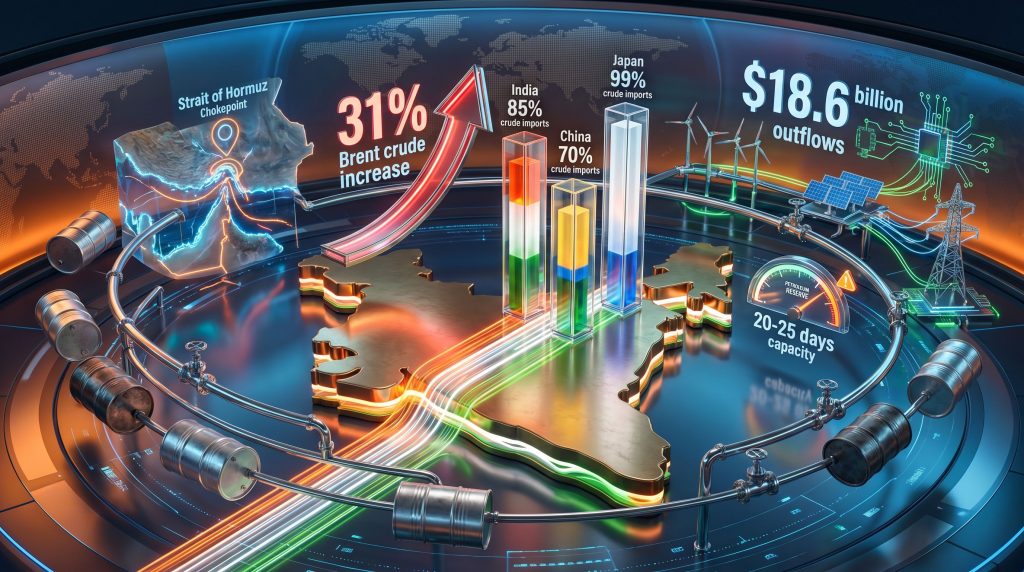
Recent market conditions illustrate these threshold effects clearly. Brent crude prices increased 31% since geopolitical tensions escalated on February 28, 2026, demonstrating how quickly energy markets can shift from stable pricing to sustained volatility. This price escalation represents more than a temporary spike, as production operations and logistical assets require extended timeframes to restart and reposition following disruptions.
The distinction between temporary and prolonged disruptions also involves examining recovery capacity. Emerging markets typically lack the strategic petroleum reserves that buffer developed economies during supply shocks. When disruptions persist beyond immediate market adjustment periods, they begin affecting industrial production schedules, transportation cost structures, and government fiscal planning processes.
Structural Vulnerability Indicators:
- Limited strategic reserve capacity relative to daily consumption
- High geographic concentration in supply sources
- Inadequate alternative transportation route development
- Restricted access to sophisticated financial hedging instruments
- Limited domestic production capacity for energy substitutes
Why India's Energy Import Architecture Creates Systemic Vulnerability
India's position as the world's third-largest crude oil importer creates fundamental exposure to global energy supply disruptions that extends far beyond simple commodity price risk. The architecture of India's energy import system concentrates multiple vulnerability factors that amplify the economic impact of prolonged disruptions.
Strategic Reserve Inadequacy
India maintains strategic petroleum reserves covering only 20-25 days of refining capacity, representing a critical infrastructure gap compared to other major importers. This limited buffer stock provides minimal protection during extended supply disruptions, forcing immediate adjustment to market price volatility without the cushioning effect that larger reserves would provide.
| Economy | Import Dependency | Strategic Reserves | Supply Diversification |
|---|---|---|---|
| India | 85% crude imports | 20-25 days | Limited geographic spread |
| China | 70% crude imports | 90+ days | Extensive pipeline network |
| Japan | 99% crude imports | 200+ days | Multiple source regions |
Geographic Concentration Risks
Approximately 50% of India's crude imports originate from Middle Eastern sources, creating concentrated exposure to regional geopolitical developments. This geographic concentration combines with transportation chokepoint vulnerabilities, particularly through the Strait of Hormuz, where approximately 20% of global petroleum liquids transit daily.
Furthermore, India's import architecture relies heavily on maritime transportation routes that become vulnerable during regional conflicts. Unlike countries with extensive pipeline networks connecting multiple supply regions, India's energy security depends largely on tanker shipping through potentially contested waters.
The systemic nature of this vulnerability becomes evident during crisis periods. When energy supply disruptions occur, multiple transmission mechanisms activate simultaneously: import bill expansion, currency pressure, inflation acceleration, and corporate margin compression across energy-intensive sectors. These effects compound rather than offset each other, creating systemic economic stress that extends far beyond the energy sector itself.
Foreign investors offloaded $18.6 billion worth of Indian shares in 2026, with $12.7 billion representing net outflows, demonstrating how energy disruption concerns translate directly into capital market volatility and currency pressure.
How Geopolitical Tensions Amplify Economic Transmission Mechanisms
Geopolitical developments affecting major energy-producing regions create multiple transmission pathways that amplify economic impacts beyond direct commodity price effects. The mechanism operates through risk premium embedding in commodity pricing, supply chain disruption expectations, and investor sentiment shifts that occur independently of actual supply destruction.
Price Transmission Dynamics
The 31% increase in Brent crude prices since February 28, 2026 illustrates how geopolitical risk premiums become embedded in energy pricing. This price escalation reflects not only current supply disruptions but also market expectations about potential future interruptions to production and transportation infrastructure. For instance, the oil price rally demonstrates similar market dynamics during periods of heightened uncertainty.
Risk Premium Components:
- Insurance cost increases for maritime energy transportation
- Shipping route diversification expenses
- Production facility security enhancement costs
- Strategic inventory accumulation by importing nations
- Financial market hedging premium expansion
Energy pricing during geopolitical tensions incorporates uncertainty premiums that persist even when physical supply disruptions remain limited. Markets price in potential supply destruction scenarios, creating sustained price elevation that affects importing economies regardless of actual production outages.
Logistical Infrastructure Vulnerabilities
Middle Eastern energy infrastructure faces extended restoration timeframes following geopolitical disruptions. Production operations and logistical assets require significant time investments to restart and reposition, creating supply constraints that extend beyond immediate conflict periods.
Geopolitical energy supply concerns trigger immediate capital flow reversals in emerging market economies. The $18.6 billion in foreign investor outflows from Indian markets demonstrates how energy supply vulnerability concerns translate directly into investment sentiment deterioration and currency pressure.
Additionally, energy price volatility creates uneven impacts across corporate sectors, with fuel-dependent industries bearing disproportionate pressure. Oil marketing companies, cement manufacturers, chemical producers, and transportation operators face immediate margin compression that often cannot be offset through pricing adjustments due to competitive constraints.
What Fiscal and Monetary Policy Constraints Emerge During Energy Crises?
Prolonged energy disruption in India creates complex policy dilemmas for emerging market governments by simultaneously generating inflationary pressure, growth constraints, and fiscal account deterioration. These multiple pressures limit conventional policy response options and force difficult trade-offs between competing economic objectives.
Growth Forecast Deterioration
Moody's revised India's real GDP growth forecast from 6.8% to 6.0% for fiscal 2027, representing an 80 basis point reduction that reflects energy disruption impacts across multiple economic sectors. This growth revision indicates that energy supply constraints create sustained rather than temporary economic drag.
Fiscal Account Pressure Points
Energy import cost increases directly affect government fiscal accounts through multiple channels:
- Trade deficit expansion through higher import bill costs
- Subsidy burden increases as governments attempt to shield consumers from energy price inflation
- Revenue collection deterioration from reduced economic activity in energy-intensive sectors
- Debt sustainability pressures from combining higher borrowing costs with reduced growth prospects
However, central banks face reduced policy flexibility during prolonged energy disruptions because traditional monetary tools become less effective. Accommodative monetary policy intended to support growth can exacerbate inflation pressures, while restrictive policy aimed at controlling inflation can worsen growth deterioration.
State Enterprise Subsidy Mechanisms
Government attempts to contain energy price inflation through subsidies absorbed by state-owned enterprises create unsustainable fiscal pressures. Cost increases have been shifted to state-owned oil marketing companies' balance sheets in ways that rating agencies view as creating contingent fiscal liabilities for government accounts.
Energy import cost increases directly worsen current account balances while simultaneously triggering capital outflows through investor sentiment deterioration. This dual pressure on external accounts limits central bank flexibility in maintaining exchange rate stability without depleting foreign exchange reserves.
Consequently, prolonged energy disruptions require coordination between fiscal and monetary authorities, state and central government policies, and domestic economic management with international cooperation frameworks. This coordination becomes more difficult as political pressures mount to provide immediate relief from energy cost increases.
Which Economic Sectors Face Maximum Disruption Risk?
Energy supply disruptions create highly uneven impacts across economic sectors, with severity determined by energy intensity, pricing flexibility, and capacity to substitute alternative inputs. Understanding sectoral vulnerability patterns helps identify where economic adjustment pressures will concentrate during prolonged disruptions.
Oil Marketing Companies (OMCs)
State-owned oil marketing companies face the most direct impact from prolonged energy disruption in India. These enterprises have absorbed fuel subsidies to contain transportation cost inflation, but this approach shifts cost pressures onto their balance sheets in ways that create unsustainable financial conditions.
OMC Financial Stress Indicators:
- Margin compression from regulated pricing constraints
- Inventory valuation losses during price volatility periods
- Working capital pressure from delayed subsidy reimbursements
- Debt accumulation to maintain operations during loss periods
- Credit rating pressure from deteriorating financial metrics
Manufacturing Sector Vulnerabilities
Energy-intensive manufacturing industries face sustained margin pressure during prolonged energy disruptions because production cost increases often cannot be immediately passed through to customers.
High-Risk Manufacturing Sectors:
| Industry | Energy Cost Share | Price Flexibility | Substitution Options |
|---|---|---|---|
| Cement | 30-40% of production cost | Limited due to competition | Minimal short-term alternatives |
| Chemicals | 25-35% of production cost | Varies by product segment | Some feedstock substitution |
| Steel | 20-30% of production cost | Commodity pricing pressure | Limited energy alternatives |
| Aluminum | 35-45% of production cost | Global price benchmarking | Minimal substitution capacity |
Transportation Sector Impact
Transportation industries face dual pressure from higher fuel costs and reduced demand as economic activity slows. Commercial transportation operators experience immediate cost increases that often cannot be fully recovered through pricing adjustments due to competitive pressures and regulatory constraints.
While service sectors have lower direct energy intensity, they experience significant indirect effects through:
- Logistics cost inflation affecting supply chain operations
- Tourism industry impacts from higher transportation costs
- Information technology power reliability concerns during grid stress
- Financial services credit quality deterioration in energy-intensive client sectors
Power Generation Sector
India's power generation mix creates vulnerability to energy supply disruptions through both fuel cost increases and operational reliability challenges. Coal-fired power plants face transportation cost increases whilst gas-fired facilities experience direct fuel cost pressures.
Although agriculture has lower direct energy intensity, it faces significant impacts through fertiliser cost increases (energy-intensive ammonia production), irrigation system power cost escalation, transportation cost increases for agricultural products, and input cost inflation affecting farm profitability.
The next major ASX story will hit our subscribers first
How Credit Rating Agencies Assess Sovereign Risk During Energy Disruptions
Credit rating agencies employ comprehensive frameworks to evaluate how prolonged energy disruptions affect sovereign creditworthiness, incorporating both immediate economic impacts and longer-term structural adaptation capacity. These assessments influence borrowing costs and international investor confidence across entire economies.
Moody's Current Assessment Framework
India maintains a Baa3 rating with stable outlook despite the growth forecast revision, indicating that rating agencies distinguish between temporary economic adjustment and fundamental creditworthiness deterioration. However, this stability depends on policy response effectiveness and disruption duration.
Rating Methodology Components:
Rating agencies evaluate multiple factors simultaneously during energy disruption assessments:
- Structural reform implementation capacity during crisis periods
- External investor confidence sustainability metrics through capital flow analysis
- Inflation expectation anchoring effectiveness under cost pressure
- Policy flexibility constraint analysis across fiscal and monetary domains
- External balance deterioration trajectory and sustainability thresholds
Scenario-Based Risk Assessment
Credit rating agencies develop multiple scenarios for energy disruption impacts, ranging from temporary adjustment to prolonged structural challenges:
Base Case Scenario:
- Energy prices moderate within 6-12 months
- Policy responses contain inflation expectations
- External investor confidence stabilises
- Growth impact remains temporary
Stress Case Scenario:
- Energy disruptions persist beyond 12 months
- Inflation becomes entrenched above target ranges
- Capital outflows accelerate and persist
- Growth impacts become structural rather than cyclical
Specific conditions that could prompt rating downgrades include prolonged disruption extending beyond economic adaptation capacity, inflation expectation de-anchoring despite policy intervention, external balance deterioration accelerating beyond sustainable levels, and policy coordination failures creating additional economic uncertainty.
Furthermore, rating agencies evaluate India's energy disruption response relative to other emerging market economies facing similar challenges. Countries with better strategic reserves, more diversified supply sources, or stronger policy response capacity may maintain rating stability whilst others face downgrade pressure.
What Structural Reforms Could Enhance Energy Security Resilience?
Building resilience against prolonged energy disruption in India requires comprehensive structural reforms across multiple dimensions, from strategic infrastructure development to market mechanism improvements and international cooperation frameworks.
Strategic Petroleum Reserve Expansion
India's current 20-25 day strategic reserve capacity represents a critical infrastructure gap requiring substantial expansion. Optimal reserve capacity should target 90-120 days of consumption coverage, bringing India closer to international best practices for import-dependent economies.
Reserve Development Priorities:
- Underground storage facility construction in geographically distributed locations
- Above-ground strategic storage capacity enhancement
- Emergency distribution infrastructure connecting reserves to major consumption centres
- Public-private partnership models for reserve financing and management
- International cooperation agreements for reserve sharing during regional crises
Supply Source Diversification
Reducing geographic concentration risks requires systematic development of alternative supply relationships and transportation infrastructure. This includes Saudi exploration licenses and other regional partnerships that could provide alternative supply sources.
Diversification Strategy Elements:
- African energy producer partnership development
- Russia-India energy cooperation expansion through dedicated pipeline infrastructure
- Domestic production enhancement in both conventional and unconventional resources
- Alternative transportation route development reducing maritime chokepoint dependency
- Long-term energy purchase agreements with multiple supplier regions
Market Mechanism Modernisation
Energy market structures require fundamental reforms to enhance price discovery, improve efficiency, and reduce government fiscal exposure during crisis periods.
Priority Market Reforms:
- Petroleum product pricing deregulation allowing market-based adjustments
- Electricity market liberalisation enabling competitive price discovery
- DISCOM financial health restoration reducing government subsidy burden
- Grid infrastructure modernisation supporting renewable energy integration
- Energy derivatives market development for risk management
India's current renewable capacity of 120 GW representing 41% of installed capacity provides a foundation for reducing fossil fuel import dependency, but requires substantial scaling and integration infrastructure development.
Integration Requirements:
- Grid stability infrastructure for intermittent renewable sources
- Large-scale energy storage system deployment
- Smart grid technology implementation for demand response management
- Transmission network expansion connecting renewable generation centres with consumption areas
- Battery manufacturing capacity development for energy storage
How Global Energy Transition Trends Affect India's Vulnerability Profile
The global transition toward renewable energy sources creates both opportunities and challenges for reducing India's energy import vulnerability. Understanding these transition dynamics helps identify pathways for building long-term energy security whilst participating in evolving international energy markets.
Renewable Energy Scaling Trajectory
India's renewable energy development faces technical and financial challenges that must be addressed to achieve meaningful import dependency reduction. Current deployment rates require acceleration to achieve energy security objectives within reasonable timeframes. The broader renewable energy transformations occurring globally provide context for India's development trajectory.
Technical Integration Challenges:
- Grid stability maintenance with high renewable penetration levels
- Intermittency management requiring sophisticated forecasting and dispatch systems
- Energy storage technology deployment at utility scale
- Transmission infrastructure expansion connecting distributed generation sources
- Demand response system development for load balancing
Green Hydrogen Economy Development
Hydrogen production represents a potential pathway for both domestic energy security and export opportunity development. Green hydrogen production using renewable electricity could reduce fossil fuel dependency whilst creating new revenue streams.
Hydrogen Development Framework:
- Electrolyser manufacturing capacity building
- Renewable electricity dedicated to hydrogen production
- Industrial decarbonisation applications in steel, cement, and chemical sectors
- Transportation fuel applications for long-haul trucking and maritime shipping
- Export infrastructure development for international hydrogen markets
Electric Vehicle Ecosystem Development
Transportation electrification reduces petroleum import dependency whilst creating new electricity demand that can be met through domestic renewable generation.
Electrification Requirements:
- Charging infrastructure deployment across urban and highway networks
- Battery manufacturing capacity development
- Grid integration systems for vehicle-to-grid applications
- Public transportation electrification programmes
- Industrial vehicle electrification in mining, logistics, and manufacturing
Energy transition success requires access to advanced technologies through international cooperation agreements that facilitate technology transfer and joint development programmes.
What Investment Implications Emerge for Energy Infrastructure?
Prolonged energy disruption in India creates substantial investment requirements across multiple infrastructure categories whilst also generating new opportunities for both domestic and international investors. Understanding these investment implications helps identify priority areas for capital allocation. Additionally, the broader tariffs and market impacts from global trade tensions affect investment flows into energy infrastructure.
Strategic Infrastructure Investment Requirements
Government budget allocation of ₹22,000 crore for transmission network strengthening represents initial investment in grid modernisation, but comprehensive energy security requires much larger capital commitments across multiple infrastructure categories.
Priority Investment Areas:
| Infrastructure Category | Investment Requirement | Timeline | Financing Approach |
|---|---|---|---|
| Strategic petroleum reserves | $15-20 billion | 5-7 years | Public-private partnership |
| Transmission grid expansion | $25-30 billion | 7-10 years | Mixed public-private |
| Renewable generation capacity | $150-200 billion | 10-15 years | Predominantly private |
| Energy storage systems | $40-50 billion | 8-12 years | Technology partnerships |
Private Sector Investment Opportunities
Energy infrastructure investment creates opportunities for private capital across multiple segments, from generation and transmission to storage and efficiency technologies.
High-Opportunity Segments:
- Solar and wind generation project development
- Battery manufacturing and deployment
- Smart grid technology systems
- Energy efficiency retrofit programmes
- Alternative fuel production facilities
Foreign Investment Considerations
International investors evaluating Indian energy infrastructure face multiple risk factors that must be balanced against growth potential and strategic importance.
Risk-Return Assessment Factors:
- Regulatory framework stability and predictability
- Currency hedging availability for long-term projects
- Technology transfer facilitation through government policies
- Local content requirements and manufacturing obligations
- Revenue recovery mechanisms during economic disruption periods
Energy infrastructure investment requires sophisticated financial market infrastructure including project financing capabilities, risk management instruments, and long-term capital availability.
Financial Infrastructure Needs:
- Infrastructure debt market development for long-term project financing
- Green bond market expansion for renewable energy projects
- Energy commodity derivatives markets for risk management
- Foreign exchange hedging instruments for international technology imports
- Insurance market capacity for energy infrastructure risks
Regional Cooperation Investment Opportunities
South Asian regional energy integration creates opportunities for cross-border infrastructure investment that enhances energy security for multiple countries simultaneously.
Regional Integration Projects:
- Cross-border electricity transmission infrastructure
- Regional natural gas pipeline networks
- Shared strategic petroleum reserve facilities
- Joint renewable energy development projects
- Regional energy trading market infrastructure
The investment implications of prolonged energy disruption in India extend far beyond simple infrastructure replacement or expansion. They require fundamental restructuring of energy system architecture to enhance resilience, efficiency, and sustainability whilst maintaining economic competitiveness. Success requires coordination between public policy frameworks, private sector investment capabilities, and international cooperation agreements that facilitate technology transfer and risk sharing.
These investment requirements represent both challenges and opportunities for India's long-term economic development. Whilst the capital requirements are substantial, successful energy infrastructure modernisation could reduce long-term economic vulnerability whilst positioning India as a leader in global energy transition trends. The key lies in developing financing mechanisms that attract private investment whilst maintaining public sector oversight of strategic infrastructure assets.
Moreover, analysing India's renewable energy opportunities reveals significant potential for reducing energy import dependency through domestic resource development and technological advancement.
Investment decisions in energy infrastructure should be evaluated based on comprehensive risk assessment and long-term economic projections. This analysis provides general information and should not be considered specific investment advice.
Ready to capitalise on emerging energy infrastructure opportunities?
Discovery Alert's proprietary Discovery IQ model delivers real-time alerts on significant mineral discoveries across ASX-listed companies, including critical energy transition metals and infrastructure materials essential for India's energy security transformation. Explore Discovery Alert's dedicated discoveries page to understand how major mineral discoveries can generate substantial returns, then begin your 14-day free trial to position yourself ahead of emerging market opportunities.