May 18, 2026

The Economics of Ore: Why What Happens After Extraction Defines a Nation's Wealth
Every tonne of unprocessed mineral ore that leaves an African port represents a transaction where the continent sells raw potential and buys back finished value at a steep premium. This is not a new phenomenon. For decades, the structural architecture of global mineral supply chains has concentrated transformation wealth in industrialised processing hubs while resource-rich nations remain anchored to the extraction end of the value chain. The critical minerals demand is accelerating this dynamic, with appetite for copper, platinum group metals (PGMs), manganese, lithium, and rare earth elements intensifying precisely as global manufacturers seek to lock in long-term supply agreements. For African nations holding significant reserves of these critical minerals, the window to capture downstream processing value has never been more commercially consequential.
Understanding how Mintek's impact on Africa's mineral footprint is reshaping this equation requires examining both the scale of the structural problem and the technical sophistication of the solutions being deployed across the continent.
When big ASX news breaks, our subscribers know first
Africa's Mineral Processing Gap: The Continent's Most Persistent Value Deficit
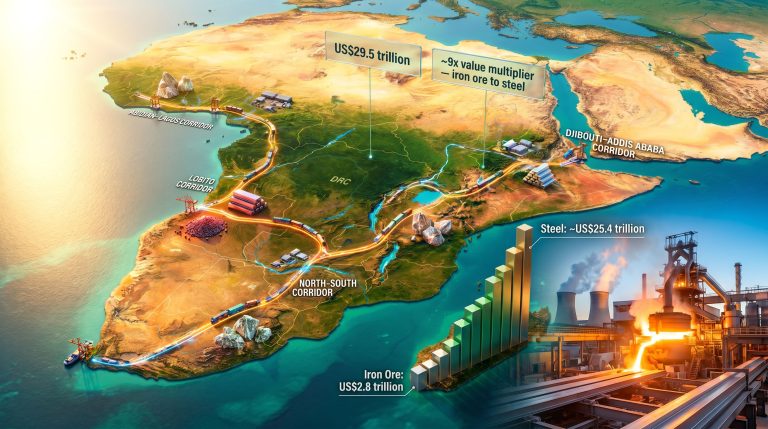
Africa holds an estimated 30% of the world's mineral reserves yet captures only a fraction of the downstream processing and manufacturing value generated from those resources. This gap between what the continent owns underground and what it retains economically is the defining industrial challenge of Africa's resource sector. The economics are straightforward: raw ore commands a base price at the point of extraction, while processed mineral products multiply that base value by factors of 3x to 10x depending on the commodity and the degree of transformation applied.
For copper specifically, the value differential is stark. Raw concentrate typically generates revenue in the range of $2,000 to $3,000 per tonne, while refined copper metal commands $8,000 to $10,000 per tonne on international markets, representing a 300 to 400 percent value increase achievable through processing. For PGMs and rare earth elements, the multipliers are even more pronounced once processing extends into refined metals and functional components for clean energy applications.
Why the Processing Gap Persists
The persistence of Africa's mineral processing deficit stems from several interconnected technical and economic barriers:
- Capital intensity: Establishing smelters, refineries, and hydrometallurgical processing plants requires substantial upfront investment that has historically been difficult to secure within the continent
- Technical complexity: Many African ore bodies present unique metallurgical challenges, including refractory mineralogy, complex multi-element matrices, and highly variable feed grades that demand specialised processing expertise
- Energy infrastructure constraints: Mineral processing is energy-intensive, with grinding operations alone typically consuming 40 to 50 percent of a processing plant's total electricity demand, creating barriers in regions with limited power infrastructure
- Skills concentration: The specialised metallurgical knowledge required to operate sophisticated processing circuits has historically been concentrated outside the continent
- Supply chain lock-in: Established global processing hubs have created entrenched offtake relationships that create structural barriers to entry for new African processing capacity
The energy transition is intensifying pressure on these barriers because the minerals most critical to clean energy manufacturing, including cobalt, lithium, rare earths, and PGMs, are disproportionately concentrated in African geology. As global manufacturers seek to diversify supply chains in response to geopolitical realignments, African processing capacity is transitioning from a development aspiration to a commercial necessity.
What Mintek Does and Why Its Dual Role Is Strategically Unique
South Africa's national mineral research organisation, Mintek, occupies an unusual institutional position that distinguishes it from conventional research bodies and commercial metallurgical consultancies. Founded in 1979, Mintek was initially established to serve South Africa's domestic mining sector. Its evolution into a pan-African technology deployment platform represents a strategic pivot that has taken decades to fully materialise, and its significance for continental industrialisation is difficult to overstate.
What makes Mintek structurally unique is its simultaneous operation as both a research institution and a technology commercialisation platform. This dual role means that metallurgical innovations developed in Mintek's laboratories do not remain confined to academic publications. They are engineered through to full industrial implementation and deployed across diverse African mining environments. Furthermore, Mintek's proprietary technologies and products are currently deployed in more than 60 countries globally, demonstrating that African-origin mineral innovation has achieved genuine international competitiveness.
From National Research Body to Continental Capability Builder
The philosophical shift underpinning Mintek's continental expansion is equally important as the technical achievements it enables. The organisation has moved beyond its original domestic mandate to function as a regional technical anchor for the Southern African Development Community (SADC) and increasingly for the broader African continent. This repositioning aligns directly with South Africa's Critical Minerals Strategy, which places Mintek at the centre of the country's technical response to the global energy transition commodity supercycle.
Mintek's Chief Executive Officer, Dr. Molefi Motuku, has articulated this institutional mission in terms that emphasise African economic sovereignty, stating that genuine continental development depends on Africa's collective capacity to shift from raw material exporter to high-value processing hub, and that the continent must become the primary beneficiary of its own mineral wealth. This framing reflects a broader strategic philosophy that positions processing capability not merely as an economic opportunity but as a prerequisite for long-term sovereign wealth generation.
The South Africa-Zambia bilateral partnership represents a particularly instructive structural model for how this philosophy is being operationalised. Rather than relying on conventional development assistance frameworks, this partnership operates at the sovereign level, enabling peer-to-peer institutional capacity transfer that builds durable technical capability within recipient institutions.
How Mintek's Proprietary Technologies Are Reshaping Processing Across the Continent
Mintek's continental impact operates through several distinct technology platforms, each addressing specific processing challenges that are particularly acute within African mining environments.
Floatstar: Stabilising the Copperbelt's Most Volatile Processing Challenge
Flotation circuit optimisation is one of the most technically demanding challenges in base metal and gold processing. Flotation is the primary separation process used to upgrade run-of-mine ore into saleable concentrate, and its performance is highly sensitive to variations in ore feed mineralogy, particle size distribution, reagent chemistry, and hydrodynamic conditions within flotation cells. In the Copperbelt region, where ore bodies display significant geological variability, maintaining consistent flotation performance represents a persistent operational challenge that directly affects metal recovery and concentrate grade.
Mintek's Floatstar technology addresses this challenge through sophisticated process control algorithms that continuously monitor circuit conditions and make real-time adjustments to stabilise performance. The practical consequences of flotation circuit instability are commercially significant: metal recovery losses of 2 to 8 percent are common in operations relying on manual control under variable feed conditions. Automated optimisation systems like Floatstar target this loss window directly, with each percentage point of recovered metal translating into measurable revenue uplift per tonne processed across large-volume operations.
Beyond recovery improvements, Floatstar delivers secondary operational benefits through reduced reagent overconsumption. Flotation reagents, including collectors, frothers, and modifiers, represent a significant operating cost in processing operations, and their overconsumption under manual control regimes adds expense without proportional recovery benefit. Automated circuit control eliminates this inefficiency systematically.
Cynoprobe: Redefining the Continental Standard for Gold Processing Safety
Cyanide management in gold processing represents both an environmental imperative and a regulatory compliance requirement across African gold-producing nations. Sodium cyanide is essential to the carbon-in-leach (CIL) and carbon-in-pulp (CIP) processes that dominate gold recovery at commercial scale, but its concentration must be maintained within precise operational windows. Too little cyanide results in incomplete gold dissolution and recovery losses; too much represents unnecessary chemical consumption and environmental risk.
Mintek's Cynoprobe technology provides continuous inline cyanide concentration measurement, replacing periodic manual sampling with real-time process intelligence. This distinction is technically significant: batch sampling introduces time lags between measurement and process response that allow out-of-specification conditions to persist, while continuous measurement enables immediate corrective action.
The geographic footprint of Cynoprobe deployments across the continent reflects both the technology's technical merit and the scale of African gold processing operations:
| Country | Deployment Status | Regional Context |
|---|---|---|
| South Africa | Primary market and largest user | Technology origin and primary development base |
| Ghana | Second-largest user | Major West African gold processing hub |
| Côte d'Ivoire | Active installations | Rapidly growing gold sector |
| DR Congo | Active installations | Multi-commodity processing environment |
| Tanzania | Active installations | East African gold corridor |
| 6 additional nations | Deployed | Total continental footprint: 11 countries |
Active installations across 11 African nations represent a continental standard-setting achievement rather than merely a commercial success. The widespread adoption of a single technology platform across such diverse regulatory, operational, and geographic environments demonstrates Mintek's capacity to develop solutions that address continent-wide challenges rather than site-specific problems.
Comminution Engineering and Foundry Metallurgy: Solving the Wear Problem
Grinding is the most energy-intensive and equipment-intensive stage of most mineral processing operations. Ball mills and related grinding equipment operate under extreme abrasive conditions, and the rate at which mill liners and grinding media wear determines both operating costs and planned maintenance intervals. In African mining environments, where abrasive ore types are common and supply chains for replacement components can be extended and expensive, accelerated equipment wear represents a significant operational vulnerability.
Mintek's comminution research addresses this challenge through the development of specialised cast iron and steel formulations engineered to maximise wear resistance while maintaining the impact toughness required for grinding applications. The practical outcome is extended operational lifespan for grinding equipment, reduced frequency of liner replacement, and lower total cost of ownership across the asset life cycle.
This work is complemented by dedicated foundry development programmes that establish local manufacturing capability for wear components in regional industrial hubs. Current foundry development initiatives support major centres including Lusaka, Kitwe, Gaborone, Dar es Salaam, and Cairo, creating local supply chain infrastructure that reduces import dependency for critical components. The downstream manufacturing multiplier of this approach extends beyond cost savings: building foundry metallurgy capability within host economies creates skilled manufacturing employment and durable industrial competency that persists beyond individual mining project cycles.
Primary comminution technology deployment nodes across southern and West Africa include Botswana, Zambia, and Ghana, where the combination of abrasive geology and large-scale operations creates the greatest demand for enhanced wear performance.
The ORTARChI Framework: Building Africa's Scientific Pipeline
Technology deployment addresses immediate processing challenges, but sustainable industrial capability requires a continuous pipeline of trained scientists and engineers who can adapt, improve, and innovate beyond the initial implementation. This is the strategic logic underlying Mintek's engagement with the O.R. Tambo Africa Research Chairs Initiative (ORTARChI), a bilateral scientific collaboration framework established at the highest levels of South Africa-Zambia governmental cooperation.
ORTARChI engages the Copperbelt University and the University of Zambia as co-research nodes, with a specific focus on Environment, Development, and Water sub-disciplines. The choice of these research areas is not incidental: they represent the intersection points between mineral processing operations and the communities, ecosystems, and water resources that surround them. By embedding mineral processing research within a broader socioecological framework, ORTARChI ensures that scientific capacity development addresses the full complexity of responsible mining rather than processing efficiency in isolation.
Why Technology Adoption Differs from Technology Internalisation
A critical distinction in the capacity-building argument concerns the difference between adopting a technology developed elsewhere and internalising the knowledge required to understand, adapt, and improve that technology independently. Conventional technology transfer programmes typically achieve adoption; ORTARChI is specifically designed to achieve internalisation.
The integration of smart-mining methodologies into university research curricula at Copperbelt University and the University of Zambia ensures that the next generation of Zambian engineers and scientists is trained using African ore bodies as research subjects and African processing challenges as the primary frame of reference. This orientation produces graduates whose technical formation is grounded in the specific geological, environmental, and operational conditions they will encounter professionally, rather than in idealised laboratory conditions designed around ore types from other continents.
This distinction matters enormously for Africa's long-term mineral sovereignty. Imported technical expertise, however capable, addresses specific project requirements over defined contract periods. Indigenous scientific capacity compounds over time, building institutional knowledge that is transferable across projects, adaptive to novel challenges, and resistant to the disruptions that affect externally dependent technical systems.
Heap Leaching in Zambia: A Case Study in Processing Economics
Heap leaching is a hydrometallurgical extraction method particularly well suited to the low-grade oxide copper mineralisation that characterises significant portions of Zambia's Copperbelt. In heap leaching, crushed ore is stacked on lined pads and irrigated with an acidic lixiviant solution that dissolves soluble copper minerals as it percolates through the heap. The copper-bearing solution, known as pregnant leach solution (PLS), is then collected and processed through solvent extraction and electrowinning circuits to produce cathode copper of commercial purity.
The economic viability of heap leaching depends critically on several interrelated processing parameters:
- Acid consumption rates: Sulphuric acid is the primary reagent in copper heap leaching and represents a major operating cost. Gangue minerals that consume acid without contributing to copper dissolution increase costs without improving recovery
- Leach cycle duration: Faster copper dissolution reduces working capital tied up in active heaps and improves asset utilisation
- Copper recovery percentage: The proportion of total copper in the ore that is successfully dissolved and recovered determines revenue generation per tonne of ore processed
- Solution management efficiency: Balancing solution volumes, acid strengths, and application rates across large heap systems requires sophisticated operational management
Mintek's metallurgical process audits and chemical optimisation programmes in Zambia have targeted precisely these parameters, working to reduce acid consumption and accelerate leach kinetics simultaneously. The macroeconomic implications of even incremental improvements at scale are substantial. Across a multi-million-tonne heap leach operation, a 1 to 2 percent improvement in copper recovery translates to tens of millions of dollars in additional revenue over the operational life of the mine.
Beyond the revenue arithmetic, processing efficiency improvements extend the viable operational life of deposits that would otherwise fall below economic thresholds at lower recovery rates. This effectively expands the exploitable resource base without additional exploration expenditure, a critically important outcome for Zambian mining assets in the context of declining high-grade ore availability.
The sovereign wealth implications cascade further: extended mine life sustains royalty streams, tax revenues, employment, and community infrastructure investment over longer periods, compounding the economic benefit of processing optimisation far beyond the direct revenue impact on mine operators.
The next major ASX story will hit our subscribers first
Critical Minerals and Africa's Energy Transition Positioning
Southern Africa's strategic position in the global critical minerals supply chain is both a commercial opportunity and an industrial policy imperative. The region's reserves of PGMs, manganese, chromium, cobalt, and emerging rare earth element deposits represent significant leverage points in the energy transition supply chain, but leverage is only realised through processing capability.
Mintek's historical contribution to PGM processing illustrates this principle with particular clarity. According to Mining Review Africa, Mintek's metallurgical research effectively nearly doubled South Africa's accessible PGM reserve base by making UG2 chromitite reef ores commercially viable. The challenge had been that chromite minerals are problematic in PGM smelting operations because they raise the liquidus temperature of furnace slag and increase viscosity, creating operational difficulties at high chrome concentrations. This is a direct demonstration of how processing technology research can redefine a nation's mineral wealth.
For rare earth processing challenges, Mintek has developed selective extraction methodologies including the PyEarth process that target Southern Africa's underexploited REE resources for integration into clean energy supply chains. Given that rare earth processing currently remains heavily concentrated in a single geographic region globally, the development of alternative processing capability represents both commercial opportunity and supply chain resilience for clean energy manufacturers worldwide.
The Full Beneficiation Value Chain
Mintek's strategic framework extends the beneficiation concept beyond ore processing to encompass downstream manufacturing linkages. The full value chain progression, from ore through concentrate, refined metal, and ultimately to fabricated components for batteries, fuel cells, jewellery, and advanced materials, compounds the economic value retained within the continent at each stage.
For Africa to participate meaningfully in the global energy transition manufacturing ecosystem, local beneficiation is not merely an economic preference. It is a structural requirement. The alternative, remaining a raw material supplier to manufacturing hubs that control both processing and component fabrication, replicates the historical extraction model in a new commodity context.
Mintek's Continental Footprint: A Comparative Perspective
Understanding the significance of Mintek's continental role requires contextualising it against the broader landscape of African mineral research capacity. No comparable institution on the continent combines the same breadth of proprietary technology platforms, cross-border deployment reach, academic partnership infrastructure, and critical minerals strategy leadership. Australia's own green metals leadership provides a useful parallel for how national institutions can anchor critical minerals strategy at the continental level.
| Dimension | Mintek | Comparable Regional Institutions |
|---|---|---|
| Technology export reach | 60+ countries | Primarily domestic focus |
| Proprietary technology platforms | Multiple (Floatstar, Cynoprobe, comminution, foundry) | Limited proprietary platforms |
| Cross-border deployment | 11+ African nations (Cynoprobe alone) | Largely single-country operations |
| Academic partnership model | ORTARChI bilateral framework | Largely ad hoc research arrangements |
| Critical minerals strategy role | National strategy technical lead | Advisory or consultative roles |
| Downstream beneficiation focus | Full value chain mandate | Processing-stage focus typical |
The absence of comparable institutions across the continent represents a structural gap in Africa's industrial development infrastructure. The argument for replicating the Mintek model, combining state backing with commercial orientation and technology export capability, in other African resource-rich nations is compelling both economically and strategically. Regional cooperation frameworks including the African Union, SADC, and the African Continental Free Trade Area provide potential vehicles for scaling mineral research and beneficiation capacity, though this would require sustained political will and coordinated investment across member states.
From Extraction to Industrial Sovereignty: The Long-Term Development Framework
The distinction between extractive revenue and industrial capability as development outcomes from mineral resources is fundamental to understanding why Mintek's work matters beyond individual technology deployments. Extractive revenue is finite and depleting: it exists for the life of the ore body and ceases when the mineral resource is exhausted. Industrial capability is compounding and transferable: it grows through application, generates intellectual property, creates skilled employment, and remains productive long after any individual mine has closed.
Dr. Motuku has framed Mintek's mission in precisely these terms, noting that by sharing technical expertise with regional partners, the institution is building collective institutional capacity for Africa's industrial sovereignty and sustainable, generational wealth generation rather than simply exporting isolated solutions. Consequently, the economic cut-off grades that define viable deposits are themselves shifting as processing innovation expands what is technically and economically recoverable.
When Mintek deploys Floatstar technology at a Copperbelt processing plant, the immediate benefit is improved metal recovery. The longer-term benefit is the accumulation of operational knowledge, process data, and technical experience within the African institutions managing that deployment. When ORTARChI trains a Zambian engineer at Copperbelt University using African ore bodies as research subjects, the immediate output is a graduate thesis. The longer-term output is a scientist capable of advancing African mineral technology independently across a career spanning decades.
The compounding logic of capability-building distinguishes Mintek's approach from conventional technology licensing models, where value continues to flow toward the intellectual property holder with each successive deployment. When African institutions develop and own mineral processing intellectual property, that value flows in the opposite direction, building sovereign technical assets that appreciate rather than depreciate over time.
As Africa's critical minerals come under intensifying global scrutiny driven by energy transition demand, the continent's ability to negotiate favourable terms in supply chain partnerships will depend directly on whether it arrives at those negotiations as a raw material exporter or as a processing and technology hub. Mintek's impact on Africa's mineral footprint will continue to expand as both the demand for critical minerals and the continent's processing ambitions scale upward together.
This article is intended for informational purposes only and does not constitute financial or investment advice. Readers should conduct independent research before making decisions related to mining investments or commodity markets.
Want to Know Which ASX Mineral Discoveries Could Signal the Next Major Resource Story?
Discovery Alert's proprietary Discovery IQ model scans ASX announcements in real time, instantly identifying significant mineral discoveries across more than 30 commodities — from copper and PGMs to rare earth elements — and delivering actionable insights directly to subscribers. Explore Discovery Alert's discoveries page to see how historic finds have generated substantial returns, and begin your 14-day free trial to position yourself ahead of the broader market.