
May 20, 2026
Understanding the Strategic Imperative Behind Energy Tariff Restructuring
The global ferrochrome industry operates within a complex web of energy economics that determines operational viability and competitive positioning. South Africa's position as a dominant ferrochrome producer faces unprecedented challenges as energy costs create fundamental shifts in industrial competitiveness across international markets.
Ferrochrome production represents one of the most energy-intensive metallurgical processes, requiring approximately 3,000-3,500 kilowatt-hours per ton of finished product. This intensive energy requirement makes electricity pricing the primary determinant of operational sustainability for smelting facilities worldwide.
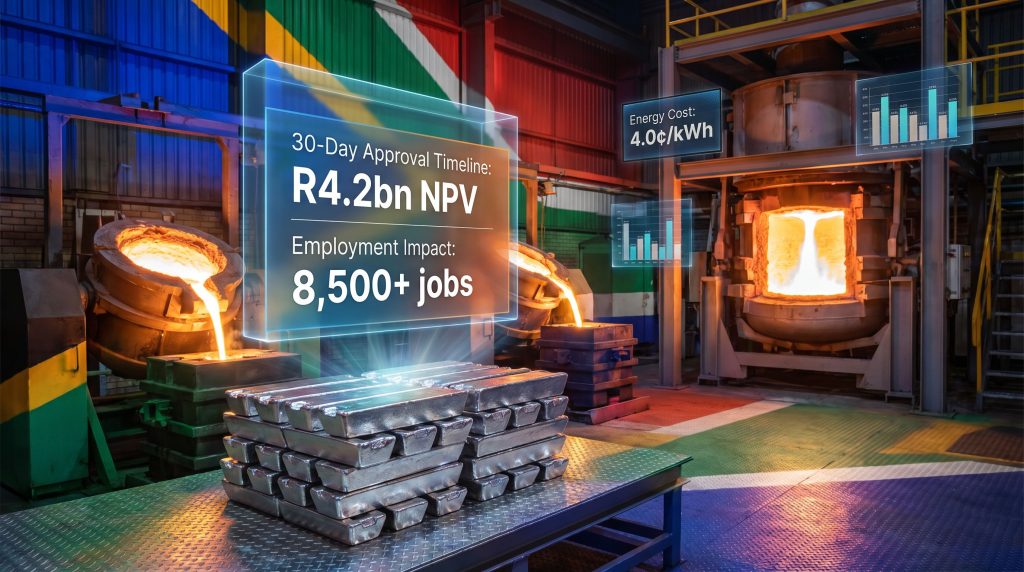
Recent developments in South Africa's regulatory landscape highlight the critical intersection between industrial policy and energy pricing structures. The acceleration of ferrochrome tariff relief process has emerged as a pivotal factor in determining the future viability of domestic production capacity and employment retention across mining communities.
Current regulatory frameworks governing industrial electricity pricing require fundamental reassessment to address competitive disadvantages facing South African producers. Multiple ferrochrome smelters have remained idle for extended periods, creating substantial risks to workforce retention and industrial capacity preservation.
When big ASX news breaks, our subscribers know first
What Economic Models Support Expedited Regulatory Processing?
Regulatory Efficiency Framework Analysis
Strategic regulatory acceleration mechanisms typically employ three primary approaches for compressing standard review timelines. Fast-track approval processes can reduce evaluation periods from conventional 180-day frameworks to expedited 60-day assessments through streamlined stakeholder consultation procedures.
Conditional interim approvals represent another pathway, allowing immediate tariff implementation pending completion of full regulatory review processes. This approach enables operational continuity while maintaining regulatory oversight requirements.
Industry-specific regulatory frameworks designed for energy-intensive manufacturing sectors provide the third acceleration option. These specialized approaches recognise unique operational requirements and competitive pressures facing particular industrial categories.
Cost-Benefit Analysis of Implementation Timelines
Regulatory processing delays create exponential negative impacts on industrial decision-making frameworks. Immediate tariff relief implementation enables preservation of existing workforce levels and maintenance of production capacity utilisation rates.
Extended regulatory timelines force progressive workforce reductions and capacity rationalisation decisions. The relationship between approval delays and economic impacts follows accelerating deterioration patterns rather than linear progression.
Timeline Impact Framework:
- Immediate Implementation: Workforce preservation, capacity maintenance, full economic contribution
- 90-Day Processing Delays: Selective workforce reductions, reduced capacity utilisation
- Extended Delays: Substantial workforce reductions, significant capacity rationalisation
The Glencore Merafe Chrome Venture's recent statement emphasises that timely regulatory consideration remains critical for sector stabilisation and long-term sustainability. Multiple smelters have remained idle for more than a year, highlighting the severity of challenges confronting domestic ferrochrome producers.
How Do Energy Pricing Strategies Impact Global Ferrochrome Market Position?
Competitive Benchmarking Against International Producers
South African ferrochrome operations face distinct energy cost structures compared to global competitors utilising alternative energy sources. International producers benefit from various energy advantages including subsidised coal-based electricity, natural gas pricing benefits, and hydroelectric power access.
Furthermore, China's ferrochrome production benefits from integrated energy policies supporting industrial electricity pricing. Kazakhstan's natural gas advantages provide cost structure benefits for energy-intensive metallurgical operations. Similarly, Norway's hydroelectric capacity enables long-term industrial electricity contracts supporting aluminium and ferroalloy production.
Current South African industrial electricity rates create competitive disadvantages requiring policy intervention through specialised tariff structures. For instance, the proposed ferrochrome-specific electricity pricing aims to restore competitive parity with international production centres.
Strategic Market Positioning Scenarios
Three distinct strategic pathways emerge for South African ferrochrome competitiveness enhancement. However, considering current global trends, these approaches require careful assessment of tariff impact on markets and broader economic implications.
Premium Positioning Strategy focuses development on high-grade ferrochrome production targeting specialised applications requiring superior metallurgical properties. This approach emphasises quality differentiation over volume competition.
Volume Competition Model aims to compete directly with Chinese producers through cost efficiency improvements and operational optimisation. This strategy requires achieving international cost parity through energy pricing adjustments.
Integrated Value Chain Approach develops downstream stainless steel manufacturing capabilities, capturing additional value creation stages within domestic operations.
What Regulatory Innovation Models Could Accelerate Industrial Support?
Cross-Sectoral Policy Integration Framework
Advanced regulatory approaches combine multiple policy instruments addressing energy security, employment protection, export revenue optimisation, and technology transfer requirements. These integrated frameworks recognise interconnections between industrial competitiveness and broader economic development objectives.
Energy security provisions link industrial electricity pricing to national energy independence goals, creating alignment between industrial policy and energy strategy. Employment protection mechanisms tie regulatory timelines to workforce retention commitments, ensuring social considerations within economic decision-making.
Export revenue optimisation structures tariff frameworks supporting foreign exchange generation through enhanced export competitiveness. Technology transfer requirements condition preferential rates on skills development programmes and technological capability enhancement.
International Best Practice Adaptation
Norway's Industrial Energy Strategy provides established precedents for long-term industrial electricity agreements supporting energy-intensive industries. Norwegian aluminium smelters operate under multi-year electricity contracts enabling investment planning certainty and operational stability.
Government co-investment in renewable energy infrastructure creates shared benefits between public energy policy and private industrial operations. Skills development partnerships with educational institutions ensure workforce capability enhancement alongside industrial support measures.
Canada's Resource Processing Framework demonstrates provincial-level approaches to industrial electricity rate guarantees for mining operations. In fact, Canada's energy transition experiences offer valuable insights for managing industrial transformation whilst maintaining competitiveness.
Infrastructure development cost-sharing arrangements reduce capital requirements for industrial expansion whilst supporting regional economic development. Export market development support programmes complement energy pricing policies through trade promotion and market access facilitation initiatives.
How Will Accelerated Processing Impact Investment Decision Frameworks?
Capital Allocation Scenario Modelling
Investment decisions in ferrochrome operations depend critically on regulatory certainty timelines and energy cost predictability. Accelerated regulatory processing enables immediate deployment of maintenance capital and restart of idled smelter capacity.
Rapid Approval Scenarios facilitate immediate restart of idled smelter capacity, enabling full-scale maintenance capital deployment and comprehensive workforce reinstatement within accelerated timeframes.
Extended Processing Timelines force phased capacity restoration approaches requiring selective equipment upgrades and graduated workforce reinstatement with accompanying skills retraining programmes.
Prolonged Regulatory Uncertainty drives asset rationalisation decisions and permanent closure considerations, limiting investment to preservation maintenance activities and minimal workforce retention.
Risk-Adjusted Return Calculations
Financial modelling for ferrochrome investments incorporates regulatory timeline uncertainty as primary risk factors affecting project economics. Shorter approval timelines enable higher net present value realisations through earlier cash flow generation and reduced uncertainty discounting.
Internal rates of return improve substantially with accelerated regulatory processing, reflecting reduced project risk and earlier production restart capabilities. Consequently, payback period calculations demonstrate exponential improvements with faster regulatory certainty achievement.
The Glencore Merafe Chrome Venture statement indicates that regulatory certainty within specified timeframes remains critical for enabling responsible decision-making and preserving options for sustaining operations and employment where possible.
What Broader Industrial Policy Implications Emerge?
Manufacturing Sector Competitiveness Strategy
Ferrochrome tariff relief acceleration creates precedents for broader industrial policy reform across energy-intensive manufacturing sectors. Aluminium smelting operations require similar energy cost structures for maintaining competitive positioning against international producers.
Manganese alloy production faces comparable competitive pressures requiring specialised electricity pricing frameworks. Integrated steel manufacturing depends on affordable ferrochrome inputs, creating supply chain interconnections requiring coordinated policy approaches.
These developments also relate to broader challenges facing energy exports challenges in resource-dependent economies worldwide.
Regional Economic Development Scenarios
Limpopo Province Dependencies highlight the concentrated economic impacts of ferrochrome industry decisions on regional employment and municipal revenue generation. Direct employment in ferrochrome operations supports extensive supply chain employment across mining equipment, transportation, and professional services sectors.
Indirect employment effects multiply direct industry impacts through supplier networks and local service provision. Municipal revenue streams depend substantially on rates and taxes from ferrochrome operations, affecting local government service delivery capabilities.
Community development programmes funded through mining industry social investment create additional economic linkages requiring consideration within policy frameworks addressing industrial competitiveness challenges.
The next major ASX story will hit our subscribers first
How Do Global Supply Chain Disruptions Influence Policy Urgency?
Strategic Resource Security Framework
Recent global events highlight ferrochrome's strategic importance for international stainless steel production and infrastructure development programmes. Chinese export restrictions on critical minerals create supply vulnerabilities requiring alternative production capacity development.
European Green Deal requirements increase demand for low-carbon ferrochrome production methods, creating opportunities for technologically advanced operations. Infrastructure investment programmes across developing economies drive stainless steel demand requiring reliable ferrochrome supply chains.
Additionally, understanding tariffs economic implications provides crucial context for evaluating global trade dynamics affecting mineral commodity markets.
Geopolitical Risk Mitigation
South African ferrochrome production provides supply chain diversification benefits for international stainless steel producers seeking reduced dependency on concentrated production regions. Political stability advantages compared to alternative producing regions enhance supply security value propositions.
Established logistics infrastructure supporting reliable delivery schedules creates competitive advantages for South African producers in international markets requiring consistent supply chain performance.
The acceleration of ferrochrome tariff relief process gains additional urgency within global supply chain resilience frameworks emphasising production capacity preservation and alternative supply source development.
What Technology Innovation Opportunities Emerge?
Next-Generation Production Technologies
Accelerated tariff relief enables investment deployment in advanced ferrochrome production methodologies reducing energy consumption through electric arc furnace optimisation. These technological improvements can achieve 15-20% energy consumption reductions compared to conventional smelting approaches.
Waste heat recovery systems improve overall energy efficiency through capture and utilisation of thermal energy typically lost in conventional production processes. Automated process control systems enhance product quality consistency whilst reducing energy waste through optimised operational parameters.
Carbon capture integration supports environmental compliance requirements whilst potentially accessing carbon credit revenue streams offsetting operational costs. Moreover, mining decarbonisation benefits demonstrate the economic advantages of implementing sustainable production technologies.
Digital Transformation Initiatives
Industry 4.0 Implementation Roadmaps enable Internet of Things sensor networks providing real-time process monitoring and optimisation capabilities. Predictive maintenance systems reduce unplanned downtime through early identification of equipment degradation patterns.
AI-driven quality control optimisation improves product specifications whilst reducing material waste and energy consumption. Blockchain-based supply chain traceability enhances market access through verification of production standards and environmental compliance.
These technological advancement opportunities require initial capital investment enabled through energy cost certainty provided by accelerated regulatory processing of tariff relief applications.
Strategic Implementation Pathways
The acceleration of ferrochrome tariff relief process represents a critical assessment of South Africa's industrial policy responsiveness and sector competitiveness preservation capabilities. Success requires coordinated action across regulatory institutions, industry stakeholders, and government policy development entities.
Strategic scenario modelling demonstrates that rapid regulatory processing delivers substantially higher economic returns compared to extended approval timelines. The exponential relationship between processing delays and economic losses makes expedited implementation economically essential rather than merely beneficial for sector sustainability.
Regulatory innovation opportunities exist through cross-sectoral policy integration, international best practice adaptation, and technology-enabled acceleration mechanisms. These approaches can enhance South Africa's industrial competitiveness whilst maintaining appropriate regulatory oversight and stakeholder consultation requirements.
The interconnections between energy policy, industrial strategy, and employment preservation require integrated approaches recognising multiple policy objectives within regulatory decision-making frameworks. The outcome of current tariff relief processing will establish precedents affecting broader manufacturing sector competitiveness and regional economic development outcomes.
Future exploration of South African ferrochrome industry developments can provide additional insights into regulatory effectiveness, international competitiveness trends, and industrial policy innovation approaches supporting energy-intensive manufacturing sectors.
This analysis contains forward-looking assessments and scenario modelling that involve inherent uncertainties. Readers should conduct independent research and consultation before making investment or operational decisions based on this content.
Ready to Capitalise on Mining Industry Developments?
Discovery Alert's proprietary Discovery IQ model delivers real-time alerts on significant ASX mineral discoveries, instantly empowering subscribers to identify actionable opportunities ahead of the broader market. Begin your 14-day free trial today and secure your market-leading advantage in the evolving resources sector.