
July 17, 2026
The Energy Transition's Supply Chain Crossroads
Global supply chains for critical minerals stand at an unprecedented inflection point. Traditional mining powers face mounting pressure to diversify sourcing strategies away from concentrated processing networks, whilst emerging jurisdictions position themselves as alternative suppliers for energy transition security. This strategic realignment creates opportunities for nations with established mining infrastructure to capture greater value from their mineral endowments through Western-aligned partnerships.
The convergence of electrification demands, geopolitical tensions, and ESG compliance requirements has fundamentally altered how mining investments are evaluated. Projects that previously competed solely on economic metrics now require consideration of supply chain security, processing pathway alternatives, and long-term strategic positioning within evolving global networks.
When big ASX news breaks, our subscribers know first
Zambia Metalex Cobalt Copper Expansion: Strategic Investment Framework
Zambia's mineral sector represents a compelling case study in strategic resource positioning during the global energy transition. The southern African nation's copper-cobalt belt contains some of the world's highest-grade deposits, with established infrastructure and regulatory frameworks that enable rapid production scaling. Recent developments suggest coordinated Western efforts to establish alternative processing pathways that could fundamentally reshape regional supply chains.
Key Investment Metrics:
- USTDA Grant Allocation: $1.41 million in feasibility study funding represents government-backed risk mitigation for private investment
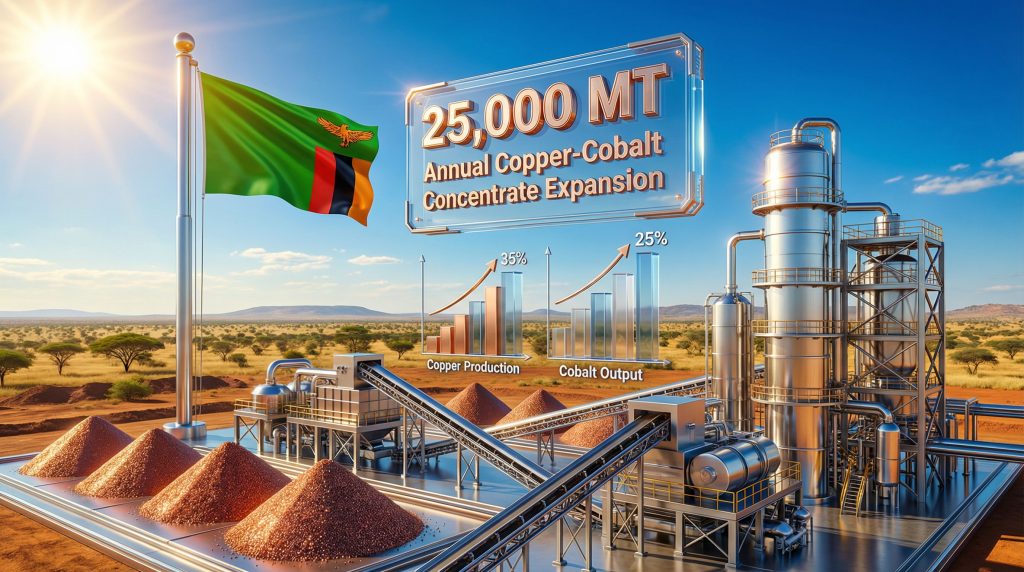
- Production Expansion Target: 25,000 metric tons annual copper-cobalt concentrate capacity increase
- Strategic Positioning: Upstream concentrate production enables flexible downstream processing partnerships
- Export Revenue Concentration: Copper represents 70-75% of Zambian export earnings, creating fiscal dependency that drives diversification initiatives
Technical Specifications and Infrastructure Assessment
The Kazozu Mine expansion project centres on metallurgical processing improvements rather than new mine development. This approach reduces geological risk whilst leveraging existing transportation corridors and electrical infrastructure. Furthermore, the focus on concentrate production specifically targets the supply chain bottleneck between raw ore extraction and refined metal output.
The critical minerals reserve approach demonstrates how strategic stockpiling can complement production expansion initiatives. Moreover, the US government's involvement through USTDA funding reflects growing Western commitment to diversifying mineral supply chains.
Table: Zambia Metalex Project Technical Framework
| Component | Current Capacity | Expansion Target | Strategic Impact |
|---|---|---|---|
| Concentrate Output | Baseline production | +25,000 MT annually | Enhanced processing flexibility |
| Metallurgical Recovery | Standard flotation | Optimised separation | Improved grade quality |
| Energy Infrastructure | Grid/diesel hybrid | Renewable integration study | ESG compliance alignment |
| Transportation Access | Rail/road to ports | Lobito Corridor connectivity | Regional export diversification |
Western Supply Chain Diversification Strategy Analysis
Strategic mineral security has become central to Western economic policy, with concentrate-level sourcing representing the critical intervention point. Unlike refined metal imports, concentrate sourcing enables downstream processing control whilst maintaining supply chain transparency. This positioning proves particularly valuable for cobalt, where processing concentration creates single points of failure in battery supply chains.
The executive order on minerals highlights the significance of government-led initiatives in reshaping supply chain priorities. Additionally, this regulatory framework provides crucial backing for projects like the Zambia Metalex cobalt copper expansion.
Chinese Processing Infrastructure Dominance
China's control over global cobalt refining infrastructure represents approximately 70-80% of total chemical processing capacity. This dominance extends throughout the Zambian Copperbelt, where Chinese-financed smelting and processing facilities handle the majority of local concentrate production. The structural advantage operates through integrated financing, processing technology, and established offtake agreements rather than direct mine ownership.
Processing infrastructure control creates more durable competitive advantages than mine ownership alone, as it captures value from multiple upstream sources whilst maintaining technical barriers to entry.
Chinese Infrastructure Presence in Zambia:
- Major smelting facilities on the Copperbelt processing regional concentrate production
- Integrated financing structures linking mine development to processing commitments
- Established offtake agreements securing long-term material flows to Chinese refineries
- Technical expertise in copper-cobalt separation and intermediate product development
Critical Mineral Resource Assessment Beyond Copper-Cobalt
Zambia's mineral endowment extends significantly beyond its established copper-cobalt production, though development timelines and commercial viability vary considerably across commodities. Understanding these broader prospects provides context for long-term strategic positioning and investment sequencing decisions.
Table: Zambian Critical Mineral Portfolio Assessment
| Mineral | Development Stage | Resource Quality | Strategic Value | Commercial Timeline |
|---|---|---|---|---|
| Manganese | Production (Luapula/Central) | Commercial deposits | Steel/battery applications | Current |
| Nickel | Production (copper byproduct) | Modest, consistent volumes | Stainless steel/batteries | Current |
| Lithium | Exploration (Choma Belt) | Pegmatite-hosted | Battery cathodes | 5-10 years |
| Graphite | Early development (Eastern) | Flake graphite occurrences | Battery anodes | 3-7 years |
| Tantalum/Niobium | Artisanal/exploration | Small-scale occurrences | Electronics/aerospace | Uncertain |
Rare Earth Element Reality Check
Despite geological interest in carbonatite prospects such as Nkombwa Hill, Zambia lacks defined rare earth element reserves or operating mines. Claims suggesting imminent rare earth production should be evaluated sceptically, as the country's demonstrated strategic value lies in base metals and battery mineral inputs rather than magnet-grade rare earth separation capabilities.
Economic Impact Modelling and Fiscal Implications
Expanded copper-cobalt production capacity strengthens Zambia's fiscal position through multiple channels whilst creating opportunities for domestic value-added processing development. The concentration of export earnings in copper creates both opportunity and vulnerability that expansion projects attempt to address through production volume increases rather than commodity diversification.
Economic Multiplier Analysis:
- Direct Employment: Mine operations and processing facility staffing expansion
- Infrastructure Investment: Transportation, power generation, and telecommunications upgrades
- Government Revenue: Mining royalties, corporate taxation, and social development fund contributions
- Regional Development: Service sector growth and technical skills transfer programmes
- Foreign Exchange: Reduced import dependency and enhanced export revenue stability
Investment Risk Mitigation Framework
Table: Risk Assessment and Mitigation Strategies
| Risk Category | Probability | Impact | Mitigation Approach |
|---|---|---|---|
| Infrastructure constraints | Medium | High | Lobito Corridor development, renewable energy integration |
| Regulatory changes | Low | Medium | Established mining code, USTDA backing |
| Market volatility | High | Medium | Diversified offtake agreements, flexible processing |
| Geopolitical competition | Medium | High | ESG compliance, transparent governance |
Global Energy Transition Demand Drivers
Copper and cobalt demand trajectories through the 2030s reflect accelerating electrification across transportation, power generation, and industrial applications. Supply gap projections indicate substantial shortfalls that cannot be addressed through existing production capacity alone, creating opportunities for strategically positioned expansion projects.
The comprehensive US minerals strategy demonstrates coordinated policy responses to these supply challenges. Consequently, projects aligning with this strategic framework receive enhanced support and market access opportunities.
Battery Metal Supply Chain Security
Cobalt applications in lithium-ion battery cathodes, aerospace alloys, and defence systems create strategic dependency concerns that drive government-backed supply chain diversification initiatives. Zambian cobalt production offers geological advantages through copper byproduct economics, reducing primary mining risks compared to concentrated deposits in the Democratic Republic of Congo.
Critical Applications Driving Demand:
- Electric Vehicle Batteries: Cathode materials requiring specific cobalt chemistry
- Grid Energy Storage: Large-scale battery systems supporting renewable energy integration
- Aerospace Applications: High-temperature alloys for turbine engines and structural components
- Defence Systems: Specialised alloys for military equipment and electronics
The next major ASX story will hit our subscribers first
The Metalex Model: Hybrid Operational Architecture
Metalex Africa represents an emerging archetype in African mining: US-incorporated entities combining commercial drive with Western transparency standards and governance frameworks. This structural approach enables institutional investment whilst maintaining operational flexibility and local market knowledge.
The demand surge insights confirm the timing advantage for such strategic positioning initiatives. Furthermore, the hybrid model addresses traditional challenges in African mining investment through innovative partnership structures.
Operational Success Factors
Four-Pillar Framework for Scalability:
- Local Embedding: Deep operational knowledge and established community relationships
- Western Capital Access: US incorporation enabling institutional investor participation
- Regulatory Alignment: ESG compliance and transparent reporting standards
- Strategic Offtake: Predetermined Western market access reducing marketing risk
This hybrid model addresses traditional challenges in African mining investment by combining local operational expertise with Western financial and governance standards, potentially serving as a template for future critical mineral developments.
Development Timeline and Investment Phases
The Zambia Metalex cobalt copper expansion follows a structured development pathway designed to minimise risk whilst establishing clear decision points for capital deployment. Understanding these phases enables realistic expectation setting and strategic planning for stakeholders across the value chain.
Table: Project Development Milestones
| Phase | Duration | Key Activities | Capital Requirements | Decision Criteria |
|---|---|---|---|---|
| Feasibility Study | 12-18 months | Technical assessment, permitting | USTDA grant funding | Economic modelling results |
| Engineering Design | 6-12 months | Detailed engineering, financing | Private capital mobilisation | Construction cost validation |
| Construction | 18-24 months | Facility construction, commissioning | Full project investment | Performance guarantees |
| Operational Ramp-up | 6-12 months | Production optimisation, market development | Working capital | Nameplate capacity achievement |
Feasibility Study Scope and Objectives
The USTDA-funded feasibility study encompasses comprehensive technical and economic analysis across multiple disciplines:
- Geological Assessment: Resource definition and mining optimisation
- Metallurgical Testing: Processing flowsheet development and recovery optimisation
- Infrastructure Planning: Power supply, transportation, and water management
- ESG Integration: Environmental impact assessment and climate resilience planning
- Market Analysis: Offtake strategy development and pricing mechanisms
- Financial Modelling: Capital requirements, operating costs, and return projections
Challenges and Strategic Risk Assessment
Success in Zambian critical mineral development requires navigating complex operational, regulatory, and market challenges whilst maintaining competitive positioning against established players. Understanding these risk factors enables appropriate mitigation strategies and realistic performance expectations.
Infrastructure and Operational Constraints
Zambia's mining infrastructure faces capacity constraints that could limit expansion projects without coordinated investment in supporting systems. Power supply reliability remains a critical concern, with grid instability and diesel backup costs affecting operational economics.
Key Infrastructure Challenges:
- Electrical Supply: Grid reliability and renewable energy integration requirements
- Transportation Capacity: Rail and port infrastructure limitations affecting export logistics
- Water Management: Processing requirements competing with community and agricultural needs
- Technical Skills: Specialised expertise requirements for advanced metallurgical processing
Market Competition and Geopolitical Dynamics
Chinese firms maintain significant competitive advantages through established processing infrastructure, integrated financing capabilities, and long-term offtake agreements. Western re-engagement requires sustained commitment and patient capital rather than short-term opportunistic investment approaches.
The USTDA partnership initiative exemplifies this coordinated approach to supply chain diversification. Moreover, the strategic backing demonstrates Western commitment to developing alternative mineral sourcing networks.
Strategic positioning in critical mineral supply chains requires long-term relationship building and operational excellence rather than purely financial competition, as processing infrastructure and technical expertise create durable competitive advantages.
Strategic Implications for Western Supply Chain Resilience
The Zambia Metalex cobalt copper expansion represents more than incremental production capacity—it demonstrates a pathway for Western re-engagement in critical mineral supply chains through upstream asset control and alternative processing development. Success depends on execution quality, sustained political support, and coordinated infrastructure investment.
This project's significance lies in establishing viable alternatives to China-dominated processing networks rather than immediately displacing existing arrangements. Long-term strategic value emerges through creating options for supply chain diversification whilst maintaining commercial competitiveness.
Additionally, the Mining.com analysis confirms industry recognition of the project's strategic importance within broader supply chain reconfiguration efforts.
Future Development Scenarios
Three potential outcomes define the project's strategic impact:
- Successful Western Integration: Establishes template for additional Western mining ventures in Africa
- Hybrid Cooperation Model: Creates balanced approach combining Western and Chinese participation
- Limited Strategic Impact: Technical or economic challenges prevent significant supply chain diversification
Each scenario requires different strategic responses from stakeholders across the critical minerals value chain, with implications extending beyond individual project success to broader supply chain security objectives.
Disclaimer: This analysis involves forward-looking statements about mining project development, commodity markets, and geopolitical trends that are subject to significant uncertainty and risk. Investment decisions should be based on comprehensive due diligence and professional financial advice.
Ready to Capitalise on Critical Mineral Market Opportunities?
Discovery Alert's proprietary Discovery IQ model delivers real-time notifications on significant ASX mineral discoveries, empowering subscribers to identify actionable opportunities in the critical minerals sector ahead of the broader market. Begin your 30-day free trial today and position yourself to capture the next wave of strategic mineral investments driving the global energy transition.