June 22, 2026

The Evolution of Energy Warfare in Modern Conflict
Maritime energy infrastructure has emerged as a primary target in contemporary asymmetric warfare, fundamentally reshaping global energy security calculations. The Ukrainian attack halts production at Lukoil's Grayfer field exemplifies how modern conflict has evolved from traditional territorial disputes to strategic resource targeting, representing a paradigm shift that extends far beyond immediate conflict zones. This transformation challenges decades of established energy investment frameworks and security protocols, forcing industry participants to reconsider fundamental assumptions about infrastructure vulnerability and geographic risk assessment.
The strategic implications extend beyond immediate production impacts, creating cascading effects across global energy markets, insurance frameworks, and investment priorities. Furthermore, understanding these dynamics requires examining both immediate tactical developments and longer-term structural changes in how energy assets are protected, valued, and strategically positioned within an increasingly interconnected yet vulnerable global energy system.
When big ASX news breaks, our subscribers know first
Strategic Transformation in Maritime Energy Targeting
The shift toward maritime energy infrastructure represents a fundamental escalation in operational scope and strategic thinking. Traditional conflict paradigms focused on territorial control and conventional military assets, but modern asymmetric warfare increasingly targets critical infrastructure as primary objectives rather than secondary considerations.
From Conventional to Extended-Range Operations
Ukrainian military capabilities have undergone significant evolution since 2022, with documented range extensions from approximately 300 kilometers to over 1,000 kilometers. This technological progression enables targeting of previously secure assets located far from active conflict zones. However, recent operations targeting the Grayfer field demonstrate how sophisticated oil price movements analysis becomes crucial for understanding market impacts.
The Caspian Sea campaign specifically illustrates this strategic evolution through coordinated strikes on multiple platforms:
- Filanovsky platform: 45,000 barrels per day capacity targeted
- Korchagin facility: 25,000 barrels per day production affected
- Grayfer field: 21,000 barrels per day operations disrupted
Maritime Vulnerability Assessment
Offshore platforms face unique defensive challenges compared to land-based infrastructure. The Caspian Sea's 143,500 square kilometers of open water creates substantial coverage gaps for traditional air defense systems, which concentrate around coastal installations rather than mid-sea positions. Platform evacuation procedures require 4-24 hours depending on threat assessment, while production restart timelines extend from 24-72 hours for standard operations to weeks or months following significant damage.
According to Ukrainian sources, the attack specifically targeted production facilities at the Grayfer field, demonstrating the precision capabilities of modern drone warfare.
Critical Development: Extended-range precision targeting has eliminated traditional geographic protection for offshore energy assets, requiring comprehensive reassessment of infrastructure risk profiles based on threat radius rather than territorial proximity.
Russian Caspian Energy Infrastructure Significance
The Caspian region represents a strategically vital component of Russian energy operations, providing both immediate revenue streams and geopolitical leverage through complex multilateral arrangements. Understanding the full implications requires examining production capacity, export dependencies, and broader strategic value.
Production Portfolio Analysis
| Platform | Daily Production | Platform Type | Strategic Function |
|---|---|---|---|
| Filanovsky | 45,000 bpd | Fixed Structure | Primary regional asset |
| Korchagin | 25,000 bpd | Ice-resistant | Year-round capability |
| Grayfer | 21,000 bpd | Conventional | Pipeline integration |
| Combined Output | 91,000 bpd | Multi-platform | ~4.3% of Lukoil total |
These assets collectively contribute approximately 91,000 barrels per day to Lukoil's global production capacity of 2.1 million barrels daily. While representing a relatively small percentage of total output, the Caspian platforms provide crucial revenue diversification outside primary Siberian production regions.
At current pricing levels of approximately $59-60 per barrel for Brent crude, production halts across all three platforms represent daily revenue impacts of $2.5-4.0 million. This financial exposure becomes particularly significant under current sanctions regimes that limit revenue recovery mechanisms and alternative market access.
Export Infrastructure Dependencies
The Caspian region's strategic value extends beyond immediate production through complex export routing arrangements. Consequently, how tariffs impact supply chains becomes relevant when considering alternative export routes during disruptions.
Primary Export Routes:
- Caspian Pipeline Consortium (CPC): Main transit through Kazakhstan to Black Sea terminals
- Baku-Batumi Pipeline: Alternative routing via Georgia to avoid CPC dependencies
- Baku-Supsa Pipeline: Secondary Georgian route with independent operational capacity
These multilateral arrangements create both strategic flexibility and political vulnerability. The CPC operates as a consortium entity with Russian, Kazakhstani, and previously Western stakeholder participation, while alternative Baku routing provides geopolitical optionality during primary route disruptions.
Pipeline Capacity Constraints:
Export route limitations prevent rapid production rerouting during disruptions. The Baku-Batumi alternative operates at lower throughput capacity than CPC primary routes, while geographic routing through multiple sovereignty jurisdictions creates complex political dynamics during emergency scenarios.
Technological Evolution and Security Implications
The advancement of long-range precision strike capabilities fundamentally alters energy security calculations across multiple dimensions. These technological developments challenge existing defensive frameworks while creating new categories of infrastructure vulnerability.
Drone Capability Progression
Technical Specifications Evolution (2022-2025):
- Range extension: From 300km to 1,000+ km operational radius
- Precision targeting: Module-specific strikes versus area bombardment
- Platform integration: Coordinated aerial and naval drone operations
- Defensive evasion: Terrain-following flight patterns minimizing radar detection
Modern long-range drone systems employ GPS and satellite guidance with autonomous operational capability, reducing launch frequency requirements while maintaining precision accuracy. Naval drone variants enable launch from coastal positions or maritime platforms, coordinating multi-platform targeting that reduces defensive response effectiveness.
Defense System Limitations
Existing air defense infrastructure was designed for conventional military threat scenarios rather than modern asymmetric warfare tactics. The Caspian region exemplifies these challenges through significant coverage gaps that make Ukrainian attack halts production at Lukoil's Grayfer field scenarios increasingly probable.
Coverage Gap Analysis:
- S-300/S-400 systems: Concentrated near Russian coastal facilities
- Mid-Caspian zones: Significant early warning and intercept capability gaps
- Platform point-defense: Limited to immediate vicinity rather than extended perimeter
- Coordination complexity: Inter-agency response across geographic dispersion
Platform-based defensive systems typically employ gun systems and short-range air defense limited to immediate platform vicinity. Integrated air defense coordination across the Caspian faces constraints from geographic dispersion and inter-agency coordination complexity.
Insurance Market Response:
Lloyd's of London and international maritime insurance markets have documented expanding premium rates for Caspian offshore energy assets, though specific percentage increases remain proprietary to insurance underwriters. This market response indicates professional risk assessment acknowledging structural vulnerability increases.
Market Dynamics and Price Response Patterns
Energy markets demonstrate complex pricing behaviors when confronting infrastructure targeting, often displaying disconnect between geopolitical events and immediate price reactions. For instance, recent oil price crash analysis reveals how multiple factors influence market responses beyond immediate supply disruptions.
Current Price Environment Context
As of December 17, 2025, crude oil markets reflect significant oversupply concerns despite ongoing geopolitical tensions:
Benchmark Pricing:
- Brent Crude: $59.68 per barrel (down from recent highs)
- WTI Crude: $56.85 per barrel
- Murban Crude: $60.86 per barrel
According to energy industry analysis, crude oil prices have fallen to multi-month lows under combined weight of projected supply overhang and media reports regarding potential Ukraine peace negotiations. Market analysts note that these price levels reflect oversupply concerns outweighing geopolitical risk premiums.
Supply Disruption vs. Market Perception
Despite documented production halts at multiple Caspian platforms, crude prices have shown limited sustained reaction to infrastructure targeting. This disconnect suggests several market dynamics that intertwine with broader concerns about US–China trade war effects on global energy demand.
Market Psychology Factors:
- Glut expectations: Widespread analyst projections of oversupplied conditions through 2026
- Russian export stability: Continued crude flows despite sanctions pressure
- Demand concerns: Slowing growth expectations offsetting supply disruption impacts
- Risk premium recalculation: Markets pricing infrastructure vulnerability as permanent rather than episodic
JP Morgan has reiterated expectations of oversupplied market conditions, stating that robust demand cannot offset abundant supply availability. Goldman Sachs projects Brent crude averaging $56 per barrel in 2026, with WTI at $52, citing persistent oversupply despite recent demand growth revisions.
Production Impact Assessment:
The combined Caspian platform disruptions affect approximately 91,000 barrels per day of production capacity. While material for Lukoil operations, this represents less than 1% of global crude production, explaining limited immediate market price response despite strategic significance.
Scenario Analysis for Infrastructure Conflict Escalation
Understanding potential escalation pathways requires systematic assessment of vulnerability patterns, defensive capabilities, and economic implications across multiple energy regions. This analysis provides framework for strategic risk assessment and contingency planning.
Regional Vulnerability Matrix
| Region | Vulnerability Level | Production Impact | Defense Capability | Strategic Significance |
|---|---|---|---|---|
| Baltic Sea | Very High | 400,000 bpd | Moderate | NATO proximity concerns |
| Black Sea | High | 200,000 bpd | Limited | Export route dependencies |
| Arctic Offshore | Low | 150,000 bpd | High | Weather protection factors |
| Barents Sea | Medium | 300,000 bpd | Moderate | Remote location advantages |
Baltic Sea Considerations:
Baltic region platforms face heightened vulnerability due to proximity to NATO territories and limited defensive depth. The 400,000 barrels per day production capacity represents significant economic exposure, while moderate defense capability reflects constraints on comprehensive air defense deployment over international waters.
Retaliatory Strike Possibilities
Escalation scenarios must consider potential retaliatory targeting of Ukrainian and European energy infrastructure. Additionally, how tariffs and global markets interact during periods of energy infrastructure disruption affects broader economic stability.
Ukrainian Infrastructure Exposure:
- Remaining refinery capacity vulnerable to conventional strikes
- Power generation facilities affecting civilian populations
- Import terminal dependencies creating supply chain vulnerabilities
European Security Considerations:
- Gas storage facility protection requirements
- Undersea cable and pipeline security assessments
- LNG terminal hardening against asymmetric threats
- Critical infrastructure coordination across EU member states
Multi-Domain Risk Assessment:
Escalation pathways extend beyond energy infrastructure to encompass telecommunications, transportation, and financial system vulnerabilities. Comprehensive security planning must address interconnected critical infrastructure dependencies rather than sector-specific protection protocols.
The next major ASX story will hit our subscribers first
Industry Security Protocol Adaptation
Energy companies face unprecedented requirements for security protocol development addressing extended-range asymmetric threats. Traditional security frameworks require fundamental revision to address new threat vectors and operational realities.
Platform Hardening Strategies
Physical Defense Enhancements:
- Enhanced air defense: Platform-mounted point-defense systems
- Early warning integration: Satellite-based detection networks
- Damage assessment capability: Rapid evaluation and response protocols
- Personnel protection: Hardened control rooms and evacuation systems
Operational Resilience Measures:
- Remote operation capability: Reduced on-platform personnel exposure
- Automated shutdown systems: Rapid production halt protocols minimizing damage
- Backup power systems: Independent operation during grid disruptions
- Communication redundancy: Multiple pathways maintaining operational control
Investment Risk Recalculation
Insurance Considerations:
Maritime energy insurance markets require comprehensive premium recalculation reflecting expanded threat zones. Traditional coverage models based on territorial proximity to conflict zones no longer provide adequate risk assessment frameworks.
Capital Allocation Shifts:
- Geographic diversification: Reduced concentration in high-risk regions
- Technology investment: Enhanced defensive and remote operation capabilities
- Joint venture arrangements: Shared security costs across multiple operators
- Political risk assessment: Enhanced evaluation of multilateral security frameworks
Timeline Implications:
Security enhancement implementation requires 12-24 months for comprehensive deployment, while investment decision impacts extend over 5-10 year planning horizons. This temporal disconnect creates interim vulnerability periods requiring interim risk mitigation strategies.
Long-Term Industry Transformation
The implications of extended-range infrastructure targeting extend far beyond immediate security concerns, potentially reshaping fundamental industry practices, technology development, and geographic investment priorities.
Technology Development Acceleration
Autonomous Defense Systems:
- Integrated air defense: Multi-layer protection combining radar, missiles, and gun systems
- Predictive threat assessment: AI-powered early warning based on satellite imagery and communication intelligence
- Swarm defense capability: Coordinated response to multiple simultaneous threats
- Electronic warfare integration: Signal jamming and cyber defense coordination
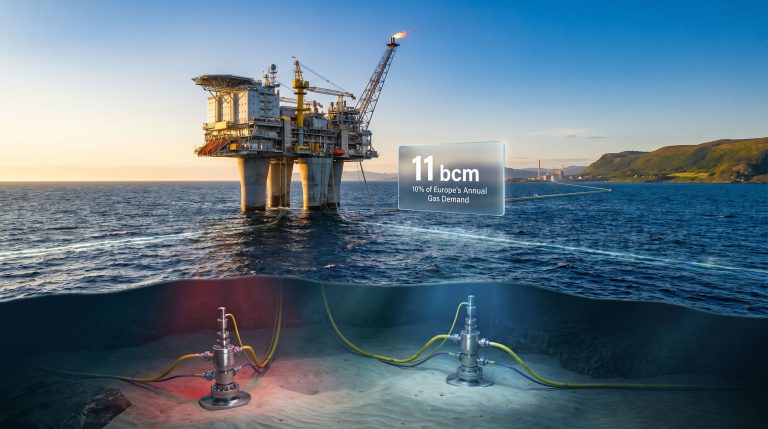
Underwater Production Innovation:
- Subsea facility design: Production systems below surface targeting capability
- Autonomous underwater operations: Reduced surface infrastructure exposure
- Deep-water positioning: Extended distance from coastal launch capabilities
- Environmental integration: Facilities designed for minimal surface signature
Geographic Production Preferences
Investment Location Criteria:
Energy companies increasingly evaluate potential investments through enhanced security frameworks considering multiple threat scenarios rather than traditional geological and economic factors alone.
Onshore vs. Offshore Trade-offs:
- Onshore advantages: Enhanced defensive deployment capability and rapid response access
- Offshore risks: Extended vulnerability to maritime targeting with limited defensive options
- Geographic positioning: Preference for regions with comprehensive air defense integration
- Political stability premiums: Increased valuation of stable governmental security cooperation
Supply Chain Localisation:
- Regional self-sufficiency: Reduced dependence on extended supply chains vulnerable to disruption
- Strategic reserve positioning: Enhanced storage capacity in secure locations
- Alternative routing development: Multiple export pathways reducing single-point-of-failure risks
- Technology transfer: Local capability development reducing foreign dependency
Strategic Implications for Market Participants
The evolution of energy infrastructure targeting creates fundamental changes in risk assessment, strategic planning, and operational protocols across the energy sector. Understanding these implications enables more effective adaptation to emerging security realities.
Immediate Action Requirements
Security Assessment Updates:
Energy companies must comprehensively review existing platform security evaluations incorporating extended-range threat scenarios. Traditional risk models based on geographic distance from conflict zones require replacement with threat-radius calculations considering technological capabilities rather than territorial boundaries.
Insurance Coverage Evaluation:
- Policy scope review: Verification of coverage for asymmetric attack scenarios
- Premium budget adjustment: Anticipated increases in maritime energy insurance costs
- Risk sharing arrangements: Joint coverage for multi-operator facilities
- Business interruption coverage: Enhanced protection for extended production halts
Alternative Supply Development:
- Route diversification timelines: Assessment of backup infrastructure development requirements
- Emergency response protocols: Rapid activation procedures for alternative supplies
- Strategic partnership agreements: Pre-negotiated arrangements for crisis supply access
- Technology deployment schedules: Implementation timelines for enhanced security systems
Long-Term Strategic Planning
Investment Location Framework:
Future energy infrastructure investment decisions require comprehensive security evaluation incorporating multiple scenario analysis. The recurring pattern where Ukrainian attack halts production at Lukoil's Grayfer field demonstrates the new operational reality that companies must address.
Risk Assessment Criteria:
- Threat radius analysis: Distance from potential adversary capabilities
- Defensive infrastructure availability: Local military protection capacity
- Political stability evaluation: Government security cooperation reliability
- Insurance market accessibility: Long-term coverage availability and cost projections
Crisis Response Integration:
- International cooperation frameworks: Multilateral security coordination for critical infrastructure protection
- Rapid response capability: Enhanced emergency management across multiple scenarios
- Communication protocols: Secure coordination during crisis situations
- Recovery planning: Systematic approaches to post-incident operations restoration
Investment Insight: The structural shift toward infrastructure vulnerability requires fundamental recalculation of energy asset valuation models, incorporating permanent security premium calculations rather than episodic risk adjustments.
Market Evolution Expectations
Price Discovery Mechanisms:
Energy markets may develop more sophisticated geopolitical risk pricing reflecting structural vulnerability rather than event-driven premiums. This evolution requires enhanced analytical frameworks capable of incorporating complex security scenarios into fundamental value assessment.
Technology Integration:
- Defense system standardisation: Industry-wide adoption of enhanced protection protocols
- Remote operation advancement: Reduced personnel exposure through technological solutions
- Predictive analytics: Early warning systems providing strategic advantage for defense deployment
- Cyber security integration: Comprehensive digital and physical protection coordination
The transformation of energy infrastructure security from territorial protection to comprehensive threat radius management represents one of the most significant strategic shifts in modern energy sector development. Companies adapting quickly to these realities while maintaining operational efficiency will likely achieve competitive advantages in an increasingly complex security environment.
Disclaimer: This analysis incorporates publicly available information and industry projections. Actual security developments and market responses may differ from outlined scenarios. Investment and operational decisions should incorporate comprehensive professional security and financial analysis appropriate to specific circumstances.
Ready to Stay Ahead of Energy Market Disruptions?
Discovery Alert's proprietary Discovery IQ model delivers real-time alerts on significant mineral discoveries and market-moving developments across ASX-listed companies, helping subscribers identify actionable opportunities before broader market awareness. Understand how major energy and commodities discoveries can generate substantial returns by exploring Discovery Alert's dedicated discoveries page and begin your 30-day free trial today to position yourself ahead of evolving market conditions.