June 21, 2026
When Old Fields Carry New Weight: The Economics of Brownfield Gas Expansion
There is a common assumption in energy markets that the most consequential investment decisions belong to frontier exploration and bold new developments. Yet the history of North Sea gas production tells a more nuanced story. The fields that have consistently defined European energy security are not the newest or most exotic assets on the continental shelf. They are the giants discovered decades ago, continuously optimised, incrementally expanded, and structurally embedded into the supply chains of entire nations. Understanding why operators like Equinor continue to invest heavily in mature fields requires a different analytical lens than the one applied to greenfield development.
The decision by Equinor and its partners to commit more than NOK 4 billion (approximately $390 to $412 million USD) to an expansion of the Troll field in Norway is a case study in this logic. It is not about discovering new resources. It is about systematically unlocking the maximum value from a reservoir that has already proven itself to be one of the most consequential offshore gas assets on the planet. Equinor expands Troll field in Norway as part of a broader strategy to sustain European gas supply through the next decade and beyond.
When big ASX news breaks, our subscribers know first
Why the Troll Field Occupies a Structural Category of Its Own
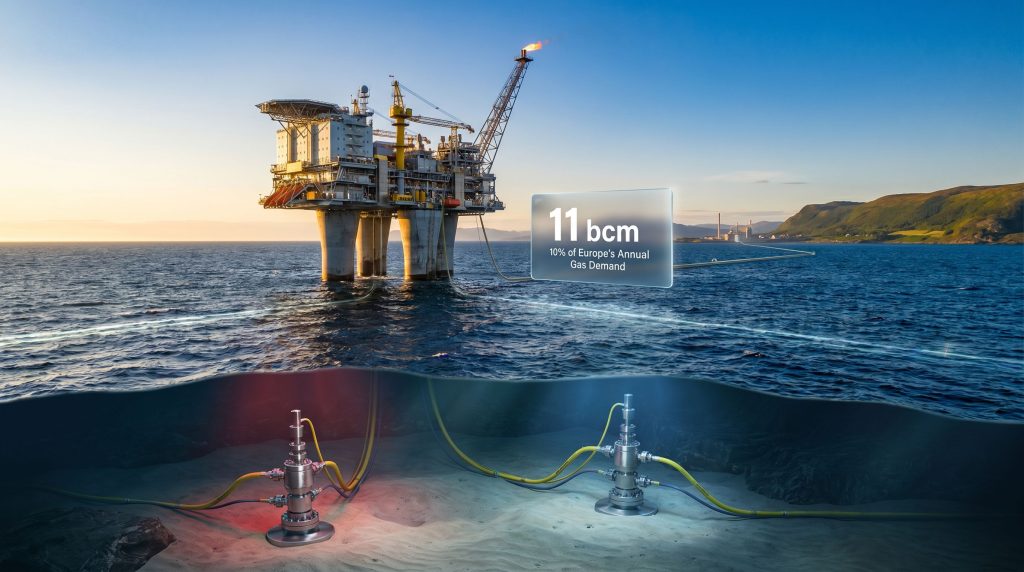
The Troll gas field sits in the Norwegian North Sea and operates at a scale that is genuinely difficult to contextualise without comparison. The field currently supplies approximately 10% of Europe's total annual natural gas consumption from a single offshore asset. For context, this concentration of supply dependency on one field would be considered extraordinary in any commodity market. In natural gas, where continental supply security hinges on source diversification, it represents both an enormous commercial advantage and a critical infrastructure responsibility.
The field holds roughly 40% of all remaining gas reserves across Norway's entire offshore portfolio. That figure alone explains why every incremental development decision at Troll carries weight far beyond the project economics of a typical subsea tie-back. Norway has become Europe's largest external gas supplier since Russian pipeline flows declined sharply from 2022 onward, and Troll is the structural backbone of that supply position.
What the Post-2022 Energy Reconfiguration Changed
Before the dramatic reduction in Russian pipeline gas deliveries, Norwegian gas was an important but largely background element of Europe's diversified supply mix. The events of 2022 fundamentally altered that calculus. With Russian volumes effectively removed from the equation for most EU member states, the Norwegian continental shelf was elevated from a reliable secondary source to a frontline energy security asset. This shift is directly relevant to understanding the broader energy security transition reshaping European supply strategy.
Furthermore, this shift created a subtle but important change in how European buyers approach Norwegian supply contracts. Rather than treating them as portfolio components, buyers increasingly view long-term agreements with Norwegian producers as core hedging instruments against geopolitical disruption. Fields like Troll now carry what analysts sometimes describe as a geopolitical premium that is distinct from pure commodity pricing.
The removal of Russian pipeline gas from Europe's supply equation has transformed Norway from a background contributor to an indispensable anchor. Any sustained production shortfall at Troll would reverberate across the energy security calculations of multiple EU member states simultaneously.
Dissecting the TWIN Project: What Equinor Is Actually Building
The new development, designated TWIN (Troll West Increased Gas Recovery North), represents the third stage within Equinor's broader Troll Phase 3 programme. Understanding its structure requires appreciating what Troll Phase 3 is attempting to achieve: a sustained, phased extension of gas recovery from the Troll West reservoir through a sequence of deliberately linked investments, each building on the subsea infrastructure established by the previous stage.
The Development Architecture
TWIN involves the installation of two new subsea production wells tied back to Troll's existing subsea infrastructure rather than requiring standalone processing facilities or new pipeline corridors. A new subsea template will be installed, while existing umbilical systems and MEG (monoethylene glycol) injection lines will be extended to support production.
MEG injection is a detail worth pausing on. In deep-water or cold-temperature subsea gas production, MEG is continuously injected into flowlines to prevent the formation of gas hydrates, which are ice-like crystalline structures that can block pipelines and shut down production entirely. By extending existing MEG infrastructure rather than constructing new systems, Equinor reduces both capital outlay and one of the key operational risks associated with subsea gas development.
| Metric | Detail |
|---|---|
| Total Investment | NOK 4 billion+ (~$390-$412 million USD) |
| Development Type | Subsea tie-back to existing infrastructure |
| New Wells | 2 production wells |
| Expected First Gas | As early as 2028 |
| Incremental Gas Volume | ~11 billion cubic metres (bcm) |
| Oil Equivalent | ~69 million barrels of oil equivalent (boe) |
| Daily Output Uplift | ~2-2.5 million cubic metres per day (first 8 years) |
How Troll Phase 3 Stages Interconnect
Troll Phase 3 commenced production in 2021, establishing the subsea and processing foundation for extended recovery from the Troll West reservoir. Stage 2 of the programme is scheduled to come online in 2026, designed to sustain plateau-level gas output through the latter part of the decade. TWIN, as Stage 3, extends the elevated production profile further into the 2030s.
This sequential staging is not accidental. Each phase is calibrated to maintain field output above a target plateau rather than allowing natural reservoir decline to erode volumes. The Troll reservoir is a water-drive system, meaning reservoir pressure is partially maintained by the natural influx of water as gas is withdrawn. This mechanism supports sustained production rates but requires careful well placement and pressure management to avoid premature water breakthrough in individual wells, which can curtail a well's productive life significantly.
How 11 Billion Cubic Metres Translates Into European Supply Reality
Numbers at the billion-cubic-metre scale can be abstract. Mapping the TWIN project's expected output against European consumption benchmarks provides sharper perspective. In addition, understanding these volumes in the context of current natural gas price trends helps illustrate the commercial significance of the project for buyers and producers alike.
| Benchmark | Annual Gas Volume (approx.) |
|---|---|
| TWIN incremental output (total lifecycle) | ~11 bcm |
| Belgium annual gas consumption | ~11 bcm |
| Netherlands annual gas consumption | ~30 bcm |
| Germany annual gas consumption | ~90 bcm |
| TWIN as % of European annual demand | ~2-3% |
The equivalence with Belgium's full-year national gas consumption illustrates how a targeted subsea tie-back, structured around reused infrastructure and simplified engineering, can still deliver a nationally significant volume of new supply to the continent. When mapped against the broader European demand picture, the project is expected to contribute the equivalent of 2 to 3% of annual continental gas requirements over its productive life.
For European gas importers, particularly those in Germany, Belgium, the Netherlands, and the UK, the 2028 production start date aligns with a period in which several existing long-term supply agreements are due for renegotiation. This timing gives buyers additional leverage in securing incremental Norwegian volumes at a moment of structural importance in the continental supply balance.
The Engineering Strategy Behind Troll's Capital Efficiency
One of the least discussed but most consequential aspects of how Equinor approaches mature field development is its deliberate commitment to brownfield optimisation over greenfield construction. The TWIN project is a live expression of this philosophy.
Infrastructure Reuse as Financial Discipline
By routing new wells back through existing subsea templates, processing connections, and pipeline networks, the development eliminates the capital cost of standalone infrastructure that would otherwise account for a large proportion of total project spend. Existing umbilical and MEG systems being extended rather than replaced reduces both procurement requirements and the time vessels need to spend on installation.
This matters considerably in the current North Sea cost environment. Offshore installation vessel day rates, subsea equipment lead times, and specialist labour costs have all increased substantially in recent years as the sector experiences a broad resurgence of activity. Projects designed around infrastructure reuse are structurally better insulated against these inflationary pressures than bespoke greenfield developments.
Electrified Operations and the Carbon Intensity Advantage
Both the Troll A platform and the Kollsnes onshore processing plant near Bergen operate on electricity supplied directly from Norway's national grid rather than relying on gas-fired turbines. This shore-power configuration is not a cosmetic environmental gesture. It produces a measurable reduction in the operational carbon intensity of Troll's gas output relative to comparable offshore assets globally. Consequently, the renewable energy transition occurring across Europe reinforces rather than undermines the commercial case for low-carbon gas production.
For European buyers increasingly subject to carbon border adjustment mechanisms and mandatory ESG procurement criteria, this characteristic represents a genuine commercial differentiator. Gas produced with lower upstream emissions can be categorised more favourably under emerging regulatory frameworks, creating a pricing dynamic that rewards low-carbon production regardless of market sentiment toward fossil fuels more broadly.
Subsea Standardisation: The Industrial Logic
Equinor has publicly committed to halving both the cost and execution time of subsea development projects across the Norwegian continental shelf, with a target delivery rate of six to eight subsea projects per year through to 2035. Achieving this requires standardised equipment specifications, common contracting frameworks, and engineering designs that can be replicated across multiple projects without bespoke rework.
Gunnar Nakken, Equinor's Senior Vice President for Projects and Subsea Norway, has acknowledged that the company must pursue a fundamentally different approach to project delivery as fields age, discovery sizes shrink, and per-unit development costs rise. Standardisation is the mechanism through which Equinor intends to offset these structural headwinds without abandoning its long-term production commitments. (Source: Equinor press statement, as reported by OilPrice.com)
The Structural Ceiling Question: Is the Norwegian Shelf Running Out of Road?
A reasonable analytical question surrounds the longer-term trajectory of Norwegian continental shelf production. The era of giant standalone discoveries is demonstrably over. The Norwegian Petroleum Directorate's own data confirms that average discovery sizes have been declining for decades, and the residual resource base increasingly comprises smaller accumulations that are only economically viable through tie-back to existing infrastructure.
What This Means for Production Targets
Equinor's stated ambition of 1.3 million barrels of oil equivalent per day from the Norwegian continental shelf by 2035 is achievable, but only if the subsea standardisation programme delivers at scale. A portfolio of six to eight subsea projects annually, each adding incremental production through brownfield tie-backs, is the arithmetic through which plateau production can be sustained against natural field decline rates.
TWIN sits within this portfolio logic. It is neither a transformative discovery nor a major standalone development. It is a carefully engineered increment within a larger programme designed to ensure that Troll's output profile remains elevated through the 2030s rather than entering the natural decline curve that follows reservoir maturation.
The Bridge Supply Framing
Norwegian gas investment increasingly occupies a specific conceptual position in energy policy debates. Rather than being framed as a contradiction of climate commitments, incremental investments like TWIN are positioned as bridge supply enablers: infrastructure that maintains European energy security during the decade-long transition away from coal and Russian pipeline dependence, while the continent's renewable capacity buildout catches up with demand replacement requirements.
The European Commission's REPowerEU framework explicitly identifies Norwegian gas as a central component of the continent's strategy to eliminate dependence on Russian energy. This regulatory framing is relevant context for understanding the investment environment, though it does not constitute project-specific support for TWIN. However, oil market disruptions and broader commodity volatility continue to shape the backdrop against which such long-term supply decisions are made.
The next major ASX story will hit our subscribers first
How TWIN Compares to Other Major North Sea Developments
| Field / Project | Operator | Location | Investment Scale | Expected Output Addition | Status |
|---|---|---|---|---|---|
| Troll TWIN (Phase 3, Stage 3) | Equinor | Norwegian North Sea | ~$410M | ~11 bcm total | FID approved, 2028 start |
| Troll Phase 3 Stage 2 | Equinor | Norwegian North Sea | Undisclosed | Plateau sustaining | Online 2026 |
| Rosebank | Equinor / Ithaca | UK North Sea | ~$3.8B | ~300 mboe total | Development phase |
| Jackdaw | Shell | UK North Sea | ~$700M | ~6.5 bcm | Development phase |
Note: Comparisons are approximate and based on publicly available operator disclosures. Development timelines remain subject to regulatory and market conditions.
The Kollsnes Gateway: Europe's Onshore Processing Hub
A dimension of Troll's strategic importance that receives less analytical attention than the field itself is the downstream infrastructure through which its gas flows. All production from Troll is processed at the Kollsnes facility near Bergen, one of the largest natural gas processing plants in Europe. From there, gas enters the Gassled pipeline network, which transports volumes to receiving terminals across the UK, Germany, Belgium, and France.
This integrated supply chain means that continued investment in Troll directly supports the utilisation economics of an extensive network of offshore pipelines and onshore terminals. Equinor's broader expansion of Troll volumes through phases like TWIN improves the per-unit economics of operating this infrastructure, reinforcing the commercial logic of the entire Norwegian gas export system.
Norway's fiscal regime also plays a background role in sustaining investment appetite. The Norwegian government offers an 85% tax refund on exploration costs for qualifying companies, a structure that reduces the financial risk of early-stage activity and helps maintain a pipeline of development candidates to feed the subsea standardisation programme over the coming decade. Furthermore, the broader LNG supply outlook for Europe reinforces why pipeline gas from Norway commands a sustained structural premium in continental supply planning.
Key Milestones and Forward Indicators to Monitor
For investors and market observers tracking how Equinor expands Troll field in Norway over the coming years, several forward-looking signals are worth watching closely:
-
2026: Stage 2 of Troll Phase 3 comes online, providing the first live test of Equinor's plateau-sustaining strategy and a leading indicator of whether the field's production profile is responding as modelled.
-
2027-2028: TWIN well drilling and subsea installation phase. Progress against schedule will reflect Equinor's ability to execute its standardised subsea programme at the cost and timeline targets it has publicly committed to. Equinor has committed over $1 billion across the Troll Phase 3 expansion programme as a whole.
-
2028: Target first gas from TWIN. Any revision to this date, earlier or later, will signal the operational performance of the standardisation programme.
-
2030-2035: The period during which TWIN's daily output contribution of 2 to 2.5 million cubic metres per day is expected to be most significant, bridging into the next generation of Norwegian shelf investment decisions.
-
European LNG infrastructure: The pace at which European receiving terminals for liquefied natural gas come online will directly affect the long-term pricing premium commanded by pipeline gas from Norway.
Disclaimer: This article is intended for informational purposes only and does not constitute financial, investment, or legal advice. Forecasts, production targets, and financial projections referenced herein are drawn from publicly available operator disclosures and industry analysis. Actual outcomes may differ materially from expectations. Readers should conduct their own due diligence before making any investment decisions.
Want to Stay Ahead of the Next Major Resource Discovery on the ASX?
Discovery Alert's proprietary Discovery IQ model scans ASX announcements in real time, instantly translating complex mineral data into actionable investment insights — visit the Discovery Alert discoveries page to see how historic mineral discoveries have generated exceptional returns, and begin your 14-day free trial today to secure a market-leading edge.