
May 19, 2026
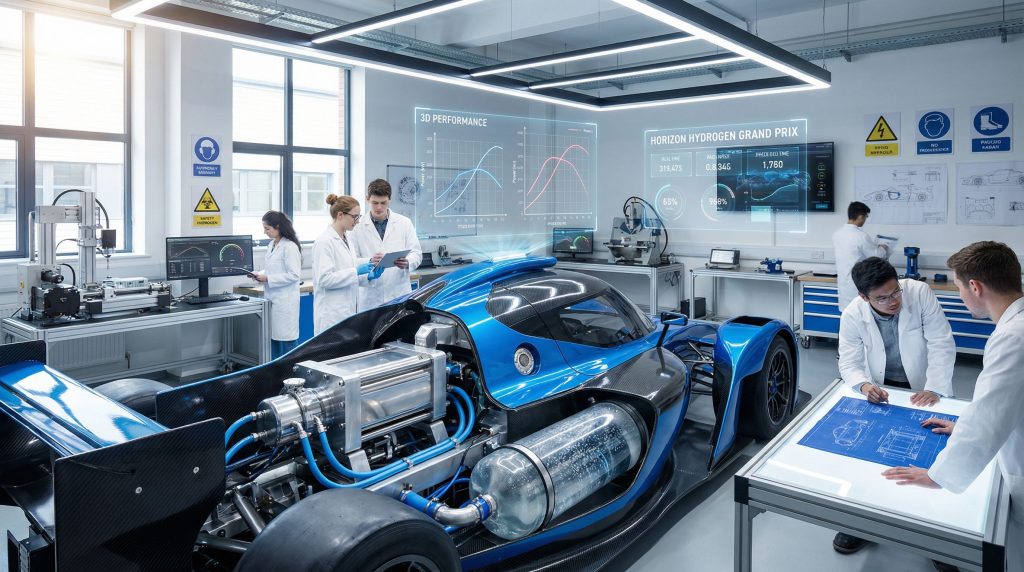
Engineering Excellence Through Academic Competition
The convergence of renewable energy technology and competitive motorsport has created unprecedented opportunities for hands-on engineering education. Universities worldwide are recognising that high-performance racing environments provide ideal testing grounds for emerging hydrogen technologies, where theoretical concepts transform into tangible engineering solutions. These programs represent a unique intersection where academic rigour meets practical application, generating innovations that extend far beyond the racetrack.
Student teams operating within these competitive frameworks face engineering challenges that mirror real-world industrial applications. The complexity of integrating hydrogen storage systems, fuel cell technologies, and advanced control mechanisms within weight-constrained racing vehicles demands interdisciplinary collaboration and innovative problem-solving approaches that traditional classroom environments cannot replicate.
When big ASX news breaks, our subscribers know first
What Drives Innovation in Student Hydrogen Racing Programs?
Technical Complexity as a Learning Catalyst
The engineering challenges inherent in student hydrogen racing programs create natural innovation accelerators. Teams must navigate complex fuel cell integration requirements while maintaining competitive performance standards. This necessitates deep understanding of electrochemical processes, thermal management systems, and high-pressure storage technologies.
Weight distribution optimisation becomes critical when incorporating hydrogen storage systems that can significantly alter vehicle dynamics. Student engineers must develop sophisticated modelling capabilities to predict how tank placement affects centre of gravity, handling characteristics, and overall performance metrics.
Safety protocols for high-pressure hydrogen handling require teams to master industrial-grade safety standards typically reserved for professional applications. This exposure to rigorous safety methodologies provides students with competencies directly transferable to commercial hydrogen applications in transportation and industrial sectors.
Real-time performance monitoring systems demand integration of advanced sensor networks with data acquisition platforms. Furthermore, students develop expertise in telemetry systems, signal processing, and predictive analytics that prove valuable across multiple engineering disciplines.
Academic-Industry Knowledge Transfer Mechanisms
University research laboratories provide foundational infrastructure for student hydrogen racing programs, enabling access to specialised testing equipment and computational resources. These facilities bridge theoretical research with practical application, allowing students to validate design concepts through rigorous testing protocols.
Industry mentorship programs connect student teams with experienced engineers from automotive, aerospace, and energy sectors. Consequently, this relationship provides access to professional-grade design methodologies, manufacturing techniques, and troubleshooting expertise that enhances educational outcomes.
Cross-disciplinary team structures integrate mechanical, electrical, and chemical engineering students within collaborative frameworks. This interdisciplinary approach mirrors professional engineering environments while fostering communication skills essential for complex project management.
Rapid prototyping and iterative design processes enable teams to test multiple design configurations within academic timeframes. Students learn to balance theoretical optimisation with practical manufacturing constraints, developing judgement critical for professional engineering practice.
Which Hydrogen Technologies Are Students Successfully Implementing?
Fuel Cell vs. Hydrogen Combustion Engine Considerations
Student teams evaluate multiple technology pathways based on performance requirements, budget constraints, and educational objectives. Fuel cell systems offer high efficiency and quiet operation but require sophisticated thermal management and control systems. In addition, hydrogen combustion engines provide familiar mechanical interfaces but present unique challenges in fuel injection and ignition timing optimisation.
The technical trade-offs between these approaches influence entire vehicle architecture decisions. Fuel cell systems typically require more complex electrical integration but offer superior energy conversion efficiency. However, combustion-based systems leverage existing automotive knowledge bases while introducing novel fuel handling requirements.
Students working with hybrid configurations combine both technologies to optimise performance across different operating conditions. These systems provide valuable learning experiences in energy management strategies and multi-source power integration.
System Integration Methodologies
Hydrogen storage tank placement requires careful consideration of safety zones, crash protection, and weight distribution effects. Students must understand pressure vessel regulations while optimising packaging efficiency within racing vehicle constraints.
Power delivery optimisation strategies involve sophisticated electronic control systems that manage energy flow between storage, conversion, and propulsion systems. Students develop expertise in power electronics, motor control, and battery management systems.
Thermal management system design addresses heat rejection from fuel cells, electric motors, and power electronics. This requires understanding of heat exchanger design, coolant flow optimisation, and thermal control strategies.
Electronic control unit programming enables students to develop custom software for vehicle management systems. Furthermore, this includes real-time operating system implementation, sensor data processing, and user interface development.
How Do Student Teams Overcome Hydrogen Racing's Technical Barriers?
Safety System Engineering Requirements
Hydrogen leak detection sensor networks require strategic placement throughout vehicle systems to ensure comprehensive monitoring. Students learn to specify appropriate sensor technologies, configure alarm thresholds, and design redundant safety systems that meet professional standards.
Emergency shutdown protocols incorporate multiple fail-safe mechanisms that automatically isolate hydrogen systems during fault conditions. These systems teach students to design robust safety interlocks while maintaining vehicle operability under normal conditions.
Crash-resistant storage tank specifications require understanding of pressure vessel standards and impact protection methodologies. Students must balance weight optimisation with safety requirements while meeting competition regulations.
Fire suppression system integration addresses unique challenges of hydrogen combustion characteristics. For instance, students learn specialised fire protection strategies for hydrogen applications while considering integration with vehicle electrical systems.
Performance Optimisation Strategies
Aerodynamic design for hydrogen storage integration requires innovative approaches to maintain vehicle performance while accommodating storage system packaging requirements. Students develop computational fluid dynamics expertise while learning practical wind tunnel testing techniques.
Lightweight material selection encompasses advanced composites, aluminium alloys, and specialised fastening systems. This provides exposure to materials science principles while addressing cost constraints typical of student projects.
Energy recovery system implementation includes regenerative braking and waste heat recovery technologies. Students gain experience with energy storage systems and power conditioning electronics, which directly supports modern AI performance optimization across various industries.
Real-time telemetry and data acquisition systems enable continuous performance monitoring and post-event analysis. Consequently, students develop expertise in wireless communication systems, database management, and data visualisation techniques.
What Are the Key Development Phases in Student Hydrogen Race Car Projects?
Conceptual Design and System Architecture
Powertrain configuration selection establishes fundamental vehicle characteristics and performance targets. Students evaluate multiple architectural options through systematic analysis of power requirements, weight constraints, and packaging limitations.
Vehicle dynamics modelling and simulation provide predictive capabilities for handling, acceleration, and braking performance. Students utilise professional-grade simulation software while learning to validate computational models through physical testing.
Component sizing and specification development requires understanding of hydrogen system scaling relationships and performance characteristics. This phase teaches students to balance theoretical optimisation with practical availability and cost constraints.
Safety system preliminary design establishes protection strategies and regulatory compliance approaches. Furthermore, students learn to interpret safety standards while developing innovative solutions for unique racing applications.
Detailed Engineering and Prototyping
Computer-aided design modelling enables precise component definition and assembly verification. Students develop proficiency with professional engineering software while learning design for manufacturing principles.
Finite element analysis provides structural validation for critical components under racing loads. This exposure to advanced analysis techniques prepares students for professional engineering responsibilities while incorporating data-driven operations principles.
Component procurement and supplier management teach students practical aspects of engineering project execution. This includes vendor qualification, quality assurance, and delivery schedule management.
Manufacturing process planning addresses fabrication techniques for specialised hydrogen racing components. Students gain exposure to advanced manufacturing methods while managing budget and schedule constraints.
Integration and Testing Phases
System assembly and quality control procedures ensure proper integration of complex subsystems. Students develop methodical approaches to system commissioning while establishing documentation practices essential for professional engineering.
Performance testing and calibration validate design assumptions while optimising system parameters. This phase provides hands-on experience with instrumentation and measurement techniques.
Safety validation and certification processes ensure compliance with competition requirements and professional standards. Students learn systematic approaches to safety verification while maintaining detailed testing documentation.
Competition preparation and optimisation focus on maximising performance within regulatory constraints. This final phase teaches students to balance multiple competing objectives while operating under time pressure.
Which Global Competitions Drive Student Hydrogen Racing Innovation?
International Racing Championships and Technical Standards
Major international competitions provide standardised frameworks for student hydrogen racing development. These events establish technical regulations that ensure safety while encouraging innovation within defined parameters.
The Shell Eco-marathon includes dedicated hydrogen vehicle categories that challenge teams to maximise efficiency and range. These competitions emphasise energy management and system optimisation over pure performance metrics.
Formula Student hydrogen divisions require teams to design complete racing vehicles while demonstrating understanding of vehicle dynamics and driver safety. In addition, these competitions integrate hydrogen technology with comprehensive automotive engineering requirements.
Regional championship programs provide stepping-stone experiences for developing teams while maintaining connections to international competition standards. This tiered approach enables broader participation while maintaining technical rigour.
Technical Specification Requirements
Competition regulations establish safety standards for hydrogen storage, handling, and vehicle operation. These requirements ensure consistent safety approaches while allowing innovation in system design and integration.
Performance categories within competitions enable teams to optimise for specific objectives such as acceleration, efficiency, or endurance. This specialisation allows teams to focus educational experiences while contributing to broader technology development.
Judging criteria incorporate both technical performance and engineering communication skills. Students learn to document design decisions and present technical concepts to professional engineering audiences.
The next major ASX story will hit our subscribers first
How Do Student Teams Measure and Optimise Performance?
Performance Metrics and Benchmarking Strategies
Power-to-weight ratio optimisation serves as a fundamental performance metric for hydrogen racing vehicles. Students learn to systematically evaluate component selection decisions while understanding trade-offs between performance and weight.
Hydrogen consumption efficiency measurements provide insights into system optimisation opportunities. Teams develop expertise in fuel flow measurement and energy balance calculations while learning efficiency improvement strategies.
Acceleration and top speed performance data enable validation of vehicle dynamics models and powertrain sizing decisions. Students gain experience with professional-grade testing equipment and measurement techniques.
Range and endurance testing results inform energy management strategies and system sizing decisions. Furthermore, this testing provides practical experience with long-duration system operation and reliability assessment.
Data Acquisition and Analysis Systems
Real-time sensor monitoring networks enable comprehensive system observation during testing and competition events. Students develop expertise in sensor selection, signal conditioning, and wireless communication systems.
Performance data logging and storage systems provide foundation for post-event analysis and continuous improvement. Students learn database management principles while developing custom analysis tools.
Post-race analysis and optimisation workflows systematise performance improvement processes. This develops analytical thinking skills while teaching systematic approaches to complex problem-solving.
Predictive maintenance scheduling protocols ensure system reliability while optimising maintenance resource allocation. Students gain exposure to condition-based maintenance strategies used in professional applications.
What Technical Skills Do Students Develop Through These Programs?
Core Engineering Competencies
Hydrogen safety handling and storage expertise provides students with specialised knowledge directly applicable to emerging clean energy industries. This includes understanding of pressure vessel regulations, leak detection systems, and emergency response protocols.
Fuel cell system design and integration encompasses electrochemistry, thermal management, and power electronics. Students develop interdisciplinary knowledge spanning chemical, mechanical, and electrical engineering domains.
Advanced materials and manufacturing techniques expose students to cutting-edge fabrication methods including composite materials, additive manufacturing, and precision machining. For instance, this knowledge proves valuable across multiple engineering applications.
Electronic control system programming develops software engineering capabilities specifically focused on real-time embedded systems. Students learn to integrate sensors, actuators, and communication systems within safety-critical applications.
Project Management and Systems Thinking
Cross-functional team coordination teaches students to manage complex projects involving multiple engineering disciplines. This develops communication skills and project management capabilities essential for professional success.
Budget management and resource allocation provide practical experience with financial constraints typical of engineering projects. Students learn to balance performance objectives with economic realities while maintaining project viability.
Timeline planning and milestone tracking establish systematic approaches to complex project execution. Students develop scheduling capabilities while learning to manage dependencies between interconnected tasks.
Risk assessment and mitigation strategies prepare students for uncertainty management in engineering applications. However, this includes both technical risks and project execution challenges commonly encountered in professional environments.
How Are Student Projects Influencing Industry Development?
Technology Transfer to Commercial Applications
Student-built hydrogen race car programs demonstrate practical applications of hydrogen technology in demanding performance environments. Teams like Hydriven from TU Delft illustrate how academic innovations can scale from motorsport applications to broader industrial use in energy, transportation, and mining sectors.
Automotive industry collaboration opportunities connect student innovations with commercial development programs. These partnerships provide pathways for technology transfer while offering students exposure to professional engineering environments.
Clean energy sector workforce development benefits from students trained in practical hydrogen applications. Graduates possess hands-on experience with hydrogen systems that proves valuable for companies developing commercial hydrogen technologies.
Research and development pipeline contributions include novel approaches to hydrogen storage, fuel cell integration, and system optimisation. Student projects often explore unconventional solutions that inform commercial development efforts.
Career Pathway Development
Industry professionals recognise the value of practical hydrogen experience demonstrated through student racing programs. According to industry observers, teams that showcase hydrogen technology in high-performance racing environments effectively illustrate the critical role energy transition insights play in enabling sustainable energy solutions.
Renewable energy engineering specialisations build upon hydrogen racing experience while addressing broader clean energy applications. Students develop competencies directly applicable to wind, solar, and energy storage industries.
Motorsport technology career opportunities leverage racing experience while applying advanced engineering skills to professional competition environments. This pathway combines technical expertise with high-performance application experience.
Clean transportation industry positions benefit from students with proven experience in alternative fuel systems and vehicle integration challenges. Furthermore, this expertise proves valuable for companies developing hydrogen-powered commercial vehicles.
What Are the Economic and Resource Requirements?
Project Funding and Budget Management
Student-built hydrogen race car programs require substantial financial investment across multiple component categories. Teams must develop sophisticated budget management capabilities while securing funding through multiple channels including university support, industry sponsorship, and grant opportunities.
Fuel cell systems typically represent the largest single cost component, requiring teams to balance performance requirements with budget constraints. Students learn to evaluate technical specifications while considering total cost of ownership.
Chassis and materials costs encompass advanced composites, specialised fastening systems, and precision manufacturing services. Students gain practical experience with cost estimation while learning to optimise material selection for performance and budget objectives.
Safety equipment requirements ensure compliance with competition regulations while protecting student participants. This category includes specialised hydrogen safety systems, fire protection equipment, and personal protective equipment.
Electronics and control system costs cover sensors, data acquisition hardware, and communication systems. Students learn to specify professional-grade equipment while managing technology refresh cycles and obsolescence concerns.
Resource Management and Sustainability
University facility and equipment access provides essential infrastructure for student racing programs. Teams utilise specialised laboratories, testing equipment, and manufacturing facilities while learning to optimise resource utilisation.
Industry sponsorship and partnership models enable access to advanced technologies and professional expertise. Students develop relationship management skills while learning to articulate value propositions for potential sponsors.
Component recycling and reuse strategies address both economic and environmental objectives. Teams learn to maximise component lifecycle value while developing sustainability transformation practices that reflect industry requirements.
Long-term program sustainability planning ensures continuity across student generations while building institutional knowledge. This includes documentation standards, knowledge transfer protocols, and alumni engagement strategies.
What Does the Future Hold for Student Hydrogen Racing Technology?
Emerging Technology Integration Opportunities
Advanced fuel cell efficiency improvements continue to enhance performance potential while reducing system complexity. Students working in this field gain exposure to cutting-edge electrochemical research while learning practical application techniques.
Lightweight hydrogen storage innovations address fundamental performance limitations while improving safety characteristics. Student teams contribute to material science research while learning advanced composite design techniques.
Artificial intelligence-driven performance optimisation represents an emerging application area combining hydrogen technology with advanced computational methods. Students develop expertise in machine learning while addressing real-world optimisation challenges.
Autonomous hydrogen vehicle development combines multiple advanced technologies within integrated systems. This represents a natural evolution of student racing programs while addressing emerging transportation industry requirements.
Industry Impact and Scaling Potential
Commercial racing series development prospects build upon student program foundations while creating professional pathways for emerging engineers. These developments provide natural progression opportunities for students while advancing hydrogen technology visibility.
Public transportation application pathways leverage student-developed technologies for broader social impact. Hydrogen bus and rail applications benefit from racing-derived innovations while providing substantial market opportunities.
Industrial vehicle technology transfer opportunities apply racing-proven technologies to construction, mining, and agricultural applications. These markets offer substantial growth potential while addressing environmental objectives and supporting engineering innovation trends.
Global clean energy transition contributions demonstrate how student-built hydrogen race car innovations support broader sustainability goals. Racing programs provide compelling demonstrations of hydrogen technology capabilities while training the next generation of clean energy engineers.
Note: This analysis is based on publicly available information and industry observations. Performance specifications and cost estimates may vary significantly based on specific program requirements and market conditions. Students and institutions considering hydrogen racing programs should conduct detailed feasibility studies appropriate to their specific circumstances.
Ready to Capitalise on the Next Major Energy Discovery?
Discovery Alert instantly alerts investors to significant ASX mineral discoveries using its proprietary Discovery IQ model, turning complex mineral data into actionable insights for both energy transition and traditional mining opportunities. Understand why major mineral discoveries can lead to significant market returns by exploring Discovery Alert's dedicated discoveries page, showcasing historic examples of exceptional outcomes, then begin your 30-day free trial today to position yourself ahead of the market.