May 17, 2026
How Enhanced Geothermal Systems Reshape Britain's Energy Security Framework
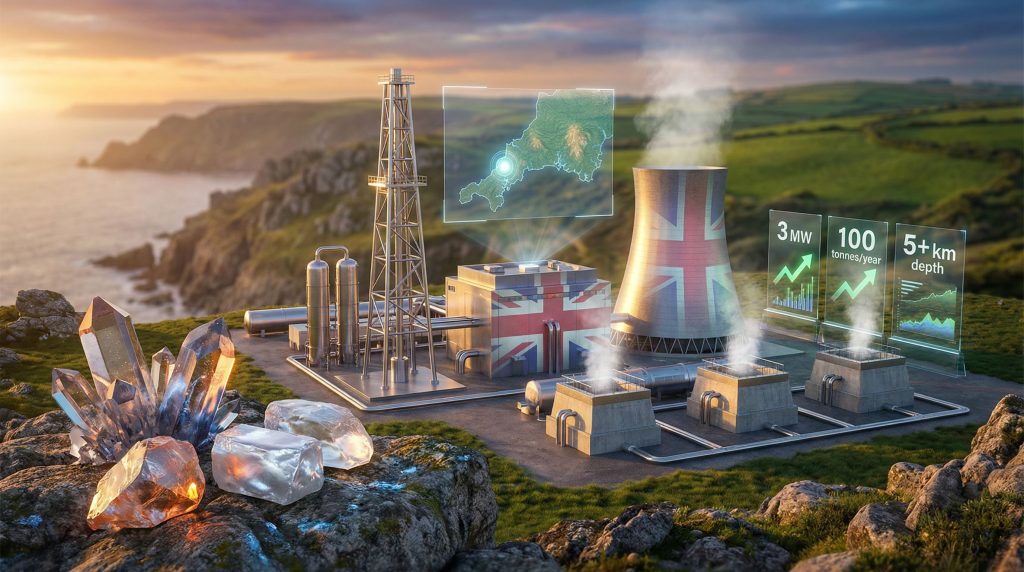
Britain's transition to renewable energy has predominantly focused on wind and solar installations, yet these intermittent sources present grid stability challenges that traditional battery storage cannot fully address. Deep geothermal technology emerges as a strategic solution, offering continuous baseload generation independent of weather patterns while simultaneously providing access to critical minerals for energy security essential for domestic battery manufacturing. The UK's first geothermal power plant marks a pivotal moment in this transformation.
The convergence of geothermal power generation with lithium extraction represents a paradigm shift in renewable energy economics, creating dual revenue streams that enhance project viability and contribute to national energy independence objectives. This technological integration addresses two fundamental challenges: reliable renewable electricity supply and reduced dependence on imported critical minerals for the growing electric vehicle and energy storage sectors.
When big ASX news breaks, our subscribers know first
Understanding Enhanced Geothermal Systems in UK Context
Technical Architecture of Deep Drilling Operations
Enhanced Geothermal Systems operate by accessing high-temperature resources at depths exceeding 3-5 kilometers, where crustal heat gradients provide sufficient thermal energy for electricity generation. Cornwall's granite batholith formations exhibit heat gradients of 40-50°C per kilometer, significantly exceeding the UK average of 25-30°C/km, making southwestern England particularly suitable for commercial geothermal development.
The technology involves creating engineered geothermal reservoirs through hydraulic stimulation of crystalline basement rocks, establishing circulation systems where water is injected, heated, and extracted to drive turbines. Binary-cycle power generation systems, proven effective in lower-temperature environments, convert geothermal heat to electricity through secondary working fluids with lower boiling points than water.
Key technical specifications include:
• Drilling depths: 3-5+ km to access optimal temperature zones
• Heat extraction rates: 150-200°C fluid temperatures in optimal locations
• Reservoir enhancement: Hydraulic fracturing to increase rock permeability
• Circulation systems: Closed-loop designs minimising environmental impact
Furthermore, modern data-driven drilling innovations have revolutionised the precision and efficiency of deep geothermal development operations.
Geological Advantages in British Formations
Britain's geological diversity provides multiple pathways for geothermal development, though resource quality varies significantly by region. The British Geological Survey has identified over 40 geothermal prospects, with primary concentrations in sedimentary basins across the East Midlands, where temperatures reach 70-90°C at 3-kilometre depths.
Scotland's lowlands present additional opportunities, though resource assessments remain preliminary compared to Cornwall's extensively studied granite formations. The Pennine Basin and Welsh sedimentary sequences offer potential for direct-use heating applications, though electricity generation requirements typically demand higher-grade resources.
Geothermal resource classification follows established parameters:
| Temperature Range | Depth (km) | Application | UK Locations |
|---|---|---|---|
| 50-70°C | 1-2 | Direct heating | East Midlands, Wales |
| 70-120°C | 2-4 | Binary power generation | Cornwall, Northern England |
| 120°C+ | 4+ | Steam turbine generation | Southwest England granite |
Grid Integration and Baseload Capabilities
Unlike variable renewable sources, geothermal installations provide capacity factors of 70-90%, delivering consistent electricity output that supports grid frequency regulation and reduces reliance on natural gas peaking plants. UK renewable electricity generation reached 29.2% of total supply in 2023, with government targets requiring 100% clean electricity by 2030.
Geothermal plants offer unique grid stability benefits:
• Frequency response: Immediate power adjustment capabilities
• Black start capability: Grid restoration following system failures
• Voltage support: Reactive power provision for transmission stability
• Weather independence: Continuous operation regardless of meteorological conditions
For instance, Geothermal Engineering Limited (GEL) has brought the UK's first deep geothermal electricity plant online, demonstrating the commercial viability of these advanced systems.
Economic Framework for Dual-Purpose Operations
Revenue Stream Analysis and Financial Modelling
The integration of lithium extraction with electricity generation fundamentally alters geothermal project economics by creating multiple income sources from single infrastructure investments. Global lithium demand reached approximately 100,000 tonnes in 2023, driven primarily by battery electric vehicle production and grid-scale energy storage deployment.
Capital expenditure for deep geothermal facilities ranges from $2-5 million per MW installed capacity, depending on geological complexity and drilling requirements. This compares to $1.2-2.5 million/MW for onshore wind installations, though geothermal's superior capacity factors improve long-term revenue potential.
Financial modelling considerations include:
• Electricity sales: Based on wholesale power prices and renewable energy certificates
• Lithium extraction revenue: Dependent on brine concentrations and processing costs
• Operational expenditure: Typically 1-3¢/kWh for established geothermal facilities
• Resource depletion: Reservoir management and reinjection strategies
Critical Minerals Strategy Implementation
Britain's dependence on lithium imports presents strategic vulnerabilities as domestic battery manufacturing expands. Approximately 8 kg of lithium carbonate equivalent is required per kilowatt-hour of battery capacity, meaning significant domestic production could reduce supply chain risks while supporting automotive electrification objectives.
Direct lithium extraction from geothermal brines achieves recovery rates of 50-90% depending on technology employed, offering environmental advantages over traditional hard-rock mining or solar evaporation pond methods. Processing facilities require specialised infrastructure for brine treatment and lithium carbonate production, creating additional industrial development opportunities.
The domestic lithium processing value chain includes:
- Brine extraction from geothermal circulation systems
- Concentration and purification through selective ion exchange
- Lithium carbonate production via precipitation and crystallisation
- Battery-grade refinement meeting automotive industry specifications
Additionally, comprehensive lithium brine market insights demonstrate the global context for these strategic mineral operations.
Strategic Alignment with Net Zero Commitments
Carbon Footprint Assessment and Lifecycle Analysis
The UK legally committed to net zero greenhouse gas emissions by 2050, with interim targets requiring 68% emissions reductions by 2030 and 81% by 2035 relative to 1990 levels. The UK's first geothermal power plant supports these objectives through lifecycle emissions of 10-50 gCO2eq/kWh, comparable to wind (10-15 gCO2eq/kWh) and substantially lower than natural gas (490 gCO2eq/kWh).
Lifecycle emissions analysis encompasses:
• Construction phase: Concrete, steel, and drilling equipment manufacturing
• Operational emissions: Minimal due to no fuel combustion requirements
• End-of-life: Facility decommissioning and material recycling
• Induced seismicity: Potential environmental impacts requiring monitoring
The UK Climate Change Committee has identified deep geothermal as a strategic technology for heat decarbonisation, particularly for industrial applications requiring high-temperature thermal energy. Integration with district heating networks could displace natural gas consumption in urban areas while providing long-term energy cost stability.
Energy Security and Import Dependency Reduction
Britain's energy security framework emphasises reducing dependence on imported fossil fuels while maintaining grid reliability during the renewable transition. Geothermal installations operate continuously, providing weather-independent generation that complements variable wind and solar resources without requiring extensive battery storage investments.
However, renewable energy transformations must be carefully coordinated to ensure grid stability throughout the transition period.
Grid stability benefits include:
• Dispatchable capacity: Power output adjustable to match demand fluctuations
• Ancillary services: Frequency regulation and voltage support capabilities
• Fuel security: Domestic resource base eliminates import dependency
• Price stability: Minimal operational costs reduce electricity price volatility
Scalability Assessment for National Expansion
Geographic Resource Mapping and Development Potential
The UK government identified potential for 5 GW of geothermal electricity capacity by 2050, requiring systematic resource assessment and strategic development planning. Cornwall's granite formations represent the highest-grade resources, though sedimentary basins across England provide additional opportunities for binary-cycle generation.
Regional resource distribution includes:
• Southwest England: High-temperature granite resources suitable for electricity generation
• East Midlands: Sedimentary aquifers optimal for direct heating applications
• Northern England: Deep Carboniferous formations with moderate geothermal potential
• Scotland: Preliminary assessments indicate viable resources in central lowlands
Drilling technology advancement enables multiple wells from single surface locations, reducing environmental impact while improving economics through shared infrastructure. Modern directional drilling techniques achieve 20-30% cost reductions compared to vertical drilling approaches.
Investment Requirements and Funding Mechanisms
Scaling geothermal to 5 GW by 2050 requires cumulative investment of £15-25 billion, including drilling, power plant construction, and grid connection infrastructure. Public-private partnership models could accelerate deployment while managing financial risks associated with exploration and resource development.
Potential funding mechanisms include:
• European Regional Development Fund: Supporting regional economic development
• UK Infrastructure Bank: Long-term financing for strategic energy projects
• Private equity participation: Risk capital for early-stage development
• Revenue support mechanisms: Contracts for Difference or similar structures
Regulatory Framework Evolution and Policy Integration
Permitting Process Optimisation
Environmental Impact Assessment procedures for deep geothermal projects typically require 6-12 months, with total development timelines spanning 5-10 years from initial planning to operational status. Regulatory streamlining could reduce development costs while maintaining environmental protection standards.
Current permitting stages include:
- Exploration Licence Application (3-6 months)
- Environmental Assessment (6-12 months)
- Local Authority Planning Permission (3-6 months)
- Grid Connection Application (4-8 months)
- Construction and Commissioning (2-4 years)
Health & Safety Executive oversight addresses induced seismicity risks through monitoring requirements and operational protocols, adding 2-3 months to permitting timelines but ensuring public safety standards.
Policy Framework Development
Geothermal development requires coordinated policy support addressing resource rights, environmental regulation, and economic incentives. Tax incentive structures similar to those supporting onshore wind could improve project economics while encouraging private investment.
Key policy areas include:
• Resource rights clarification: Subsurface access and ownership frameworks
• Heat network development: Integration with district heating systems
• Environmental monitoring: Standardised protocols for seismic and water quality assessment
• Research and development support: Technology advancement and knowledge transfer
The next major ASX story will hit our subscribers first
International Best Practices and Technology Transfer
Global Leadership Models
Iceland's geothermal sector generates 31.8% of national electricity and provides 73% of heating through integrated district systems, demonstrating the potential for high renewable penetration. Iceland's development timeline began in the 1970s, achieving operational status within 5-8 years for individual projects supported by mature infrastructure.
The Netherlands operates 17 deep geothermal projects, primarily focused on direct heating rather than electricity generation. Dutch policy frameworks provide tax deductions and subsidy schemes for renewable heating, creating market conditions favourable to geothermal development despite modest resource grades.
Germany's approach combines public geological surveys with financial incentives through the Market Incentive Program, supporting 43+ direct-use projects despite limited high-temperature resources. This demonstrates pathways for geothermal deployment in moderate-resource environments similar to much of Britain.
Technology Innovation and Knowledge Sharing
Binary-cycle power generation systems developed for Icelandic applications operate efficiently at temperatures of 80-120°C, making them transferable to UK geological conditions. Heat pump integration strategies can enhance overall system efficiency while expanding market applications.
Dutch direct lithium extraction trials on geothermal brines have achieved 50-70% recovery rates, providing technological precedents for dual-purpose operations. These pilot projects demonstrate commercial viability for mineral extraction from moderate-concentration brines typical of sedimentary formations.
International collaboration opportunities include:
• Technology licensing: Proven systems adapted to UK conditions
• Knowledge exchange: Operational experience and best practices
• Joint research programmes: Enhanced geothermal system development
• Supply chain integration: Equipment manufacturing and services
Long-Term Economic Development Implications
Regional Economic Impact and Job Creation
Geothermal development creates specialised employment opportunities in drilling, plant operations, and mineral processing sectors. Skills requirements overlap with oil and gas industry competencies, providing transition pathways for workers in traditional energy sectors.
Cornwall's position as the UK's initial geothermal hub offers potential for industrial cluster development around specialised services and equipment supply. Research collaboration between the University of Exeter's Geothermal Engineering Group and industry partners creates knowledge transfer opportunities supporting technological advancement.
Economic development impacts include:
• Direct employment: Plant operations, maintenance, and administration
• Indirect jobs: Supply chain services and equipment manufacturing
• Induced effects: Local spending by workers and contractors
• Export potential: Technology and services for international markets
Industrial Symbiosis and Circular Economy Applications
Geothermal installations enable industrial symbiosis through waste heat utilisation for manufacturing processes, agricultural applications, and district heating systems. Lithium processing facilities require substantial energy inputs, creating opportunities for integrated operations that optimise resource utilisation.
Circular economy principles apply through:
• Heat cascading: Sequential use of geothermal energy across temperature ranges
• Mineral recovery: Extraction of multiple elements from geothermal brines
• Water management: Sustainable groundwater use and reinjection practices
• Infrastructure sharing: Common facilities reducing development costs
Future Energy Policy Development and Strategic Planning
Integration with National Energy Strategy
UK energy policy increasingly emphasises system integration across electricity, heating, and transport sectors. Geothermal resources provide flexibility to serve multiple applications simultaneously, supporting decarbonisation objectives while maintaining energy security.
Strategic energy planning implications include:
• Renewable energy target achievement: Baseload generation supporting 100% clean electricity
• Critical mineral security: Reduced import dependency for battery manufacturing
• Regional development: Economic opportunities in geologically suitable areas
• Technology leadership: Establishing UK capabilities in emerging energy sectors
Regulatory Precedent Setting
Early geothermal projects establish regulatory frameworks applicable to future developments, including environmental monitoring standards, community benefit sharing mechanisms, and industrial integration protocols. These precedents influence policy development for emerging renewable technologies.
Environmental monitoring standards developed for deep geothermal operations provide templates for other subsurface energy technologies, including enhanced oil recovery and carbon capture and storage projects. Community engagement requirements ensure local benefit sharing while maintaining social licence for energy development.
Consequently, the success of the UK's first geothermal power plant will establish critical precedents for national energy policy implementation.
Risk Assessment and Investment Considerations
Technical and Geological Risk Factors
Geothermal development involves significant upfront capital requirements with geological risks that cannot be fully assessed until drilling completion. Resource temperature, flow rates, and brine chemistry variations affect both electricity generation and mineral extraction revenues.
Primary risk categories include:
• Exploration risk: Uncertain resource quality and quantity
• Technical risk: Equipment performance and maintenance requirements
• Regulatory risk: Policy changes affecting project economics
• Market risk: Electricity prices and lithium demand fluctuations
Financial Risk Mitigation Strategies
Insurance products for geothermal exploration reduce investor risk exposure, though coverage remains limited compared to conventional energy projects. Public sector participation through grants, loan guarantees, or equity investment can improve project bankability while supporting strategic objectives.
Revenue diversification through dual-purpose operations provides some protection against commodity price volatility, though operational complexity increases accordingly. Long-term power purchase agreements and lithium supply contracts reduce market exposure while ensuring predictable cash flows.
For instance, Power Magazine reports on the successful commissioning of advanced geothermal facilities that demonstrate commercial viability despite initial investment challenges.
Investment analysis should consider the long-term nature of geothermal projects, substantial upfront capital requirements, and geological uncertainties that may affect project returns. This analysis is for informational purposes only and does not constitute investment advice.
The emergence of the UK's first geothermal power plant represents a strategic inflection point in British energy policy, demonstrating the viability of deep geothermal technology while establishing frameworks for future expansion. Success in dual-purpose operations could accelerate deployment across suitable geological formations, contributing meaningfully to net zero objectives while enhancing energy security through diversified domestic resources.
Looking to Capitalise on Britain's Energy Transition?
Discovery Alert's proprietary Discovery IQ model delivers real-time notifications on significant mineral discoveries across the energy transition sector, instantly empowering subscribers to identify actionable opportunities ahead of the broader market. Begin your 14-day free trial today and secure your market-leading advantage in the rapidly evolving critical minerals landscape.