
August 14, 2026
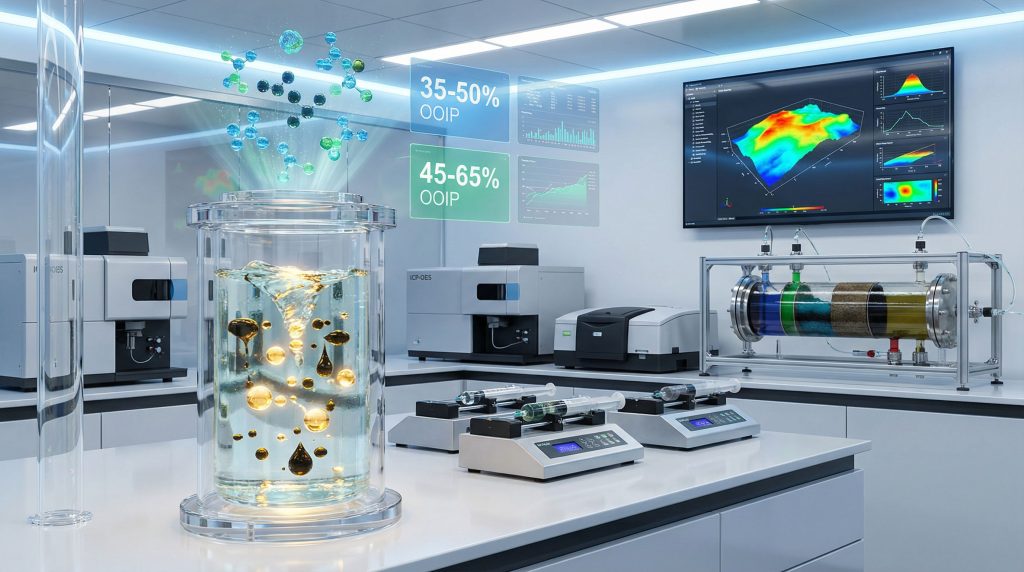
Enhanced oil recovery chemistry represents a transformative approach to maximising hydrocarbon extraction from mature reservoirs, where conventional production methods have reached their economic limits. The molecular-level interactions between specialised chemical formulations and reservoir rock-fluid systems create opportunities to unlock previously inaccessible resources through precisely engineered interventions that modify fundamental physical properties governing oil mobility and recovery efficiency.
Modern reservoir chemistry applications have evolved beyond traditional acid stimulation treatments to encompass sophisticated chemical systems that target specific mineralogical and fluid dynamic challenges within complex geological formations. These advanced chemical interventions operate through multiple mechanisms simultaneously, including interfacial tension reduction, wettability alteration, and mobility control enhancement, creating synergistic effects that can dramatically improve sweep efficiency and ultimate recovery factors.
Understanding the Molecular Foundation of Chemical EOR Systems
The effectiveness of enhanced oil recovery chemistry depends fundamentally on understanding how chemical agents interact with reservoir fluids and rock surfaces at the molecular level. Surface chemistry modifications occur when specialised surfactants reduce the interfacial tension between oil and water phases, enabling previously immobilised oil droplets to become mobile within the pore network.
Critical molecular interactions include:
- Surfactant molecule orientation at oil-water interfaces
- Electrostatic interactions between chemical agents and mineral surfaces
- Polymer chain entanglement effects on fluid viscosity
- Temperature-dependent chemical stability mechanisms
Recent field applications have demonstrated that targeted chemical formulations can disrupt iron- and aluminium-stabilised clay structures within reservoir formations, thereby improving pore connectivity and fluid flow pathways while preserving crude oil quality characteristics. Laboratory analysis using inductively coupled plasma optical emission spectroscopy (ICP-OES) has revealed that effective chemical treatments produce temporary increases in dissolved metal concentrations that decline to non-detectable levels within 30 days, indicating controlled mineral interaction rather than bulk formation dissolution.
Interfacial tension modification represents the primary mechanism through which surfactant systems enhance oil displacement efficiency. When surfactant concentrations exceed critical micelle concentration thresholds, dramatic reductions in oil-water interfacial tension occur, enabling mobilisation of residual oil trapped by capillary forces within smaller pore spaces.
Advanced surfactant chemistry has evolved to address increasingly challenging reservoir conditions, with extended surfactants achieving interfacial tension reductions to ultra-low levels whilst maintaining stability under elevated temperature and high-salinity conditions. Gemini surfactants, featuring dual hydrophilic head groups connected by spacer chains, demonstrate superior performance in harsh reservoir environments compared to conventional single-chain surfactants.
When big ASX news breaks, our subscribers know first
Optimising Chemical Agent Selection for Maximum Recovery Potential
The selection of appropriate chemical agents for enhanced oil recovery applications requires careful consideration of reservoir-specific conditions, fluid properties, and economic constraints. Different chemical systems offer varying advantages depending on formation characteristics, temperature regimes, and water chemistry parameters.
Surfactant system performance varies significantly based on molecular structure:
| Surfactant Category | Primary Advantage | Temperature Stability | Salinity Tolerance |
|---|---|---|---|
| Anionic Systems | Cost-effectiveness | Moderate (up to 60°C) | Limited |
| Extended Surfactants | Enhanced stability | High (up to 90°C) | Excellent |
| Gemini Surfactants | Ultra-low IFT | Very high (up to 120°C) | Superior |
| Biosurfactants | Environmental compatibility | Variable | Moderate |
Polymer flooding applications utilise high molecular weight water-soluble polymers to improve sweep efficiency by increasing the viscosity of injected water, thereby reducing mobility ratio and improving volumetric sweep of heterogeneous reservoirs. Hydrolysed polyacrylamide (HPAM) remains the most widely applied polymer system, though susceptibility to thermal and mechanical degradation limits applications in high-temperature or high-salinity environments.
Biopolymer alternatives, including xanthan gum and other microbially produced polysaccharides, offer superior shear resistance and thermal stability compared to synthetic polymers, making them particularly suitable for challenging reservoir conditions. These biological polymers maintain rheological properties under conditions that would degrade conventional synthetic systems.
Recent field trials have demonstrated that single-application chemical treatments can restore production in previously non-commercial wells, achieving sustained output of approximately 23 gallons per day with basic sediment and water levels below 5 percent.
Alkaline-surfactant-polymer (ASP) flooding combines multiple chemical mechanisms to maximise oil recovery through synergistic effects. Alkaline agents react with acidic components in crude oil to generate natural surfactants, whilst injected surfactants provide additional interfacial tension reduction. Polymer components improve sweep efficiency and mobility control throughout the displacement process.
The complexity of ASP systems requires extensive laboratory testing and field optimisation to achieve successful implementation. Phase behaviour studies using specialised equipment help determine optimal chemical concentrations and injection sequences for specific reservoir applications, particularly when considering oil price movements that influence project economics.
Formation-Specific Chemical Compatibility and Performance Optimisation
Reservoir mineralogy plays a crucial role in determining the effectiveness and longevity of chemical enhanced oil recovery treatments. Clay-rich formations present particular challenges due to their sensitivity to chemical interactions that can cause swelling, mobilisation, or formation damage if not properly managed through specialised chemical formulations.
Clay mineral interactions require specialised consideration:
- Smectite clays exhibit high swelling potential in contact with fresh water or incompatible chemicals
- Kaolinite formations may experience particle mobilisation under altered pH conditions
- Illite-chlorite systems demonstrate variable stability depending on chemical composition and concentration
Field applications in clay-dominated formations have successfully employed chemical treatments without mobilising proppant or damaging fracture integrity, addressing longstanding challenges in similar reservoir settings. Post-treatment analysis reveals that effective chemical systems target specific mineral phases whilst preserving formation structure and hydrocarbon composition.
Temperature and pressure effects significantly influence chemical system performance and stability. Thermal degradation of polymer chains occurs at elevated temperatures, reducing viscosity and mobility control effectiveness. Chemical systems must be formulated to maintain stability and performance under reservoir pressure and temperature conditions throughout the treatment and production phases.
Advanced chemical formulations incorporate thermal stabilisers and crosslinking agents to extend performance under challenging downhole conditions. Smart polymer systems with temperature-responsive properties can provide enhanced performance by adapting to changing thermal conditions during injection and production cycles, particularly important when considering global oil futures market volatility.
Water chemistry compatibility represents another critical factor in chemical EOR success. High-salinity formation waters can precipitate certain surfactants or reduce polymer effectiveness through ionic interactions. Hardness ions, particularly calcium and magnesium, can interfere with chemical performance through precipitation reactions or polymer crosslinking effects.
Specialised chemical formulations address water chemistry challenges through the use of chelating agents, salt-tolerant surfactants, and modified polymer structures that maintain performance in high-salinity environments. Pre-treatment water analysis and compatibility testing help optimise chemical formulations for specific field applications.
Economic Framework for Chemical EOR Project Evaluation
The economic viability of enhanced oil recovery chemistry projects depends on multiple factors including chemical costs, incremental oil recovery volumes, operational complexity, and project longevity. Single-application treatment models offer different economic profiles compared to continuous flooding operations, with lower upfront capital requirements but potentially shorter treatment life cycles.
Cost components for chemical EOR projects include:
- Chemical procurement and transportation expenses
- Specialised injection equipment and infrastructure modifications
- Laboratory testing and chemical optimisation programmes
- Enhanced production facility requirements for chemical handling
- Environmental compliance and waste management systems
Field trials have demonstrated economic transformation of previously non-commercial assets, with wells transitioning from zero production to sustained output levels sufficient to justify continued operation. The Fowler 1 well in South Texas exemplifies this economic model, moving from three months of zero production to approximately 23 gallons per day following chemical treatment.
Risk assessment considerations encompass technical, operational, and economic factors that could impact project success. Formation damage potential represents a primary technical risk, particularly in formations with complex mineralogy or existing fracture systems. Chemical retention and chromatographic separation effects can reduce treatment effectiveness and increase chemical requirements.
Regulatory considerations vary by jurisdiction but typically include environmental impact assessments, produced water management requirements, and chemical handling protocols. Early engagement with regulatory agencies and comprehensive environmental planning help minimise approval delays and compliance costs, especially given OPEC tariff impacts on operational economics.
Performance Validation Through Advanced Laboratory Testing
Laboratory validation of chemical EOR effectiveness employs sophisticated analytical techniques to characterise fluid-rock interactions, chemical stability, and recovery mechanisms. Core flooding experiments using representative reservoir samples provide critical data for chemical optimisation and field application design.
Essential analytical methods include:
- Inductively Coupled Plasma Optical Emission Spectroscopy (ICP-OES) for elemental analysis of produced fluids
- Fourier Transform Infrared Spectroscopy (FTIR) for hydrocarbon composition characterisation
- Dynamic light scattering for particle size distribution in chemical formulations
- Rheological testing for viscosity and flow behaviour characterisation
Phase behaviour studies determine optimal chemical concentrations and identify potential compatibility issues before field implementation. Microemulsion formation and stability testing help optimise surfactant systems for specific crude oil and brine compositions.
Recent laboratory analyses have demonstrated that effective chemical treatments produce measurable but temporary changes in produced fluid chemistry, with iron concentrations declining from elevated levels to non-detectable status within 30 days. These findings support controlled mineral interaction mechanisms rather than indiscriminate formation dissolution.
Interfacial tension measurement methodologies employ spinning drop tensiometers or pendant drop apparatus to quantify surfactant effectiveness under reservoir conditions. These measurements guide surfactant selection and concentration optimisation for specific applications, which becomes particularly relevant given declining US oil production trends.
Core flooding experimental protocols simulate reservoir conditions during chemical injection and production phases, providing data on pressure responses, breakthrough timing, and ultimate recovery factors. Representative core samples must accurately reflect reservoir mineralogy, porosity, and permeability characteristics to ensure reliable results.
Field Implementation Strategies and Operational Best Practices
Successful chemical EOR implementation requires comprehensive pre-implementation assessment including detailed reservoir characterisation, economic screening, and regulatory approval processes. Technical feasibility studies evaluate formation compatibility, chemical effectiveness, and operational requirements for specific field applications.
Critical assessment factors include:
- Reservoir pressure and temperature profiles
- Formation water chemistry and compatibility
- Existing well infrastructure and modification requirements
- Production facility capabilities for chemical handling
- Environmental impact and regulatory compliance requirements
Chemical mixing and injection system design must accommodate the specific requirements of selected chemical formulations whilst maintaining stability and effectiveness throughout the injection process. Specialised pumping equipment, corrosion-resistant materials, and automated control systems help ensure reliable operation.
Production facility modifications may be required to handle chemical breakthrough, altered fluid properties, or increased water production rates. Enhanced separation equipment, corrosion monitoring systems, and produced water treatment capabilities support successful chemical EOR operations. Furthermore, understanding enhanced oil recovery fundamentals becomes critical when designing these facility modifications.
Performance monitoring programmes track treatment effectiveness through production data analysis, chemical tracer studies, and periodic fluid sampling. Real-time monitoring systems enable rapid response to changing conditions and optimisation of ongoing operations, particularly important given energy export challenges affecting global markets.
The next major ASX story will hit our subscribers first
Future Developments in Chemical EOR Technology
Emerging developments in enhanced oil recovery chemistry focus on improved environmental sustainability, enhanced performance under extreme conditions, and integration with digital technologies for optimisation and monitoring. Bio-based surfactant development addresses environmental concerns whilst potentially reducing costs through renewable feedstock utilisation.
Next-generation chemical technologies include:
- Smart polymer systems with triggered release mechanisms responding to specific downhole conditions
- Nanotechnology applications for targeted delivery and enhanced reservoir modification
- Machine learning optimisation of chemical formulations based on real-time performance data
- Sustainable chemistry approaches using renewable and biodegradable materials
Artificial intelligence applications in chemical formulation optimisation leverage large datasets from laboratory testing and field applications to identify optimal chemical combinations for specific reservoir conditions. Digital twin modelling enables predictive analysis of chemical flood performance and optimisation of injection strategies.
Integration with digital technologies enhances monitoring capabilities and enables adaptive management approaches based on real-time performance data. Automated chemical injection control systems maintain optimal conditions throughout the treatment process whilst minimising operational complexity.
Carbon footprint reduction in chemical manufacturing and deployment addresses environmental sustainability concerns whilst potentially reducing operational costs. Green chemistry principles guide the development of environmentally compatible chemical systems that maintain technical performance whilst minimising environmental impact.
Produced water treatment and chemical recovery systems enable recycling of chemical agents and reduce environmental impact through advanced separation and purification technologies. These systems can improve project economics whilst addressing water management challenges in chemical EOR operations.
What distinguishes chemical EOR from gas injection methods?
Chemical enhanced oil recovery operates through molecular-level modification of fluid properties and rock-fluid interactions, whilst gas injection primarily achieves recovery through pressure maintenance and oil swelling mechanisms. Chemical systems can target specific geological challenges such as clay stabilisation and wettability alteration that gas injection cannot address directly.
How long does chemical EOR treatment effectiveness persist?
Treatment longevity varies significantly based on chemical retention characteristics, degradation rates under reservoir conditions, and geological heterogeneity. Field observations indicate effectiveness periods ranging from several months to multiple years, with single-application treatments showing sustained benefits in appropriate formations.
Can chemical EOR applications succeed in unconventional reservoirs?
Specialised chemical formulations designed for low-permeability formations and complex fracture networks have demonstrated success in shale and tight oil applications. These systems require modification to address unique challenges including complex mineralogy, limited injection capacity, and fracture connectivity considerations.
What represents the primary technical risks in chemical EOR projects?
Principal risk factors include formation damage potential, chemical incompatibility with reservoir fluids or minerals, unexpected retention effects reducing chemical effectiveness, and production facility corrosion or scaling issues. Comprehensive laboratory testing and phased implementation approaches help mitigate these risks.
The analysis presented here provides a technical framework for evaluating enhanced oil recovery chemistry applications across diverse reservoir conditions and operational scenarios. Implementation decisions should incorporate site-specific geological, economic, and regulatory considerations with appropriate professional consultation.
Are You Missing Opportunities in the Energy Sector's Chemical Recovery Revolution?
Discovery Alert's proprietary Discovery IQ model delivers real-time alerts on significant ASX mineral and energy discoveries, instantly empowering subscribers to identify actionable opportunities ahead of the broader market. Begin your 30-day free trial today and secure your market-leading advantage in the evolving energy landscape.