May 13, 2026
Mediterranean energy markets are experiencing a transformative period as eni gas discoveries in libya reshape regional supply dynamics and challenge traditional European import strategies. These developments occur against a backdrop of evolving energy security strategy considerations and heightened focus on supply chain resilience. Furthermore, the discoveries coincide with periods of significant oil price volatility that amplify the strategic importance of regional gas resources.
Mediterranean Gas Resources Transform European Energy Architecture
North African offshore gas discoveries represent a fundamental shift in European energy procurement strategies, moving away from long-distance LNG imports toward regionally integrated pipeline networks. Libya's strategic position in the Mediterranean creates natural advantages for European markets, particularly Italy, through reduced transportation costs and enhanced supply chain reliability.
The geographic proximity of Libyan gas fields to European consumption centers offers compelling economic benefits compared to alternative supply sources. Shorter shipping routes reduce logistics costs by approximately 30-40% compared to intercontinental LNG shipments from Qatar, Australia, or the United States. This cost differential becomes particularly significant during periods of elevated global energy prices.
European energy diversification strategies increasingly emphasise supply source geographical distribution to minimise single-point-of-failure risks. Mediterranean gas resources provide strategic balance within European import portfolios, offering pipeline-delivered supplies that complement existing infrastructure networks. However, these developments must be viewed within the broader context of OPEC production impact on regional energy markets.
Key Supply Chain Advantages
- Reduced transport time: 2-3 days versus 15-20 days for alternative LNG sources
- Lower infrastructure investment: Existing pipeline capacity utilisation
- Enhanced supply reliability: Reduced weather and shipping disruption exposure
- Cost predictability: Pipeline economics versus spot LNG market volatility
The Greenstream pipeline infrastructure already connects Libyan gas production directly to Italian distribution networks, providing immediate market access for incremental production capacity. This existing connectivity eliminates the need for extensive new infrastructure investment, accelerating project development timelines and improving overall project economics.
When big ASX news breaks, our subscribers know first
Technical Excellence in Offshore Gas Development
The eni gas discoveries in libya showcase advanced offshore exploration techniques operating in Mediterranean conditions. Located approximately 85 kilometres offshore in 650-foot water depths, these developments demonstrate the technical feasibility of accelerated gas production in complex marine environments.
Geological Formation Characteristics
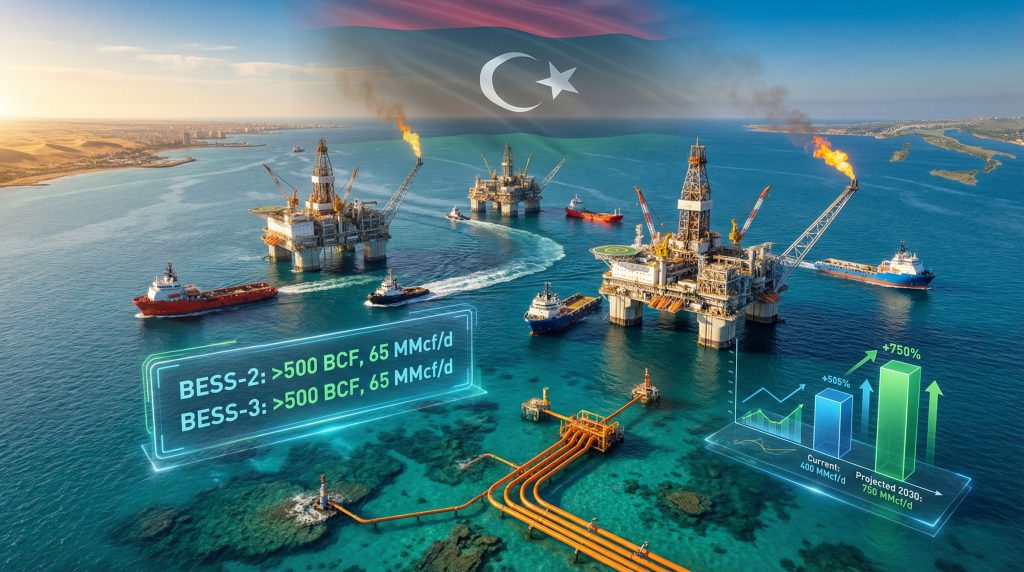
The Metlaoui Formation represents one of the Mediterranean's most consistently productive reservoir systems. This geological structure extends across multiple offshore blocks, demonstrating remarkable reservoir quality and commercial viability across diverse drilling locations. Both BESS-2 and BESS-3 discoveries exceeded 500 billion cubic feet of estimated reserves, confirming the formation's substantial hydrocarbon-bearing capacity.
Early reservoir testing reveals high-quality reservoir characteristics essential for sustained commercial production. Well test data confirms the geological structure's ability to deliver commercially viable flow rates, validating development economics and production sustainability forecasts.
Technical Specifications of Libyan Gas Discoveries
| Discovery | Reserve Estimate | Production Capacity | Infrastructure Distance | Development Timeline |
|---|---|---|---|---|
| BESS-2 | >500 BCF | 65 MMcf/d | 16 km | 18-24 months |
| BESS-3 | >500 BCF | 65 MMcf/d | 16 km | 18-24 months |
| Combined | >1 TCF | 130 MMcf/d | N/A | 24-30 months |
Infrastructure Integration Economics
The proximity advantage of 16 kilometres to existing Bahr Essalam infrastructure creates exceptional development economics rarely achievable in offshore exploration. This distance enables cost-effective tie-back development strategies that leverage existing production facilities, processing capacity, and pipeline connectivity.
Tie-back development approaches typically reduce capital expenditure requirements by 40-60% compared to standalone development projects. This cost reduction stems from shared infrastructure utilisation, reduced engineering complexity, and accelerated construction timelines enabled by proven operational systems.
"Infrastructure proximity enables development cost reductions of 40-60% while simultaneously reducing project risk through utilisation of proven operational systems and established regulatory frameworks."
European Energy Import Strategy Evolution
Italy's energy portfolio demonstrates the strategic significance of North African gas resources in European supply diversification. In 2025, Libya secured position as Italy's largest crude supplier, representing nearly 25% of total Italian crude imports. This market share reflects both competitive pricing and reliable supply chain performance that European energy planners increasingly value. Moreover, these developments must be considered alongside tariffs and investment implications affecting broader energy markets.
Comparative Supply Economics
Mediterranean pipeline gas offers substantial economic advantages compared to global LNG alternatives. Transportation cost differentials range from $0.50-1.20 per million BTU depending on global LNG spot pricing and shipping availability. These savings compound significantly across multi-year supply contracts, creating material economic benefits for European consumers.
Pipeline gas also provides enhanced supply reliability compared to LNG imports, which face potential disruption from shipping constraints, port capacity limitations, and weather-related delays. European energy security planners increasingly prioritise supply sources that minimise operational complexity and external dependency risks.
Long-term Strategic Positioning
The Mellitah Oil & Gas joint venture between Eni and Libya's National Oil Corporation targets 750 million cubic feet per day production capacity by 2026. This represents an 87% increase from current baseline production levels, demonstrating the scale of potential Mediterranean gas contribution to European energy security.
European Union energy independence strategies emphasise diversification across multiple supply corridors while maintaining cost competitiveness. North African pipeline gas satisfies both objectives through reliable supply chain performance and favourable transportation economics compared to intercontinental alternatives. Additionally, these developments occur within the context of broader global market impacts affecting energy security considerations.
Libya's Energy Sector Economic Transformation
The combined 130 million cubic feet per day production capacity from BESS-2 and BESS-3 discoveries represents substantial revenue enhancement for Libya's energy sector. At current European gas prices, this production increment could generate annual export revenues exceeding $200-300 million, providing significant fiscal benefits for Libya's government budget.
Revenue Generation and Export Optimisation
Libya's dual-market strategy balances domestic energy security with export revenue maximisation. Gas production serves both internal electricity generation requirements and export market demand, optimising overall resource utilisation and economic returns.
National Oil Corporation projections indicate the discoveries will help ease supply gaps while supporting export demand growth. This dual-purpose approach ensures domestic energy security while maximising foreign currency earnings from international gas sales.
Libya's Projected Energy Export Growth by 2030
| Resource Type | 2025 Baseline | 2030 Projection | Growth Rate | Primary Markets |
|---|---|---|---|---|
| Crude Oil | 1.2 million bpd | 1.8 million bpd | 50% | Europe, Asia |
| Natural Gas | 400 MMcf/d | 750 MMcf/d | 87% | Italy, Europe |
International Investment Climate
Eni's sustained commitment to Libyan energy development, operating continuously since 1959, demonstrates long-term confidence in the country's investment climate and regulatory framework. Current daily production of approximately 162,000 barrels of oil equivalent per day establishes Eni as Libya's largest foreign energy producer.
The company's recent expansion activities include securing a 29,000 square kilometre exploration block in the Sirte Basin in February 2026, indicating continued confidence in Libya's hydrocarbon potential and investment environment. This exploration commitment represents substantial capital deployment across multiple development phases.
Mediterranean Energy Development Regional Context
Libya's recent discoveries complement broader Mediterranean energy development trends while offering unique competitive advantages. The Sirte Basin ranks among North Africa's most prolific oil and gas regions, with demonstrated hydrocarbon potential across multiple geological formations and exploration targets.
Comparative Regional Analysis
While Eastern Mediterranean discoveries may exceed Libyan finds in absolute reserve size, the infrastructure proximity and rapid development potential of BESS-2 and BESS-3 offer superior economic returns and faster market entry timelines. This development speed advantage becomes critical during periods of elevated European gas demand and pricing.
Mediterranean offshore exploration demonstrates consistent technological advancement and operational efficiency improvements. Standardised drilling techniques, proven reservoir management practices, and established regulatory frameworks enable accelerated development timelines across the region.
Supply Chain Integration Opportunities
Existing pipeline infrastructure creates opportunities for expanded capacity utilisation and network optimisation. The Greenstream pipeline represents proven technology for Mediterranean gas transportation, providing a foundation for incremental capacity expansion as production volumes increase.
Regional energy development benefits from technology transfer between operators and shared operational expertise across similar geological and operational environments. This knowledge sharing accelerates learning curves and reduces development risks across multiple projects.
The next major ASX story will hit our subscribers first
Long-term Strategic Market Implications
European energy security strategies increasingly emphasise supply source diversification while maintaining cost competitiveness and reliability. The eni gas discoveries in libya satisfy multiple strategic objectives through favourable transportation economics, established infrastructure connectivity, and proven operational track records. Furthermore, these developments provide significant reserves that could transform energy supply dynamics across the Mediterranean region.
Investment Requirements and Economic Returns
Capital expenditure for tie-back development projects typically ranges from $200-400 million depending on infrastructure complexity and production capacity targets. These investment levels generate attractive returns given current European gas pricing and long-term supply agreement structures.
Break-even analysis indicates project viability at European gas prices above $6-8 per million BTU, well below current market levels and long-term price forecasts. This economic resilience provides investors with confidence in project returns across various pricing scenarios.
Future Development Potential
Libya's energy sector positions itself for sustained growth through continued exploration, infrastructure expansion, and international partnership development. The combination of substantial remaining hydrocarbon potential, improving investment climate, and strategic geographic positioning creates favourable conditions for long-term sector development.
Disclaimer: This analysis contains forward-looking statements and projections based on current market conditions and available information. Energy market volatility, geopolitical developments, and regulatory changes may significantly impact actual outcomes. Investors should conduct independent due diligence and consider multiple risk factors before making investment decisions.
Market Psychology and Risk Assessment
Energy investors increasingly prioritise projects with accelerated development timelines and reduced infrastructure risk. Tie-back developments offer both advantages while maintaining exposure to commodity price upside through established market access channels.
Geopolitical risk assessment for North African energy investments requires balanced evaluation of operational track records, regulatory stability, and international partnership frameworks. Libya's demonstrated ability to maintain energy export commitments through various political transitions provides confidence for long-term energy supply planning.
The Mediterranean offshore energy sector demonstrates resilience through technological advancement, operational efficiency improvements, and regulatory framework development that supports sustained international investment and development activity.
Ready to Capitalise on Energy Sector Discoveries?
Discovery Alert's proprietary Discovery IQ model delivers real-time alerts on significant ASX mineral and energy discoveries, instantly empowering subscribers to identify actionable opportunities ahead of the broader market. Begin your 14-day free trial today and secure your market-leading advantage in the evolving energy and resources sector.