May 21, 2026
Deep beneath West African waters, sophisticated energy infrastructure networks are reshaping regional gas monetization strategies through integrated development models that leverage existing processing capabilities. As global LNG markets evolve toward hub-based supply systems, operators increasingly prioritise capital-efficient approaches that maximise infrastructure utilisation while minimising greenfield investment requirements. These strategic frameworks enable accelerated project timelines and enhanced economic returns through shared processing facilities and consolidated export operations.
The convergence of proven reserves, established infrastructure, and strategic partnerships creates compelling development scenarios for deepwater gas-condensate resources in emerging markets. Furthermore, modern subsea technologies enable economically viable connections between distant offshore discoveries and centralised processing hubs, fundamentally altering traditional field development economics and risk profiles. These developments reflect broader natural gas trends influencing global energy markets.
Understanding Equatorial Guinea's Strategic Gas Infrastructure Development
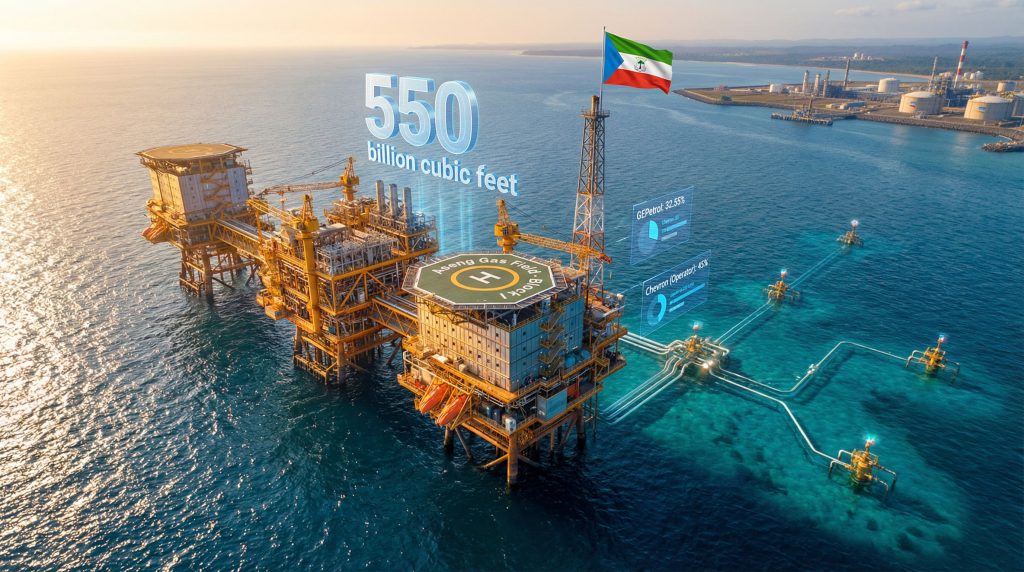
The Aseng Gas Monetization Project represents a sophisticated integration of subsea production systems with established midstream processing capabilities. Located in Block I offshore waters at approximately 3,100-foot depths, the development encompasses proven gas-condensate reserves estimated at 550 billion cubic feet. This substantial resource base positions the project as a cornerstone of regional energy security initiatives while demonstrating advanced deepwater development methodologies.
The strategic positioning of Aseng field offers significant advantages for regional integration. The offshore location provides direct access to existing pipeline infrastructure connecting to the Punta Europa LNG processing complex, eliminating the need for extensive new midstream development. Consequently, water depths of 3,100 feet fall within proven operational parameters for modern subsea completion technologies, reducing technical risk while maintaining cost-effective drilling and completion programs.
Key Technical Specifications:
• Proven reserves: 550 billion cubic feet of gas-condensate
• Water depth: 3,100 feet in Block I offshore waters
• Integration capability with Punta Europa LNG facilities
• Advanced subsea completion requirements for deepwater production
• Direct pipeline connectivity to established processing infrastructure
The field's geographic position enables cross-border development opportunities with neighbouring territories, creating potential for shared infrastructure utilisation across multiple discoveries. This positioning supports the broader Gas Mega Hub strategy by providing a central anchor point for regional field integration and consolidated processing operations.
Infrastructure Integration Economics
Utilisation of established midstream processing capabilities fundamentally transforms project economics compared to greenfield alternatives. The Punta Europa LNG processing complex provides proven gas treatment, liquefaction, and export capabilities that eliminate the substantial capital requirements typically associated with new facility construction. In addition, this infrastructure sharing model reduces overall development costs while accelerating project timelines through streamlined engineering and construction phases.
The established processing infrastructure offers several economic advantages:
Capital Efficiency Benefits:
• Reduced CAPEX through infrastructure sharing arrangements
• Elimination of greenfield processing facility requirements
• Shared operational expertise and established workforce
• Proven regulatory pathways and permitting precedents
• Enhanced project IRR through shortened development timelines
Connection to existing export terminals at Punta Europa provides immediate access to international LNG markets without the typical 5-7 year construction timeline required for new liquefaction facilities. This market access advantage enables earlier revenue generation and improved project cash flow profiles, particularly valuable given current global LNG demand dynamics and US natural gas forecasts.
When big ASX news breaks, our subscribers know first
Government Participation and Project Viability Framework
The evolution of state ownership structures demonstrates strategic alignment between international operators and national energy objectives. GEPetrol's participation has expanded significantly from an initial 5% stake to 32.55% through February 2026 financing arrangements, reflecting increased government commitment to long-term project success and enhanced local economic benefits.
This ownership restructuring creates a balanced partnership framework that combines international technical expertise with local operational knowledge and regulatory support. However, the increased state participation strengthens project foundations through risk-sharing mechanisms while ensuring alignment with national energy development priorities.
| Entity | Previous Stake | Current Stake | Primary Role |
|---|---|---|---|
| Chevron (Noble Energy EG) | ~60% | ~45% | Technical operator & development lead |
| GEPetrol | 5% | 32.55% | State participation & local oversight |
| Glencore | ~20% | ~12% | Marketing & trading expertise |
| Gunvor | ~15% | ~10% | Additional trading capabilities |
The Equatorial Guinea energy milestone achieved in September 2025 established comprehensive fiscal and commercial frameworks designed to support sustained development economics. These arrangements balance competitive investment terms with enhanced revenue-sharing mechanisms, creating incentives for long-term field optimisation and continued regional exploration activities.
Fiscal Framework Components:
• Competitive tax structures supporting international investment
• Balanced revenue-sharing between state and private partners
• Investment incentives for sustained long-term development
• Enhanced local content requirements and workforce development obligations
• Technology transfer provisions facilitating skills development
Government participation extends beyond financial investment to include regulatory support and strategic planning coordination. The increased GEPetrol stake ensures direct state involvement in operational decision-making while maintaining international best practices for technical development and safety standards.
Regional Gas Mega Hub Strategy Implementation
The Aseng Gas Monetization Project functions as a foundational component within Equatorial Guinea's comprehensive Gas Mega Hub development strategy. This approach consolidates multiple field developments around centralised processing infrastructure, optimising capital deployment while maximising resource recovery across the broader regional portfolio.
The integrated development model encompasses several interconnected projects that leverage shared infrastructure and operational synergies. For instance, by routing production from multiple discoveries through common processing facilities, the strategy reduces per-unit development costs while enabling coordinated reservoir management and production optimisation.
Integrated Project Portfolio:
• Aseng Field: Primary anchor development in Block I
• Alen Field Extension: Block O development leveraging existing infrastructure
• Yoyo-Yolanda Cross-Border Field: Multi-jurisdictional development opportunity
• Blocks EG-06 and EG-11: Exploration areas supporting future expansion
• Alba Field Integration: Additional processing consolidation potential
This hub-based development approach creates operational efficiencies through shared workforce, consolidated logistics, and integrated maintenance programmes. Furthermore, the strategy also enables more effective reservoir management by coordinating production profiles across multiple fields to optimise overall system performance and extend facility operating life.
Cross-Border Development Opportunities
The strategic positioning of Aseng field enables integration with cross-border resources, particularly the Yoyo-Yolanda field development that spans multiple territorial jurisdictions. This multi-country approach requires sophisticated regulatory coordination but offers substantial economies of scale through shared infrastructure utilisation.
Cross-border field developments present unique technical and commercial challenges that require careful coordination between multiple regulatory frameworks and fiscal regimes. However, successful implementation can create significant value through optimised reservoir management and consolidated processing operations.
Regional Integration Benefits:
• Shared subsea infrastructure reducing individual field development costs
• Coordinated reservoir management across territorial boundaries
• Consolidated processing and export operations
• Enhanced negotiating position with international LNG buyers
• Reduced environmental footprint through infrastructure consolidation
Technical Development and Infrastructure Specifications
Deepwater gas-condensate development at 3,100-foot depths requires sophisticated subsea engineering solutions that balance technical performance with economic efficiency. The Aseng Gas Monetization Project employs proven subsea completion technologies adapted for Gulf of Guinea environmental conditions and production requirements.
Subsea infrastructure components must accommodate the specific characteristics of gas-condensate reservoirs while ensuring reliable long-term operation in deepwater environments. The technical specification includes advanced pressure management systems, multi-phase flow handling capabilities, and integrated production monitoring technologies that align with industry innovation trends.
Subsea Infrastructure Requirements:
• High-specification subsea wellhead systems for deepwater installation
• Advanced subsea manifolds consolidating multiple well streams
• Flexible riser systems or rigid pipelines for produced fluid transport
• Comprehensive subsea control and monitoring systems
• Cathodic protection for long-term corrosion prevention
The processing integration design accommodates sustained production levels extending into the mid-2030s through modular expansion capabilities and optimised flow management systems. Connection to established Punta Europa facilities enables immediate utilisation of proven gas treatment and liquefaction technologies without requiring new processing development.
Advanced Subsea Technologies
Modern subsea completion technologies enable reliable operation at 3,100-foot depths while maintaining cost-effective installation and maintenance programmes. The project specification includes advanced subsea Christmas trees, integrated control systems, and sophisticated flow management equipment designed for gas-condensate production optimisation.
Subsea manifold systems consolidate production from multiple wells while enabling individual well monitoring and control. These systems incorporate advanced flow measurement technologies and real-time production optimisation capabilities that maximise reservoir recovery while maintaining operational flexibility.
The integration of advanced subsea technologies with established processing infrastructure demonstrates how strategic infrastructure planning can unlock previously uneconomic resources while maintaining competitive development costs and accelerated project timelines.
Technical Innovation Elements:
• Multi-well subsea manifold systems for optimised production routing
• Advanced pressure and temperature monitoring throughout the subsea network
• Integrated flow assurance systems preventing hydrate formation and flow restrictions
• Real-time production optimisation through advanced control systems
• Modular design enabling future expansion and additional well tie-ins
Impact on Regional LNG Supply Dynamics
The Aseng Gas Monetization Project strengthens Equatorial Guinea's position within global LNG supply networks by extending export capabilities into the mid-2030s through established infrastructure utilisation. This sustained production capability reinforces the country's role as a reliable supplier to international markets while maintaining competitive positioning relative to emerging LNG projects worldwide.
Equatorial Guinea's established export infrastructure provides significant advantages in accessing both European and Asian LNG markets. The Punta Europa facility offers proven loading capabilities and established shipping relationships that enable flexible market response and optimised cargo scheduling based on seasonal demand patterns and pricing opportunities.
Strategic Market Positioning:
• Sustained LNG export capacity through mid-2030s production levels
• Established market access to European and Asian buyers
• Proven operational reliability and cargo delivery performance
• Competitive shipping distances to major demand centres
• Flexible production scheduling accommodating market volatility
The project's integration with regional supply networks creates opportunities for coordinated marketing and optimised cargo consolidation. By leveraging established buyer relationships and proven operational performance, Equatorial Guinea maintains competitive advantages relative to emerging suppliers requiring new infrastructure development and market penetration.
Global Market Integration
Regional LNG supply dynamics increasingly favour producers with established infrastructure and proven operational track records. The Aseng Gas Monetization Project capitalises on these market preferences by extending production from facilities with demonstrated reliability and established customer relationships.
European energy security considerations following recent geopolitical developments have increased demand for reliable, long-term LNG supply arrangements. Consequently, Equatorial Guinea's established position and proven delivery capabilities create opportunities for enhanced long-term contracting and premium pricing arrangements, particularly given current energy exports challenges affecting global markets.
Market Access Advantages:
• Direct shipping access to European markets via established routes
• Flexible routing options to Asian markets through proven logistics networks
• Established relationships with international LNG trading entities
• Proven cargo loading and quality specifications meeting international standards
• Strategic positioning for both baseload and flexible supply arrangements
Investment Timeline and Development Milestones
Project development follows a structured timeline designed to optimise resource deployment while maintaining operational flexibility. The March 2026 Final Investment Decision represents a critical milestone enabling detailed engineering and procurement activities while final regulatory approvals continue through established government channels.
The phased development approach minimises upfront capital requirements while maintaining schedule flexibility for market optimisation. This strategy enables responsive adjustment to changing market conditions while preserving project economics through efficient resource utilisation, which is crucial for energy transition security.
Key Development Milestones:
• March 2026: Final Investment Decision completion
• Q2 2026: Detailed engineering and procurement initiation
• Q4 2026: Final regulatory approvals and project sanctioning
• 2027-2028: Subsea infrastructure fabrication and installation
• 2029-2030: First gas production and LNG export commencement
Capital efficiency strategies focus on leveraging existing infrastructure while optimising new investment deployment. The shared infrastructure approach reduces individual project capital requirements while maintaining technical performance standards and operational reliability.
Risk Management and Capital Optimisation
Development risk mitigation incorporates proven technologies and established operational frameworks while maintaining flexibility for technical optimisation. The utilisation of existing processing infrastructure reduces execution risk while enabling accelerated project timelines and improved capital efficiency.
Phased development strategies enable responsive capital deployment based on market conditions and operational performance. This approach maintains project optionality while optimising resource allocation across the broader regional portfolio.
Capital Efficiency Strategies:
• Shared infrastructure reducing individual project CAPEX requirements
• Phased development minimising upfront investment exposure
• Proven technology deployment reducing technical risk
• Optimised drilling and completion programmes for gas-condensate recovery
• Integrated project management across regional portfolio
The next major ASX story will hit our subscribers first
Broader West African Energy Development Implications
The Aseng Gas Monetization Project establishes a replicable model for government-operator partnerships in West African energy development. The balanced ownership structure and strategic infrastructure utilisation demonstrate effective approaches to unlocking stranded gas resources while maintaining competitive project economics.
This development model offers broader applications across West African gas provinces where existing infrastructure can be leveraged to accelerate new field development. The template demonstrates how strategic partnerships can optimise capital deployment while ensuring sustainable local economic benefits.
Regional Development Model Elements:
• Balanced government-operator partnership structures
• Strategic infrastructure sharing for capital efficiency
• Integrated multi-field development approaches
• Technology transfer and local workforce development
• Sustainable revenue-sharing supporting long-term economic growth
The project's success could catalyse additional regional developments through demonstrated economic viability and proven partnership frameworks. This replication potential supports broader West African energy sector growth while maintaining competitive international positioning, as detailed in the Alen Gas Project FID milestone.
Long-Term Energy Security Benefits
Sustained LNG export revenue provides foundation for continued economic development while supporting strategic energy partnerships. The project demonstrates how natural resource development can support long-term economic stability through diversified revenue streams and enhanced international relationships.
Technology transfer and local workforce development create lasting benefits extending beyond project operational life. These capacity-building elements support continued energy sector growth while developing local expertise for future developments.
Economic Development Impacts:
• Sustained export revenue supporting economic diversification
• Enhanced energy infrastructure supporting regional industrial growth
• Technology transfer developing local technical capabilities
• Workforce development creating sustainable employment opportunities
• Strategic international partnerships strengthening regional positioning
Investment Considerations:
This analysis is provided for informational purposes and does not constitute investment advice. Energy project developments involve substantial technical, commercial, and regulatory risks that may significantly impact project outcomes and financial performance. Potential investors should conduct independent due diligence and consult qualified advisors before making investment decisions.
Frequently Asked Questions:
When will the Aseng Gas Monetization Project begin commercial production?
Following the March 2026 Final Investment Decision and pending final regulatory approvals, first gas production is anticipated in the 2029-2030 timeframe, with exports continuing into the mid-2030s.
How does existing infrastructure reduce project development costs?
The project leverages established Punta Europa LNG processing facilities, eliminating the need for new liquefaction infrastructure and reducing capital expenditure requirements compared to greenfield developments.
What role does increased government participation play in project success?
GEPetrol's expanded 32.55% ownership provides enhanced local oversight, strengthened revenue sharing arrangements, and improved regulatory support for long-term development success.
How does this project support Equatorial Guinea's broader energy strategy?
The development serves as a cornerstone of the Gas Mega Hub initiative, consolidating multiple field developments around centralised infrastructure to optimise export capacity and economic returns while extending operational life into the mid-2030s.
Ready to capitalise on emerging energy opportunities?
Discovery Alert's proprietary Discovery IQ model delivers real-time alerts on significant ASX mineral discoveries, instantly empowering subscribers to identify actionable opportunities ahead of the broader market. Begin your 14-day free trial today and secure your market-leading advantage.