
May 13, 2026
What Is Driving the Shift from Equipment Sales to Service-Centric Models?
The mining industry stands at a pivotal transformation point where traditional equipment acquisition models face unprecedented scrutiny. Capital expenditure pressures, operational complexity increases, and demand for predictable cost structures drive fundamental changes in how mining companies approach equipment ownership. This shift represents more than a procurement preference change; it signals a strategic realignment toward outcome-focused partnerships that prioritise performance over possession. Equipment manufacturers responding to this evolution are developing sophisticated service frameworks that transform their role from suppliers to integrated operational partners. Furthermore, these industry evolution trends indicate a broader movement towards collaborative operational models.
The Economics Behind Performance-Based Partnerships
Mining operations face mounting pressure to optimise capital allocation while maintaining production targets. Traditional equipment purchase models require substantial upfront investments that strain balance sheets and limit financial flexibility. Service-centric approaches redistribute these costs across operational timeframes, converting large capital expenditures into predictable operational expenses that align with revenue generation cycles.
Performance-based partnerships fundamentally alter risk distribution between mining companies and equipment manufacturers. Under traditional models, operational risks associated with equipment failure, maintenance complexity, and performance degradation rest entirely with mining operators. Service-centric frameworks transfer these risks to manufacturers who possess specialised expertise and economies of scale to manage them more efficiently.
The economic rationale extends beyond cost redistribution. Mining companies increasingly recognise that their core competencies centre on resource extraction and processing, not equipment maintenance and optimisation. Consequently, by partnering with manufacturers who specialise in equipment lifecycle management, operations can refocus internal resources on activities that directly impact mineral recovery and processing efficiency.
Capital Expenditure Optimisation Strategies for Mining Operations
Modern mining operations require sophisticated approaches to capital allocation that balance immediate operational needs with long-term strategic objectives. Service-based equipment models enable more flexible capital deployment by reducing large, lumpy investments that can distort financial planning and limit strategic options.
Cash flow predictability emerges as a critical advantage in service-centric models. Rather than facing uncertain maintenance costs, unplanned equipment failures, and irregular replacement cycles, mining operations can establish consistent operational expenditure patterns that facilitate more accurate financial forecasting and budget planning.
The total cost of ownership calculations in service-based models often reveal significant advantages over traditional purchase approaches. When considering equipment acquisition costs, maintenance expenses, spare parts inventory, specialised labour requirements, and replacement timing, many operations discover that service partnerships deliver superior economic outcomes while reducing operational complexity. Additionally, data-driven operations are becoming essential for optimising these financial models.
Risk Transfer Mechanisms in Modern Equipment Agreements
Service-centric models incorporate sophisticated risk allocation mechanisms that protect mining operations from various operational uncertainties. Equipment availability risks transfer to service providers who commit to maintaining specified uptime levels through comprehensive maintenance protocols and rapid response capabilities.
Technology obsolescence represents another significant risk that service partnerships address effectively. Rather than being locked into aging equipment platforms, mining operations benefit from service providers' continuous technology updates and improvement implementations that maintain competitive performance levels throughout contract periods.
Performance guarantee structures create accountability mechanisms that align service provider incentives with mining operation objectives. These guarantees typically cover availability metrics, efficiency targets, and cost parameters that directly impact operational profitability, ensuring that service providers share financial consequences of performance shortfalls.
When big ASX news breaks, our subscribers know first
How Do Lifecycle Service Frameworks Transform Mining Operations?
Three-Tier Partnership Models: Stability, Optimisation, and Growth
Comprehensive lifecycle service frameworks typically structure partnerships across multiple tiers that address different operational requirements and risk appetites. Basic stability tiers focus on maintaining equipment availability and preventing unexpected failures through standardised maintenance protocols and rapid response capabilities.
Optimisation tiers extend beyond basic maintenance to include performance enhancement activities that improve efficiency, reduce energy consumption, and extend equipment lifecycles. These partnerships often incorporate advanced monitoring systems, predictive maintenance technologies, and continuous improvement processes that deliver measurable operational gains. Moreover, AI in mining operations is enhancing these optimisation capabilities significantly.
Growth-oriented partnerships represent the most comprehensive service level, incorporating strategic planning, technology roadmap development, and operational transformation initiatives. These relationships position service providers as long-term strategic partners who contribute to operational excellence and competitive advantage development.
Performance Metrics That Define Success in Service Agreements
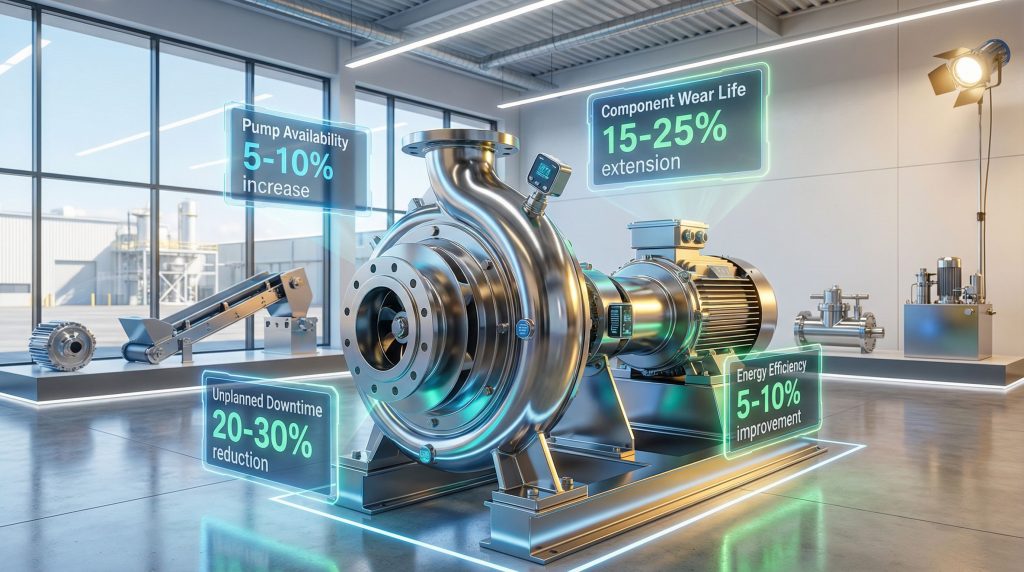
Measurable Performance Improvements
| Metric Category | Improvement Range | Impact Area |
|---|---|---|
| Pump Availability | 5-10% increase | Production continuity |
| Component Wear Life | 15-25% extension | Maintenance costs |
| Unplanned Downtime | 20-30% reduction | Operational efficiency |
| Energy Efficiency | 5-10% improvement | Operating costs |
Effective service agreements establish clear, measurable performance indicators that create accountability for both parties while providing objective bases for contract evaluation and improvement. Availability metrics typically receive primary emphasis, as equipment uptime directly correlates with production capacity and revenue generation potential.
Efficiency measurements encompass energy consumption, throughput optimisation, and resource utilisation indicators that impact operational costs and environmental performance. These metrics often reveal opportunities for continuous improvement that benefit both mining operations and service providers through shared value creation.
Safety performance indicators represent increasingly important components of service agreements, particularly as mining operations face enhanced regulatory scrutiny and stakeholder expectations regarding workplace safety. Service providers who demonstrate superior safety outcomes often command premium pricing while delivering significant value through reduced incident costs and improved operational continuity.
Integration Across the Minerals Processing Value Chain
Modern lifecycle service frameworks recognise that equipment performance optimisation requires holistic approaches that consider interactions across entire processing systems. Isolated equipment optimisation can create bottlenecks or inefficiencies in adjacent processes, limiting overall system performance and value creation potential.
Integration strategies involve comprehensive system analysis that identifies opportunities for coordinated improvements across multiple equipment categories and operational processes. This approach often reveals synergies that deliver greater performance gains than individual equipment optimisations would achieve independently.
Cross-functional coordination between service providers and mining operation teams becomes critical for successful integration implementation. These relationships require clear communication protocols, shared planning processes, and aligned performance objectives that support coordinated decision-making and problem resolution. Furthermore, critical minerals recycling initiatives are increasingly being integrated into these comprehensive service frameworks.
What Operational Improvements Can Mining Companies Expect?
Equipment Availability Enhancement Strategies
Lifecycle service models deliver availability improvements through multiple complementary approaches that address both planned and unplanned downtime sources. Predictive maintenance technologies enable early identification of potential failures, allowing for proactive interventions during scheduled maintenance windows rather than emergency repairs during production periods.
Standardised maintenance protocols ensure consistent service quality while reducing variability in equipment performance and lifecycle outcomes. These protocols incorporate manufacturer expertise and industry best practices that often exceed the capabilities of individual mining operations to develop and maintain internally.
Rapid response capabilities represent critical components of availability enhancement strategies, particularly for operations in remote locations or those with limited maintenance infrastructure. Service providers maintain strategic inventory positions and mobile service capabilities that enable faster problem resolution than mining operations could achieve independently.
Standardised Maintenance Protocols and Their Benefits
Standardisation across maintenance practices creates multiple operational advantages that extend beyond individual equipment performance. Consistent protocols enable more effective training programmes, improved safety outcomes, and better predictability in maintenance planning and resource allocation.
Quality assurance mechanisms inherent in standardised approaches reduce maintenance-related variability that can impact equipment performance and reliability. These mechanisms often incorporate verification procedures, documentation requirements, and performance monitoring that ensure maintenance activities achieve intended outcomes consistently.
Knowledge transfer capabilities improve significantly under standardised maintenance frameworks, as service providers can apply lessons learned across multiple operations to enhance protocols continuously. This collective learning approach accelerates improvement implementation and reduces the time required to optimise maintenance effectiveness.
Safety Enhancements Through Professional Service Networks
Professional service networks bring specialised safety expertise and training capabilities that often exceed individual mining operations' resources and capabilities. These networks maintain current knowledge of safety regulations, best practices, and emerging technologies that enhance workplace safety outcomes.
Reduced maintenance interventions through improved equipment reliability and predictive maintenance capabilities directly contribute to safety improvements by minimising personnel exposure to hazardous maintenance activities. This reduction particularly benefits operations involving complex or dangerous equipment maintenance procedures.
Standardised safety procedures across service networks ensure consistent safety standards regardless of location or specific operational conditions. These procedures often incorporate lessons learned from multiple operations and regulatory environments, creating robust safety frameworks that exceed minimum compliance requirements.
How Are Global Service Networks Supporting Equipment Lifecycle Management?
Regional Infrastructure Requirements for Comprehensive Coverage
Effective lifecycle service delivery requires strategic infrastructure positioning that balances response time requirements with cost efficiency considerations. Service providers must maintain appropriate inventory levels, technical capabilities, and personnel resources across geographic regions to support diverse operational requirements.
Local expertise development represents a critical component of regional infrastructure strategies, as service quality depends heavily on understanding local operational conditions, regulatory requirements, and cultural considerations. This expertise often requires significant investment in training programmes and knowledge transfer initiatives.
Supply chain coordination across regional networks enables more efficient resource utilisation while maintaining service quality standards. Coordinated approaches can reduce inventory requirements, improve spare parts availability, and enable more flexible resource deployment in response to varying demand patterns.
Equipment Delivery, Repair, and Recycling Integration
Comprehensive lifecycle service models integrate equipment delivery, repair, and end-of-life recycling into coordinated frameworks that optimise total lifecycle value while minimising environmental impact. This integration requires sophisticated logistics capabilities and coordination across multiple service functions.
Circular economy principles increasingly influence service model design, as both mining operations and service providers seek to maximise resource utilisation while minimising waste generation. These principles often reveal opportunities for component remanufacturing, material recovery, and extended equipment lifecycles that benefit all stakeholders.
Technology platforms enable integration coordination by providing visibility across lifecycle stages and supporting data-driven decision-making regarding repair versus replacement decisions, optimal maintenance timing, and end-of-life value recovery opportunities.
Testing and Quality Assurance in Distributed Service Models
Quality assurance across distributed service networks requires standardised testing protocols and performance verification procedures that ensure consistent service delivery regardless of location or specific service provider capabilities. These protocols often incorporate remote monitoring capabilities and centralised quality oversight functions.
Performance validation mechanisms enable continuous improvement through systematic collection and analysis of service outcomes across network locations. This data-driven approach facilitates rapid identification of best practices and problem areas that require attention or process modification.
Technology integration supports quality assurance through remote monitoring, diagnostic capabilities, and predictive analytics that enable proactive quality management rather than reactive problem resolution. These capabilities often exceed what individual mining operations could develop independently.
What Financial Models Underpin Performance-Based Equipment Agreements?
Total Cost of Ownership Calculations in Service Contracts
Total cost of ownership analysis in service-based models must account for numerous cost categories that extend beyond simple equipment purchase prices and basic maintenance expenses. These calculations include direct costs such as service fees, performance penalties, and supplementary services, alongside indirect costs including reduced operational flexibility and potential dependency risks.
Comparative analysis between service models and traditional ownership approaches requires careful consideration of different risk profiles and cash flow patterns. Service models typically involve higher predictability but potentially higher total costs, while ownership models offer greater control but increased financial and operational risks.
Sensitivity analysis becomes particularly important in total cost evaluations, as operational conditions, commodity prices, and equipment utilisation patterns can significantly impact the relative attractiveness of different financial models. These analyses help operations identify break-even points and optimal contract structures.
Revenue Sharing Mechanisms Between Operators and Service Providers
Innovative service contracts increasingly incorporate revenue sharing mechanisms that align service provider incentives with mining operation profitability. These arrangements typically involve service providers receiving base fees plus performance bonuses tied to operational improvements that directly impact revenue generation.
Risk sharing arrangements distribute both upside potential and downside risks between parties, creating stronger incentives for collaborative performance optimisation. These mechanisms often involve shared investments in improvement initiatives and shared benefits from successful implementations.
Performance guarantee structures protect mining operations from service shortfalls while providing service providers with opportunities to capture additional value through superior performance delivery. These guarantees typically include penalty mechanisms for underperformance and bonus opportunities for exceeding baseline expectations.
Long-Term Financial Planning for Mining Equipment Partnerships
Long-term service partnerships require sophisticated financial planning that accounts for changing operational requirements, technology evolution, and market conditions over extended contract periods. This planning must balance contract flexibility with cost predictability to optimise outcomes for both parties.
Technology refresh provisions enable service contracts to incorporate equipment updates and capability enhancements without requiring contract renegotiation or termination. These provisions often include predetermined upgrade pathways and cost-sharing mechanisms for technology improvements.
Contract adjustment mechanisms allow for modifications in response to significant changes in operational requirements, regulatory conditions, or market circumstances. These mechanisms provide flexibility while maintaining contract integrity and protecting both parties' interests.
Which Equipment Categories Are Leading the Service Model Transformation?
Pumping Systems and Slurry Handling Equipment
Pumping systems represent ideal candidates for service-based models due to their critical role in mineral processing operations and the specialised expertise required for optimal performance management. Metso expands lifecycle services model specifically for pumping equipment, reflecting industry recognition of these systems' importance and complexity.
Slurry handling equipment faces unique challenges related to abrasive materials, corrosive environments, and demanding operational conditions that require specialised maintenance approaches and component selection. Service providers specialising in these applications can deliver superior performance through dedicated expertise and optimised maintenance protocols.
Performance optimisation opportunities in pumping systems include energy efficiency improvements, wear life extensions, and availability enhancements that directly impact operational costs and production continuity. These opportunities often require systematic approaches that individual operations struggle to implement effectively.
Critical Processing Equipment in Minerals Operations
Processing equipment criticality makes these systems natural candidates for service-based approaches, as equipment failures can halt entire operations and create significant financial losses. Service models provide insurance against these risks while potentially improving overall performance levels.
Complex processing equipment often requires specialised knowledge and tools that exceed individual operations' capabilities to maintain internally. Service providers can justify investments in specialised equipment and training that benefit multiple operations while delivering superior service quality.
Integration opportunities across processing systems create additional value propositions for comprehensive service approaches that optimise entire processing chains rather than individual equipment components. These approaches often reveal synergies that improve overall system performance beyond what individual optimisations could achieve.
Expansion Opportunities Across Mining Technology Sectors
Service model expansion across mining technology sectors reflects growing recognition of the benefits these approaches can deliver across diverse equipment categories and operational requirements. Success in pumping systems demonstrates model viability and creates templates for expansion into other equipment categories.
Technology complexity increases across mining operations create additional opportunities for service-based approaches, as operations struggle to maintain internal expertise across increasingly sophisticated equipment platforms. Service providers can develop specialised capabilities that serve multiple operations more efficiently than individual internal capabilities. Additionally, insights from innovation expo insights suggest that technology advancement is accelerating this trend.
Market maturation in service-based models enables more sophisticated contract structures and performance guarantees that address initial concerns about service model adoption. This maturation creates positive feedback loops that accelerate adoption across additional equipment categories and operational contexts.
The next major ASX story will hit our subscribers first
How Do Mining Companies Evaluate Service Provider Capabilities?
Technical Expertise Assessment Criteria
Technical expertise evaluation requires comprehensive assessment of service providers' capabilities across equipment design, maintenance protocols, diagnostic technologies, and performance optimisation methodologies. This evaluation often involves reviewing provider credentials, examining past performance records, and assessing technical staff qualifications and experience levels.
Innovation capabilities represent increasingly important evaluation criteria, as mining operations seek service partners who can contribute to long-term competitive advantage through technology advancement and operational improvement initiatives. These capabilities often require ongoing research and development investments that individual operations cannot justify independently.
Problem-solving track records provide insights into service providers' abilities to address complex operational challenges and deliver creative solutions under demanding conditions. These records often reveal provider strengths and limitations that significantly impact service delivery quality and relationship success potential.
Global Reach and Local Support Requirements
Global service network capabilities enable consistent service delivery across multiple operational locations while providing access to broader expertise and resource pools. However, these capabilities must be balanced against local support requirements that ensure responsive service delivery and understanding of local conditions.
Local presence evaluation should consider both physical infrastructure and human resources that enable effective service delivery in specific geographic regions. This presence often requires significant provider investments that demonstrate commitment to long-term service delivery in particular markets.
Cultural compatibility assessment becomes particularly important for service relationships that involve close operational integration and long-term partnership development. Cultural misalignment can undermine service effectiveness and create relationship tensions that impact overall partnership success.
Performance Guarantee Structures and Accountability Measures
Performance guarantee evaluation requires careful analysis of guarantee scope, measurement methodologies, penalty structures, and provider financial capabilities to honour guarantee commitments. These guarantees should provide meaningful protection while maintaining reasonable risk allocation between parties.
Accountability mechanisms must include clear reporting requirements, performance monitoring systems, and dispute resolution procedures that ensure transparency and fair treatment of both parties. These mechanisms often determine relationship success more than initial contract terms.
Financial stability assessment of service providers becomes critical when performance guarantees involve significant financial commitments or when long-term contracts create dependency relationships. Provider financial difficulties can disrupt service delivery and create operational risks that undermine contract benefits.
What Are the Long-Term Industry Implications of Service-Centric Models?
Competitive Landscape Changes for Equipment Manufacturers
Service model adoption fundamentally alters competitive dynamics among equipment manufacturers by shifting competition from product features and pricing toward service capabilities and long-term relationship management. This shift often favours manufacturers with strong service organisations and global support networks over those focused primarily on product development and manufacturing efficiency.
Market consolidation pressures may increase as service model requirements favour larger organisations with greater financial resources and geographic reach capabilities. Smaller manufacturers may find it difficult to compete effectively without substantial service infrastructure investments or strategic partnership arrangements.
Innovation incentives change under service-based models, as manufacturers become directly responsible for equipment performance outcomes rather than simply providing products that meet initial specifications. This responsibility often accelerates innovation in reliability, efficiency, and maintenance technologies that benefit entire industries.
Mining Company Operational Strategy Evolution
Strategic focus shifts toward core competencies as mining companies increasingly rely on service partners for specialised equipment management capabilities. This evolution enables greater concentration of internal resources on activities that directly impact mineral extraction and processing efficiency rather than equipment maintenance and optimisation.
Operational flexibility may increase through service partnerships that provide access to latest technologies and best practices without requiring internal capability development. This flexibility often enables faster adaptation to changing market conditions and operational requirements.
Risk management approaches evolve as service partnerships transfer certain operational risks to specialised providers while potentially creating new dependency risks that require different management strategies. Successful risk management requires careful balance between risk transfer benefits and dependency concerns.
Technology Innovation Acceleration Through Service Partnerships
Collaborative innovation opportunities increase as service partnerships create aligned incentives for performance improvement and technology advancement. These partnerships often generate faster innovation cycles than either party could achieve independently through shared resources and expertise.
Technology adoption rates may accelerate as service providers can justify advanced technology investments across multiple operations, reducing adoption barriers that individual operations face when considering expensive technology upgrades. Furthermore, recent developments in lifecycle services for minerals processing demonstrate the potential for industry-wide transformation.
Industry-wide benefit realisation occurs as service providers share best practices and technological improvements across their service networks, accelerating industry-wide performance improvements and technology standardisation.
How Can Mining Operations Successfully Transition to Lifecycle Service Models?
Contract Negotiation Best Practices for Performance-Based Agreements
Successful contract negotiation requires thorough preparation including baseline performance measurement, clear objective definition, and realistic performance target establishment. Operations should document current performance levels across relevant metrics to enable fair comparison and realistic improvement target setting.
Performance measurement methodologies must be clearly defined and mutually acceptable to prevent disputes and ensure accurate performance assessment. These methodologies should account for operational variability and external factors that may impact performance but remain outside service provider control.
Contract flexibility provisions enable adaptation to changing operational requirements and market conditions while maintaining contract integrity. These provisions should include clear procedures for contract modifications and fair mechanisms for addressing unforeseen circumstances.
Internal Capability Assessment and Resource Allocation
Internal capability assessment should identify which maintenance and operational functions will transfer to service providers and which will remain internal responsibilities. This assessment helps determine optimal service scope and internal resource reallocation opportunities.
Staff transition planning addresses potential redundancies and retraining requirements associated with service model adoption. Effective planning often identifies opportunities for staff redeployment into higher-value activities while addressing legitimate employment concerns.
Knowledge management strategies ensure that critical operational knowledge transfers effectively between internal teams and service providers. These strategies often involve documentation requirements and formal knowledge transfer procedures that prevent information loss during transition periods.
Implementation Timeline and Change Management Strategies
Phased implementation approaches reduce transition risks and enable learning-based adjustments before full-scale deployment. These approaches typically begin with non-critical equipment or limited operational scope before expanding to more critical systems.
Change management strategies address cultural resistance and operational concerns that often accompany service model adoption. Successful change management typically involves clear communication, stakeholder engagement, and demonstration of early wins that build confidence in new approaches.
Performance monitoring during implementation enables rapid identification of issues and course corrections that prevent minor problems from becoming major disruptions. This monitoring should include both operational performance metrics and relationship quality indicators that predict long-term success potential.
Mining operations considering lifecycle service partnerships should evaluate their current maintenance capabilities, long-term operational goals, and financial flexibility to determine the optimal service tier that aligns with their business objectives while providing measurable performance improvements and predictable cost structures.
Frequently Asked Questions:
How do performance-based service contracts differ from traditional equipment purchases?
Performance-based contracts shift focus from equipment ownership to operational outcomes, with service providers taking responsibility for availability, efficiency, and maintenance while mining companies pay for guaranteed performance levels rather than equipment assets.
What factors determine the success of lifecycle service partnerships?
Success depends on clear performance metrics, aligned commercial incentives, robust communication protocols, and the service provider's technical expertise and global support infrastructure combined with realistic performance targets and effective change management.
How do mining companies maintain operational control under service-based models?
Companies retain operational oversight through defined performance standards, regular reporting mechanisms, and collaborative planning processes while benefiting from specialised maintenance expertise that often exceeds internal capabilities and delivers superior operational outcomes.
This analysis is based on industry observations and publicly available information. Mining operations should conduct thorough due diligence and seek professional advice before making significant operational or financial commitments to service-based equipment models. Performance improvements and cost benefits may vary significantly based on operational conditions, equipment age, and service provider capabilities.
Ready to Capitalise on Mining Equipment Service Trends?
Discovery Alert's proprietary Discovery IQ model delivers real-time alerts on significant ASX mineral discoveries, instantly empowering subscribers to identify actionable opportunities as the mining industry transforms toward service-centric models. Begin your 14-day free trial today and position yourself ahead of the market with instant insights into mining companies adapting to these operational innovations.