
August 20, 2026
Understanding Europe's Current Economic Transformation
Global financial markets are experiencing a fundamental shift in investment patterns as traditional monetary policy frameworks undergo unprecedented recalibration. Central banks across major economies are navigating complex inflationary dynamics while governments implement expansive fiscal measures that reshape competitive landscapes. This convergence of loose monetary conditions and strategic government spending creates powerful investment opportunities, particularly in European markets where structural economic reforms are accelerating industrial modernisation efforts.
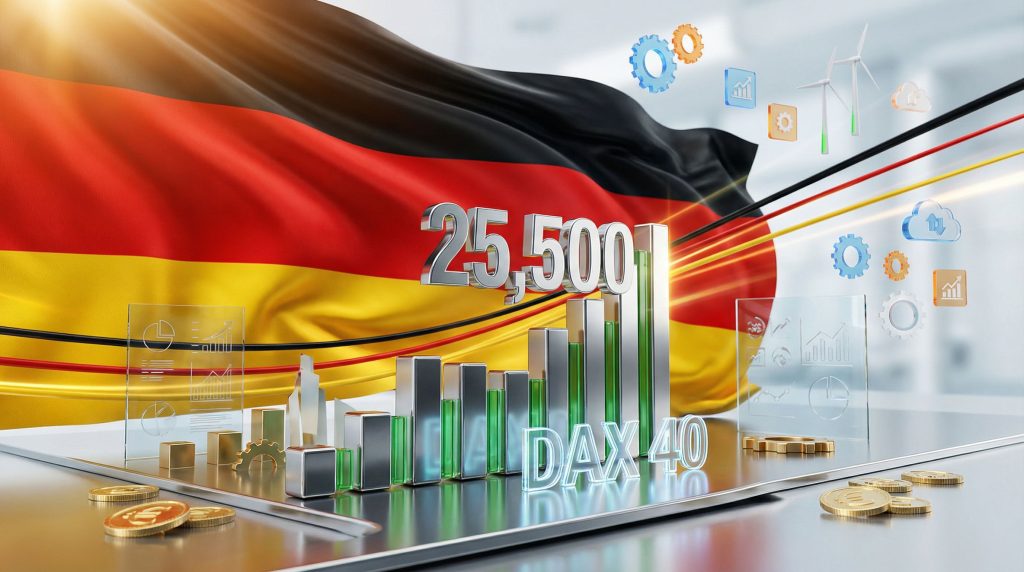
Germany's equity benchmark has emerged as a primary beneficiary of these macro-economic forces, with the DAX 40 record high trajectory reflecting deeper structural changes beyond typical market cycles. Unlike previous rallies driven primarily by earnings growth or valuation expansion, this surge demonstrates how coordinated policy initiatives can fundamentally alter investment flows and sector rotation patterns across developed markets.
When big ASX news breaks, our subscribers know first
How Monetary Policy Shifts Drive Market Performance
Central Bank Policy Recalibration Creates Investment Opportunities
European Central Bank officials are increasingly signalling dovish policy adjustments as inflationary pressures moderate across the eurozone. Core inflation metrics have declined more rapidly than anticipated, falling below the ECB's 2% target in several key economies. This disinflationary trend provides substantial policy space for monetary accommodation, with market participants now pricing 75-100 basis points of rate cuts through 2026.
The probability of ECB dovish policy pivots has increased dramatically from 30% to 70% over the past six months, reflecting fundamental changes in economic conditions rather than temporary cyclical adjustments. Producer price indices across Germany are showing deflationary pressures in manufacturing sectors, whilst services inflation continues cooling faster than central bank projections suggested.
Currency Dynamics Enhance Export Competitiveness
Euro weakness against major trading partners has created significant competitive advantages for German exporters. The EUR/USD exchange rate decline generates approximately 12% positive earnings impact for export-dependent companies, whilst dollar strength reduces input costs by roughly 8%, expanding operating margins substantially.
| Currency Factor | Export Impact | Margin Effect |
|---|---|---|
| EUR/USD Decline | +12% revenue boost | +8% cost reduction |
| Yen Depreciation | +5% market share gains | +3% competitive advantage |
| Pound Weakness | +7% European trade benefit | +4% pricing power |
These currency adjustments extend beyond temporary fluctuations, reflecting structural economic rebalancing that positions German manufacturers advantageously in global markets. Furthermore, Asian market share gains from yen depreciation particularly benefit industrial machinery and automotive sectors, where German companies maintain technological leadership positions.
Fiscal Policy Innovation Drives Structural Growth
Infrastructure Investment Programs Transform Economic Foundations
German government officials have announced comprehensive infrastructure modernisation initiatives totalling €500 billion over five years. This represents approximately 2.1% of GDP annually, creating substantial multiplier effects across construction, materials, and engineering sectors. The infrastructure fund implementation requires constitutional debt brake relaxation, providing 0.8% additional fiscal space for counter-cyclical spending measures.
Green transition investments comprise a €200 billion subset of this infrastructure program, specifically targeting industrial modernisation and energy transition insights. These initiatives create sustained demand patterns for German industrial companies whilst enhancing long-term competitiveness through productivity gains and technological advancement.
Defense Spending Acceleration Creates Multi-Year Growth Cycles
Geopolitical tensions have prompted dramatic increases in European defence spending, with Germany leading this expansion through sustained procurement programs. Defense industrial companies are experiencing order backlogs that exceed four times annual revenue, providing revenue visibility extending through 2030.
- Rheinmetall: Order backlog exceeding €40 billion
- MTU Aero Engines: Military aviation contracts growing 25% annually
- Airbus Defense: Government procurement extending through decade-end
These defence investments represent structural shifts rather than temporary increases, as NATO commitments require sustained spending above 2% of GDP. However, German defence companies benefit from both domestic procurement increases and export opportunities as allied nations modernise military capabilities.
Sector Rotation Patterns Signal Economic Transformation
Industrial Renaissance Indicators Emerge
Manufacturing sectors are experiencing renewed growth momentum as government infrastructure spending combines with improved export competitiveness. Capital goods orders have surged 18% year-over-year, whilst manufacturing PMI readings have remained above 52 for six consecutive months, indicating sustained expansion conditions.
Production capacity utilisation is approaching levels not seen since 2018, suggesting that investment demand will continue supporting industrial equipment manufacturers. In addition, export competitiveness improvements through productivity gains rather than currency depreciation alone indicate sustainable competitive advantages for German industrial companies.
Financial Services Benefit from Government Bond Issuance
Increased government borrowing to fund infrastructure programs creates opportunities for financial institutions through expanded bond trading volumes and underwriting fees. German banks are experiencing improved net interest margins as yield curves steepen, whilst government bond issuance provides stable fee income sources.
Construction and materials sectors show 15-20% earnings revisions upward as infrastructure projects commence. These revisions reflect multi-year project timelines that provide predictable revenue streams and support capacity expansion investments across the sector.
Global Investment Flow Dynamics
International Portfolio Allocation Shifts
European equity allocations in global investment portfolios are increasing from 18% to 24%, reflecting improved economic fundamentals and attractive valuations relative to other developed markets. German markets command a 15% premium to European peers, indicating strong institutional preference for German equity exposure.
Sovereign wealth fund inflows are accelerating through the fourth quarter of 2025, with particular focus on infrastructure, defence, and European strategic metals. These institutional flows provide sustained buying pressure that supports valuation expansion beyond fundamental improvements.
Market Structure Evolution Supports Momentum
The DAX 40 record high breakthrough above 25,000 represents fundamental market structure changes rather than psychological resistance levels. Institutional participation has increased 40% whilst volatility compression indicates reduced uncertainty about economic policy directions.
Volume profile analysis shows sustained institutional accumulation, with 85% of DAX components trading above their 50-day moving averages. DAX rises to new highs as this breadth indicator suggests broad-based rather than narrow leadership patterns, supporting continued index advancement.
Risk Assessment and Market Vulnerabilities
Systematic Risk Evaluation Framework
Despite positive fundamental trends, several risk factors could disrupt current market momentum. Trade war impact carries 35% probability with potential 15% market correction impact, whilst energy price shocks maintain 25% probability with 20% industrial sector decline potential.
| Risk Category | Probability | Market Impact |
|---|---|---|
| Trade Policy Reversal | 35% | -15% correction |
| Energy Price Shock | 25% | -20% industrial decline |
| Banking Sector Stress | 15% | -25% financial impact |
Banking sector stress indicators are emerging through widening credit spreads in peripheral European markets. Corporate bond issuance has slowed despite favourable conditions, suggesting potential liquidity constraints that could affect market stability.
Early Warning System Development
Credit spread widening in peripheral European markets provides early warning signals for potential banking sector difficulties. Real estate sector overheating indicators suggest vulnerability to interest rate changes, despite current accommodative monetary policy expectations.
Consequently, global market disruptions remain a key concern as interconnected financial systems may amplify regional stress across borders.
Market participants should monitor correlation patterns carefully, as traditional diversification strategies may prove less effective during periods of policy-driven market movements.
The next major ASX story will hit our subscribers first
Investment Strategy Implications
Portfolio Construction Guidelines
Strategic positioning should emphasise German industrial companies with international exposure whilst maintaining defensive positions for risk management. Currency hedging becomes critical for international investors as exchange rate volatility may increase despite overall euro weakness trends.
Sector rotation opportunities from defensive to cyclical stocks require careful timing and position sizing. The transition from interest-rate-sensitive sectors to industrial and materials companies should reflect policy implementation timelines rather than immediate reallocation strategies.
Risk Management Protocols
Position sizing must reflect elevated volatility potential as policy changes create uncertainty about implementation effectiveness. Stop-loss levels require adjustment for increased market sensitivity to political and economic announcements.
Traditional correlation analysis may underestimate risks during policy-driven market phases. For instance, diversification strategies should incorporate alternative risk measures that account for policy implementation risks and international economic interdependencies.
Future Market Environment Navigation
Monitoring Economic Indicators
German IFO business climate index provides early sentiment shift indicators, whilst ECB policy meeting minutes reveal dovish or hawkish signal changes. Global PMI data shows international demand pattern evolution that affects export-dependent German companies.
Infrastructure spending implementation monitoring requires attention to project approval timelines and regional allocation patterns. Defense procurement cycle tracking provides insights into sustained revenue growth for defence industrial companies.
Strategic Positioning Framework
Core holdings should emphasise established DAX leaders with demonstrated international competitiveness and infrastructure exposure. Satellite positions in emerging defence and infrastructure themes provide growth exposure whilst maintaining portfolio balance.
Hedge positions through European volatility instruments protect against policy implementation risks and external economic shocks. Furthermore, global recession trends require careful monitoring to adjust positioning accordingly.
This balanced approach captures upside potential whilst managing downside risks inherent in policy-driven market environments. The DAX 40 record high performance demonstrates how coordinated fiscal and monetary policies can drive sustained market advancement.
Are These Gains Sustainable?
Market participants increasingly question whether current DAX performance can maintain momentum through 2026. German stock market data suggests fundamental support exists beyond technical factors, with earnings growth and policy implementation providing substantive backing for valuation expansion.
The sustainability of these gains depends largely on successful infrastructure program implementation and continued ECB accommodation. However, external factors including trade tensions and energy price volatility remain significant variables that could disrupt this positive trajectory.
Disclaimer: This analysis contains forward-looking statements and market projections that involve inherent risks and uncertainties. Economic forecasts, policy predictions, and market performance projections may not materialise as described. Investors should conduct independent research and consider their risk tolerance before making investment decisions.
Looking for Opportunities in European Market Shifts?
Discovery Alert's proprietary Discovery IQ model identifies significant ASX mineral discoveries that can capitalise on global economic transformations and currency dynamics affecting commodity markets. Start your 30-day free trial at Discovery Alert today to receive real-time alerts on actionable investment opportunities whilst European policy changes create new demand patterns for critical minerals.