August 14, 2026
Europe's Energy Security Crisis Accelerates
European energy infrastructure faces unprecedented pressure as prolonged conflict threatens to push the continent into severe energy scarcity during critical summer months. Current natural gas trends indicate storage levels have reached dangerously low thresholds, whilst global markets struggle to maintain adequate supply chains. Furthermore, Europe faces energy scarcity if war drags into summer, creating a scenario that could fundamentally reshape economic stability across the region.
When big ASX news breaks, our subscribers know first
Europe's Storage Infrastructure Reaches Critical Thresholds
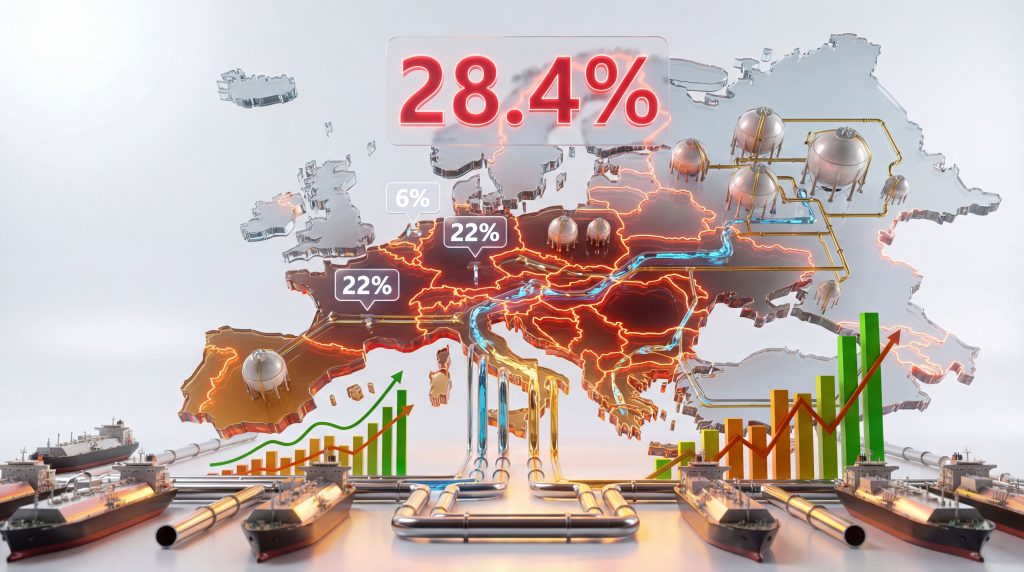
European natural gas storage facilities currently operate at dangerously depleted levels, creating unprecedented vulnerability during what should be the continent's seasonal replenishment period. Current data indicates storage capacity averaging 28.4% across European Union member states, representing a dramatic shortfall compared to historical benchmarks that typically maintain 45-55% capacity entering summer injection seasons.
Critical Storage Analysis by Major European Economies:
| Country | Current Level | Historical Average | Minimum Operational Threshold |
|---|---|---|---|
| Netherlands | 6% | 58% | 20% |
| Germany | 22% | 52% | 25% |
| France | 22% | 49% | 25% |
| EU Average | 28.4% | 51% | 35% |
These figures reveal structural vulnerabilities that extend beyond temporary supply disruptions. European gas storage infrastructure consists primarily of depleted gas fields and salt cavern formations, each requiring specific injection and withdrawal cycles. Depleted gas fields, representing approximately 60% of total European storage capacity, feature slower injection rates due to geological permeability characteristics.
Salt cavern storage, concentrated in Germany and the United Kingdom, offers faster cycling capability but represents only 30% of available capacity. The mathematics of seasonal replenishment presents acute challenges given current depletion levels.
Summer injection seasons typically span April through October, during which storage facilities must replenish 71.6% of total capacity to achieve minimum operational thresholds. At maximum injection rates of 1.5-2.0% of total European gas consumption daily, mathematical constraints prevent full replenishment if demand remains elevated throughout the injection period.
Technical constraint analysis reveals that European storage infrastructure cannot achieve historical safety benchmarks by November 2026 even under optimal injection scenarios.
Temperature-demand correlations further complicate recovery prospects. Winter 2025-2026 heating degree days exceeded 10-year averages by 8-12%, artificially accelerating storage depletion. Meteorological projections indicate a 40% probability of above-average winter conditions recurring, which would necessitate drawing reserves below minimum operational thresholds typically maintained at 15% for system stability.
Global Economic Transmission Mechanisms Under Stress
International economic forecasting organisations have begun revising growth projections downward as energy price volatility creates systematic pressure across multiple sectors. The Organisation for Economic Cooperation and Development projects U.S. inflation reaching 4.2% for 2026, elevated from baseline expectations of 3.1%, whilst U.S. GDP growth contracts to 2.0% compared to previous forecasts of 2.8%.
European Central Bank President Christine Lagarde characterised recovery timelines as extending far beyond conflict resolution periods. Her assessment emphasised that expectations of rapid normalisation upon hostility cessation represented overly optimistic scenarios given structural energy market constraints. Lagarde specifically acknowledged that monetary policy adjustments possess no mechanistic capacity to reduce energy commodity prices, effectively confirming central banking limitations in addressing supply-side crises.
Sectoral Impact Assessment demonstrates differential vulnerability across industrial categories:
- Chemical Manufacturing: Energy costs typically represent 20-30% of production expenses; sustained price increases create 15-25% total cost base escalation
- Steel Production: Integrated facilities utilising energy for heat and electricity face 20-30% operational cost surges under elevated pricing scenarios
- Aluminium Smelting: Electro-intensive production processes experience 25-35% cost increases when electricity pricing becomes volatile
- Data Centres: Computing infrastructure operations encounter 10-15% expense growth despite efficiency improvements
Barclays President Stephen Dainton warned that financial market participants substantially underestimated transmission mechanisms through which energy price inflation propagates into systemic economic impacts. His analysis identified three compounding factors creating European vulnerability: fiscal constraints limiting counter-cyclical spending capacity, slow pre-existing growth trajectories restricting debt absorption capability, and structural import dependency creating immediate price transmission channels.
How Do Global Trade Impacts Affect Energy Markets?
Oil price transmission operates through multiple channels with varying time horizons. Global trade impacts create additional complexity as international supply chains adjust to shifting geopolitical realities.
- Immediate (0-3 months): Petroleum product prices increase within 2-4 weeks; transportation fuel surcharges applied across logistics networks
- Medium-term (1-3 months): Manufacturing input costs reflected in producer price indexes as supply chains adjust pricing
- Long-term (3-6 months): Consumer goods prices adjust as manufacturing cost increases flow through distribution channels
Diversification Strategy Limitations Exposed
European energy diversification initiatives implemented following 2022 supply disruptions have created temporary vulnerability windows where traditional supply chains were dismantled before alternative sources achieved operational capacity. Post-2022 strategy targeted 45% renewable electricity penetration by 2030 under Fit for 55 regulatory frameworks, with current penetration levels reaching approximately 37% as of 2025.
However, green transition challenges continue to impede progress, as renewable energy scaling faces implementation constraints that limit crisis response capability:
- Wind capacity additions require 18-24 month development timelines from planning approval to grid connection
- Solar installations depend on component supply chains currently experiencing disruption due to geopolitical tensions
- Battery storage systems necessary for grid stability represent less than 5% of required capacity under high renewable penetration scenarios
Nuclear capacity utilisation presents additional constraints despite availability of existing infrastructure. Several European nations implementing nuclear phase-out policies lack political framework for capacity restoration during crisis periods. Germany's remaining nuclear facilities operate under decommissioning schedules that prevent rapid capacity expansion.
LNG import infrastructure operates at 85-95% capacity utilisation across European terminals, creating bottlenecks independent of storage constraints. Pipeline transport limitations from alternative suppliers including Azerbaijan and Norway restrict geographic distribution optimisation between member states. Interconnection improvements require multi-year capital investments that cannot address immediate shortage scenarios.
International LNG Market Reconfiguration
Global liquefied natural gas markets experience fundamental rebalancing as European demand surge creates unprecedented pricing pressure across traditional import regions. Asian economies, particularly those lacking strategic petroleum reserves, face acute competition for spot market purchases that historically provided supply flexibility. Moreover, LNG market implications suggest long-term structural changes across global supply chains.
Regional Competition Dynamics unfold across multiple timeframes:
- Short-term (0-3 months): Spot LNG prices surge 40-60% above baseline levels as European buyers compete with Asian importers
- Medium-term (3-9 months): Long-term contract renegotiations favour suppliers with pricing power whilst buyers accept higher baseline prices
- Long-term (9+ months): Infrastructure investment acceleration occurs globally as importers seek supply security over cost optimisation
China's LNG import projections indicate potential decline to 8-year lows as domestic demand destruction occurs in response to elevated pricing. Industrial consumers including petrochemical manufacturers and power generators implement temporary production curtailments when LNG costs exceed operational viability thresholds.
Japanese energy policy considerations include potential coal capacity reactivation as LNG becomes economically unviable for baseload power generation. This represents significant policy reversal from carbon reduction commitments but reflects pragmatic response to energy security imperatives.
Australia's cyclone-related outages at major LNG export facilities compound global supply constraints during peak demand periods. Technical recovery timelines for affected infrastructure extend 4-6 weeks under optimal weather conditions, further limiting spot market availability.
Policy Response Framework Analysis
European government intervention options remain constrained but potentially impactful within narrow operational parameters. Emergency response protocols typically activate when storage levels decline below 25% capacity, triggering coordination mechanisms through the European Network of Transmission System Operators for Gas.
Immediate demand management measures include:
- Industrial consumption curtailment protocols affecting energy-intensive manufacturing
- Consumer conservation incentive programmes targeting residential and commercial usage
- Strategic reserve release coordination between member states
- Emergency supplier agreement activation with alternative source countries
What Are the Medium-Term Adaptation Strategies?
Medium-term adaptation strategies focus on infrastructure development acceleration and efficiency mandate expansion. Nuclear capacity utilisation optimisation becomes politically feasible during crisis periods despite previous phase-out commitments. Regional cooperation frameworks strengthen through enhanced interconnection capacity and coordinated purchasing mechanisms.
Demand elasticity analysis indicates 15-20% industrial gas consumption reduction achievable within 30-day implementation periods through temporary production suspensions. Residential demand reduction of 8-12% becomes possible through thermostat management and behavioural modifications, though effectiveness varies by heating season duration and weather severity.
Price cap mechanisms present implementation challenges due to market distortion effects and supplier response uncertainties. Historical precedent from 2022-2023 crisis periods demonstrates that artificial pricing constraints can exacerbate supply shortages if producers redirect volumes to unregulated markets.
According to Shell's warning about potential energy shortages, the situation requires immediate attention from policymakers across Europe.
The next major ASX story will hit our subscribers first
Financial Market Risk Repricing Dynamics
Investment capital allocation increasingly prioritises energy security over pure cost optimisation as markets recognise structural shifts in risk assessment methodologies. European industrial competitiveness faces permanent disadvantage versus regions maintaining secure, low-cost energy access through domestic production or long-term supply agreements.
Equity market valuation adjustments reflect energy intensity as fundamental business risk factor. Companies operating energy-intensive processes experience valuation pressure whilst energy infrastructure investments command premium returns despite extended payback periods.
Corporate profitability analysis reveals margin compression for entities unable to pass increased costs to consumers. Competitive market structures limit pass-through capabilities in certain sectors, creating earnings pressure that extends beyond immediate energy cost increases.
Banking sector exposure through commercial lending to energy-intensive industries creates systematic risk as borrowers face operational constraints. Credit repricing mechanisms adjust loan terms and availability based on energy cost sustainability assessments for individual borrowers.
Stagflation risk assessment emerges as primary macroeconomic concern combining supply-side inflation with economic slowdown. Central banks face policy dilemmas where traditional demand destruction tools cannot address supply-side inflation sources. Wage-price spiral risks increase if energy inflation persists beyond 6-month windows, creating self-reinforcing inflation cycles.
Summer 2026 Critical Testing Period
Summer months represent decisive testing for European energy resilience as seasonal demand patterns, storage replenishment requirements, and industrial activity levels determine whether current shortages evolve into sustained crisis. Losing significant portions of the traditional injection window could create cascading shortages extending into winter 2026-2027.
Seasonal risk amplification occurs through multiple mechanisms. Summer injection seasons provide the primary opportunity for gas storage replenishment due to lower heating demand permitting higher injection volumes. Current 28.4% capacity baseline requires 71.6% volume replenishment within approximately 6-month operational window.
Industrial demand patterns typically decline during summer months, providing additional capacity for storage injection. However, cooling demand for data centres and manufacturing facilities may remain elevated due to increasing digitalisation and production reshoring trends following supply chain disruptions.
What Role Do Weather Patterns Play?
Weather pattern dependencies create uncertainty around both demand levels and renewable energy generation capacity. Abnormally hot summers increase cooling demand whilst potentially reducing wind generation efficiency. Conversely, mild summer conditions provide optimal injection opportunities but may create false confidence regarding winter preparedness.
Infrastructure maintenance schedules traditionally occur during low-demand summer periods but may require deferral under current conditions to maximise injection capacity. Maintenance deferrals create operational risks for winter peak demand periods when system reliability becomes critical.
Furthermore, current oil price forecast trends suggest additional pressure on European energy costs throughout the summer injection period.
The European Commission's energy crisis response measures, detailed in their official guidance, outline the scale of challenges facing the continent.
Europe faces energy scarcity if war drags into summer represents more than temporary supply disruption—it signals fundamental transformation in how economic security must be conceptualised within interconnected but unstable global systems. The continent's response framework will likely reshape energy policy, industrial strategy, and economic planning methodologies for decades, establishing precedents for crisis management that extend far beyond immediate circumstances.
Risk scenario modelling indicates that failure to achieve adequate storage levels by October 2026 could trigger continent-wide energy rationing unprecedented since World War II. Such scenarios would fundamentally alter European industrial competitiveness, consumer behaviour, and political stability in ways that current policy frameworks appear inadequately prepared to address.
Are You Positioned for Energy Market Volatility?
Europe's looming energy crisis presents both challenges and opportunities for astute investors monitoring ASX-listed energy and resource companies. Discovery Alert's proprietary Discovery IQ model delivers real-time alerts on significant mineral discoveries that could benefit from shifting global supply chains and energy security concerns, empowering subscribers to identify actionable investment opportunities ahead of broader market recognition. Begin your 14-day free trial today to secure your market-leading advantage during these unprecedented times.