August 6, 2026
The complex landscape of European energy security continues to evolve as geopolitical tensions intersect with fundamental infrastructure dependencies. Furthermore, the oil price rally across global markets has intensified scrutiny of traditional energy relationships that seemed destined for rapid transformation.
The Strategic Architecture of Central European Energy Dependencies
The resumption of Russian oil flows via Ukraine through the Druzhba pipeline system in April 2026 exemplifies how energy infrastructure creates enduring geopolitical relationships that transcend temporary political tensions. This development demonstrates the sophisticated interplay between energy security, financial mechanisms, and diplomatic leverage in modern European politics.
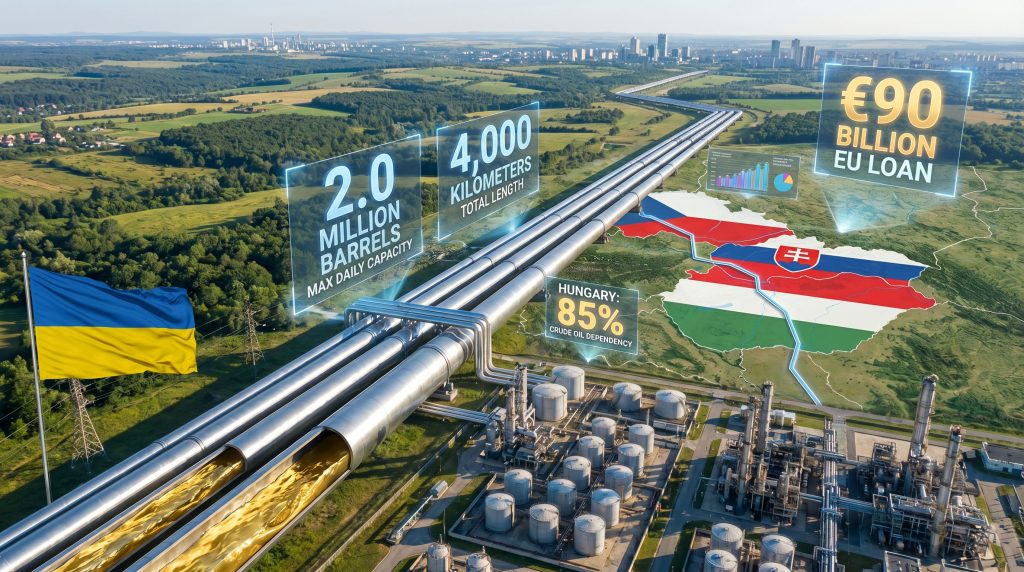
The Druzhba network's technical specifications reveal why Central European nations prioritise its operation despite ongoing sanctions pressure. However, declining US oil production has created additional market pressures that make alternative supply sources more challenging to secure. This 4,000-kilometer pipeline system represents critical infrastructure that cannot be easily replaced through alternative supply arrangements.
Pipeline Capacity and Regional Energy Architecture
The technical capabilities of the Druzhba system underscore its strategic importance for Russian oil flows via Ukraine:
| Metric | Specification |
|---|---|
| Maximum Daily Capacity | 2.0 million barrels |
| Standard Operating Flow | 1.2-1.4 million barrels |
| Pipeline Length | 4,000 kilometers |
| Primary Beneficiaries | Hungary, Slovakia, Czech Republic |
| Reduced Wartime Capacity | Small fraction of normal flows |
The pipeline's capacity reduction due to Western sanctions and drone attack disruptions highlights the vulnerability of energy infrastructure in conflict zones. In addition, these technical constraints force regional energy planning to balance security considerations with supply reliability requirements.
Hungary's Energy Import Profile and Strategic Calculations
Hungary's energy security framework demonstrates why Viktor Orbán's government linked pipeline operations to EU financial assistance mechanisms. The country's energy import profile reveals critical dependencies that shape foreign policy decisions:
- 85% crude oil dependency on Russian supplies via Druzhba
- Limited alternative supply routes due to landlocked geography
- Refinery infrastructure optimised for Russian crude specifications
- Strategic petroleum reserves insufficient for extended supply disruptions
- Political alignment supporting continued Russian energy relationships
These dependencies create lock-in effects that limit rapid supply chain restructuring. Consequently, pragmatic energy arrangements emerge that may conflict with broader geopolitical objectives.
When big ASX news breaks, our subscribers know first
Financial Leverage Mechanisms in EU Energy Diplomacy
The connection between Russian oil flows via Ukraine and the €90 billion EU loan package reveals sophisticated geopolitical bargaining dynamics that extend beyond simple energy transactions. Moreover, tariff investment impacts have created additional complexity in European financial planning.
The Ukrainian Position in Energy-Finance Negotiations
Ukraine's control over critical infrastructure serving EU member states provides significant diplomatic leverage despite wartime conditions. The country's strategic approach demonstrates several key elements:
- Controls pipeline infrastructure serving major EU economies
- Links repair timing to securing international financial commitments
- Maintains transit revenue streams despite ongoing conflict
- Leverages energy security concerns to influence EU policy decisions
This positioning allows Ukraine to extract maximum value from its geographic position as a transit corridor. Furthermore, it converts infrastructure control into financial and political support.
Hungarian Negotiating Strategy and EU Solidarity Tests
Hungary's approach to the energy-finance linkage reveals how smaller EU member states can influence collective decision-making through strategic veto power deployment:
Tactical Elements:
- Links domestic energy security to EU solidarity mechanisms
- Uses veto power over collective financial decisions strategically
- Balances domestic energy needs against alliance obligations
- Maintains pro-Russian positions despite EU pressure
Political Outcomes:
- Delayed EU financial assistance to Ukraine for months
- Forced explicit connection between energy flows and loan approval
- Demonstrated limits of EU unity on Russia-related policies
EU Institutional Response to Energy-Finance Integration
The European Union's acceptance of the energy-finance linkage reveals institutional flexibility in crisis management. For instance, prioritising Ukrainian financial stability over sanctions purity demonstrates:
- Pragmatic adaptation to member state energy dependencies
- Flexible interpretation of sanctions frameworks
- Priority ranking of financial stability over ideological consistency
- Crisis management approaches that accommodate conflicting interests
The CNN report highlights how "Russian oil resumed flowing through Ukrainian territory after months of disruption, unlocking crucial EU financial support mechanisms."
Strategic Scenario Modelling for Russian Energy Transit
Long-term projections for Russian oil flows via Ukraine reveal multiple potential pathways that will shape European energy security through the next decade. However, trade war and oil markets dynamics add additional uncertainty to these forecasts.
Scenario 1: Gradual Diversification (2026-2030)
Probability Assessment: 65%
This scenario assumes steady but gradual reduction in Russian energy dependence through market-driven diversification:
- Central European refineries slowly adapt to alternative crude sources
- Druzhba capacity gradually decreases as new supply chains develop
- Transit revenues provide Ukraine with declining but stable income stream
- Investment flows toward alternative pipeline connections
- Market mechanisms drive supply source diversification
Investment Implications:
- Opportunities in alternative pipeline infrastructure
- Refinery modification projects gain economic viability
- Strategic petroleum reserve expansion becomes priority
- Energy security premiums persist in Central European markets
Scenario 2: Accelerated Decoupling (2026-2028)
Probability Assessment: 25%
Major geopolitical escalation forces immediate supply chain restructuring under this scenario. Additionally, US-China trade war effects could accelerate this process:
- Emergency infrastructure investments enable rapid diversification
- Political pressures override economic considerations
- Short-term energy price volatility affects regional economic stability
- Alternative supply arrangements receive accelerated political support
Market Dynamics:
- Significant price volatility in European energy markets
- Emergency investment in alternative infrastructure
- Geopolitical risk premiums increase substantially
- Supply chain disruption creates temporary shortages
Scenario 3: Status Quo Maintenance (2026-2035)
Probability Assessment: 10%
Pragmatic energy arrangements outlast political tensions in this scenario:
- Druzhba continues operating at reduced but consistent capacity
- Energy pragmatism overrides sanctions architecture
- Long-term contracts provide stability for all parties
- Political accommodation enables continued cooperation
This scenario faces significant political obstacles but demonstrates how economic interests can influence geopolitical relationships over extended periods.
Infrastructure Vulnerability Assessment and Protection Strategies
The drone strike damage that initially halted Russian oil flows via Ukraine highlights critical infrastructure protection challenges facing European energy systems. According to Deutsche Welle, "Infrastructure protection remains a paramount concern as energy systems become targets in modern conflicts."
Physical Security Risk Analysis
Demonstrated Vulnerabilities:
- Drone strike capabilities against pipeline systems proven effective
- Extended pipeline routes through active conflict zones
- Limited redundancy for critical energy infrastructure
- Civilian energy infrastructure targeting as military strategy
Protection Challenges:
- 4,000-kilometer pipeline length requires extensive monitoring
- Multiple national jurisdictions complicate security coordination
- Advanced drone technology accessible to various actors
- Economic costs of comprehensive protection systems
Operational Continuity Planning
Effective infrastructure protection requires multi-layered approaches addressing both physical security and operational resilience:
Enhanced Monitoring Systems:
- Early damage detection capabilities
- Real-time flow monitoring across pipeline segments
- Integrated security assessment protocols
- Rapid response team deployment mechanisms
Diplomatic Coordination Framework:
- Infrastructure protection agreements between transit countries
- International monitoring of critical energy facilities
- Coordinated response protocols for infrastructure attacks
- Shared intelligence on potential threats to energy systems
Investment Analysis and Market Positioning Opportunities
The restoration of Russian oil flows via Ukraine creates specific investment themes relevant to Central European energy transition strategies. Furthermore, these developments present unique opportunities for infrastructure development.
Infrastructure Investment Priorities
Alternative Pipeline Development:
- Mediterranean supply route connections gain strategic value
- LNG terminal capacity expansion becomes priority
- Cross-border interconnection projects receive political support
- Strategic petroleum storage facility development
Refinery Modernisation Requirements:
- Technical modifications for diverse crude oil specifications
- Processing capability upgrades for alternative supply sources
- Efficiency improvements to maintain competitive positioning
- Environmental compliance upgrades during transition period
Market Positioning Considerations
Energy Security Premium Dynamics:
- Central European markets willing to pay premiums for supply reliability
- Infrastructure resilience creates competitive advantages
- Geopolitical risk pricing becomes permanent feature
- Long-term contracts gain value over spot market arrangements
Regional Market Integration:
- Enhanced energy interconnection reduces individual country vulnerabilities
- Shared strategic reserve systems improve collective security
- Coordinated procurement strategies increase negotiating power
- Technology sharing accelerates transition timelines
Precedent Setting for Future EU-Russia Energy Relations
The Russian oil flows via Ukraine resumption establishes important precedents that will influence future European energy diplomacy and sanctions policy implementation. Consequently, these arrangements may shape long-term energy relationships.
Selective Sanctions Application Framework
The accommodation of continued oil flows despite broader sanctions demonstrates how:
- Member state dependencies override collective sanctions purity
- Infrastructure arrangements receive different treatment than financial sanctions
- Energy pragmatism creates exceptions to political restrictions
- Economic necessity influences diplomatic flexibility
Energy Infrastructure as Diplomatic Tool
The episode reveals how energy infrastructure serves multiple diplomatic functions beyond simple commodity transportation:
- Leverage creation through infrastructure control
- Financial instrument linking energy flows to broader agreements
- Political bargaining chip in multilateral negotiations
- Economic weapon through supply disruption capabilities
The next major ASX story will hit our subscribers first
Global Lessons for Energy Security Architecture
The complex dynamics surrounding Russian oil flows via Ukraine provide broader lessons applicable to global energy security planning and crisis management. However, these lessons extend beyond European contexts to global energy infrastructure planning.
Infrastructure Interdependence Management
Geographic Constraint Recognition:
- Physical geography limits rapid supply chain restructuring capabilities
- Technical specifications create infrastructure lock-in effects
- Investment timelines require long-term planning horizons
- Alternative route development needs substantial lead times
Political Relationship Subordination:
- Energy security imperatives often override political preferences
- Economic interests create enduring relationships despite tensions
- Pragmatic accommodation becomes necessary for functional systems
- Ideological consistency yields to practical energy needs
Crisis Response Mechanism Development
Effective Planning Elements:
- Redundant supply routes for critical energy imports
- Flexible diplomatic frameworks enabling pragmatic arrangements
- Strategic reserve capacity sufficient for extended disruptions
- Multi-source supply agreements reducing single-point dependencies
Institutional Adaptation Requirements:
- Crisis management protocols that accommodate member state differences
- Sanctions frameworks with built-in flexibility for essential services
- Financial mechanisms linking energy security to broader political objectives
- Diplomatic channels maintaining communication during conflicts
"The restoration of pipeline flows demonstrates how energy infrastructure creates geopolitical relationships that transcend temporary political tensions," according to energy analysts monitoring the situation.
The resumption of oil flows through the Druzhba pipeline demonstrates that European energy security remains inextricably linked to Russian supply arrangements. Nevertheless, ongoing efforts at diversification continue despite practical constraints. This reality shapes investment opportunities, diplomatic strategies, and long-term energy planning across Central Europe, highlighting the complex intersection of technical infrastructure, financial mechanisms, and geopolitical calculations in modern energy markets.
Disclaimer: This analysis involves forecasts, speculation, and geopolitical scenarios that are subject to significant uncertainty. Energy market conditions, political relationships, and infrastructure capabilities may change rapidly, affecting the accuracy of projections and investment implications discussed.
Looking to Capitalise on Energy Infrastructure Investment Opportunities?
Discovery Alert's proprietary Discovery IQ model delivers real-time alerts on significant mineral discoveries essential to global energy transition infrastructure, instantly empowering subscribers to identify actionable opportunities ahead of the broader market. Begin your 14-day free trial today and secure your market-leading advantage in the critical minerals sector.