July 13, 2026
The european ferro-titanium prices have become increasingly volatile due to complex market dynamics affecting industrial commodity sectors across Europe. Global industrial commodity markets operate through intricate networks of supply chain relationships, raw material dependencies, and production capacity constraints that create significant volatility across pricing structures. Metal alloy production represents a particularly complex segment where specialized materials serve critical industrial applications, requiring sophisticated understanding of both operational dynamics and market psychology to navigate effectively.
Understanding these fundamental market mechanisms becomes essential when examining how industrial disruptions cascade through interconnected supply chains, affecting everything from raw material procurement to finished product delivery schedules. Furthermore, the commodity volatility hedging strategies have become critical for market participants navigating these challenging conditions.
Fundamental Drivers of Market Pricing Mechanisms
Raw Material Supply Constraints and Cost Escalation
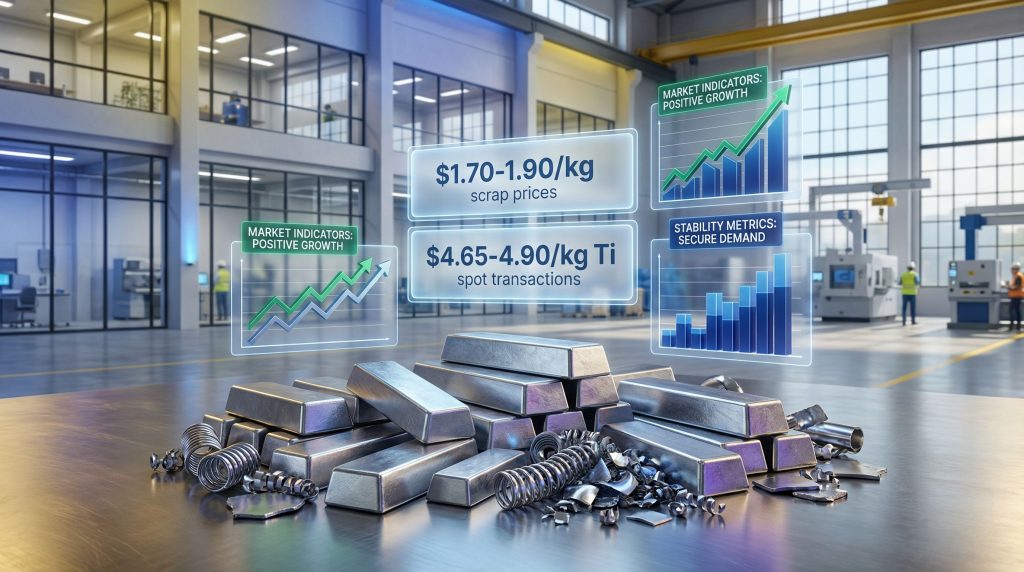
The ferro-titanium production ecosystem faces persistent challenges in securing adequate high-grade titanium scrap feedstock, particularly specialized turnings essential for processing operations. Recent market analysis reveals titanium turnings pricing at $1.70-1.90 per kilogram delivered duty paid Northwest Europe, representing substantial increases from earlier periods when prices ranged $1.55-1.75 per kilogram.
Critical Supply Factors:
- Producer threshold pricing at $2.00/kg identified as trigger point for increased scrap supplier participation
- Seasonal inventory drawdowns during fourth quarter periods
- Limited generation rates during manufacturing holiday shutdowns
- Currency fluctuation impacts on dollar-denominated scrap transactions
Market participants report conflicting assessments regarding scrap availability dynamics. Industry analysis indicates that crossing the $2.00/kg threshold could attract scrap suppliers who have held inventory while anticipating higher prices. However, separate producer commentary suggests difficulty acquiring turnings even at prices exceeding this threshold, indicating divergent market perspectives on underlying supply conditions.
Production Capacity Utilisation Patterns
European ferro-titanium manufacturers currently operate below optimal capacity levels, creating artificial supply constraints that support elevated pricing structures. This underutilisation stems from strategic inventory management protocols rather than demand-driven production scheduling limitations.
Capacity Management Dynamics:
- Raw material procurement lead times extending 1-2 months
- Processing lag between scrap acquisition and finished product delivery
- Risk management protocols preventing speculative raw material purchases
- Strategic prioritisation of long-term contracts over spot market participation
The production process exhibits significant temporal gaps where scrap materials purchased at current market prices require approximately 1-2 months for processing, melting, and conversion into finished ferro-titanium products. Consequently, this creates financial risk exposure for producers who must balance raw material acquisition costs against uncertain future pricing environments.
When big ASX news breaks, our subscribers know first
Supply Chain Disruption Impacts and Market Response
Corporate Restructuring Events and Risk Mitigation
Recent corporate insolvency events within the European ferro-titanium sector have created significant market uncertainty, prompting strategic reassessments across supply chain networks. The filing for insolvency by Austrian metal trading firm LL-Resources on January 5, 2026, demonstrates the interconnected nature of modern industrial markets and their vulnerability to single-point failures.
Despite subsidiary SIA LLR-Ecotech confirming that operations remained unaffected by the parent company insolvency, the announcement triggered precautionary actions throughout the supply chain. Additionally, the current supply chain crisis affecting critical minerals has intensified these concerns. Steel mills and downstream consumers initiated comprehensive supplier qualification processes, creating temporary demand fluctuations that influenced short-term pricing dynamics.
Market Response Indicators:
| Response Type | Market Impact | Timeline |
|---|---|---|
| Producer offer increases | $4.75-4.90/kg Ti | Immediate |
| Premium pricing attempts | $5.60/kg Ti (disputed viability) | Short-term |
| Supplier qualification processes | Hypothetical demand creation | 3-6 months |
| Contract prioritisation | Spot market withdrawal | Ongoing |
Alternative Sourcing Strategies
Steel mills and cored-wire producers initiated extensive supplier diversification programmes following market disruptions. These strategic shifts involve comprehensive qualification protocols for alternative producers, creating artificial demand spikes during transition periods.
However, market analysis reveals that unless actual delivery failures occur through force majeure declarations, existing long-term contract holders remain legally obligated to their commitments. This creates a distinction between genuine demand increases and hypothetical enquiries generated by precautionary supply chain planning.
Current Price Assessment Methodologies
Professional Price Discovery Mechanisms
Market intelligence organisations employ sophisticated assessment frameworks to establish benchmark pricing for European ferro-titanium markets. These methodologies consider multiple transaction types, delivery specifications, and quality parameters to create representative market indicators.
Current Price Assessment Data:
| Assessment Category | Price Range ($/kg Ti) | Delivery Terms | Specifications |
|---|---|---|---|
| Spot Transactions | $4.65-4.90 | DDP/DAF Rotterdam | 70% Ti minimum |
| Long-term Contracts | $4.30-4.60 | Negotiated terms | Customer specifications |
| Premium Grades | $5.60+ | DDP Europe | Low aluminium content |
Source: Market assessment data from January 22, 2026
Transaction Validation Protocols
Market assessment organisations implement rigorous validation processes to distinguish genuine commercial transactions from theoretical offers. This involves confirming actual material transfers, payment terms, delivery schedules, and quality specifications across multiple market segments.
The assessment process identified multiple confirmed transactions at $4.75-4.90/kg Ti range, indicating verified commercial activity at these levels. For instance, the Argus titanium pricing platform provides comprehensive market data validation. Simultaneously, isolated transactions at $5.60/kg Ti faced broad market scepticism regarding price sustainability above $5.00/kg Ti, demonstrating the assessment methodology's ability to distinguish between representative pricing and outlier transactions.
Seasonal Market Pattern Analysis
Quarterly Demand Fluctuation Cycles
Ferro-titanium markets exhibit predictable seasonal variations driven by industrial production schedules, raw material generation patterns, and strategic inventory management across supply chains.
Fourth Quarter 2025 Characteristics:
- Inventory drawdown strategies ahead of year-end financial reporting
- Manufacturing activity reduction during holiday periods
- Reduced titanium scrap generation during Christmas and New Year shutdowns
- Strategic positioning for anticipated first quarter price movements
First Quarter 2026 Dynamics:
- Post-holiday inventory rebuilding driving procurement activity
- Annual contract negotiations creating price discovery opportunities
- Currency hedging effects following euro appreciation against dollar since January 17
- Continued low scrap generation following manufacturing slowdowns
Raw Material Generation Pattern Dependencies
Titanium scrap availability correlates directly with industrial production cycles across multiple sectors. The documented reduction in generation rates during December 2025 through January 2026 reflects predictable patterns where:
- Aerospace manufacturing schedules produce high volumes of titanium turnings during fabrication operations
- Industrial maintenance cycles generate scrap during equipment overhaul periods
- Demolition activities recycle titanium materials from retired infrastructure
- Holiday manufacturing shutdowns create temporary supply constraints
These cyclical patterns manifested in the $0.15-0.20/kg increase in titanium turnings prices between January 8 and January 22, 2026, demonstrating the direct correlation between seasonal supply variations and market pricing.
End-User Industry Influence on Market Dynamics
Steel Industry Integration and Demand Patterns
Steel industry consumption represents the primary driver of ferro-titanium demand, with current market activity characterised by standard enquiries from trading firms, cored-wire producers, and mills seeking spot first-quarter volumes. One significant mill released a substantial long-term contract enquiry, though overall underlying demand remains characterised as depressed within Europe's broader pressured steel industry context.
Moreover, the mining industry evolution continues to reshape raw material availability and processing capabilities across the sector.
Steel Industry Demand Indicators:
- Standard spot market enquiries for Q1 2026 delivery
- Long-term contract negotiations for strategic supply security
- Procurement diversification following supply chain disruptions
- Integration strategies for high-strength, low-alloy steel applications
For current european ferro-titanium prices to sustain or advance further, market analysis indicates the necessity of significant real consumption increases from steel mills, which appears unlikely given the broader challenges facing European steel production.
Capacity Constraints and Production Economics
European ferro-titanium producers maintain spare production capacity but face economic constraints that limit output expansion. Increasing production to serve additional customers requires proportionate raw material acquisition increases, creating a feedback loop where enhanced scrap purchasing drives higher input costs.
The commodity pricing impact analysis reveals how these cost pressures affect overall market performance.
Should producers attempt output increases through accelerated scrap purchasing, rising scrap prices would necessitate higher ferro-titanium offers to prevent margin erosion, creating natural production constraints.
Forward-Looking Market Intelligence
Short-Term Price Trajectory Factors
Current pricing levels appear supported by structural supply constraints, though sustainability depends on underlying steel industry demand recovery and raw material availability improvements over the coming months.
Supporting Elements:
- Limited spare production capacity across European producers
- Continued scrap supply constraints through Q1 2026
- Alternative supplier qualification processes creating artificial demand
- Currency trends favouring European producer competitiveness
Risk Considerations:
- Potential resolution of supply chain disruptions
- Seasonal increases in scrap generation rates
- Weak steel industry fundamentals limiting consumption growth
- Possible inventory destocking by downstream consumers
Medium-Term Structural Changes
Market participants anticipate structural adaptations as producers respond to recent disruptions through capacity investments, supply chain modifications, and strategic partnership development. These adjustments could fundamentally alter competitive positioning and pricing dynamics over 6-18 month timeframes.
Meanwhile, the tariffs impact on markets continues to influence trade dynamics and pricing strategies across the sector.
Latvian Import Context Analysis:
Latvian titanium scrap imports averaged 408 tonnes monthly during January-November periods, while LLR-Ecotech maintained average production of approximately 477 tonnes monthly. If production disruptions occur, this would remove significant monthly capacity from European markets, potentially creating temporary supply tightness supporting higher pricing levels.
The next major ASX story will hit our subscribers first
Strategic Market Positioning Frameworks
Risk Management and Procurement Optimisation
Effective navigation of volatile ferro-titanium markets requires balanced approaches integrating risk management, supply security, and cost optimisation strategies tailored to specific market participant requirements.
Steel Producer Strategies:
- Supplier diversification while maintaining quality standards
- Flexible contract structures accommodating price volatility
- Strategic inventory buffers for supply security
- Financial health monitoring systems for supplier evaluation
Trading Organisation Approaches:
- Transparent price discovery and risk management focus
- Comprehensive market intelligence capability development
- Value chain relationship building across all segments
- Working capital maintenance for volatile market conditions
Market Participant Adaptation Requirements
The complex interplay between seasonal patterns, supply disruptions, and underlying demand fundamentals creates challenges requiring sophisticated analytical frameworks and strategic flexibility. Market participants must balance short-term tactical responses with longer-term strategic positioning to effectively navigate evolving conditions.
Furthermore, comprehensive ferro-titanium market analysis provides essential data for strategic decision-making.
Investment Implications:
Current market dynamics suggest that while european ferro-titanium prices face near-term support from supply constraints and disruption responses, longer-term sustainability depends on fundamental steel industry recovery rather than temporary market adjustments.
Disclaimer: This analysis incorporates market data and insights from various industry sources for informational purposes. Market conditions are subject to rapid change, and participants should conduct independent research before making commercial decisions. Price forecasts and market projections represent analytical assessments rather than investment recommendations.
Looking to Capitalise on Industrial Commodity Market Volatility?
Discovery Alert's proprietary Discovery IQ model delivers real-time notifications on significant ASX mineral discoveries, instantly identifying actionable opportunities in titanium, ferro-alloy producers, and related industrial commodity sectors ahead of broader market recognition. Begin your 30-day free trial today at discoveryalert.com.au to gain the market-leading advantage needed to navigate volatile commodity markets effectively.