May 14, 2026
Why European Grid Modernization Has Become an Economic Imperative
The architecture of European electricity networks reflects decades of national planning that predates today's renewable energy revolution. Traditional grid systems were designed for centralized fossil fuel generation, creating fundamental mismatches with distributed solar and wind power that now dominate new capacity additions. This structural legacy has created a continental infrastructure crisis requiring unprecedented coordination across 27 member states.
European Commission President Ursula von der Leyen's recent call for von der leyen grids package agreement by summer 2026 represents more than policy rhetoric. It acknowledges that Europe's energy transition security faces a critical bottleneck where inadequate transmission capacity threatens to strand renewable investments worth hundreds of billions of euros. The proposed legislation aims to address systematic failures in cross-border electricity trading, permitting challenges affecting over half of major transmission projects, and coordination gaps between national grid operators.
When big ASX news breaks, our subscribers know first
Quantifying Europe's Infrastructure Investment Gap
The Scale of Required Capital Deployment
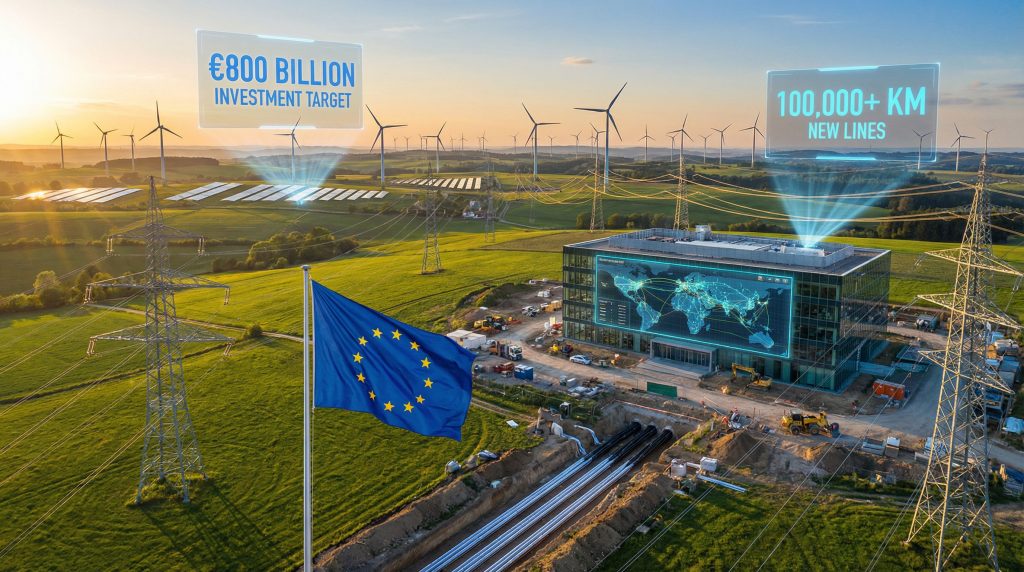
Current analysis indicates Europe requires approximately €800 billion in grid infrastructure investment through 2050 to accommodate renewable energy targets and maintain system reliability. This figure encompasses both transmission and distribution network upgrades, with cross-border interconnection projects representing roughly 30% of total requirements.
The funding challenge extends beyond capital availability to regulatory certainty. Traditional utility financing models struggle with projects spanning multiple jurisdictions, each with distinct permitting processes, environmental standards, and cost-recovery mechanisms. The von der leyen grids package agreement proposal specifically targets these coordination failures through harmonised regulatory frameworks.
Project Development Timeline Challenges
Industry data reveals that major transmission projects currently require 8-12 years from initial planning to commercial operation, with permitting representing 40-60% of total development time. The proposed legislation includes provisions for streamlined environmental impact assessments across borders.
Furthermore, the package establishes standardised technical specifications for equipment compatibility, digital permitting platforms to reduce administrative delays, and priority status designation for strategic interconnection projects.
Cross-Border Coordination Mechanisms
The existing Trans-European Networks for Energy (TEN-E) Regulation provides some framework for international cooperation, but implementation has proven inadequate for current needs. Projects of Common Interest (PCI) designation offers certain regulatory advantages, yet many strategically important connections remain stalled due to cost-sharing disputes between member states.
Legislative Architecture of the Proposed Reforms
Renewable Energy Directive Modifications
The grids package incorporates specific amendments to existing renewable energy legislation, focusing on grid connection procedures that historically created bottlenecks for wind and solar developers. Key provisions include maximum connection timeframes of 18 months for projects under 1 MW.
Additionally, the package establishes grid readiness requirements for new renewable installations, shared connection infrastructure to reduce individual project costs, and advanced queue management systems preventing speculative applications.
Electricity Market Design Revisions
Market design changes address fundamental issues with current electricity trading across borders. The legislation proposes enhanced flexibility mechanisms including bidirectional contracts for difference enabling revenue certainty for transmission investments.
In addition, the reforms introduce locational marginal pricing in congested network areas, enhanced balancing market integration across member states, and storage system participation in ancillary service markets.
Grid Digitalisation Standards Implementation
Digital infrastructure represents a critical component often overlooked in traditional grid planning. The proposed regulations establish interoperability requirements including common communication protocols between transmission system operators.
Moreover, the package mandates real-time data sharing for cross-border power flows, coordinated system planning using shared modelling tools, and cybersecurity standards for critical infrastructure protection.
Supply Chain Resilience and Strategic Autonomy
Domestic Manufacturing Capability Targets
The legislation includes provisions addressing Europe's dependence on non-EU suppliers for critical grid components. Proposed measures establish 40% minimum EU sourcing requirements for major transmission equipment by 2030.
| Component Category | Current EU Share | 2030 Target | Strategic Priority |
|---|---|---|---|
| High-voltage transformers | 25% | 40% | Critical |
| Power cables | 60% | 75% | Important |
| Protection systems | 35% | 50% | Critical |
| Control software | 20% | 45% | Critical |
Industrial Policy Coordination
The grids package agreement aligns with broader EU industrial strategy through research and development funding for advanced grid technologies. Furthermore, it includes skills development programs for specialised technical workforce, public procurement preferences for EU-manufactured equipment, and export promotion for European grid technology solutions.
However, implementing these capital raising methods requires careful coordination between member states to avoid market distortions whilst achieving strategic autonomy objectives.
Financial Framework for Cross-Border Infrastructure
Cost Allocation Methodology Reforms
Traditional cost-sharing arrangements have created persistent disputes between member states, particularly for projects where benefits accrue unevenly across borders. The proposed legislation establishes updated burden-sharing formulas based on quantified benefits to each participating country.
These formulas consider economic welfare gains, system reliability improvements, and renewable energy integration capacity when determining appropriate cost allocation across jurisdictions.
Investment Incentive Structures
To attract private capital for long-term infrastructure investments, the legislation proposes regulatory certainty mechanisms guaranteeing cost recovery over 25-year periods. Additionally, it includes risk-sharing instruments reducing project development uncertainties.
Consequently, the framework facilitates public-private partnerships through standardised contract frameworks and return guarantee structures for transmission system operators.
European Union Budget Integration
The proposed framework enhances coordination between EU budget allocations and national grid investments through NextGenerationEU fund alignment with strategic grid priorities. For instance, it coordinates regional development funding for cross-border projects whilst integrating innovation programs supporting advanced technologies.
Implementation Timeline and Political Dynamics
Legislative Process Requirements
The von der leyen grids package agreement by summer 2026 requires successful navigation of EU co-legislation procedures involving both the European Parliament and Council of Ministers. The Commission proposal finalisation targets Q2 2024, followed by Parliamentary committee reviews through Q4 2024.
Subsequently, Council working group negotiations span Q1-Q2 2025, with trilogue negotiations between institutions in Q3 2025 and final adoption targeting Q2 2026.
Member State Coordination Challenges
Political feasibility depends on addressing national sovereignty concerns regarding grid planning and energy security. Potential obstacles include existing national grid codes requiring modification and utility regulatory framework adjustments.
Moreover, challenges encompass environmental permitting procedure standardisation and local opposition management strategies that could delay implementation across member states.
The next major ASX story will hit our subscribers first
Stakeholder Influence on Final Legislative Text
Industry Association Positions
Major grid operators through the European Network of Transmission System Operators for Electricity (ENTSO-E) have advocated for enhanced regulatory certainty and streamlined permitting processes. Their priorities include long-term network planning coordination across borders and investment cost recovery guarantees for strategic projects.
Furthermore, they emphasise technical standard harmonisation reducing equipment costs and operational procedure standardisation for system reliability across the European network.
Environmental and Consumer Advocacy
Environmental organisations have expressed support for renewable energy integration aspects whilst raising concerns about potential environmental impact assessment streamlining. Consumer advocacy groups focus on cost transparency in grid investment recovery and bill impact assessment for proposed infrastructure spending.
However, they also prioritise energy poverty prevention measures during transition periods and democratic participation in infrastructure planning decisions affecting local communities.
Comparative Analysis with Global Grid Modernisation Policies
North American Infrastructure Investment Parallels
The United States Infrastructure Investment and Jobs Act provides useful comparison points for European grid modernisation approaches. Key differences include US federal grant programs versus EU cost-sharing frameworks and state versus member state coordination requirements.
Additionally, distinctions emerge between private utility versus public ownership models and regional transmission organisation structures that influence implementation strategies across jurisdictions.
Asian Grid Development Strategies
China's ultra-high voltage transmission network development offers technical insights for European planners, particularly regarding long-distance renewable energy transport from resource-rich to demand-heavy regions. Moreover, their experience with advanced grid control technologies managing complex power flows provides valuable lessons.
Australia's renewable energy zones framework offers relevant experience for European renewable integration challenges through designated geographic areas with enhanced grid capacity and streamlined connection procedures.
Long-Term Market Transformation Implications
Energy Trading Market Evolution
Successful implementation of the grids package agreement would fundamentally reshape European electricity markets through enhanced price convergence dynamics. This includes reduced price volatility across member states, enhanced market liquidity for long-term contracts, and improved renewable energy revenue predictability.
Consequently, these changes would reduce market power for large generators whilst increasing cross-border trading volumes and enabling enhanced seasonal storage arbitrage opportunities.
Investment Pattern Shifts
Infrastructure modernisation would drive significant changes in European energy sector investment flows. For instance, transmission investment would increase from current €3-4 billion annually to €8-10 billion, whilst distribution network upgrades would accelerate for local renewable integration.
These investment strategies would also drive storage system deployment responding to enhanced grid flexibility requirements and create technology sector opportunities in digital grid management solutions.
Industrial Competitiveness Impacts
Enhanced grid infrastructure could provide European industry with competitive advantages through more reliable electricity supply reducing production disruptions. Furthermore, it would enable lower average electricity costs through improved market efficiency and enhanced renewable energy access supporting sustainability commitments.
Additionally, industrial facilities could benefit from grid service revenue opportunities for flexibility providers participating in demand response programs.
Risk Factors and Implementation Uncertainties
Technical Standardisation Challenges
Achieving the von der leyen grids package agreement faces significant technical hurdles requiring resolution before summer 2026. Equipment compatibility issues include existing national grid codes reflecting different technical philosophies and legacy equipment replacement timelines and costs.
Moreover, system integration complexities encompass real-time operational coordination between control centres, emergency response procedure alignment, and cybersecurity framework implementation across borders.
Economic and Financial Risks
Market transformation of this magnitude involves substantial uncertainties that could affect implementation success. These include construction cost inflation potentially increasing total investment requirements beyond €800 billion and technology obsolescence risks for long-term infrastructure investments.
However, the potential trade policy effects on European energy markets could create additional uncertainties requiring careful monitoring throughout the implementation period.
According to the European Commission's recent statement, addressing these risks requires coordinated action across multiple policy areas to ensure successful grid modernisation outcomes.
Disclaimer: This analysis contains forward-looking projections regarding European energy policy implementation that involve significant uncertainties. Actual legislative outcomes, infrastructure investment requirements, timeline achievements, and market transformation effects may differ materially from those discussed. Readers should consider this information alongside official European Commission documentation and consult qualified energy policy professionals for investment or business decisions.
Looking to Capitalise on Infrastructure Investment Opportunities?
Discovery Alert's proprietary Discovery IQ model identifies emerging investment opportunities in the commodities and infrastructure sectors that power Europe's energy transition, delivering real-time alerts on significant ASX mineral discoveries. Begin your 14-day free trial today and position yourself ahead of the market to capture the next wave of infrastructure-driven growth.