August 21, 2026
The Long Game: Why Resource Companies That Straddle Two Energy Eras May Win the Transition
The global mining industry is living through one of its most paradoxical periods in decades. Demand for fossil fuels remains structurally significant in the near term, yet financial markets increasingly price resource companies on the basis of where their earnings will come from in ten years, not two. This creates an unusual strategic puzzle: how does a major coal-dependent miner protect today's cash flows while simultaneously building tomorrow's earnings architecture without destroying shareholder value in the process?
Few companies on the JSE are navigating this tension more explicitly than Exxaro Resources, whose Exxaro energy and future metals strategy has become one of the most closely watched transition models in Southern Africa's mining sector. Rather than making dramatic divestitures or issuing aspirational net-zero pledges unsupported by capital, the company is pursuing something more methodical and, arguably, more difficult: building three parallel business pillars simultaneously while maintaining dividend continuity throughout.
When big ASX news breaks, our subscribers know first
Understanding the Three-Pillar Earnings Architecture
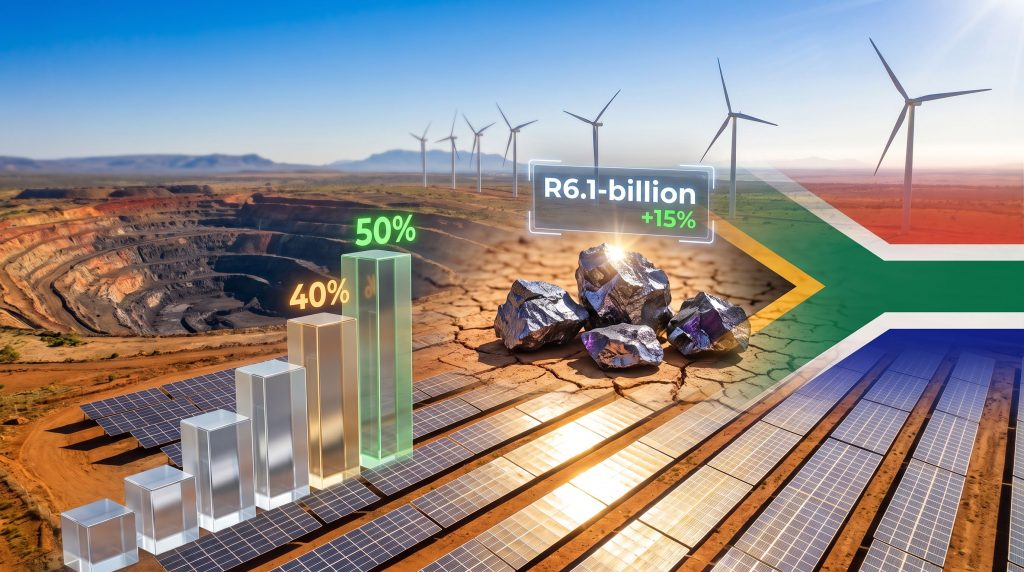
At the heart of Exxaro's strategic framework is a deliberate restructuring of where group earnings originate. The company has set an explicit target for its combined energy and future-facing metals businesses to account for more than 50% of total group earnings by 2030, with coal's contribution declining to approximately 40% of the total over the same period.
This is not an incremental adjustment. For a company that has historically derived the overwhelming majority of its income from coal operations, shifting the earnings centre of gravity this substantially within a single decade represents a fundamental reimagining of the business. Furthermore, what makes this target particularly credible is that all three pillars are already generating or growing revenue simultaneously, rather than the energy and metals segments existing purely as forward projections.
Pillar One: Coal as a Precision Cash Engine
Coal remains the financial engine of the group, and Exxaro's management has been explicit that no abrupt exit is planned. The strategic logic here is worth examining closely: coal cash flows are being used to fund the very transition that will eventually reduce coal's earnings dominance. This internal capital recycling mechanism is central to the model's financial integrity.
Performance from the coal segment in the most recent half-year reporting period was robust:
- Coal export sales rose 15% to 3.9-million tonnes, supported by active switching between domestic and export channels to capture premium pricing
- Matla mine's underground output improved 38% year-on-year, driven by continuous mining operations across an extensive underground workforce
- Richards Bay coal export volumes tracked toward an annualised industry run rate of approximately 60-million tonnes, reflecting improving rail performance at the system level
- The Grootegeluk mine continues to anchor the group's coal production base as a long-life, high-quality asset
The operational flexibility to arbitrage between domestic and export markets is an underappreciated competitive advantage. When export prices carry a significant premium over domestic contracted prices, Exxaro can redirect volumes accordingly, optimising realised revenue per tonne without increasing production capacity. Broader mining decarbonisation benefits are becoming increasingly relevant as the industry weighs the financial case for transition alongside operational performance.
Pillar Two: Cennergi and the Renewable Energy Scaling Curve
Exxaro's renewable energy subsidiary, Cennergi, has undergone a meaningful strategic evolution. Originally conceived primarily as a mechanism to reduce the energy cost base of Exxaro's own mining operations, Cennergi is increasingly being positioned as a standalone earnings contributor capable of generating returns independent of the coal business it serves. The Exxaro renewable energy strategy reflects a deliberate, long-term shift in how the group thinks about energy as a business pillar rather than merely an operational cost.
The operational metrics from the most recent period illustrate how far this pillar has already developed:
| Renewable Energy Metric | Result |
|---|---|
| Grootegeluk energy supplied by Cennergi | 30% of total requirements |
| Carbon emission reduction at Grootegeluk | 22% |
| Annual electricity cost savings | R100-million |
| Wind plant availability | 98% |
| Lephalale Solar Project contribution | 66 GWh |
| Total renewable energy output growth | +12% year-on-year |
The Lephalale Solar Project reached commercial operation in April 2026, contributing its first full generation output to the portfolio. Meanwhile, the Karreebosch wind farm in the Eastern Cape is progressing on schedule and on budget, with commercial operation targeted for the first half of 2027. During H1 alone, R704-million was invested in Karreebosch's construction, underscoring the project's priority within the capital allocation framework.
One structural insight that tends to be underappreciated by observers of renewable energy assets is the complementarity advantage that wind and solar generation profiles offer when held within a single portfolio. Wind resources in South Africa's Eastern Cape tend to be strongest during periods when solar irradiance is lower, and vice versa. By holding both asset types, Cennergi achieves a more consistent generation profile across seasons and weather conditions than a single-technology operator could, reducing earnings volatility from the energy pillar. This blended output effect is already visible in improved EBITDA performance numbers from the energy segment.
The long-term target for the energy portfolio is a net capacity of 1,600 MW by 2030, encompassing both self-generation for Exxaro's mining operations and external power sales.
Pillar Three: Manganese Makes Its First Formal Earnings Contribution
Perhaps the most strategically significant development in Exxaro's most recent reporting period is that manganese transitioned from a strategic ambition into an active income contributor. For the first time in the company's reporting history, future-facing metals moved from being a heading on a slide to an actual line item generating income.
Manganese occupies an interesting position in the critical minerals landscape that deserves some unpacking. While battery metals like lithium and cobalt receive substantially more media attention, manganese serves two distinct and growing demand streams simultaneously:
- Steel decarbonisation: Manganese is an essential alloying element in steel production, and as the global steel industry pursues lower-carbon production pathways, high-grade manganese supply becomes increasingly critical
- Battery chemistry: High-purity manganese is a key input in lithium manganese iron phosphate (LMFP) battery chemistry, which is gaining traction as a cost-effective alternative to more expensive lithium-ion formulations in the electric vehicle sector
South Africa holds some of the world's largest known manganese ore reserves, concentrated in the Kalahari Manganese Field in the Northern Cape, which is estimated to contain roughly 80% of global identified manganese resources. Consequently, Exxaro's strategic positioning in manganese carries geological and geopolitical significance beyond its immediate financial contribution. The growing critical minerals demand underpinning this positioning is reshaping how mining companies prioritise portfolio development globally.
Copper and other energy transition minerals remain under active evaluation for portfolio inclusion, suggesting the future-metals pillar will broaden further as the decade progresses.
The Capital Architecture Behind the Transition
Understanding how Exxaro is financing its three-pillar transformation is as important as understanding what it is building. The company's CFO Riaan Koppeschaar has outlined a project finance structure designed to optimise returns while insulating the group's balance sheet from transition-era capital risk.
The core framework operates on a 75% project finance / 25% equity funding model for energy infrastructure projects. Several features of this structure deserve attention:
- Project financing is drawn progressively from the commencement of construction, not in a single upfront tranche
- Equity contributions are weighted toward the later stages of project execution, preserving liquidity during the early capital-intensive construction phase
- All project financing carries limited recourse to Exxaro's balance sheet, meaning that if a specific project encounters difficulties, the group's broader financial position is structurally protected
- Interest rate exposure across all project financing is managed through interest rate swap agreements, providing cost certainty over the life of the debt
This financing architecture reflects institutional-grade capital discipline. By structuring growth capital with limited recourse and hedged interest costs, Exxaro avoids the binary risk that has undermined some peers who have funded transition-era growth entirely from their balance sheets, only to face capital constraints when commodity cycles turn.
Dividend Policy: A Vote of Confidence in the New Earnings Base
Two material changes to Exxaro's dividend policy signal management's growing conviction in the diversified earnings model:
- The removal of the R12-billion to R15-billion cash buffer requirement that previously served as a defensive capital retention mechanism
- A revision of the dividend cover ratio, with future growth to be financed through internally generated cash flows supplemented by debt facilities rather than equity
Taken together, these changes indicate that management views the transition-era earnings base as sufficiently resilient and predictable to reduce defensive capital hoarding. This is a meaningful signal for investors assessing whether the three-pillar model is performing to plan.
H1 Financial Performance: The Numbers Behind the Narrative
The most recent half-year results provide concrete validation that the multi-pillar strategy is executing rather than merely aspiring.
| Financial Metric | H1 Result | Direction |
|---|---|---|
| Cash generation | R6.1-billion | +15% year-on-year |
| Revenue growth | Period increase | +7% year-on-year |
| Coal export volumes | 3.9-million tonnes | +15% year-on-year |
| Renewable energy output | Total generation | +12% year-on-year |
| Matla production | Underground output | +38% year-on-year |
| Total stakeholder value created | R10-billion | Across employees, government, shareholders |
| Social impact expenditure | R1.4-billion | Host communities and labour-sending areas |
The simultaneity of growth across all three pillars within a single reporting period is the critical detail here. It is relatively straightforward to report coal cash flow growth in isolation, or renewable energy growth funded by external capital. What is more difficult is growing all three simultaneously while maintaining dividend payments and funding a major wind farm construction project. Exxaro's H1 numbers suggest it is achieving precisely this.
The ERP System Replacement: A Less Discussed but Strategically Relevant Development
One element of Exxaro's recent reporting that receives limited analytical coverage but carries meaningful operational significance is the feasibility study underway to replace the company's enterprise resource planning (ERP) system. ERP platforms integrate core business processes — including finance, human resources, supply chain, manufacturing, and sales — into a unified operational platform.
For a company managing three increasingly distinct business pillars with different cost structures, revenue profiles, and capital requirements, the quality of integrated data and reporting infrastructure is not a peripheral concern. The decision to evaluate a full ERP replacement suggests that Exxaro's leadership recognises that the operational complexity of running a diversified energy-and-metals business requires a more sophisticated information backbone than a coal-dominant operation historically required. Indeed, broader mining sustainability transformation trends point to data infrastructure as a core enabler of successful strategic pivots across the sector.
Key Risks That Investors and Analysts Should Monitor
While Exxaro's strategic execution has been compelling, however, several structural risks deserve ongoing attention:
- Rail infrastructure dependency: Richards Bay coal export performance remains contingent on rail system reliability, which has historically been a constraint on upside capture. Improvements are tracking positively at the industry level, but systemic risk remains
- Wind resource variability: Lower Eastern Cape wind conditions during the most recent period suppressed generation from Cennergi's wind assets, highlighting the natural resource risk that cannot be fully engineered away. The 98% plant availability figure confirms the issue was meteorological rather than operational
- Manganese price cycles: As a commodity with exposure to both steel and battery demand, manganese prices are influenced by global industrial production cycles, Chinese steel output trajectories, and evolving battery chemistry adoption rates. Near-term price volatility is possible even within a structurally positive long-term demand thesis
- Multi-project capital competition: With Karreebosch under construction, LSP recently commissioned, and future-metals development ongoing, capital allocation discipline will be tested as multiple projects compete for resources simultaneously
The next major ASX story will hit our subscribers first
Comparing Exxaro's Approach to Industry Peers
| Strategic Dimension | Exxaro Approach | Common Alternative |
|---|---|---|
| Coal transition speed | Phased, cash-generative retention | Rapid divestiture |
| Energy integration model | Self-generation plus external sales | Purely external procurement |
| Future metals entry point | Manganese-led, income-generating | Exploration-stage positions |
| Project finance structure | 75/25 limited recourse model | Full balance sheet funding |
| Dividend continuity | Maintained through transition capex | Suspended during growth phases |
| Emissions target | 40% Scope 1 and 2 reduction by 2030 | Variable commitments |
The deliberate retention of coal as a cash engine rather than a disposal target distinguishes Exxaro from miners that have pursued ideologically driven divestiture strategies. The integrated model requires significantly more capital allocation discipline but substantially reduces the transition financing risk that has challenged some peers.
For further context on how Exxaro positions its business across these pillars, the company's official disclosures offer detailed operational and strategic commentary that complements the financial metrics outlined here.
The Road to 2030: Milestones That Will Define the Outcome
Several near and medium-term catalysts will determine whether the Exxaro energy and future metals strategy achieves its 2030 earnings rebalancing target on schedule. According to Mining Indaba coverage of Exxaro's copper ambitions, the company's appetite for broadening its future-metals portfolio is actively shaping how it evaluates new asset opportunities.
2026 to 2027 near-term milestones:
- Karreebosch wind farm reaching commercial operation in H1 2027, adding meaningful renewable capacity to the portfolio
- Manganese income scaling from its inaugural contribution toward a materially visible earnings line
- ERP feasibility study conclusions informing the operational infrastructure investment decision
- Continued coal export volume optimisation contingent on rail system performance at Richards Bay
2027 to 2030 medium-term markers:
- Renewable energy portfolio progressing toward the 1,600 MW net target through additional project development or acquisition
- Potential copper or other critical mineral asset integration into the future-metals pillar
- Coal earnings proportionally declining as energy and metals grow in absolute terms
- The 50% earnings threshold from energy and metals being crossed, validating the decade-long strategic thesis
Disclaimer: This article contains forward-looking statements and projections based on publicly available information and company disclosures. These statements involve inherent uncertainties and should not be construed as financial advice. Past operational performance does not guarantee future results. Investors should conduct independent due diligence and consult qualified financial advisers before making investment decisions.
Ready to Identify the Next Major Resource Discovery Before the Market Does?
Discovery Alert's proprietary Discovery IQ model scans ASX announcements in real time, instantly identifying significant mineral discoveries across critical commodities — including the manganese, copper, and energy transition metals reshaping resource portfolios like Exxaro's — and delivering actionable alerts directly to subscribers. Explore how historic discoveries have generated exceptional returns and begin your 14-day free trial today to position yourself ahead of the broader market.