May 20, 2026
The Fast-Track Mechanism India Austria has emerged as a critical bilateral platform addressing the complex regulatory challenges that often impede cross-border investment flows. Furthermore, this mechanism represents a sophisticated evolution in economic diplomacy, where regulatory harmonisation and administrative efficiency take precedence over conventional trade liberalisation approaches.
What Is the Fast-Track Mechanism Between India and Austria?
The Fast-Track Mechanism India Austria represents a dedicated bilateral platform designed to streamline investment processes and resolve operational challenges for businesses operating across both jurisdictions. Operationalised on April 18, 2026, during the India-Austria Business Forum, this mechanism establishes direct coordination channels between regulatory authorities to expedite investment approvals and address compliance bottlenecks.
Institutional Framework and Operational Structure
The mechanism operates through bilateral institutional coordination, with India's Department for Promotion of Industry and Internal Trade (DPIIT) serving as the primary coordinating body on the Indian side. Austria's Federal Ministry of Economy, Energy and Tourism (BMWET) provides counterpart coordination, as evidenced by Federal Minister Wolfgang Hattmannsdorfer's participation in the inaugural forum.
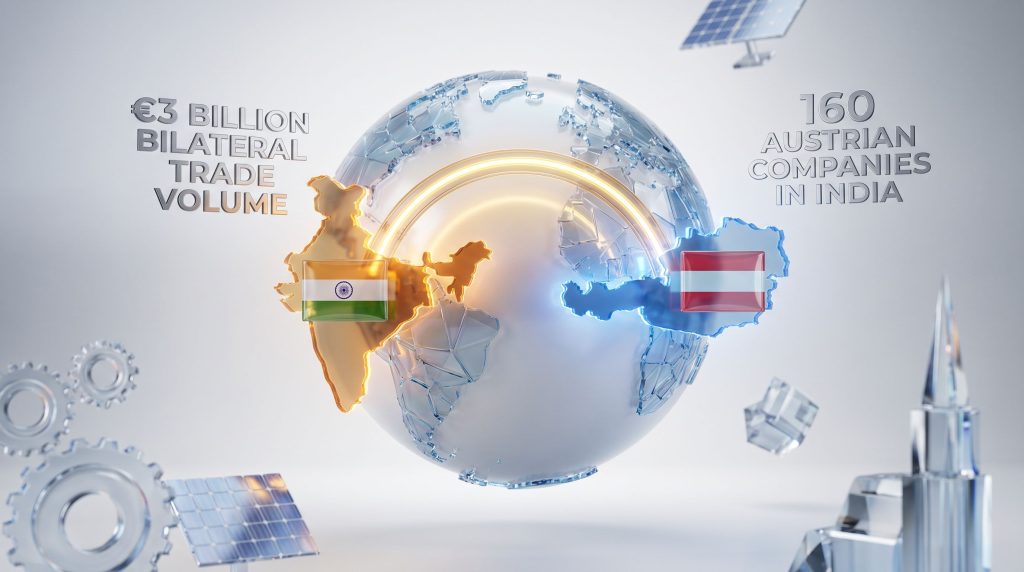
Current bilateral trade relationships demonstrate the foundation for this mechanism, with €3 billion in bilateral trade volume as of 2026 and 160 Austrian companies already operating in Indian markets. This existing commercial foundation provides a practical testing ground for this streamlined permitting process protocols.
The mechanism's launch coincided with Federal Chancellor Christian Stocker's visit to India, marking the first official Austrian Chancellor visit in over four decades. This high-level diplomatic engagement signals substantial political commitment to transcending traditional bureaucratic barriers in cross-border investment processes.
Legal Foundation and Regulatory Scope
The Fast-Track Mechanism India Austria addresses specific regulatory barriers that have historically impeded bilateral investment flows. According to government statements, the platform aims to facilitate investments, address operational issues, and ensure timely resolution of investor concerns through dedicated institutional channels.
The mechanism's scope encompasses multiple regulatory domains:
• Administrative processing acceleration for investment approvals
• Compliance cost reduction through streamlined procedures
• Inter-agency coordination to eliminate bureaucratic redundancies
• Dispute prevention mechanisms through early intervention protocols
This regulatory architecture reflects recognition that modern investment barriers extend beyond traditional policy restrictions to encompass administrative efficiency and institutional responsiveness challenges.
When big ASX news breaks, our subscribers know first
How Does Austria's Investment Facilitation Model Compare Globally?
Austria's bilateral approach to investment facilitation represents a targeted strategy within the broader European Union framework for enhancing investment attractiveness. Unlike comprehensive multilateral trade agreements, bilateral fast-track mechanisms allow for sector-specific customisation and rapid implementation of procedural improvements.
European Fast-Track Mechanisms Benchmarking
European Union member states have adopted varied approaches to investment facilitation, reflecting different economic priorities and administrative capacities:
| Country | Mechanism Type | Primary Focus | Target Sectors |
|---|---|---|---|
| Austria | Bilateral Fast-Track | Processing Efficiency | Multi-sectoral |
| Germany | Digital Investment Portal | Documentation Streamlining | Manufacturing |
| Netherlands | One-Stop Investment Shop | Regulatory Coordination | Technology & Logistics |
| Sweden | Green Investment Track | Sustainability Projects | Renewable Energy |
Austria's model emphasises bilateral customisation over standardised EU-wide approaches, allowing for country-specific regulatory alignment and cultural adaptation in business processes.
Regulatory Innovation in Bilateral Trade Architecture
The Fast-Track Mechanism India Austria incorporates several innovative features that distinguish it from traditional investment promotion approaches:
Single-Window Processing: Rather than requiring investors to navigate multiple government agencies independently, the mechanism establishes coordinated review processes that eliminate duplicative requirements and conflicting jurisdictional interpretations.
Digital Integration Capabilities: Modern investment facilitation increasingly relies on digital integration systems, electronic verification protocols, and real-time status tracking for investment applications.
Sector-Specific Customisation: The mechanism allows for tailored approaches to different industries, recognising that pharmaceutical companies face different regulatory challenges than renewable energy developers or manufacturing enterprises.
What Investment Barriers Does the Mechanism Address?
The Fast-Track Mechanism India Austria specifically targets regulatory bottlenecks that have historically created delays and increased compliance costs for bilateral investment projects. These barriers span multiple regulatory domains and administrative processes.
Sanitary and Phytosanitary (SPS) Compliance Challenges
Product registration requirements represent a significant barrier for Austrian companies seeking to enter Indian markets, particularly in pharmaceutical, food processing, and agricultural sectors. The mechanism addresses these challenges through several approaches:
Streamlined Registration Procedures: Accelerated review processes for Austrian pharmaceutical and food products seeking Indian market approval, reducing traditional registration timelines through coordinated agency review.
Technical Standards Harmonisation: Recognition of Austrian certification standards where they meet or exceed Indian regulatory requirements, eliminating duplicative testing and documentation requirements.
Mutual Recognition Protocols: Development of frameworks where Austrian regulatory approvals carry enhanced credibility in Indian review processes, and vice versa.
Origin Certification and Trade Documentation
Certificate of origin processing has emerged as a particular friction point in bilateral trade, especially for complex manufactured products with multi-country supply chains. The mechanism addresses these challenges through:
• Digital verification systems for trade documentation authenticity
• Expedited processing protocols for Austrian exporters to Indian markets
• Simplified documentation requirements for established bilateral traders
• Electronic submission and tracking systems for certificate applications
Regulatory Policy Framework Harmonisation
Investment approval processes often involve multiple government agencies with overlapping jurisdictions and differing requirements. Consequently, the Fast-Track Mechanism India Austria establishes coordination protocols to address these institutional challenges:
Inter-Agency Coordination: Structured communication channels between Austrian and Indian regulatory authorities to resolve conflicting requirements before they impact investors.
Timeline Standardisation: Establishment of predictable review periods for different categories of investment proposals, providing investors with reliable planning frameworks.
Escalation Mechanisms: Clear pathways for addressing regulatory disputes or delays that emerge during the investment approval process.
Which Sectors Benefit Most from Fast-Track Processing?
The Fast-Track Mechanism India Austria prioritises specific sectors where both countries have identified complementary capabilities and mutual commercial interests. Government officials have explicitly identified three primary focus areas for enhanced cooperation.
Advanced Manufacturing and Industrial Technology
Austria's sophisticated manufacturing capabilities, particularly in precision engineering and industrial automation, align with India's expanding industrial requirements. The mechanism facilitates technology transfer and manufacturing partnerships through:
Automotive Component Integration: Austrian automotive suppliers gain accelerated access to India's rapidly expanding vehicle manufacturing sector, leveraging both domestic demand and export manufacturing opportunities.
Precision Engineering Equipment: Austrian companies specialising in high-precision manufacturing equipment benefit from streamlined approval processes for establishing Indian operations or forming joint ventures.
Industrial Automation Systems: Technology transfer partnerships in robotics, process automation, and quality control systems receive prioritised processing under the mechanism's framework.
Green Technology and Sustainable Development
Both governments have identified sustainable development, advanced manufacturing, and green technologies as priority areas for future cooperation, reflecting alignment with broader climate objectives and energy security goals.
Renewable Energy Project Facilitation: Austrian companies with expertise in hydroelectric, solar, and wind technologies benefit from expedited project approval processes for Indian renewable energy developments.
Clean Technology Transfer: The mechanism facilitates partnerships in energy efficiency technologies, waste management systems, and environmental monitoring equipment.
Environmental Compliance Systems: Austrian environmental technology providers gain streamlined access to India's expanding environmental compliance and remediation markets.
Dual Vocational Training and Skills Development
Austria's renowned dual education system, which combines academic learning with practical work experience, represents a valuable model for India's skills development initiatives:
• Educational Institution Partnerships between Austrian and Indian technical training providers
• Professional Qualification Recognition to facilitate mobility of skilled workers
• Training Program Development customised for Indian industrial requirements
• Certification Standardisation to ensure compatibility between Austrian and Indian skill standards
The 17th Session of the India-Austria Joint Economic Commission (IAJEC) identified additional cooperation opportunities across infrastructure development, scientific research and innovation, semiconductors, critical minerals, digitalisation, artificial intelligence, and AYUSH wellness sectors.
How Does This Impact India-EU Trade Relations?
The Fast-Track Mechanism India Austria serves as a practical testing ground for broader India-EU economic integration, providing insights and precedents that could influence larger multilateral trade negotiations currently under discussion.
Precedent Setting for Broader EU-India FTA Negotiations
Government discussions have explicitly highlighted the importance of the proposed India-EU Free Trade Agreement as a key enabler for scaling trade, reducing barriers, and facilitating investment flows. In addition, the bilateral mechanism provides several advantages for broader multilateral negotiations:
Regulatory Best Practices Development: Successful bilateral coordination protocols can be scaled to encompass other EU member states, creating standardised approaches to investment facilitation across the European Union.
Sector-Specific Framework Testing: The mechanism allows both sides to test regulatory harmonisation approaches in specific sectors before implementing them across broader trade relationships.
Dispute Resolution Model Refinement: Bilateral dispute resolution experiences provide valuable insights for designing effective multilateral frameworks that can accommodate diverse regulatory systems.
Trade Volume Expansion Projections
Current bilateral trade metrics provide a baseline for evaluating the mechanism's potential impact. Moreover, these baseline figures demonstrate significant room for growth in bilateral commercial relationships:
Baseline Trade Relationship:
• €3 billion current bilateral trade volume (2026)
• 160 Austrian companies currently operating in Indian markets
• Government Pension Fund Global (Norway) renewable energy investments demonstrate European institutional investor confidence in Indian markets
Furthermore, this trend towards enhanced investment market impacts could influence other European institutional investors to increase their Indian market exposure, particularly in sectors prioritised under the fast-track framework.
Sectoral Integration Acceleration
The bilateral mechanism facilitates deeper integration in strategic sectors that align with both EU and Indian policy priorities:
Critical Minerals and Semiconductor Cooperation: Both Austria and India have identified semiconductors and critical minerals as priority cooperation areas, reflecting broader geopolitical considerations around supply chain resilience and technological sovereignty.
Infrastructure Development Partnerships: Austrian expertise in sustainable infrastructure development could support India's ambitious infrastructure expansion plans while providing Austrian firms with access to large-scale project opportunities.
Scientific Research Collaboration: Enhanced institutional frameworks for research partnerships could accelerate innovation in priority sectors like renewable energy, digitalisation, and artificial intelligence.
What Are the Implementation Challenges and Success Metrics?
The Fast-Track Mechanism India Austria faces several operational challenges that are common to bilateral investment facilitation initiatives, particularly those spanning different time zones, regulatory cultures, and administrative systems.
Operational Bottlenecks in Cross-Border Coordination
Time Zone Management: With India operating 4.5 hours ahead of Austria, real-time coordination for urgent investment issues requires careful scheduling and potentially extended working hours for government officials on both sides.
Language and Documentation Standards: While English serves as a common business language, technical regulatory documentation often requires precise legal language that may be interpreted differently across jurisdictions.
Cultural Differences in Administrative Processes: Austrian and Indian regulatory approaches reflect different historical traditions in government-business relationships, requiring adaptation and mutual understanding for effective coordination.
Performance Measurement Framework
Effective evaluation of the mechanism's success requires quantifiable metrics that can demonstrate tangible improvements in bilateral investment flows:
Investment Processing Timeline Metrics:
• Approval timeline reduction compared to pre-mechanism processing periods
• Documentation requirement simplification measured by reduced paperwork volume
• Inter-agency coordination efficiency tracked through reduced back-and-forth communications
• Investor satisfaction scoring based on feedback from companies utilising the mechanism
Trade Flow Enhancement Indicators:
• New investment project volume initiated under fast-track procedures
• Sectoral diversification in bilateral trade relationships
• Company expansion rates for Austrian firms in Indian markets
• Job creation metrics in priority cooperation sectors
Scalability Assessment for Other Bilateral Partnerships
The mechanism's design allows for evaluation of its potential replication with other trading partners. However, these initiatives must be carefully coordinated with evolving executive permit orders and regulatory frameworks to ensure consistency:
Model Adaptation Requirements: Lessons learned from India-Austria coordination can inform similar mechanisms with other EU member states or EFTA countries.
Integration with Existing Frameworks: The mechanism must coordinate effectively with existing India-EFTA agreements and broader EU-India negotiations without creating conflicting requirements.
Resource Allocation Efficiency: Success metrics should demonstrate whether bilateral mechanisms provide better value than multilateral approaches for specific types of investment facilitation.
The next major ASX story will hit our subscribers first
Future Implications for India's Investment Policy Architecture
The Fast-Track Mechanism India Austria represents a significant evolution in India's approach to international investment facilitation, moving beyond traditional promotional activities toward active regulatory coordination and administrative efficiency enhancement.
Digital Infrastructure Development Requirements
Modern investment facilitation increasingly relies on sophisticated digital platforms that can integrate multiple regulatory systems and provide real-time status tracking for investors:
Blockchain-Based Documentation Systems: Secure, verifiable digital documentation that can be instantly shared between Austrian and Indian regulatory authorities without concerns about authenticity or tampering.
Artificial Intelligence-Powered Compliance Monitoring: Automated systems that can identify potential regulatory conflicts before they impact investors, providing early warning systems for both government officials and private sector participants.
Real-Time Investment Tracking Platforms: Digital dashboards that allow investors to monitor the status of their applications across multiple government agencies simultaneously.
Institutional Capacity Building Needs
Successful bilateral coordination requires enhanced capabilities within government institutions on both sides. Furthermore, companies seeking to capitalise on these opportunities must develop sophisticated capital raising strategies that align with these emerging bilateral frameworks:
Cross-Cultural Training Programmes: Government officials need enhanced understanding of their counterpart's regulatory culture, business practices, and communication styles to facilitate effective coordination.
Technical Expertise Development: As the mechanism addresses increasingly sophisticated sectors like semiconductors, artificial intelligence, and advanced manufacturing, government officials require enhanced technical knowledge to make informed decisions.
Language and Communication Skills: While English serves as a working language, nuanced regulatory coordination benefits from enhanced communication capabilities and cultural sensitivity.
Strategic Positioning in Global Investment Flows
The mechanism's success could significantly influence India's competitive position in attracting European investment and technology transfer:
Regional Hub Development: Effective bilateral mechanisms with multiple European countries could position India as the preferred Asian destination for European manufacturing and technology companies seeking regional expansion.
Investment Diversion Effects: Success in facilitating Austrian investment could attract investment away from other Asian economies, particularly in high-value sectors like renewable energy and advanced manufacturing.
Technology Transfer Acceleration: Streamlined regulatory processes could accelerate technology transfer partnerships that enhance India's capabilities in strategic sectors whilst providing European companies with cost-effective manufacturing and development platforms.
Conclusion: A Model for Future Bilateral Cooperation
The Fast-Track Mechanism India Austria represents a sophisticated approach to modern investment facilitation that prioritises regulatory efficiency over traditional promotional activities. Its success will likely influence broader patterns in bilateral economic cooperation and potentially serve as a model for enhanced EU-India economic integration.
For instance, the mechanism's emphasis on bilateral agreements demonstrates how targeted cooperation can achieve results more rapidly than comprehensive multilateral negotiations. Moreover, its focus on specific sectors allows both countries to leverage their comparative advantages whilst addressing strategic priorities.
The mechanism's evolution will provide valuable insights into the effectiveness of bilateral versus multilateral approaches to investment facilitation, regulatory harmonisation, and economic integration in an increasingly complex global economy.
Investment Disclaimer: This analysis is for informational purposes only and should not be construed as investment advice. Bilateral investment mechanisms involve regulatory and policy risks that may change over time. Potential investors should conduct their own due diligence and consult with qualified professionals before making investment decisions based on bilateral trade agreements or facilitation mechanisms.
Want to Stay Ahead of Investment Opportunities in Resource Discoveries?
Discovery Alert instantly notifies investors about significant ASX mineral discoveries using its proprietary Discovery IQ model, turning complex mineral data into actionable insights for both short-term traders and long-term investors. Explore Discovery Alert's discoveries page to see how major mineral discoveries have generated substantial market returns, then begin your 14-day free trial to position yourself ahead of the market with real-time alerts powered by advanced AI technology.