
August 24, 2026
Understanding Federal Energy Budget Allocations in the Nuclear Sector
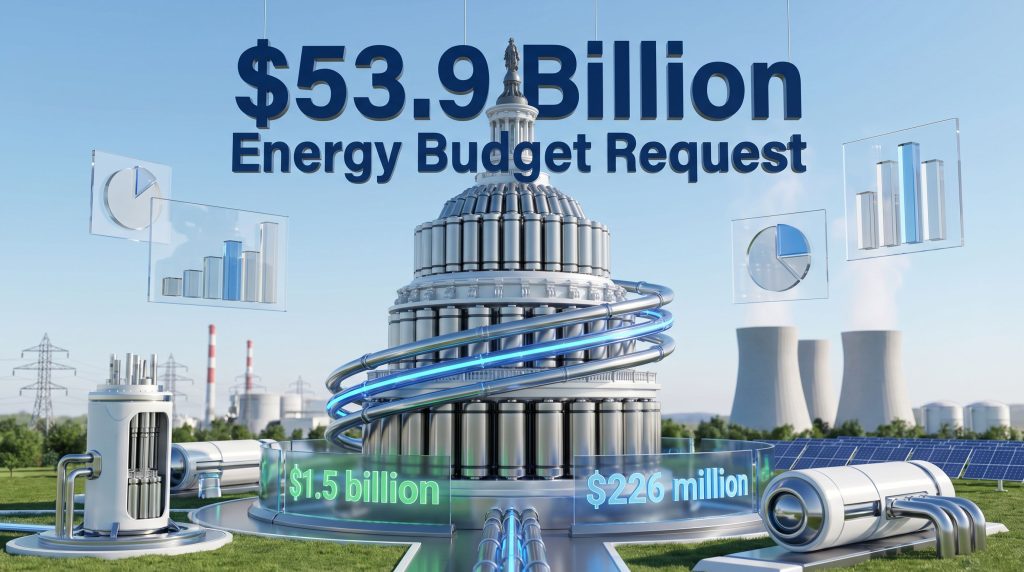
The Department of Energy's comprehensive budget structure for fiscal year 2027 demonstrates strategic prioritisation of nuclear technology development through multiple funding mechanisms. Energy Secretary Chris Wright's testimony before congressional committees in April 2026 outlined a $53.9 billion discretionary budget request that positions nuclear energy as integral to national energy independence objectives.
Congressional oversight of nuclear energy appropriations operates through a complex committee structure that includes the Senate Energy and Natural Resources Committee, House Energy and Commerce Subcommittee, and House Subcommittee on Energy & Water Development. This multi-committee framework requires DOE leadership to present coordinated testimony across different legislative venues, as evidenced by Wright's appearances on April 15, 16, and 21, 2026.
Furthermore, these developments align with broader uranium production trends that are shaping the nuclear fuel cycle. Additionally, nuclear waste disposal safety considerations remain paramount as the nuclear sector expands.
Congressional Budget Authority Framework for Energy Programs
Federal nuclear energy investments flow through distinct appropriations categories that separate discretionary from mandatory spending classifications. The DOE secretary testifies on FY 2027 budget allocations that encompass both operational funding for existing nuclear programs and capital investments for emerging technologies. Wright's congressional testimony emphasised that nuclear funding represents strategic infrastructure investment rather than research subsidisation.
The appropriations process requires annual congressional approval for discretionary nuclear programs, while certain loan guarantee authorities operate under previously established statutory frameworks. This dual structure enables both predictable programme funding and flexible project-specific support based on commercial readiness assessments.
Discretionary vs. Mandatory Spending Classifications in Energy Policy
Nuclear energy budget allocations primarily fall under discretionary spending authority, requiring annual congressional appropriations approval. The $1.5 billion allocation for the Office of Nuclear Energy represents discretionary funding that Congress can modify during the appropriations process. In contrast, loan guarantee programmes operate under mandatory spending authority once congressional authorisation is established.
This spending classification structure influences project development timelines, as discretionary programmes face annual funding uncertainty while mandatory spending provides more predictable capital availability for multi-year development initiatives.
Multi-Committee Oversight Structure for Nuclear Energy Funding
Congressional oversight of nuclear energy appropriations involves coordination between authorising committees and appropriations subcommittees. The Senate Energy and Natural Resources Committee establishes policy direction, while appropriations subcommittees determine specific funding levels. Wright's testimony across multiple congressional venues demonstrates the complex legislative coordination required for nuclear programme advancement.
House and Senate energy committees maintain distinct jurisdictional responsibilities that sometimes create conflicting policy priorities. The DOE must navigate these institutional dynamics while advocating for coherent nuclear energy strategy implementation. Moreover, these policies intersect with recent executive production orders that affect national security considerations.
When big ASX news breaks, our subscribers know first
What Does the $53.9 Billion Energy Budget Request Signal for Nuclear Policy?
The comprehensive energy budget request indicates a fundamental shift toward viewing nuclear technology as essential baseload infrastructure rather than experimental research. Wright's testimony positioned nuclear energy within a $3.5 billion baseload power infrastructure allocation that encompasses coal, natural gas, and nuclear generation sources, signalling competitive positioning rather than preferential treatment.
Congressional budget priorities reflect recognition that advanced nuclear commercialisation requires sustained federal investment to overcome first-of-a-kind technology risks. The $226 million Advanced Reactor Demonstration Program allocation represents focused support for moving reactor concepts from laboratory demonstration toward commercial deployment.
Strategic Shift Toward Baseload Power Infrastructure Investment
Federal energy policy increasingly emphasises grid reliability and baseload generation capacity as national security imperatives. The DOE secretary testifies on FY 2027 budget priorities that position nuclear energy as competing directly with conventional baseload sources rather than occupying a separate clean energy category. This framing reflects recognition that nuclear technology must achieve cost competitiveness to secure long-term market penetration.
Congressional testimony indicates that baseload power infrastructure investment addresses both immediate grid stability concerns and long-term energy independence objectives. Wright's presentation emphasised that nuclear technology serves dual purposes: traditional utility applications and specialised industrial power requirements, particularly data centre operations requiring reliable, high-capacity electricity supply.
Nuclear Energy Office Funding Priorities and Programme Expansion
The Office of Nuclear Energy's $1.5 billion allocation encompasses multiple programme categories designed to accelerate technology maturation across different reactor designs. Advanced reactor development receives priority funding through the $226 million Advanced Reactor Demonstration Program, while a newly proposed $10 million Office of Fusion coordinates federal fusion research activities across multiple agencies.
This funding structure indicates strategic diversification across nuclear technology pathways rather than concentration on single reactor designs. Congressional appropriations support parallel development tracks that reduce technology risk through portfolio approaches to advanced nuclear commercialisation. These financing approaches relate to broader capital raising strategies being implemented across the energy sector.
Advanced Reactor Development Timeline and Regulatory Coordination
The Reactor Pilot Program operates under an explicit July 4, 2026 criticality deadline established by presidential directive. This compressed timeline demonstrates federal commitment to accelerating advanced reactor demonstration while maintaining regulatory safety standards. Wright's testimony emphasised that Nuclear Regulatory Commission personnel actively collaborate with DOE on pilot project permitting processes.
Regulatory coordination between DOE and NRC represents a significant departure from traditional sequential review processes. Early NRC engagement with reactor developers provides regulatory feedback during development phases rather than comprehensive licensing review only at commercialisation stages.
| Programme Category | Requested Amount | Policy Objective | Implementation Timeline |
|---|---|---|---|
| Office of Nuclear Energy | $1.5 billion | Advanced reactor development | Multi-year programme expansion |
| Advanced Reactor Demo Program | $226 million | Commercial deployment acceleration | July 2026 criticality targets |
| Baseload Power Infrastructure | $3.5 billion | Grid modernisation and capacity | Ongoing infrastructure investment |
| Office of Fusion | $10 million | Fusion energy coordination | New programme establishment |
How Will Federal Loan Programs Transform Nuclear Project Financing?
The Office of Energy Dominance Financing represents a revolutionary approach to nuclear project capitalisation that combines federal lending authority with private equity participation from major corporations. Wright's congressional testimony revealed that federal lending programmes will support the first 10 nuclear reactor projects through structured risk distribution mechanisms rather than traditional grant funding.
This financing architecture leverages federal capital as debt financing while requiring private equity contributions from hyperscaler corporations seeking data centre power solutions. The strategy explicitly spreads financial risk across multiple projects to reduce average costs through portfolio diversification effects.
Office of Energy Dominance Financing Structure and Risk Distribution
Federal lending authority operates through conditional commitment processes that reserve capital pending project milestone achievement. The $263 million conditional loan commitment to SHINE Technologies demonstrates active deployment of this lending framework for nuclear technology commercialisation. Wright's testimony indicated that federal loans serve as complementary capital rather than substitute funding for private investment.
The risk distribution strategy involves supporting multiple reactor projects simultaneously rather than concentrating federal exposure on single demonstration facilities. Wright explained to Congress that this approach recognises first-of-a-kind reactor costs will exceed subsequent commercial deployment expenses, with federal support specifically targeting the highest-risk initial projects.
Public-Private Partnership Models for First-of-a-Kind Reactors
Federal financing strategy explicitly incorporates equity capital from hyperscaler corporations requiring reliable data centre power. Wright's testimony revealed that the DOE will provide lending capital while obtaining equity contributions from large technology companies that recognise nuclear power as essential for data centre operations. This partnership model aligns federal policy objectives with private sector electricity demand.
The public-private financing structure incentivises private sector discipline while enabling federal support for projects that private markets would decline based on pure risk-return calculations. Hyperscaler equity participation ensures commercial viability assessments while federal lending addresses first-mover disadvantage concerns.
Hyperscaler Data Centre Integration Strategy
Technology companies requiring massive data centre power capacity represent the primary private sector partners in federal nuclear financing programmes. These corporations recognise that nuclear technology provides reliable baseload power essential for continuous data centre operations. Wright's testimony emphasised that hyperscaler equity participation validates commercial demand for advanced reactor electricity output.
Data centre power requirements create predictable electricity demand that supports nuclear project financing through long-term power purchase agreements. This demand certainty reduces project risk while providing revenue stability that traditional utility markets cannot guarantee for first-of-a-kind reactor deployments.
Key Insight: Federal lending programmes specifically target the initial 10 nuclear reactor projects through portfolio risk distribution across multiple corporate partners, with emphasis on technology companies requiring dedicated data centre power infrastructure.
What Are the Regulatory Pathways for Microreactor Commercialisation?
Advanced nuclear regulatory frameworks are evolving to accommodate microreactor technology characteristics that differ fundamentally from traditional large reactor designs. The National Reactor Innovation Center's Demonstration of Microreactor Experiments (DOME) test bed achieved operational status on April 10, 2026, providing physical infrastructure for microreactor experimentation and regulatory validation.
NRC organisational restructuring initiated in 2026 aims to streamline advanced reactor licensing processes while maintaining safety standards. Wright's testimony emphasised that collaborative NRC-DOE engagement during development phases accelerates regulatory approval timelines compared to sequential review processes.
Reactor Pilot Programme Timeline and Criticality Targets
Multiple Reactor Pilot Program participants advance toward the July 4, 2026 criticality deadline established by presidential directive. This compressed timeline requires unprecedented coordination between reactor developers, regulatory agencies, and federal support programmes. Wright's congressional testimony confirmed that several pilot projects maintain realistic prospects for achieving this milestone.
Kairos Power's ground-breaking announcement for its Oak Ridge reactor facility on April 21, 2026, demonstrates active construction progress among advanced reactor developers. This project likely represents one of the pilot programme initiatives targeting July criticality achievement, illustrating the transition from conceptual design to operational demonstration.
NRC-DOE Collaborative Permitting Process Evolution
Regulatory coordination between NRC and DOE represents a significant departure from traditional licensing approaches that separate development from regulation. Wright explained to Congress that NRC personnel receive early insight into reactor technology evolution, enabling accelerated licensing for commercial electricity sales following successful demonstration.
This collaborative framework addresses traditional regulatory bottlenecks that extend project development timelines and increase costs. Early NRC engagement provides iterative regulatory feedback during design phases rather than comprehensive review only at final licensing stages.
Manufacturing and Deployment Scalability Requirements
Microreactor commercialisation depends fundamentally on demonstrating factory manufacturing capabilities and standardised assembly processes. Wright's testimony emphasised that small modular reactor cost reduction requires proving that components can be factory-built and assembled on-site, substantially reducing construction timelines compared to large reactor projects.
Senator James Risch identified substantial economic opportunity in microreactor manufacturing capacity, noting that entities developing factory production capabilities and logistics systems will capture significant commercial value. This manufacturing scalability represents the critical pathway for achieving cost competitiveness with conventional generation sources. These developments align with broader industry innovation trends affecting energy sector transformation.
Which Congressional Concerns Shape Nuclear Energy Policy Direction?
Congressional oversight of nuclear energy policy reflects bipartisan recognition that advanced reactor commercialisation requires federal intervention to overcome market failures in first-of-a-kind technology development. Senator Angus King's testimony identified construction and permitting costs as the primary obstacles preventing market-driven nuclear deployment, while Senator James Risch emphasised manufacturing opportunities for microreactor components.
Legislative priorities focus on three critical dimensions: achieving cost competitiveness with existing baseload generation, reducing construction and permitting timelines, and establishing manufacturing scalability to drive costs downward across subsequent commercial deployments.
Cost Reduction Imperatives for Advanced Nuclear Technologies
Congressional testimony consistently emphasised that nuclear technology must achieve cost competitiveness to secure long-term commercial viability. King's concerns about relying entirely on market forces reflect legislative recognition that first-of-a-kind reactor costs exceed private sector investment thresholds without federal risk mitigation.
The DOE secretary testifies on FY 2027 budget priorities that address cost reduction through manufacturing standardisation and regulatory streamlining. Wright's response to congressional concerns articulated that federal lending support for initial reactor projects enables cost reduction through manufacturing learning curves and supply chain development.
Construction and Permitting Bottleneck Solutions
Legislative oversight identifies construction timelines and permitting processes as critical bottlenecks constraining nuclear technology deployment. Congressional testimony revealed that advanced reactor developers require regulatory certainty and accelerated approval processes to achieve commercial viability timelines.
The collaborative NRC-DOE permitting approach addresses traditional regulatory delays while maintaining safety standards. Wright's testimony indicated that early regulatory engagement reduces overall project development timelines by providing iterative feedback during design phases.
Furthermore, these developments occur within a broader context of federal policy initiatives affecting energy infrastructure development across multiple sectors.
Market-Based vs. Federal Support Debate Analysis
Congressional debate reflects tension between market-oriented approaches and targeted federal intervention for strategic technologies. King's concerns about market failure in advanced nuclear development contrast with traditional free-market advocacy for minimal government involvement in technology commercialisation.
The legislative framework emerging from these debates emphasises federal support for first-of-a-kind projects while expecting subsequent commercial deployments to achieve market competitiveness. This approach recognises that private markets cannot efficiently allocate capital for technologies with substantial development risks and uncertain regulatory pathways.
Key Congressional Priorities:
- Accelerated licensing procedures for innovative reactor designs
- Cost competitiveness with existing baseload generation sources
- Supply chain resilience and domestic manufacturing capacity
- Workforce development for emerging nuclear technologies
- Regulatory certainty for long-term investment planning
- Integration with existing grid infrastructure requirements
How Do Budget Allocations Compare to Previous Nuclear Energy Investments?
Historical analysis of federal nuclear energy appropriations reveals significant escalation in advanced reactor development funding compared to traditional nuclear research budgets. The $1.5 billion Office of Nuclear Energy allocation represents substantial increase from prior fiscal years, indicating strategic prioritisation of nuclear technology commercialisation over basic research activities.
Previous nuclear energy budgets emphasised research and development activities conducted at national laboratories, while current appropriations focus on commercial deployment support through demonstration projects and financing programmes. This shift reflects policy evolution from technology development toward market implementation.
Historical Funding Trends in Federal Nuclear Programmes
Federal nuclear energy investment historically concentrated on light water reactor safety research and waste management programmes. Current budget priorities demonstrate strategic reorientation toward advanced reactor technologies with potential for near-term commercial deployment. The $226 million Advanced Reactor Demonstration Program represents focused investment in specific technology pathways rather than broad research portfolios.
Congressional appropriations patterns indicate sustained commitment to nuclear technology advancement beyond traditional research timeframes. Multi-year funding commitments enable reactor developers to plan commercial deployment schedules with greater certainty regarding federal support availability.
Advanced Reactor Development Programme Evolution
The Advanced Reactor Demonstration Program represents DOE's primary mechanism for accelerating private-sector advanced reactor commercialisation. Programme evolution demonstrates transition from conceptual research toward operational demonstration and regulatory approval processes. Current funding levels enable multiple parallel technology development tracks rather than sequential research phases.
ARDP structure appears designed to move technology concepts through regulatory approval toward commercial deployment within compressed timeframes. The programme's focus on demonstration rather than research indicates policy emphasis on near-term commercialisation rather than long-term technology development.
International Competitiveness and Technology Leadership Goals
Federal nuclear investment strategy explicitly addresses international competition in advanced reactor technology development. Congressional testimony emphasised that American nuclear technology leadership requires sustained federal support to compete with international government-backed nuclear programmes.
Budget allocations reflect recognition that nuclear technology represents strategic national capability requiring federal investment to maintain international competitiveness. The DOE secretary testifies on FY 2027 budget priorities that position American nuclear technology as export opportunity while serving domestic energy independence objectives.
The next major ASX story will hit our subscribers first
What Are the Economic Implications of Federal Nuclear Energy Strategy?
Federal nuclear energy investment creates substantial economic development opportunities across manufacturing, construction, and technology sectors. Wright's testimony emphasised that microreactor commercialisation generates manufacturing jobs while serving specialised electricity markets that traditional generation sources cannot efficiently address.
Economic analysis of nuclear energy policy reveals multiplier effects that extend beyond electricity generation to encompass advanced manufacturing, specialised construction, and high-technology employment. Senator Risch's identification of manufacturing opportunities reflects legislative recognition that nuclear technology commercialisation creates diverse economic benefits.
Job Creation Potential in Nuclear Manufacturing Sectors
Microreactor manufacturing requires specialised fabrication capabilities that generate high-skill employment in advanced manufacturing sectors. Risch's congressional testimony identified significant commercial opportunity for entities developing factory production capabilities and logistics systems for reactor components.
The manufacturing scalability essential for microreactor cost reduction creates employment opportunities in factory construction, component fabrication, quality assurance, and specialised logistics. These employment opportunities concentrate in regions with existing advanced manufacturing infrastructure and skilled workforce availability.
Energy Security Benefits of Domestic Nuclear Capacity
Federal nuclear investment addresses energy independence objectives by reducing dependence on imported energy sources while providing reliable baseload generation capacity. Nuclear technology serves dual energy security functions: grid stability through continuous power generation and fuel security through domestic uranium resources.
Advanced reactor deployment creates domestic supply chain opportunities that reduce dependence on foreign nuclear technology suppliers. This supply chain development provides economic benefits while enhancing national security through domestic nuclear capability maintenance.
Long-term Grid Stability and Baseload Power Requirements
Nuclear energy provides essential grid stability services through continuous baseload generation that renewable sources cannot reliably supply. The $3.5 billion baseload power infrastructure allocation recognises that grid modernisation requires reliable generation sources capable of serving industrial and data centre electricity demand.
Economic analysis indicates that nuclear baseload capacity reduces overall electricity system costs by providing grid stability services and capacity reserves. These system-wide benefits justify federal investment even when individual nuclear projects require higher capital costs than conventional generation alternatives.
Which Stakeholder Groups Benefit from Nuclear Energy Budget Priorities?
Federal nuclear energy policy creates benefits across diverse stakeholder categories that include technology corporations, nuclear industry suppliers, regional economic development entities, and specialised workforce sectors. Wright's testimony identified hyperscaler corporations as primary beneficiaries through access to reliable data centre power sources.
Congressional budget priorities align multiple stakeholder interests through programmes that address technology development, manufacturing capacity, workforce training, and regional economic development objectives simultaneously.
Technology Companies Seeking Clean Data Centre Power
Hyperscaler corporations requiring massive data centre power capacity represent primary stakeholders in federal nuclear financing programmes. These companies recognise nuclear technology as essential for continuous data centre operations that renewable sources cannot reliably support. Wright's testimony emphasised that technology companies provide equity capital for nuclear projects specifically to secure reliable electricity supply.
Data centre power requirements create substantial electricity demand that supports nuclear project financing through long-term power purchase agreements. This demand provides revenue certainty that traditional utility markets cannot guarantee for first-of-a-kind reactor deployments.
Nuclear Industry Manufacturers and Equipment Suppliers
Advanced reactor commercialisation creates substantial opportunities for nuclear industry manufacturers and specialised equipment suppliers. Microreactor deployment requires factory manufacturing capabilities that generate employment and investment opportunities across nuclear supply chain sectors.
The $263 million SHINE Technologies conditional loan demonstrates federal support for nuclear industry suppliers developing specialised capabilities. This support extends beyond reactor developers to encompass isotope production, component manufacturing, and specialised service providers.
Regional Economic Development in Nuclear Hub Communities
Nuclear energy investment concentrates economic development in regions with existing nuclear infrastructure and specialised workforce capabilities. Kairos Power's Oak Ridge reactor construction demonstrates how federal nuclear programmes generate regional employment and investment opportunities.
The National Reactor Innovation Center's DOME test bed operational status creates regional economic development through advanced nuclear research and testing capabilities. These facilities attract private investment while generating specialised employment opportunities.
What Challenges Could Affect Nuclear Budget Implementation?
Federal nuclear energy programmes face implementation challenges that include congressional appropriations uncertainty, regulatory coordination complexities, and private sector investment coordination requirements. Wright's testimony acknowledged that first-of-a-kind reactor costs exceed subsequent commercial deployments, creating financial risks for federal lending programmes.
Congressional oversight identifies potential obstacles in construction timelines, permitting processes, and cost overrun risks that could affect programme success. These challenges require coordinated responses across multiple federal agencies and private sector partners.
Congressional Appropriations Process and Political Considerations
Annual appropriations processes create funding uncertainty that complicates multi-year nuclear project development schedules. Congressional budget priorities can shift based on political considerations that affect nuclear programme continuity across different legislative sessions.
The DOE secretary testifies on FY 2027 budget priorities to multiple congressional committees with potentially conflicting jurisdictional interests. This institutional complexity requires sustained advocacy to maintain nuclear programme funding across different political circumstances. These challenges reflect broader concerns about DOE budget testimony procedures and their implications for energy policy implementation.
Regulatory Timeline Coordination Between Federal Agencies
Advanced reactor deployment requires coordination between DOE development programmes and NRC regulatory approval processes. Timeline misalignment between federal agencies could delay commercialisation despite adequate funding availability. Wright's emphasis on collaborative NRC-DOE engagement addresses these coordination challenges.
The July 4, 2026 criticality deadline requires unprecedented regulatory coordination to achieve pilot programme milestones. Any regulatory delays could affect subsequent commercial deployment schedules and private sector investment decisions. Additionally, insights from Senate energy hearings provide valuable context for understanding these coordination challenges.
Private Sector Investment Coordination Requirements
Federal nuclear financing programmes require sustained private sector equity participation from hyperscaler corporations and other commercial partners. Changes in private sector electricity demand or investment priorities could affect federal programme effectiveness.
The risk distribution strategy across 10 initial nuclear projects requires coordinated private investment decisions that federal policy cannot directly control. Private sector withdrawal from nuclear investment could compromise federal programme objectives despite adequate federal funding availability.
Policy Analysis: Federal nuclear energy funding represents strategic coordination between immediate grid stability requirements and long-term energy independence objectives, emphasising emerging technologies capable of serving specialised industrial applications while maintaining competitive positioning within broader baseload generation markets.
How Does This Budget Position America's Nuclear Energy Future?
Federal nuclear energy investment establishes America's competitive position in global advanced reactor markets while addressing domestic energy independence and grid stability requirements. The comprehensive budget framework supports technology development, manufacturing capacity, regulatory advancement, and commercial deployment across multiple reactor designs.
Congressional appropriations indicate sustained political commitment to nuclear technology advancement that extends beyond traditional research timeframes toward commercial market implementation. This strategic approach positions American nuclear technology for both domestic deployment and international export opportunities.
Global Nuclear Technology Competition and Market Leadership
International competition in advanced reactor development requires sustained federal investment to maintain American technology leadership. Congressional testimony emphasised that nuclear technology represents strategic national capability requiring federal support to compete with international government-backed programmes.
American nuclear technology leadership depends on demonstrating commercial viability through successful pilot project deployment and cost-competitive manufacturing capabilities. Federal investment provides the risk mitigation essential for private sector participation in first-of-a-kind technology development.
Clean Energy Transition Integration Strategies
Nuclear energy integration within broader clean energy transition requires demonstrating complementary relationships with renewable generation sources. Advanced reactor deployment addresses grid stability requirements that renewable sources cannot reliably provide while supporting decarbonisation objectives.
Federal policy positions nuclear technology as essential baseload generation that enables greater renewable penetration by providing grid stability services. This integration approach recognises that comprehensive decarbonisation requires diverse technology portfolios rather than single generation sources.
Next-Generation Reactor Deployment Scenarios
Successful pilot programme demonstration could accelerate commercial nuclear deployment across multiple market sectors including traditional utilities, industrial applications, and specialised data centre power requirements. The manufacturing scalability essential for cost reduction creates potential for substantial market expansion beyond initial demonstration projects.
Federal investment strategy supports parallel development pathways that reduce technology risk while enabling market-driven selection of optimal reactor designs for specific applications. This portfolio approach maximises probability of commercial success while maintaining technology diversity for different market requirements.
Disclaimer: This analysis is based on publicly available information from congressional testimony and federal budget documents. Nuclear technology development involves substantial technical and commercial risks that could affect project timelines and investment returns. Readers should conduct independent research and consult qualified professionals before making investment decisions related to nuclear energy technologies or companies involved in advanced reactor development.
Ready to Capitalise on Nuclear Energy Investment Opportunities?
Discovery Alert's proprietary Discovery IQ model instantly identifies significant mineral discoveries across uranium and energy metals sectors, providing subscribers with actionable insights into the expanding nuclear supply chain. Explore historic discovery returns to understand how major mineral finds can generate substantial market opportunities, then begin your 14-day free trial to position yourself ahead of the nuclear energy transformation.