August 13, 2026
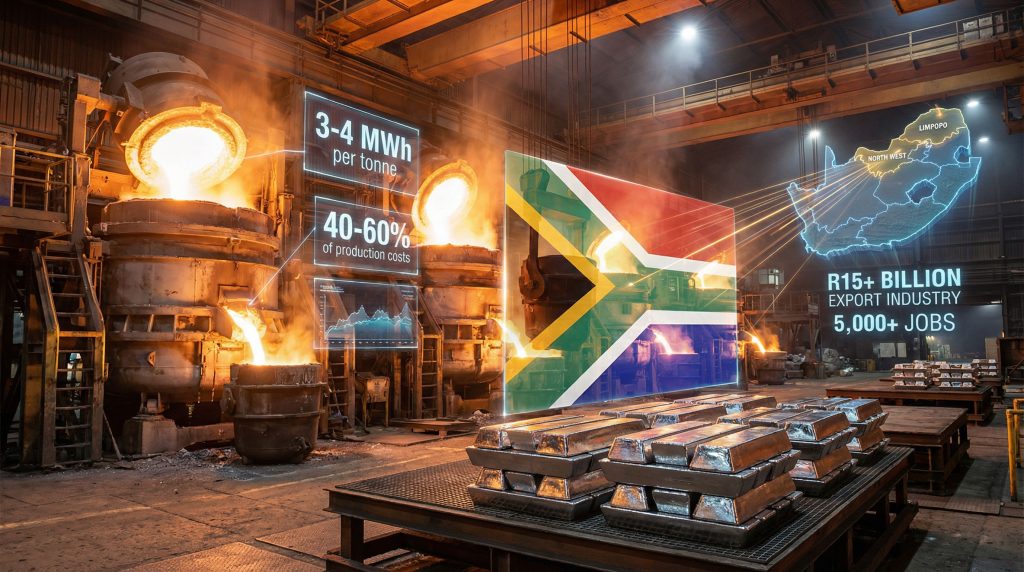
Industrial energy systems worldwide face unprecedented pressure to balance competitiveness with sustainability. South Africa's ferrochrome sector exemplifies this challenge, where electricity costs have reached levels that threaten entire industries. The recent Eskom ferrochrome smelters MoU between Eskom and major ferrochrome producers represents more than a tactical response to immediate crisis management. It signals a fundamental shift toward collaborative industrial policy frameworks that could reshape how energy-intensive manufacturing operates across emerging economies, particularly given the broader tariffs impact on investments affecting global industrial competitiveness.
Understanding South Africa's Ferrochrome Energy Crisis
What Makes Ferrochrome Smelting So Energy-Intensive?
Ferrochrome production demands continuous high-temperature operations that push electrical systems to their limits. The smelting process requires maintaining furnace temperatures above 1,600°C to effectively reduce chromite ore, creating an energy profile unlike most industrial operations.
Key Energy Requirements:
• Continuous operation: 24/7 energy consumption with minimal flexibility for load shedding
• Temperature consistency: Maintaining precise thermal conditions for metallurgical processes
• Scale economics: Large-scale production volumes to justify massive energy investments
• Grid stability: Requiring consistent power quality for sensitive furnace control systems
The electrical intensity creates a unique vulnerability where even modest tariff increases can fundamentally alter production economics. Unlike manufacturing processes that can adjust energy consumption based on pricing signals, ferrochrome smelting operates with limited flexibility once furnaces reach operating temperature.
Why Standard Electricity Tariffs Don't Work for Smelters
Traditional utility pricing structures developed for diverse customer bases create systematic mismatches with energy-intensive industrial operations. The fundamental issue stems from cost allocation methodologies that distribute grid infrastructure expenses across different customer segments.
Historical Tariff Evolution:
Since 2008, South African electricity tariffs have increased by over 900%, creating unprecedented pressure on industrial competitiveness. This dramatic escalation reflects broader utility financial challenges rather than operational efficiency improvements, with tariffs economic implications extending beyond South Africa to global industrial markets.
Structural Pricing Challenges:
• Peak demand penalties: Time-of-use charges that penalise continuous operations
• Cross-subsidisation: Industrial customers supporting residential and commercial rate structures
• Grid investment recovery: Infrastructure costs allocated across customer classes regardless of usage patterns
• Regulatory complexity: Multiple approval processes for specialised pricing arrangements
The mismatch between industrial energy needs and standard tariff design creates economic distortions that ultimately affect employment, export competitiveness, and regional development. Furthermore, standard residential-focused pricing models cannot accommodate the unique operational requirements of energy-intensive manufacturing.
When big ASX news breaks, our subscribers know first
Strategic Framework: Eskom's Multi-Stakeholder Approach
The Joint Task Team Model
The collaborative approach established through the December 8, 2025 MoU represents a significant departure from traditional utility-customer relationships. Rather than bilateral negotiations, the framework incorporates government policy objectives, labour concerns, and regulatory requirements into integrated decision-making processes.
Stakeholder Composition:
| Sector | Representatives | Primary Interests |
|---|---|---|
| Government | Dr Kgosientsho Ramokgopa (Minister) | Industrial policy, employment protection |
| Industry | Samancor Chrome, Glencore-Merafe | Operational viability, competitiveness |
| Labour | Organised labour representatives | Employment security, skills preservation |
| Utility | Eskom management | Financial sustainability, grid stability |
| Regulatory | NERSA oversight | Consumer protection, market balance |
Critical Employment Impact:
The Section 189 retrenchment processes initiated by both companies affect close to 5,000 workers, representing significant regional employment concentrations. This scale of potential job losses creates political and economic imperatives that extend beyond traditional commercial negotiations.
Eskom CEO Dan Marokane emphasised that the task team would develop strategies supporting industrial competitiveness whilst ensuring electricity-pricing solutions did not impose additional burdens on other customers. This commitment addresses historical criticism of cross-subsidisation practices in line with the Eskom ferrochrome smelters MoU.
Negotiated Pricing Agreements (NPAs) Evolution
The current crisis emerged despite regulatory approval of six-year NPAs in October 2023, highlighting the inadequacy of traditional pricing mechanisms during severe market downturns. Both Samancor Chrome and Glencore-Merafe activated hardship provisions earlier in 2025 as market conditions deteriorated beyond sustainable operating parameters.
NPA Implementation Timeline:
• October 2023: Six-year NPAs receive NERSA regulatory approval
• Early 2025: Market deterioration triggers hardship provision activation
• 2025: Eskom applies for take-or-pay obligation waivers
• December 2025: Emergency task team formation and MoU development
The progression demonstrates how even sophisticated pricing agreements require additional flexibility mechanisms during extreme market stress. Take-or-pay obligation waivers approved by NERSA provided temporary operational stability, but insufficient long-term certainty for investment and employment decisions.
Hardship Provision Mechanisms:
These contractual provisions allow automatic pricing adjustments when predetermined market conditions occur. However, the experience indicates that even these safeguards proved insufficient for maintaining viable operations, necessitating additional government intervention and stakeholder coordination.
Economic Impact Analysis: Beyond Electricity Pricing
Industrial Competitiveness Metrics
South Africa's ferrochrome industry operates within global commodity markets where cost competitiveness directly determines market share and export viability. The electricity cost component represents a significant portion of total production expenses, creating vulnerability to tariff volatility that extends beyond individual company finances.
Global Market Context:
Ferrochrome production concentrates in countries with abundant chromite ore deposits and competitive energy costs. South Africa competes primarily with China, Kazakhstan, and India, where different energy policy frameworks create varying cost structures for similar production processes. Additionally, the trade war commodity impact has intensified competitive pressures across global markets.
Export Market Implications:
The potential closure of additional smelting capacity threatens South Africa's position as a major ferrochrome supplier to global stainless steel production. China's dominance in stainless steel manufacturing creates concentrated demand that South African producers must serve competitively or risk permanent market share loss.
Value Chain Integration:
• Upstream: Chrome ore mining operations providing feedstock
• Midstream: Ferrochrome smelting and processing facilities
• Downstream: Stainless steel and speciality alloy applications
• Supporting: Transportation, maintenance, and technical services
Disruption at the smelting level affects entire regional industrial ecosystems, creating multiplier effects that extend beyond direct employment figures.
Employment and Regional Development
The 5,000 workers facing potential retrenchment represent specialised metallurgical expertise accumulated over decades of industrial development. These positions require technical skills and operational knowledge that cannot be easily replaced once lost from the regional economy.
Skills Preservation Challenges:
• Specialised knowledge: Furnace operation and maintenance expertise
• Metallurgical understanding: Process optimisation and quality control capabilities
• Safety protocols: High-temperature industrial safety and emergency response
• Equipment familiarity: Facility-specific technical knowledge and troubleshooting
Regional development implications extend beyond direct employment through supporting business networks, local procurement relationships, and community economic activity. Ferrochrome facilities typically anchor broader industrial clusters that create interdependent economic relationships.
The preservation of industrial capacity requires balancing immediate cost pressures with long-term strategic value creation for regional economies.
Technical Solutions: Furnace Capacity Management
Operational Flexibility Strategies
The commitment to bring 40% of furnace capacity back online represents a carefully calibrated approach to production resumption. This partial restart strategy allows companies to respond to improved pricing conditions whilst maintaining technical capability for full production restoration.
Phased Production Approach:
-
Furnace assessment: Evaluating equipment condition after shutdown periods
-
Staged restart: Bringing individual furnaces online sequentially
-
Capacity optimisation: Adjusting production levels based on market conditions
-
Full restoration: Scaling to complete operational capacity as conditions improve
The 40% capacity threshold appears designed to maintain technical viability whilst managing operational costs during the interim tariff adjustment period. This approach preserves industrial infrastructure whilst providing flexibility for market-responsive production adjustments under the Eskom ferrochrome smelters MoU.
Furnace Hibernation Considerations:
High-temperature industrial furnaces require specialised maintenance during shutdown periods to prevent permanent equipment damage. The technical complexity of restarting metallurgical facilities creates significant costs and operational risks that influence strategic decision-making beyond simple economic calculations.
Energy Demand Integration
Controlled industrial loads can provide grid stability benefits through predictable consumption patterns and potential demand response capabilities. Ferrochrome smelters represent substantial, consistent electricity demand that can support grid planning and renewable energy integration strategies.
Grid Integration Advantages:
• Load predictability: Consistent consumption profiles for system planning
• Demand response potential: Controllable loads during system stress
• Infrastructure utilisation: Supporting transmission and distribution efficiency
• Renewable integration: Providing base load complementing variable renewable sources
Smart grid technologies could enable more sophisticated load management arrangements that benefit both industrial customers and system operators. However, implementing such capabilities requires significant technical investment and regulatory framework development, particularly considering broader electrification and decarbonisation trends affecting the sector.
Regulatory Framework: NERSA's Interim Tariff Mechanisms
Interim Tariff Adjustment Process
NERSA's processing of interim tariff adjustment applications represents a critical pathway for addressing emergency pricing situations whilst maintaining regulatory oversight. The current application demonstrates how traditional approval processes must adapt to crisis management requirements.
Regulatory Processing Status:
NERSA is currently reviewing the interim tariff adjustment application, with approval triggering the commitment to suspend Section 189 retrenchment processes. This timeline creates immediate employment implications tied to regulatory decision-making under the framework established by the Eskom and ferrochrome producers memorandum.
Approval Criteria Balance:
• Economic viability: Ensuring pricing supports sustainable operations
• Consumer protection: Preventing undue burden shifts to other customer classes
• Market stability: Maintaining competitive industrial capacity
• Regulatory precedent: Establishing frameworks for similar future applications
The interim tariff mechanism provides emergency relief whilst longer-term solutions develop through the three-month complementary mechanism timeline established in the MoU.
Cross-Subsidy Protection Mechanisms
Historical NPA arrangements have transferred costs to standard tariff customers, creating regulatory and political challenges for expanded industrial support programmes. Eskom's commitment to protecting other customers from additional cost burdens represents a significant policy shift requiring new implementation approaches.
Protection Challenges:
The Eskom ferrochrome smelters MoU acknowledges that previous NPAs have been financed through standard tariff customer contributions, but provides limited details regarding how future arrangements will avoid similar cross-subsidisation. This represents a critical implementation gap requiring innovative regulatory solutions.
Potential Mechanisms:
• Ring-fenced funding: Separate financing sources for industrial support programmes
• Government contributions: Direct fiscal support for strategic industries
• Market-based solutions: Competitive pricing structures reducing subsidy requirements
• Transparency requirements: Public reporting on cost allocation methodologies
Developing effective cross-subsidy protection requires coordinating utility financial management, regulatory oversight, and government industrial policy objectives within coherent implementation frameworks.
Market Dynamics: Chrome Ore Export Tax Controversy
Trade Policy Alternatives Analysis
The rejection of government proposals for chrome ore export taxation highlights fundamental tensions between resource beneficiation objectives and industrial competitiveness requirements. Chrome producers and ferrochrome smelters argued that export taxes would fail to address underlying electricity cost challenges whilst potentially undermining export competitiveness.
Export Tax Policy Rationale:
• Beneficiation incentives: Encouraging local value-added processing
• Government revenue: Generating fiscal resources from mineral exports
• Strategic resource management: Prioritising domestic industrial development
• Economic diversification: Reducing dependence on raw material exports
Industry Opposition Arguments:
The ferrochrome sector maintained that export taxes would not improve smelter viability without addressing fundamental electricity cost competitiveness issues. This position emphasises that industrial policy measures must address root causes rather than creating additional cost pressures.
Alternative Policy Approaches:
• Direct industrial support: Targeted assistance for manufacturing facilities
• Energy policy reform: Addressing underlying utility cost structures
• Infrastructure investment: Improving competitive positioning through facility upgrades
• Market development: Supporting export market access and pricing optimisation
Global Supply Chain Considerations
South Africa's ferrochrome industry operates within global supply chains dominated by Chinese stainless steel production. This concentration creates both market opportunities and competitive vulnerabilities that influence domestic policy decisions.
Market Concentration Risks:
• Demand dependency: Reliance on Chinese stainless steel sector growth
• Price volatility: Exposure to global commodity market fluctuations
• Alternative suppliers: Competition from Kazakhstan, India, and other producers
• Trade policy impacts: Potential effects of international trade disputes
Strategic mineral designation trends globally suggest increasing government interest in securing supply chain control for critical materials. South Africa's position as a major chromite producer provides potential leverage in international negotiations, but requires maintaining competitive production capabilities in line with global mining industry developments.
The next major ASX story will hit our subscribers first
Financial Sustainability Models
Cost Recovery Mechanisms
Developing sustainable financing for industrial support programmes requires balancing utility financial health, customer protection, and economic development objectives. Traditional cost allocation methods prove inadequate for managing strategic industrial policy requirements within competitive electricity markets.
Funding Source Options:
| Mechanism | Advantages | Challenges |
|---|---|---|
| Direct government subsidy | Clear public policy support | Fiscal budget constraints |
| Utility cross-subsidisation | Established regulatory framework | Customer burden concerns |
| Development finance | Long-term strategic focus | Limited availability and terms |
| Market-based pricing | Economic efficiency | Competitiveness implications |
Long-term Viability Requirements:
Sustainable solutions must address both immediate crisis management and underlying structural challenges affecting industrial competitiveness. This requires coordinating electricity pricing reform, industrial policy development, and regulatory framework modernisation within coherent strategic approaches.
Risk Allocation Frameworks
Effective risk management requires distributing uncertainties across stakeholders based on capability and control rather than simply shifting burdens between parties. The MoU framework suggests movement toward shared risk approaches that recognise mutual dependencies.
Risk Categories:
• Market risk: Commodity price volatility and demand fluctuations
• Operational risk: Equipment reliability and maintenance requirements
• Regulatory risk: Policy changes and approval uncertainties
• Financial risk: Currency volatility and capital availability
Collaborative risk management enables more sophisticated hedging strategies and contingency planning than traditional bilateral utility-customer relationships. However, implementing such frameworks requires developing new contractual structures and performance monitoring capabilities.
Implementation Timeline and Milestones
Three-Month Development Phase
The MoU establishes a three-month timeline for finalising complementary mechanisms supporting competitive pricing pathways for the ferrochrome sector. This compressed schedule reflects the urgency of employment protection whilst requiring sophisticated policy coordination across multiple government departments and regulatory bodies.
Development Phase Activities:
• Mechanism design: Creating specific support structures and funding arrangements
• Stakeholder consultation: Ensuring industry, labour, and consumer representation
• Technical specification: Detailed pricing parameters and operational requirements
• Legal framework: Contract terms, enforcement mechanisms, and performance standards
The timeline suggests that preliminary policy frameworks already exist, requiring refinement and formal approval rather than complete development of new regulatory approaches.
Monitoring and Evaluation Framework
Effective implementation requires establishing clear success metrics and adaptive management processes that can respond to changing market conditions and policy effectiveness. The complexity of multi-stakeholder arrangements demands sophisticated performance monitoring capabilities.
Performance Indicators:
• Employment retention: Tracking job preservation and skills development
• Production levels: Monitoring capacity utilisation and output volumes
• Cost impacts: Measuring effects on different customer classes and utility finances
• Export competitiveness: Assessing market share and pricing performance
Quarterly review processes would enable adaptive management approaches that can adjust intervention parameters based on observed outcomes and changing market conditions. This flexibility appears essential for managing commodity market volatility and global competitive pressures affecting the Eskom ferrochrome smelters MoU.
Future Scenarios: Industrial Energy Policy Evolution
Scenario 1: Successful Model Replication
If the ferrochrome intervention achieves its stated objectives of maintaining industrial capacity whilst protecting other electricity customers, the framework could establish precedents for addressing similar challenges across energy-intensive industries. Aluminium, silicon, and steel sectors face comparable electricity cost pressures that might benefit from similar collaborative approaches.
Replication Potential:
• Aluminium smelting: Similar energy intensity and global competitiveness challenges
• Silicon production: High-temperature processing requirements and export orientation
• Steel manufacturing: Integrated production chains and employment concentration
• Mining processing: Beneficiation facilities requiring reliable electricity supply
Successful model replication could transform South Africa's approach to industrial policy by demonstrating effective coordination between energy provision, employment protection, and economic development objectives.
Scenario 2: Market-Driven Transition
Alternative scenarios might emphasise competitive market mechanisms rather than negotiated intervention frameworks. This approach would prioritise electricity market liberalisation, renewable energy integration, and private sector investment in industrial efficiency improvements.
Market Transition Elements:
• Multiple supplier options: Competitive electricity procurement for industrial customers
• Renewable integration: Industrial-scale solar and wind project development
• Energy storage deployment: Battery systems enabling load balancing and cost optimisation
• Grid modernisation: Smart infrastructure supporting flexible industrial operations
Market-driven approaches might reduce regulatory complexity whilst requiring substantial private investment and technological modernisation. The effectiveness would depend on developing competitive electricity markets and supporting infrastructure, particularly as the mining industry evolution continues transforming operational models.
Scenario 3: Policy Framework Expansion
The most ambitious scenario involves developing comprehensive national industrial strategies that coordinate energy policy, trade policy, skills development, and regional development within integrated frameworks. This approach would treat the ferrochrome intervention as one component of broader economic transformation initiatives.
Strategic Integration Opportunities:
• Regional cooperation: SADC energy and industrial development coordination
• Technology transfer: International partnerships for efficiency improvements and modernisation
• Skills development: Training programmes aligned with industrial transformation requirements
• Infrastructure investment: Coordinated development of energy, transport, and telecommunications systems
Comprehensive policy frameworks could position South Africa as a leader in sustainable industrial development whilst maintaining competitiveness in global markets. However, implementation would require unprecedented coordination across government departments, regulatory bodies, and private sector stakeholders.
Disclaimer: This analysis is based on publicly available information and should not be considered investment advice. Commodity markets and industrial policy developments involve significant uncertainties that can affect outcomes differently than projected. Readers should conduct independent research and consult qualified professionals before making business or investment decisions.
Ready to Discover the Next Industrial Investment Opportunity?
Discovery Alert's proprietary Discovery IQ model delivers real-time alerts on significant ASX mineral discoveries, helping investors identify actionable opportunities ahead of broader market awareness. Whether tracking industrial metals like chrome or exploring emerging commodities, Discovery Alert's platform transforms complex mining data into clear investment insights. Begin your 30-day free trial today to position yourself ahead of industrial transformation trends shaping tomorrow's markets.