June 18, 2026
Understanding the Strategic Context Behind Major Fertilizer Consolidation
Global fertilizer markets are experiencing a fundamental transformation as producers confront unprecedented cost pressures and supply chain challenges. The Mosaic phosphates plant closure Brazil represents a significant development in this evolving landscape, where companies face a perfect storm of sulfur price volatility, oversupply conditions, and intensified competition for capital allocation, forcing difficult decisions about facility rationalisation.
Market Dynamics Forcing Industry-Wide Adjustments
According to the U.S. Geological Survey Mineral Commodity Summaries 2025, global phosphate rock production reached approximately 232 million tonnes in 2024, yet market conditions have deteriorated significantly. The International Fertilizer Association reported that phosphate fertiliser prices declined approximately 22% year-over-year from Q1 2024 to Q1 2025, creating margin compression across the sector.
Sulfur price volatility has emerged as a critical pressure point for phosphate producers. World Bank commodity data indicates sulfur prices remained elevated at $180-200 per tonne in April 2026, compared to historical averages of $120-140 per tonne. Furthermore, this volatility directly impacts phosphoric acid production costs, where sulfuric acid represents 40-45% of DAP/MAP production expenses.
The oversupply situation has reached concerning levels. World Bank Commodity Markets database reported global phosphate rock mine production exceeded apparent consumption by 8-12 million tonnes annually during 2024-2025, representing the largest supply surplus since 2016-2017. Consequently, this excess capacity has driven global DAP production capacity utilisation down to 73% in Q1 2026, well below the historical average of 85-90%.
The Economics of Phosphate Plant Rationalisation
Integrated phosphate mining and processing facilities carry significant fixed cost burdens that become particularly problematic during market downturns. Mining infrastructure maintenance, environmental monitoring, workforce overhead, and processing plant depreciation typically represent 50-65% of total operating costs regardless of production volumes.
When facilities operate at 50% capacity utilisation during market stress, unit costs can escalate 40-60% above nameplate capacity levels. This cost structure reality makes marginal production economically unfavourable and explains why companies are pursuing aggressive industry consolidation strategies.
Transportation logistics add another layer of complexity. Brazilian phosphate producers face 8,000-12,000 kilometre distances to key export markets in North America and Europe, compared to less than 2,000 kilometres for Moroccan and Tunisian competitors. This geographic disadvantage creates a $20-35 per tonne delivered cost penalty for regional markets and $10-15 per tonne for global markets.
Environmental compliance costs further pressure Brazilian operations. Brazil's regulatory framework requires phosphate producers to maintain phosphogypsum stacks with advanced containment systems and long-term monitoring obligations. According to Brazilian National Environmental Institute data, compliance and remediation costs range from $8-15 per tonne of phosphate produced, approximately 2.5-3 times higher than North African producers facing less stringent oversight.
When big ASX news breaks, our subscribers know first
How Do Brazilian Phosphate Operations Fit Into Global Supply Chain Strategy?
Brazil's position in global phosphate markets reflects both significant resources and structural limitations. The country holds approximately 260 million tonnes of phosphate rock reserves according to USGS data, positioning it fourth globally behind Morocco's 50 billion tonnes, China's 3.7 billion tonnes, and Algeria's 2.7 billion tonnes.
Brazil's Role in International Fertiliser Production
| Metric | Brazil's Position | Global Context |
|---|---|---|
| Phosphate rock reserves | 260 million tonnes (4th globally) | 0.4% of global reserves |
| Annual production capacity | 6.5-7.0 million tonnes | 3% of global output |
| Domestic consumption | 4.2-4.5 million tonnes | Growing agricultural demand |
| Regional market share | 40-50% of South America | Strategic but limited |
Brazilian phosphate production serves three primary markets: domestic consumption accounts for 60-65% of production, regional exports to Argentina, Paraguay, and Uruguay represent 25-30%, while niche global markets absorb the remaining 5-10%. This distribution pattern reveals Brazil's regional focus rather than global market participation.
The Cerrado region, where the Mosaic phosphates plant closure Brazil affects the Araxá and Patrocínio facilities, accounts for approximately 85% of Brazil's phosphate rock production. For instance, this geographic concentration creates both operational efficiencies and supply chain vulnerabilities.
Strategic Asset Portfolio Optimisation
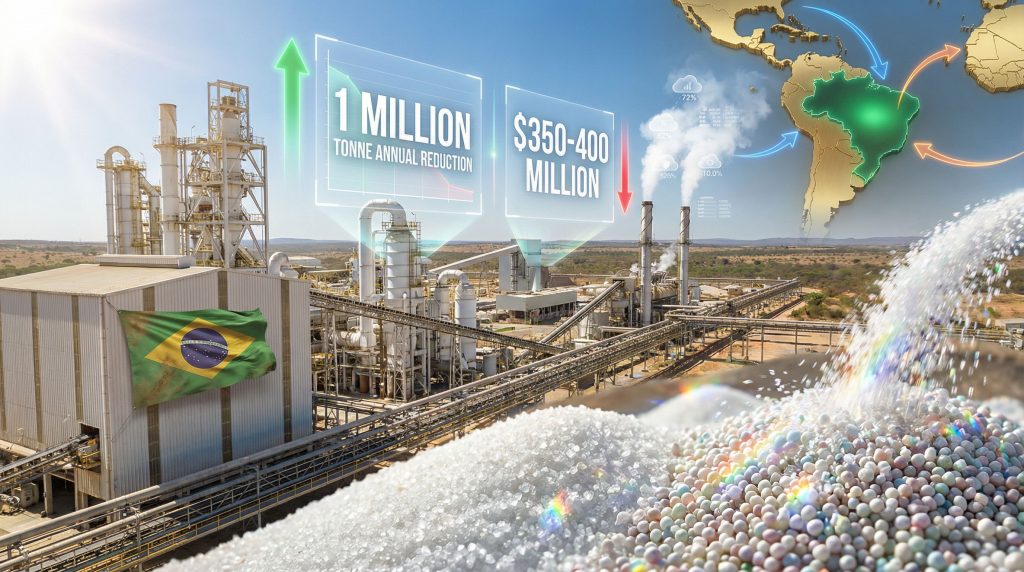
The announced closure of 1 million tonnes of annual capacity represents approximately 14-15% of total Brazilian phosphate capacity. While this reduction equals only 0.4% of global production, the regional impact proves more significant given transportation costs and established supply relationships.
South American phosphate fertiliser imports total approximately 2.2 million tonnes annually, with Brazil historically supplying 40-50% of regional requirements. The mine reclamation trends associated with the Mosaic phosphates plant closure Brazil decision forces regional importers toward Moroccan, Tunisian, and Chinese suppliers, potentially adding $15-25 per tonne in transportation costs.
However, geographic diversification historically provided companies with operational flexibility, but current market conditions favour concentrated production in lower-cost locations. The shift represents a fundamental change from market share maximisation to profitability optimisation.
What Are the Financial Implications of Large-Scale Plant Closures?
The financial impact of major fertiliser plant closures extends far beyond immediate shutdown costs, encompassing asset impairments, workforce transitions, and long-term operational restructuring.
Immediate Financial Impact Structure
| Cost Category | Estimated Range (USD) | Timeline |
|---|---|---|
| Asset impairments | $275-300 million | Q1 2026 |
| Severance and termination | $75-100 million | 2026-2027 |
| Closure and remediation | $50-75 million | 2026-2028 |
| Total pre-tax impact | $350-400 million | Multi-year |
Asset impairments represent the largest component, reflecting write-downs of phosphate processing equipment, mining infrastructure, and land values. The magnitude indicates substantial invested capital that cannot be economically recovered under current market conditions.
Severance and termination costs, estimated at $75-100 million, suggest significant workforce reductions affecting an estimated 1,500-2,500 employees based on typical industry ratios. These costs reflect Brazil's robust worker protection regulations and negotiated settlement agreements.
Environmental closure and remediation expenses of $50-75 million underscore the long-term obligations associated with phosphate operations. These costs include phosphogypsum stack capping, water treatment facility decommissioning, and ongoing monitoring requirements mandated by Brazilian environmental authorities.
Long-term Operational Benefits
Annual operational benefits provide the economic justification for closure decisions:
- CAPEX reduction: $20-30 million annually in eliminated mine development, equipment maintenance, and facility upgrades
- OPEX savings: $70-80 million yearly through workforce elimination, energy cost reduction, and raw material handling cessation
- Net annual benefit: $90-110 million in steady-state savings after stabilisation
The payback analysis reveals approximate recovery periods of 3.2-4.4 years, assuming constant operational savings and no market price recovery. This timeline demonstrates management confidence in sustained market weakness and validates the strategic decision to exit rather than maintain operations.
How Will This Impact Global Phosphate Supply-Demand Dynamics?
The removal of 1 million tonnes of annual phosphate capacity from Brazilian operations creates both immediate supply adjustments and longer-term market rebalancing effects across global fertiliser markets.
Production Capacity Adjustments
While the reduction represents only 0.4% of global phosphate production capacity, regional impacts prove more pronounced. South American agricultural markets face particular adjustment challenges as traditional supply relationships shift toward longer-distance providers.
Argentina, importing approximately 450,000 tonnes annually with 35-40% historically sourced from Brazil, must now source 60% or more from Morocco and Tunisia. This transition adds an estimated $8-12 million annual cost burden to Argentine agricultural operations.
Paraguay and Uruguay, traditionally dependent on competitive Brazilian pricing, face similar supply chain restructuring. Paraguay's 180,000 tonnes annual phosphate imports and Uruguay's 80,000 tonnes must find alternative suppliers at higher transportation costs.
Competitive Landscape Implications
According to Mosaic's official announcement, the closure represents a strategic withdrawal from marginal production rather than temporary market adjustment, signalling industry recognition that lower-cost producers will capture displaced demand permanently.
Remaining efficient facilities experience improved capacity utilisation as demand redistributes. Moroccan and Tunisian producers, enjoying 30-40% cost advantages versus Brazilian operations, can expand market share while maintaining healthy margins.
Investment acceleration in lower-cost production regions becomes economically attractive as regional supply tightens. North African producers particularly benefit from both cost advantages and geographic proximity to major agricultural markets.
The pricing power enhancement in regional markets may prove temporary as new supply sources establish distribution relationships and transportation logistics optimise over 12-18 month periods.
What Does This Signal About Future Industry Consolidation?
The fertiliser sector appears to be entering a phase of disciplined capacity management, with producers prioritising returns over market share growth. This strategic shift reflects fundamental changes in industry evolution trends and competitive dynamics.
Broader Fertiliser Sector Trends
Asset rationalisation has become standard practice across major producers facing similar cost pressures. Nutrien Limited reduced Brazilian phosphate production capacity by approximately 800,000 tonnes during 2024-2025, citing sulfur cost pressures and regional market saturation. Similarly, CF Industries maintained stable North African operations while rationalising North American assets, demonstrating cost-based geographic selection.
Technology upgrades receive investment priority over capacity expansion as companies focus on operational efficiency rather than volume growth. This shift recognises that phosphate markets operate as buyer-dominated commodity markets where additional volume provides minimal pricing uplift.
Sustainability transformations increasingly drive operational decisions as environmental regulations tighten globally. Brazilian operations face particularly stringent requirements that add structural cost burdens compared to operations in less regulated jurisdictions.
Investment Implications for Fertiliser Markets
| Scenario | Probability | Market Impact |
|---|---|---|
| Further industry consolidation | High | Improved pricing discipline |
| Regional supply disruptions | Medium | Temporary price volatility |
| Accelerated technology adoption | High | Long-term cost reductions |
| Environmental regulation tightening | High | Additional closure pressures |
Future industry structure likely favours larger, more efficient producers with geographic advantages and superior cost positions. Smaller or marginal operations face increasing pressure as fixed costs remain elevated while commodity price dynamics remain volatile.
The consolidation trend suggests that fertiliser supply chains will become more concentrated in lower-cost regions, potentially reducing global supply redundancy but improving overall industry profitability.
How Should Agricultural Stakeholders Prepare for Supply Chain Changes?
Agricultural stakeholders must adapt procurement strategies and risk management approaches to navigate evolving fertiliser supply chains and potential price volatility during industry restructuring.
Risk Management Strategies for Farmers
Diversified supplier relationships become essential to reduce dependency on single sources during industry transitions. The Mosaic phosphates plant closure Brazil demonstrates how quickly established supply arrangements can change, requiring agricultural operators to maintain multiple vendor relationships.
Forward contracting provides price protection and supply security during transition periods when new supply sources establish distribution networks. Agricultural producers should consider extending contract horizons beyond traditional seasonal patterns to ensure availability.
Alternative nutrient management approaches deserve increased attention as fertiliser costs potentially rise. Precision agriculture technologies, soil testing optimisation, and organic supplement integration can reduce fertiliser intensity while maintaining crop yields.
Regional sourcing strategies should prioritise suppliers with stable operational profiles and diversified production assets. Single-facility suppliers face higher closure risks during market downturns compared to integrated producers with geographic diversification.
Strategic Considerations for Agricultural Investors
Fertiliser price volatility creates both investment risks and opportunities across agricultural value chains. Investors should monitor supply chain disruptions that may create temporary pricing dislocations in regional markets.
Regional market dynamics vary significantly based on supply proximity and transportation infrastructure. South American agricultural investments may face higher input cost pressures as traditional Brazilian supply sources are replaced by longer-distance providers.
Technology adoption trends potentially reduce fertiliser intensity over time through precision application, soil health improvements, and crop variety optimisation. Investment themes should consider both higher input costs and reduced fertiliser dependency as offsetting forces.
Furthermore, sustainability considerations influence long-term demand patterns as environmental regulations and carbon footprint concerns drive agricultural practice changes. These trends may favour organic production methods and reduced chemical input dependency.
The next major ASX story will hit our subscribers first
What Are the Broader Implications for Resource Sector Asset Management?
The strategic rationalisation of phosphate operations provides valuable lessons for resource sector portfolio optimisation and asset management during commodity market cycles.
Portfolio Optimisation Lessons
Regular asset performance reviews prove essential for maintaining competitiveness as market conditions evolve rapidly. Companies that wait for severe distress signals often face more costly adjustment processes and limited strategic options.
Geographic concentration risks require balanced evaluation against operational efficiencies. While diversification provides market access and risk reduction benefits, cost competitiveness ultimately determines long-term viability across commodity markets.
Market cycle timing critically influences restructuring success as stakeholder negotiations, asset valuations, and alternative use options vary significantly across economic conditions. Early action during market weakness often produces better outcomes than crisis-driven responses.
Stakeholder communication maintains credibility and reduces regulatory complications during major operational changes. Transparent disclosure of strategic rationale and timeline management helps preserve relationships essential for future operations.
Future Industry Structure Predictions
"The fertiliser industry appears to be entering a phase of disciplined capacity management, with producers prioritising returns over market share growth through systematic elimination of higher-cost production assets." This strategic outlook reflects broader trends documented by industry analysts.
Resource allocation increasingly favours lowest-cost producers with sustainable competitive advantages rather than geographic market share optimisation. This shift reflects commodity market maturation and investor demands for capital discipline.
Environmental compliance costs continue escalating globally, creating structural advantages for operations in jurisdictions with stable regulatory frameworks and reasonable compliance requirements. Producers must evaluate long-term regulatory risk alongside current cost structures.
Technology integration becomes critical for maintaining cost competitiveness as traditional operational improvements reach diminishing returns. Companies that successfully integrate automation, process optimisation, and environmental management technologies will capture market share from less efficient competitors.
Investment Considerations: Agricultural commodity stakeholders should monitor ongoing industry consolidation trends while developing supply chain resilience strategies that account for potential future disruptions and cost escalation in fertiliser markets.
Disclaimer: This analysis contains forward-looking statements and projections based on current market conditions and industry trends. Actual outcomes may differ materially due to commodity price volatility, regulatory changes, and unforeseen market developments. Readers should conduct independent research and consult qualified advisors before making investment decisions.
Ready to Capitalise on Strategic Mining Industry Shifts?
Discovery Alert's proprietary Discovery IQ model delivers real-time alerts on significant ASX mineral discoveries, instantly empowering subscribers to identify actionable opportunities ahead of the broader market. Begin your 14-day free trial today and secure your market-leading advantage whilst major industry consolidation creates new investment landscapes.