June 15, 2026
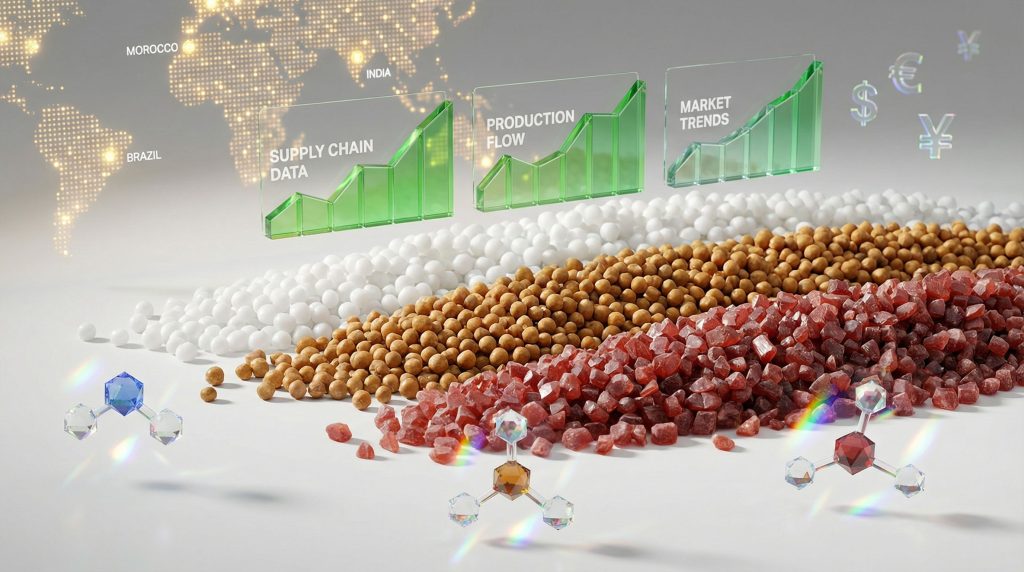
Global fertilizer markets continue navigating unprecedented structural transformations as producers and distributors adjust to evolving economic pressures across key agricultural regions. The fertilizer market moves after FLA conference have highlighted how the convergence of regulatory changes, supply chain consolidation, and shifting credit dynamics has created a complex landscape where traditional pricing mechanisms are being fundamentally reshaped.
Regional Supply Chain Disruptions Reshape Global Fertilizer Trade Patterns
Recent developments in global fertilizer markets reflect deeper macroeconomic forces that extend beyond seasonal demand fluctuations. Production constraints in major export regions have created opportunities for price coordination across different nutrient categories, while importers face increasingly challenging credit conditions.
Brazil's fertilizer procurement patterns demonstrate how credit availability has become a critical determinant of purchasing decisions. Traditional financing mechanisms for agricultural inputs have experienced significant strain as grain-to-fertilizer price ratios deteriorated across South American markets.
This financial pressure has forced distributors to adopt more strategic timing for their import commitments. Furthermore, the impact of US economy tariffs has created additional complexity for international fertilizer trade flows.
The mismatch between buyer expectations and seller pricing has become particularly pronounced in nitrogen markets, where Chinese production decisions continue influencing global supply availability. Caprolactam production adjustments in China have created ripple effects throughout ammonia and urea markets, demonstrating the interconnected nature of chemical and fertilizer value chains.
Key factors driving current market dynamics include:
- Tightened agricultural credit conditions affecting farmer purchasing power
- Strategic inventory management by major importing countries
- Production optimization in energy-intensive manufacturing regions
- Currency volatility impacting import costs across emerging markets
When big ASX news breaks, our subscribers know first
Carbon Border Adjustments Transform European Fertilizer Import Economics
European Union carbon border adjustment mechanisms (CBAM) implementation has fundamentally altered competitive dynamics within potash and phosphate markets. The economic impact extends beyond direct compliance costs, creating strategic advantages for producers with lower carbon footprints while penalising traditional suppliers.
Potash importers face significant affordability challenges as CBAM compliance costs compound existing logistical expenses. European agricultural markets have begun showing signs of demand substitution, with farmers exploring alternative nutrient sources to manage input cost inflation.
The regulatory framework has created distinct market segments. In addition, decarbonisation benefits are becoming increasingly important for competitive positioning.
Low-Carbon Certified Suppliers
Producers with verified emissions profiles can command premium pricing while maintaining market access. This category benefits from reduced compliance burden and enhanced competitive positioning.
Traditional Export-Oriented Producers
Legacy suppliers face mounting pressure to invest in emissions reduction technologies or accept reduced market share in European agricultural regions.
Integrated Value Chain Operators
Companies controlling multiple production stages can optimise carbon accounting across their operations, creating vertical integration advantages during the transition period.
Financial Market Conditions Constrain Agricultural Input Demand
Credit market tightening has emerged as a primary constraint on fertilizer demand patterns across multiple importing regions. Agricultural lending capacity has contracted as commodity price volatility increases creditworthiness assessment complexity for financial institutions.
Brazilian farmers particularly face challenges securing seasonal financing for nitrogen purchases required for second corn crop applications. The traditional credit cycle misalignment between fertilizer procurement timing and grain sales receipts has intensified under current market conditions.
Moreover, fertilizer market analysis suggests these credit constraints will continue affecting agricultural input accessibility throughout the growing season.
Regional banking sector health directly impacts agricultural lending capacity, creating geographic disparities in input accessibility that could affect global crop production patterns.
Working capital management pressures extend throughout fertilizer distribution networks, where intermediaries struggle to maintain inventory levels while managing extended payment terms from agricultural customers.
Critical financial constraints include:
- Seasonal cash flow mismatches between input costs and crop revenues
- Reduced credit lines for agricultural distributors
- Currency hedging costs for import-dependent markets
- Collateral valuation challenges amid commodity price volatility
Production Economics Drive Strategic Capacity Management
Energy cost differentials continue reshaping global fertilizer production economics, with natural gas price variations creating distinct competitive advantages across manufacturing regions. Integrated production models demonstrate superior margin resilience during periods of input cost volatility.
Ammonia production economics particularly benefit from backward integration strategies where producers control feedstock supply chains. This vertical integration provides operational flexibility during market volatility while ensuring raw material security. However, natural gas forecasts indicate continued price volatility ahead.
Natural Gas Price Correlation Impact
Production flexibility varies significantly across regions based on energy infrastructure and supply chain integration:
- Middle East: High gas cost advantage, medium production flexibility, high export capacity
- North America: Medium gas cost advantage, high production flexibility, medium export capacity
- Europe: Low gas cost advantage, low production flexibility, low export capacity
- Asia-Pacific: Variable gas cost advantage, medium production flexibility, variable export capacity
Phosphate production benefits from integrated sulphur supply chains, where producers can optimise margins across multiple product categories. Weather-related production constraints in Morocco have highlighted the concentration risks inherent in geographically focused supply chains.
Strategic capacity management decisions reflect long-term economic optimisation rather than short-term market responses. Plant utilisation rates across different regions demonstrate how producers balance market share preservation against margin optimisation.
Technology Adoption Transforms Operational Efficiency
Digital transformation initiatives within fertilizer production have accelerated as companies seek operational improvements amid margin pressure. Process efficiency gains from technology adoption provide competitive advantages that extend beyond direct cost reduction.
Environmental compliance requirements drive technology investment decisions, particularly in regions where regulatory standards continue tightening. Emissions reduction technologies represent both compliance necessities and potential competitive differentiators.
Innovation focus areas include:
- Automated production optimisation systems
- Predictive maintenance technologies
- Energy efficiency improvements across manufacturing processes
- Supply chain visibility platforms for inventory management
Infrastructure Investment Priorities Reflect Strategic Positioning
Port and logistics capacity expansions in major export regions demonstrate long-term strategic positioning for market share growth. Supply chain resilience investments have gained priority as companies recognise vulnerability to disruption events.
Transportation infrastructure limitations create bottlenecks that can significantly impact regional pricing dynamics. Rail and port capacity constraints particularly affect bulk commodity movements during peak seasonal demand periods.
Consequently, commodity market volatility has increased focus on infrastructure resilience as a risk mitigation strategy.
Regional development policies supporting fertilizer industry growth vary significantly, creating competitive advantages for producers in supportive jurisdictions while challenging operations in regions with restrictive frameworks.
Strategic Infrastructure Development
Investment priorities across major fertilizer regions focus on:
- Port terminal capacity expansion for bulk handling efficiency
- Rail network connectivity improvements for inland transportation
- Storage facility construction for seasonal demand management
- Pipeline infrastructure for integrated chemical operations
The next major ASX story will hit our subscribers first
Market Psychology Influences Trading Behavior
Buyer sentiment in fertilizer markets reflects broader agricultural commodity market uncertainty, with purchasing decisions increasingly influenced by macroeconomic outlook rather than immediate crop requirements. This psychological shift has extended typical procurement cycles as buyers seek optimal timing for major commitments.
Price discovery mechanisms have adapted to reflect the increased importance of forward-looking indicators rather than spot market conditions. Trading patterns demonstrate growing reliance on contract terms that provide flexibility amid volatile input costs.
Furthermore, tariffs impact investment decisions as market participants adjust their risk assessment frameworks.
Risk management approaches have evolved to address multiple uncertainty sources:
- Regulatory compliance cost variability
- Currency fluctuation exposure across international transactions
- Credit risk assessment for extended payment terms
- Supply chain disruption contingency planning
Long-Term Structural Implications for Agricultural Input Markets
The convergence of regulatory, financial, and technological changes suggests permanent structural transformation within global fertilizer markets. Traditional competitive advantages based solely on production scale or geographic proximity are being challenged by new performance criteria.
Sustainability metrics increasingly influence purchasing decisions as agricultural value chains respond to environmental pressures from consumers and regulators. This shift creates opportunities for producers capable of demonstrating verifiable environmental performance improvements.
For instance, recent fertilizer market moves after FLA conference discussions emphasised the growing importance of sustainability certification programmes.
Regional competitive positioning will likely reflect multiple factors beyond traditional cost structures:
- Carbon footprint verification capabilities
- Supply chain reliability during disruption events
- Financial stability for long-term partnership development
- Technology integration for operational efficiency
Investment Risk Assessment Framework
Geopolitical risks continue influencing fertilizer market dynamics as trade relationships evolve and regulatory frameworks change. Investment decisions must account for potential policy shifts that could alter competitive landscapes within specific markets.
Operational risks encompass both traditional factors like energy cost volatility and emerging considerations such as carbon pricing mechanisms. The complexity of risk assessment has increased as multiple variables interact across different time horizons.
Economic modelling for fertilizer market investments requires scenario analysis that considers various combinations of regulatory, technological, and market development pathways. Strategic positioning recommendations must account for uncertainty while identifying robust competitive advantages.
However, fertilizer market moves after FLA conference outcomes suggest that industry stakeholders are developing more sophisticated frameworks for navigating these complex risk environments.
This analysis is based on publicly available market information and industry observations. Investors should conduct independent research and consider consulting with qualified professionals before making investment decisions. Fertilizer market dynamics involve multiple risk factors that can significantly impact investment outcomes.
Ready to Capitalise on the Next Agricultural Commodity Opportunity?
Discovery Alert's proprietary Discovery IQ model delivers instant notifications on significant ASX mineral discoveries, including those in the fertiliser and agricultural sectors, giving subscribers actionable insights ahead of the broader market. Visit Discovery Alert's dedicated discoveries page to explore how historic mineral discoveries have generated substantial returns, then begin your 14-day free trial to position yourself ahead of market-moving announcements.