
August 14, 2026
How Financial Innovation is Reshaping Critical Mineral Processing Through Strategic Partnerships
Traditional mining operations require decades-long development cycles, extensive capital commitments, and significant geological uncertainty. Yet across global markets, institutional investors increasingly recognise that tailings reprocessing presents fundamentally different risk-return profiles. Rather than searching for new ore bodies beneath Earth's surface, these projects leverage existing mineral accumulations that represent decades of previous extraction activities. This strategic shift toward surface-based resources eliminates many conventional mining uncertainties while creating new frameworks for public-private environmental collaboration, particularly as demonstrated by the Cerro de Pasco Quiulacocha agreement.
When examining modern resource development models, the convergence of environmental remediation objectives with commercial mineral recovery represents an emerging investment category. Unlike traditional greenfield exploration projects, tailings reprocessing operations benefit from established infrastructure, known geological conditions, and defined regulatory pathways. For institutional investors evaluating long-term commodity exposure, these characteristics offer compelling alternatives to conventional mining industry evolution cycles.
When big ASX news breaks, our subscribers know first
What Does the Cerro de Pasco Quiulacocha Agreement Reveal About Peru's Mining Evolution?
Strategic Partnership Architecture in Environmental Remediation
The collaboration between Cerro de Pasco Resources and AMSAC establishes a comprehensive framework that transforms how legacy mining sites generate economic value while addressing environmental liabilities. AMSAC, Peru's state entity responsible for inherited environmental mining liabilities, operates as the institutional bridge between government remediation mandates and private sector technical capabilities.
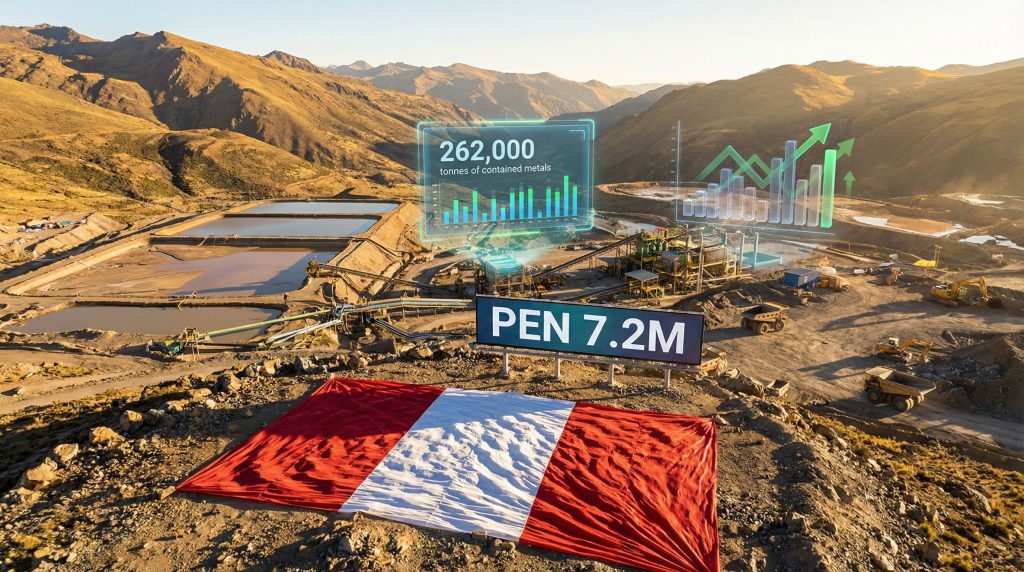
This partnership model reflects broader trends across Latin America where governments recognise that private sector expertise can accelerate environmental restoration while generating revenue streams for continued remediation activities. The financial structure demonstrates risk-sharing principles: an initial commitment of 7.2 million Peruvian soles (approximately US$2.1 million) over the agreement's initial term, with extension mechanisms contingent on documented technical and regulatory progress.
Furthermore, the agreement demonstrates innovative mining permitting strategies that streamline regulatory processes through established government partnerships.
Key Partnership Benefits:
- Elimination of two-year government easement limitations
- Comprehensive site access across 57-hectare deposit area
- Coordinated permitting pathway through established government channels
- Milestone-based extension framework reducing timeline uncertainty
- Integration with existing El Metalurgista concession operations
Comparative Analysis of Regional Tailings Development Models
Across Latin American mining jurisdictions, similar public-private frameworks have emerged as governments seek to balance environmental restoration with economic development. Chile's environmental remediation projects often involve direct government funding, while Colombia emphasises community participation in tailings management decisions. Peru's model through AMSAC represents a middle approach, combining state oversight with private sector operational responsibility.
The cost-benefit distribution in the Cerro de Pasco Quiulacocha agreement allocates operational risks to the private sector while maintaining government oversight of environmental outcomes. This structure appeals to institutional investors because it provides clear regulatory pathways without requiring navigation of multiple government agencies simultaneously.
How Does This Partnership Transform Surface Resource Economics?
Operational Advantages of Tailings Reprocessing
Surface-based mineral processing eliminates several major cost categories that characterise traditional mining operations. Drilling, blasting, and ore haulage represent significant capital and operational expenditures in conventional projects. Tailings reprocessing operations utilise existing surface accumulations, enabling direct application of processing technologies without underground development requirements.
The technical programme authorised by the agreement encompasses five integrated phases designed to characterise the resource comprehensively. These phases incorporate advanced mine reclamation innovation techniques that ensure environmental restoration alongside economic recovery.
- Resource Definition Drilling: Establishing spatial distribution and metal concentration patterns
- Geotechnical Assessment: Characterising material stability and engineering properties
- Hydrogeological Analysis: Mapping groundwater conditions and flow patterns
- Geophysical Surveys: Identifying subsurface structures and geological anomalies
- Environmental Baseline Studies: Documenting pre-development conditions for impact assessment
Financial Timeline and Development Milestones
The agreement's milestone-based structure aligns payment schedules with technical progress, reducing execution risk for both parties. Initial drilling activities target commencement in Q2 2026, approximately two months following the March 26, 2026 announcement date. This timeline positions resource estimation activities for completion during the latter half of 2026, enabling feasibility study development throughout 2027.
The US$5 million Development Finance Corporation commitment provides additional capital certainty, though disbursement schedules likely coordinate with drilling results and environmental impact assessment progress. In addition, this approach reflects broader trends in strategic antimony partnership financing models.
| Development Phase | Timeline | Key Deliverables |
|---|---|---|
| Drilling Programme Launch | Q2 2026 | Resource definition, geotechnical analysis |
| Resource Estimation | Q4 2026 | Preliminary mineral resource calculation |
| Environmental Assessment | 2027 | EIA development, community consultation |
| Feasibility Studies | 2027-2028 | Technical and economic viability assessment |
Why Did Markets Respond with 20%+ Share Price Appreciation?
Risk Mitigation Through Regulatory Certainty
The immediate market response reflected investor recognition of significantly reduced development risks. Prior to this agreement, Cerro de Pasco Resources operated under a limited government easement with two-year validity, creating uncertainty about long-term site access and development continuity. The new framework eliminates this constraint through formal government partnership that extends beyond traditional permitting relationships.
Market participants particularly value the coordinated access provision, which enables comprehensive technical assessment across the entire 57-hectare tailings footprint. This eliminates geographic constraints that previously prevented optimisation of processing workflows and environmental management strategies.
According to recent market analysis, the agreement represents a significant breakthrough that positions the company for accelerated development timelines.
Market Confidence Factors:
- Regulatory pathway clarification through formal AMSAC coordination
- Technical access certainty across entire deposit area
- Environmental compliance framework embedded in agreement structure
- Community engagement protocols through established institutional channels
- Timeline predictability via milestone-based extension mechanisms
Institutional Investor Perspective on Valuation Impact
The share price increase from approximately C$370 million to C$445 million market capitalisation represents more than just agreement announcement enthusiasm. Institutional investors recognise that tailings reprocessing projects offer superior risk-adjusted returns compared to greenfield exploration, particularly in established mining districts with known geological characteristics.
"The elimination of drilling, blasting, and haulage requirements fundamentally alters project economics, creating operating cost advantages that traditional mining operations cannot achieve."
Trading volume increases accompanying the price appreciation indicate broad institutional participation rather than speculative activity. This suggests professional investors view the Cerro de Pasco Quiulacocha agreement as materially improving project development probability and timeline predictability.
What Makes Quiulacocha a Globally Significant Surface Resource?
Historical Mining District Legacy
Located 175 kilometres northeast of Lima, the Cerro de Pasco mining district operated continuously for 86 years, creating substantial surface accumulations of processed material. The historical timeline encompasses two distinct phases: copper-dominated production from 1906 to 1965, followed by polymetallic extraction through 1992.
This extended operational period generated an estimated 262,000 tonnes of contained metals within the tailings deposit. The historical production data indicates systematic mineral extraction across multiple commodity cycles, suggesting diverse metal content that could support various processing approaches depending on current market conditions.
Technical Characteristics and Processing Potential
The 57-hectare surface footprint represents more than half of the El Metalurgista concession area, indicating the substantial scale of historical processing activities. Unlike underground resources that require extensive geological modelling, surface tailings enable direct sampling and characterisation of material properties and metal distributions.
Processing advantages include elimination of traditional mining stages:
- No drilling requirements – Material readily accessible at surface
- No blasting operations – Tailings already in processed form
- No haulage costs – Material positioned for direct processing
- No underground development – Surface operations only
These operational advantages create significant cost structure benefits compared to conventional mining projects, particularly important given current inflationary pressures on mining equipment and labour costs globally.
How Does This Agreement Align with Peru's Mining Modernisation Strategy?
AMSAC's Institutional Role in Environmental Restoration
AMSAC operates as Peru's specialised entity for managing inherited environmental mining liabilities, representing the government's systematic approach to addressing legacy contamination while generating economic value from remediation activities. This institutional framework enables coordinated responses to environmental challenges rather than site-by-site regulatory negotiations.
The partnership model demonstrates how environmental remediation objectives can align with commercial mineral recovery, creating sustainable financing mechanisms for ongoing restoration activities. Revenue generated through tailings processing can support broader environmental remediation initiatives across Peru's mining regions, particularly as critical minerals transition becomes increasingly important for global supply chains.
Regulatory Framework and Permitting Coordination
The agreement establishes integrated permitting pathways that coordinate multiple government agencies through AMSAC's established relationships. This reduces regulatory complexity while maintaining environmental oversight standards. The Environmental Impact Assessment development will proceed through established channels with clear government coordination rather than requiring separate negotiations with environmental, mining, and regional authorities.
Community consultation processes benefit from AMSAC's institutional relationships, providing established frameworks for stakeholder engagement rather than requiring development of new consultation protocols. This reduces both timeline uncertainty and community relations risks for project development.
The next major ASX story will hit our subscribers first
What are the Critical Success Factors for Project Development?
Technical Programme Execution Requirements
The comprehensive drilling and assessment programme requires coordination of multiple specialised contractors and equipment suppliers. High-altitude operations at Cerro de Pasco's elevation present technical challenges that require experienced operators and appropriate equipment specifications.
Critical Technical Milestones:
- Drilling Programme Initiation – Q2 2026 target requires equipment procurement and contractor selection
- Resource Estimation Completion – Foundation for all subsequent feasibility assessments
- Environmental Baseline Establishment – Required for EIA development and permitting
- Community Consultation Process – Government-coordinated stakeholder engagement
- Integrated Feasibility Assessment – Technical and economic viability determination
Strategic Positioning for Long-term Development
The agreement's extension mechanisms create incentives for consistent technical progress while providing flexibility for project optimisation. Rather than fixed-term arrangements, the milestone-based structure enables adaptation to technical findings and market conditions throughout development phases.
Integration with existing El Metalurgista concession operations provides infrastructure advantages and operational synergies. Shared equipment, personnel, and logistics capabilities reduce overall project development costs while accelerating implementation timelines.
How Does Quiulacocha Compare to International Tailings Projects?
Global Tailings Reprocessing Market Context
Internationally, tailings reprocessing has emerged as a significant growth sector within mining operations. Major mining companies increasingly recognise that historical tailings deposits often contain economically recoverable metals that were uneconomical to extract using previous technologies. Advances in processing efficiency and metal recovery techniques have transformed these legacy deposits into viable resources.
| Project Characteristic | Quiulacocha | Typical Tailings Projects |
|---|---|---|
| Surface Area | 57 hectares | 10-200 hectares (varies) |
| Historical Production | 86 years continuous | 20-50 years typical |
| Metal Content | 262,000 tonnes estimated | Highly variable |
| Processing Advantage | No drilling/blasting required | Similar surface operations |
| Regulatory Framework | Government partnership model | Varies by jurisdiction |
Investment Appeal of Surface Resource Projects
Tailings reprocessing attracts institutional investment because these projects offer several advantages over traditional mining ventures. Environmental benefits align with ESG investment criteria, while shorter development timelines and reduced capital requirements appeal to investors seeking faster returns. The elimination of exploration risk further enhances investment attractiveness.
However, as detailed in comprehensive project analysis, the Cerro de Pasco Quiulacocha agreement demonstrates how environmental remediation can generate commercial returns while addressing legacy environmental liabilities. This model creates precedents for similar projects across Latin America and globally, where governments seek private sector solutions for inherited environmental challenges.
Strategic Implications for Peru's Mining Investment Climate
Long-term Vision for Sustainable Resource Development
The AMSAC partnership model represents systematic evolution in Peru's approach to mining development, balancing economic growth with environmental restoration. By integrating private sector technical capabilities with government environmental oversight, this framework creates sustainable development pathways that benefit multiple stakeholders.
Technology transfer opportunities emerge through international best practices in tailings processing, potentially establishing Peru as a regional leader in sustainable mining approaches. The revenue generation from tailings reprocessing can fund broader environmental restoration initiatives, creating positive feedback loops for sustainable development.
Regional Economic Development Potential
The project's location near Lima provides infrastructure advantages and skilled labour access that support efficient operations. Regional economic benefits include employment creation, local procurement opportunities, and infrastructure development that supports broader economic activity.
Key Success Indicators for Stakeholders:
- Technical Achievement – Successful resource definition and processing optimisation
- Environmental Improvement – Measurable restoration of site conditions
- Economic Value Creation – Sustainable revenue generation for continued operations
- Community Benefits – Local employment and infrastructure development
- Regulatory Model Development – Precedent for similar projects across Peru
The Cerro de Pasco Quiulacocha agreement establishes a framework that transforms legacy mining sites from environmental liabilities into economic assets through strategic partnerships. This approach offers institutional investors exposure to resource development with reduced geological risk while advancing environmental restoration objectives. The model's success could influence similar partnerships across Latin America, where governments seek private sector solutions for inherited environmental challenges while creating sustainable economic opportunities.
Investment decisions should consider all relevant risks including commodity price volatility, regulatory changes, and technical execution challenges. This analysis is for informational purposes only and does not constitute investment advice.
Looking to Capitalise on ASX Mining Discoveries?
Discovery Alert's proprietary Discovery IQ model instantly identifies significant mineral discoveries across the ASX, delivering real-time alerts that transform complex geological data into actionable investment opportunities. Explore historic discovery returns and begin your 14-day free trial today to position yourself ahead of the market with advanced AI-powered insights.