
June 24, 2026
What Is Flash Joule Heating and How Does It Transform Metal Recovery?
Electrothermal processing technology represents a paradigm shift in how industries extract valuable metals from complex waste streams. At the forefront of this revolution stands Flash Joule Heating in metal recovery, a breakthrough methodology that harnesses electrical resistance heating to achieve unprecedented temperature gradients within microsecond timeframes, fundamentally altering the economics of metal recovery operations.
The underlying physics of this approach centers on rapid current application through conductive material matrices, creating localised heating zones that reach extreme temperatures instantaneously. This electrothermal mechanism triggers carbothermal reduction processes and bond-breaking reactions that conventional methods require hours or days to achieve.
Fundamental Physics Behind Electrothermal Metal Liberation
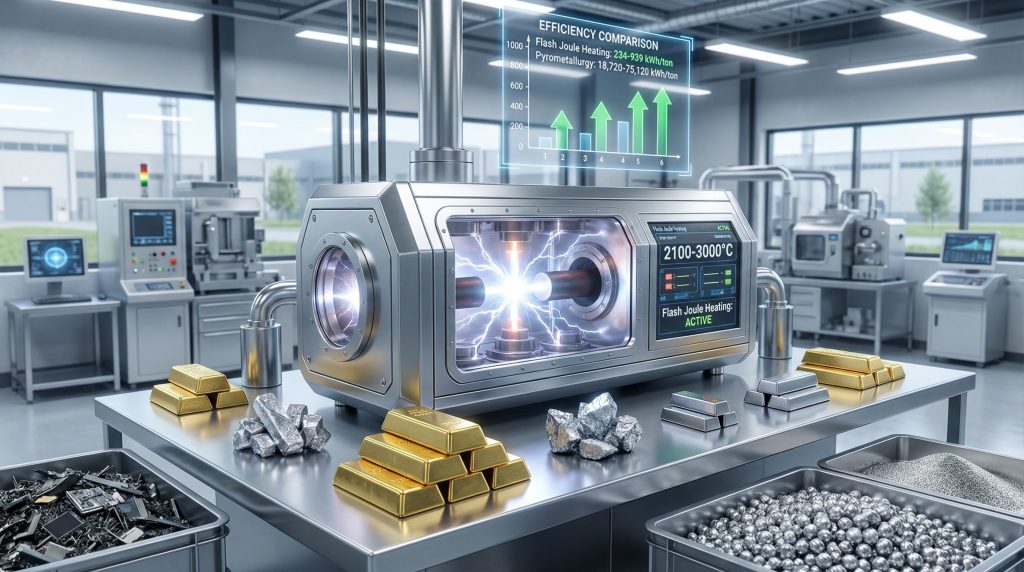
Flash Joule Heating in metal recovery operates through precise electrical resistance heating that generates temperatures between 2100-3000°C within milliseconds. The process applies pulsed direct current through specially prepared feedstock matrices containing conductive carbon additives, creating rapid thermal decomposition pathways that break chemical bonds in refractory compounds.
The technology requires specific feedstock preparation involving carbon black mixing ratios optimised for electrical conductivity. Processing time scales range from milliseconds to seconds, representing a dramatic acceleration compared to traditional pyrometallurgical operations that typically require hours of sustained heating.
Temperature control systems manage heating rates through precisely timed electrical pulses, ensuring optimal energy transfer while preventing excessive volatilisation of target metals. The rapid heating mechanism enables selective thermal treatment of different material components based on their thermal stability characteristics.
Core Technical Parameters and Operating Conditions
Operational deployment of flash joule heating tech requires sophisticated electrical infrastructure capable of delivering high-current pulses with precise timing control. Power delivery systems must accommodate varying feedstock compositions while maintaining consistent thermal profiles across processing batches.
Current specifications vary based on material type and target recovery efficiency, with electrical systems designed to handle variable resistance loads as feedstock composition changes. Processing chambers incorporate vacuum systems and cold trap infrastructure for volatile capture, ensuring comprehensive material recovery.
Material handling considerations encompass feedstock standardisation protocols, as confirmed by operational facilities targeting specific quality parameters for consistent processing performance. Environmental control systems including gas-scrubbing infrastructure address air quality management requirements during high-temperature operations.
When big ASX news breaks, our subscribers know first
How Does Flash Joule Heating Compare to Traditional Metal Recovery Methods?
Traditional metallurgical processing has relied on pyrometallurgical and hydrometallurgical approaches for centuries, each carrying inherent limitations in energy efficiency, environmental impact, and processing throughput. These conventional methods face mounting pressure from increasingly complex waste streams and stringent environmental regulations.
Energy Efficiency Analysis
| Recovery Method | Processing Time | Temperature Requirements | Chemical Inputs |
|---|---|---|---|
| Flash Joule Heating | Milliseconds-seconds | 2100-3000°C (localised) | Minimal |
| Pyrometallurgy | Hours-days | 1200-1600°C (sustained) | Flux materials |
| Hydrometallurgy | Days-weeks | 60-200°C | Extensive acid solutions |
The electrothermal approach demonstrates significant advantages in processing velocity, achieving material transformation rates that conventional methods cannot match. While traditional pyrometallurgy requires sustained high-temperature environments consuming massive energy inputs, Flash Joule Heating in metal recovery delivers targeted thermal treatment only when and where needed.
Environmental infrastructure requirements differ substantially between methodologies. Conventional processing demands extensive chemical handling systems, waste treatment facilities, and prolonged emission controls. Electrothermal systems require environmental control and gas-scrubbing systems, but operate with reduced chemical inputs and shorter emission periods.
Environmental Impact Comparison
Chemical consumption represents a critical differentiator between processing approaches. Traditional hydrometallurgical operations rely heavily on acid solutions, generating substantial wastewater streams requiring treatment before discharge. Furthermore, the mining decarbonisation benefits of advanced processing technologies operate with minimal chemical requirements for certain applications, particularly in rare earth element processing.
Waste stream characteristics vary dramatically between methodologies. Conventional processing generates multiple waste categories including chemical residues, contaminated water, and atmospheric emissions over extended periods. In addition, electrothermal processing concentrates waste generation into shorter timeframes with different composition profiles.
Carbon footprint analysis reveals complex trade-offs between energy intensity and processing duration. While Flash Joule Heating in metal recovery requires high instantaneous power delivery, the brief processing periods may result in lower overall energy consumption compared to sustained conventional operations.
Which Metal Types Can Be Recovered Using Flash Joule Heating Technology?
The versatility of electrothermal processing extends across diverse metal categories, from precious metals in electronic waste to critical materials in battery recycling applications. Current operational deployments demonstrate practical recovery capabilities for multiple metal types simultaneously.
Battery Metal Recovery Applications
Lithium extraction from battery black mass represents a significant application area for electrothermal processing technology. The process demonstrates high efficiency in breaking down solid electrolyte interphase (SEI) layers that impede conventional recovery methods, enabling enhanced leaching kinetics in subsequent processing steps.
Transition metal recovery encompasses cobalt, nickel, and manganese extraction from various battery chemistries. The technology's adaptability across different cathode compositions provides operational flexibility for facilities processing mixed battery waste streams, particularly in battery-grade lithium refinement applications.
Commercial deployment has focused initially on printed circuit board processing, with facilities targeting copper, gold, silver, and tin recovery from electronic waste feedstock. Operational plans include expansion to gallium and germanium recovery lines, contingent on feedstock availability and market demand.
Precious Metal Recovery from E-Waste
Electronic waste processing represents the most mature application area for electrothermal processing technology. Current operational facilities demonstrate recovery capabilities for gold, silver, and other precious metals from printed circuit boards and electronic components.
Platinum group metal extraction protocols utilise the technology's rapid heating capabilities to break down complex alloy structures, enabling enhanced separation of rhodium and palladium from electronic substrates. The process shows particular effectiveness in removing toxic metals including chromium and mercury from waste streams.
Halide-based evaporative separation techniques leverage the precise temperature control possible with electrothermal heating, enabling selective volatilisation of different metal species based on their thermal stability characteristics.
Rare Earth Element Processing
Neodymium-iron-boron (NdFeB) and samarium-cobalt (SmCo) magnet waste processing represents an emerging application area supported by government funding initiatives. Research collaborations between academic institutions and commercial entities focus on developing specialised processing protocols for permanent magnet recycling.
Chlorination methodology development demonstrates potential for achieving high-purity rare earth concentrates within seconds of processing time. The approach utilises selective volatilisation of non-rare earth materials, concentrating valuable elements for downstream purification.
Oxychloride concentration mechanisms leverage the rapid heating capabilities to achieve chemical transformations that conventional processing requires significantly longer timeframes to accomplish. Government support through Department of Defense funding indicates strategic interest in domestic rare earth recovery capabilities.
What Are the Technical Advantages of Flash Joule Heating Over Conventional Methods?
Operational excellence in metal recovery demands processing technologies that optimise throughput, minimise environmental impact, and maintain consistent product quality. Electrothermal processing addresses these requirements through fundamentally different operational approaches compared to conventional metallurgy.
Processing Speed and Throughput Benefits
The rapid kinetics enabled by this technology transform traditional processing timelines. Where conventional methods require extended reaction periods to achieve complete metal liberation, electrothermal processing accomplishes similar results within seconds or minutes.
Continuous processing capabilities represent a significant operational advantage over batch-oriented conventional methods. The technology enables steady-state operations with consistent feedstock input and product output, improving facility utilisation rates and operational predictability.
Scalability considerations favour electrothermal processing through modular reactor designs that can accommodate varying production requirements. Industrial implementation demonstrates successful scale-up from laboratory conditions to commercial throughput levels exceeding 8,000 metric tons per year.
Chemical and Environmental Benefits
Acid consumption reduction represents a major environmental advantage in certain applications. Rare earth element recovery protocols demonstrate acid-free processing capabilities, eliminating the extensive chemical handling infrastructure required by conventional hydrometallurgical approaches.
Water consumption minimisation results from reduced chemical processing requirements and shorter reaction periods. Environmental permitting processes confirm compliance with regulatory standards, indicating successful environmental impact mitigation compared to traditional processing methods.
Waste generation characteristics differ substantially from conventional approaches, concentrating environmental impacts into shorter timeframes while reducing overall chemical waste production. Gas-scrubbing systems address atmospheric emissions during brief processing periods rather than sustained operations.
Economic Efficiency Factors
Capital expenditure requirements for electrothermal processing facilities demonstrate competitive positioning relative to conventional processing infrastructure. Integrated facility designs encompassing all necessary processing, environmental, and analytical systems enable streamlined operations within consolidated footprints.
Operating cost structures benefit from reduced chemical consumption, shorter processing cycles, and lower maintenance requirements compared to traditional pyrometallurgical or hydrometallurgical operations. Labour requirements focus on skilled technical operations rather than extensive manual handling of chemical processing systems.
Recovery yield improvements contribute significantly to project economics through enhanced valuable metal extraction rates. The technology's ability to process complex waste streams that conventional methods struggle with opens additional feedstock opportunities and revenue streams.
How Is Flash Joule Heating Technology Being Commercialised?
The transition from academic research to commercial deployment represents a critical phase in technology development, requiring successful integration of technical capabilities with regulatory compliance and market demand. Current commercialisation efforts demonstrate practical pathways from laboratory validation to industrial operation.
Current Industrial Implementation Status
Commercial deployment achieved a significant milestone in December 2025 with the successful completion of first processing operations at an operational facility in Texas. The commissioning process confirmed that core technology systems operate effectively under real industrial conditions, validating the scale-up from laboratory research.
Regulatory approval through Texas Commission on Environmental Quality permit processes demonstrates successful environmental compliance frameworks. The permit-by-rule authorisation enables advancement of commercial operations while meeting state environmental protection standards.
Production capacity targets focus on staged ramp-up approaches, with initial facilities targeting 8,000 metric tons per year of feedstock processing by Q3 2026. Dual-track operational strategies enable simultaneous research and development activities during commercial scale-up phases.
Technology Transfer and Partnership Models
Academic-industry collaboration frameworks established pathways from university research to commercial deployment through structured partnership arrangements. The formation of specialised subsidiaries enables focused technology development while maintaining corporate flexibility.
Site selection and development processes progressed through comprehensive evaluation of infrastructure requirements, regulatory environments, and feedstock supply logistics. Major civil construction projects encompassed process equipment installation, environmental control systems, and analytical laboratory capabilities.
Supply chain development emphasises long-term feedstock security through advanced negotiations with waste stream suppliers. Furthermore, the broader mining industry evolution supports feedstock qualification processes that ensure consistent material quality parameters essential for reliable processing performance.
Market Applications and Target Feedstocks
Electronic waste processing represents the primary commercial focus for initial deployment, targeting printed circuit board feedstock with established recovery protocols for copper, gold, silver, and tin. Market demand validation supports commercial viability for these applications.
Expansion planning incorporates additional metal recovery capabilities including gallium and germanium processing lines, subject to feedstock availability and market conditions. Government funding support through Department of Defense programmes indicates strategic value for critical materials recovery.
Integration with existing recycling infrastructure enables processing of materials that conventional facilities cannot handle economically. This positioning creates competitive advantages in complex waste stream processing markets.
What Are the Current Limitations and Challenges of Flash Joule Heating?
Despite demonstrated technical capabilities and successful commercial deployment milestones, electrothermal processing faces implementation challenges common to emerging technologies. Understanding these limitations enables realistic assessment of deployment timelines and operational requirements.
Technical Processing Constraints
Feedstock conductivity requirements necessitate specific preparation protocols including carbon additive mixing to achieve optimal electrical characteristics. Material handling systems must accommodate varying feedstock compositions while maintaining consistent processing conditions.
Vacuum system infrastructure requirements add operational complexity compared to atmospheric processing methods. Cold trap systems for volatile capture require specialised equipment and operational protocols for effective material recovery.
Process optimisation demands sophisticated control systems capable of managing rapid thermal cycles while maintaining product quality consistency. Variable feedstock compositions require adaptive processing parameters to achieve optimal recovery yields.
Economic and Scaling Challenges
Initial capital investment requirements encompass specialised electrical infrastructure, environmental control systems, and analytical capabilities. The integrated facility approach demands substantial upfront investment before revenue generation begins.
Skilled operator training represents an ongoing operational requirement due to the specialised nature of electrothermal processing equipment. Safety protocols for high-temperature electrical processes require comprehensive training programmes and certification procedures.
Market acceptance timelines extend beyond technical validation to include customer qualification processes and supply chain integration. Quality control systems must demonstrate consistent product specifications to meet customer requirements.
Regulatory and Environmental Considerations
Permitting requirements for new processing technologies involve comprehensive environmental impact assessments and regulatory review processes. Air quality management systems require specialised equipment for high-temperature emission control.
Safety standards for electrical processing operations demand rigorous equipment design and operational protocols. Emergency shutdown procedures and fail-safe systems ensure operator protection during high-energy processing operations.
Waste handling protocols must address unique residue characteristics from electrothermal processing compared to conventional methods. However, recent research indicates disposal pathways require evaluation and approval for new waste stream compositions.
The next major ASX story will hit our subscribers first
What Does the Future Hold for Flash Joule Heating in Metal Recovery?
Technology evolution in metallurgical processing continues accelerating driven by increasing demand for critical materials recovery and environmental sustainability requirements. Electrothermal processing positions itself at the intersection of these trends through demonstrated capabilities and ongoing development initiatives.
Technology Development Roadmap
Process optimisation efforts focus on expanding applicable metal types and improving recovery efficiencies across diverse feedstock compositions. Automation advancement enables consistent operations while reducing labour requirements and improving safety outcomes.
Integration with circular economy frameworks aligns electrothermal processing with broader sustainability initiatives, positioning the technology as a key enabler for closed-loop materials systems. Hybrid processing combinations explore synergies with other advanced separation technologies.
Research collaboration between academic institutions and commercial entities continues advancing fundamental understanding of electrothermal mechanisms and their applications to complex materials systems. Government funding support indicates sustained strategic interest in technology development.
Market Expansion Opportunities
Critical minerals supply chain applications address growing demand for domestic processing capabilities in strategic materials. Defence and aerospace sectors represent key markets for high-purity metal recovery from specialised alloys and components.
Automotive industry battery recycling presents substantial growth opportunities as electric vehicle adoption accelerates and first-generation battery systems reach end-of-life. Furthermore, green mining innovations in electronics manufacturing waste processing address increasing volumes of complex electronic components requiring specialised recovery methods.
International deployment strategies consider global markets for technology transfer and facility development. Regional market characteristics influence optimal deployment approaches and partnership structures.
Investment and Industry Growth Projections
Funding trends in advanced processing technologies reflect growing investor recognition of opportunities in critical materials recovery. Government support through multiple federal agencies indicates strategic priority for domestic processing capabilities.
Competitive landscape development includes both direct technology competition and integration opportunities with existing processing infrastructure. Vertical consolidation potential exists through supply chain integration and customer acquisition strategies.
Global deployment considerations encompass technology transfer opportunities, international partnerships, and regional market development strategies. Supply chain security concerns drive interest in distributed processing capabilities closer to waste generation sources.
Investment in emerging metallurgical technologies carries inherent risks including technical challenges, market acceptance uncertainties, and regulatory changes. Potential investors should conduct thorough due diligence and consider diversified exposure to technology development risks.
Looking to Capitalise on Critical Minerals Processing Breakthroughs?
Discovery Alert's proprietary Discovery IQ model delivers instant notifications when ASX-listed companies announce significant technological breakthroughs and metal recovery innovations, helping you identify actionable investment opportunities before the broader market responds. Start your 30-day free trial today at Discovery Alert and position yourself ahead of the curve in the rapidly evolving critical minerals sector.