May 20, 2026
How Fleet Optimization Technology is Revolutionising Mining Operations
Modern mining operations face unprecedented pressures to maximise efficiency while maintaining safety standards and environmental compliance. Advanced fleet management systems have emerged as the primary solution, enabling mining companies to transform their operational capabilities through sophisticated automation technologies. These systems represent a fundamental shift from traditional equipment management toward algorithmic optimisation of extraction and transport processes.
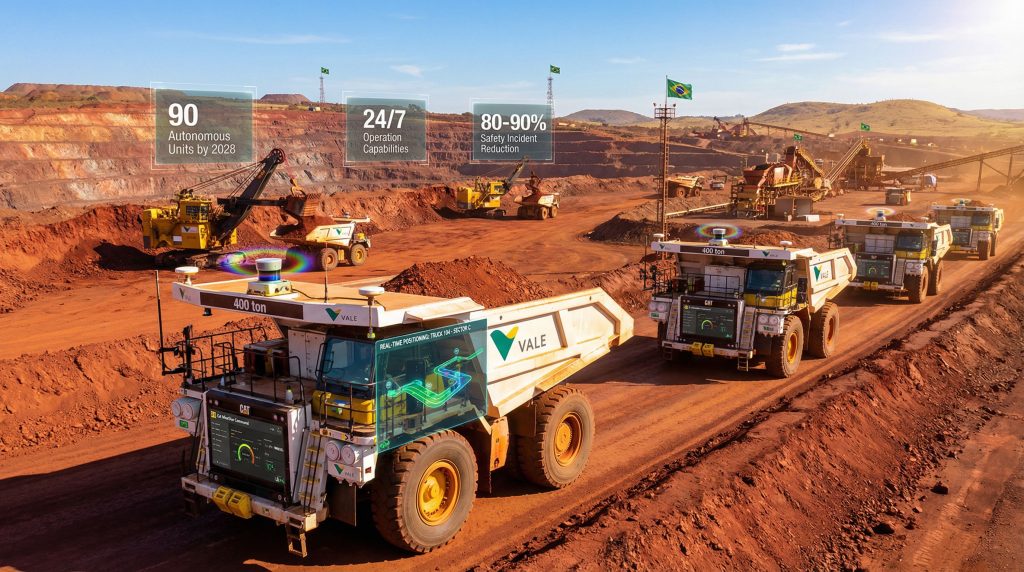
The integration of autonomous vehicle technology into large-scale mining operations has accelerated dramatically over recent years. Vale autonomous truck fleet expansion exemplifies this transformation through strategic partnerships with equipment manufacturers and technology providers. By converting conventional truck fleets to autonomous operation, mining companies are pioneering new standards for industrial-scale robotic logistics.
When big ASX news breaks, our subscribers know first
Strategic Advantages of Autonomous Vehicle Integration in Mining
Mining companies worldwide are prioritising autonomous vehicle technology for three fundamental reasons: operational efficiency improvements, enhanced safety protocols, and environmental compliance optimisation. These systems enable continuous operation without traditional shift limitations, creating substantial productivity gains across extraction and material transport operations.
Payload Capacity Evolution:
- Traditional autonomous haulers: 320 metric tons
- Next-generation autonomous models: 400 metric tons
- Capacity improvement: 25% increase in material transport efficiency
The transition from conventional to autonomous operations represents more than simple equipment upgrades. Fleet utilisation rates improve significantly through 24/7 operational capabilities, eliminating downtime associated with shift changes and crew rotations. Furthermore, maintenance scheduling becomes predictive rather than reactive, utilising advanced algorithms to optimise equipment availability and reduce unplanned downtime.
Safety Performance Indicators:
Autonomous systems eliminate human operators from hazardous zones while incorporating real-time environmental monitoring capabilities. These systems continuously track air quality, slope stability, and terrain conditions, providing comprehensive safety oversight that exceeds traditional manual monitoring approaches.
Remote operation capabilities fundamentally transform risk management in mining environments. By removing personnel from direct contact with heavy machinery operations, companies can significantly reduce exposure to workplace hazards whilst maintaining full operational control through advanced sensor networks and communication systems.
Technical Architecture Behind Modern Autonomous Mining Fleets
Contemporary autonomous mining systems rely on sophisticated technical infrastructure combining GPS positioning, wireless communication networks, and machine learning algorithms. These systems require centimetre-level positioning accuracy to navigate complex mining terrain whilst coordinating multiple vehicles simultaneously.
Communication Infrastructure Requirements:
- High-speed wireless networks enabling real-time vehicle coordination
- Redundant communication systems preventing connectivity failures
- Advanced sensor arrays for terrain mapping and obstacle detection
- Machine learning algorithms optimising route selection based on current conditions
The vehicle conversion process involves retrofitting existing equipment with autonomous control systems rather than complete fleet replacement. This approach minimises capital requirements while leveraging existing maintenance infrastructure and operational knowledge.
Vale's autonomous truck program began in 2018 at the Brucutu mine in Minas Gerais state. The programme has expanded systematically, reaching 18 operational units by 2024 with plans to quintuple the fleet to 90 units by 2028. This expansion will occur primarily through converting conventional vehicles already operating within Vale's Northern System.
Partnership Structure:
The implementation relies on collaboration between multiple specialised organisations:
- Equipment manufacturers providing autonomous system technology
- Regional distributors offering localised technical support
- Mining companies contributing operational expertise and infrastructure
This partnership model enables companies to leverage established equipment supply chains whilst accessing specialised technical knowledge for autonomous system integration.
Economic Impact Analysis of Autonomous Mining Technology
The financial implications of autonomous mining technology extend beyond initial capital investment to encompass operational cost reductions, productivity improvements, and labour cost restructuring. Vale's total investment in autonomous truck technology reached approximately $210 million through 2024, demonstrating the significant capital commitment required for large-scale implementation.
Investment Recovery Framework:
| Operational Metric | Traditional Systems | Autonomous Systems | Potential Improvement |
|---|---|---|---|
| Daily Operating Hours | 16-18 hours | 22-24 hours | 25-35% increase |
| Fuel Consumption | Variable operator efficiency | Algorithm-optimised routes | 10-15% reduction potential |
| Maintenance Approach | Reactive scheduling | Predictive analytics | 20-30% cost reduction potential |
| Safety Incidents | Human error factor present | Sensor-based prevention | Significant reduction potential |
Note: These projections represent industry estimates and potential outcomes. Actual results may vary based on implementation quality, operational conditions, and specific technology configurations.
The transition from operators to technical specialists represents a fundamental shift in mining labour requirements. Rather than eliminating employment, autonomous systems typically require retraining existing personnel for digital system management, remote monitoring, and technical maintenance roles.
How Do Productivity Enhancements Drive Cost Savings?
Enhanced ore movement efficiency results from optimised routing algorithms that continuously adjust to changing terrain conditions, weather factors, and operational priorities. These systems can process real-time data from multiple sources to determine optimal load distribution, route selection, and timing coordination.
In addition, autonomous systems enable more precise material handling, reducing waste associated with human operational variability. Consistent execution of transport protocols leads to improved material quality control and reduced processing requirements downstream.
Implementation Challenges and Risk Management Strategies
Large-scale autonomous mining implementation faces several technical and operational challenges requiring comprehensive risk management approaches. However, the mining sector faces particular challenges under these new trade rules, which network reliability represents a critical concern, as autonomous vehicles depend entirely on consistent communication with central control systems.
Infrastructure Requirements:
- Redundant communication networks preventing system failures
- Weather-resistant sensor systems maintaining performance in diverse conditions
- Equipment interoperability ensuring seamless integration with existing machinery
- Emergency response protocols enabling rapid human intervention when required
Regulatory compliance presents additional complexity as mining safety frameworks adapt to accommodate unmanned operations. Environmental monitoring capabilities must meet or exceed existing compliance standards whilst providing real-time data for regulatory reporting.
What Are the Key Cybersecurity Considerations?
Autonomous mining systems create new cybersecurity vulnerabilities requiring specialised protection protocols. Companies must implement comprehensive digital security frameworks protecting against unauthorised access whilst maintaining operational efficiency.
The tropical climate conditions in Brazil's mining regions present unique technical challenges for sensor performance and equipment reliability. Autonomous systems must maintain consistent operation through seasonal weather variations whilst adapting to changing terrain conditions.
Global Supply Chain Implications
Vale's Northern System represents Brazil's largest iron ore and copper production facility, making Vale autonomous truck fleet expansion significant for global commodity markets. The facility operates 130-140 total trucks across multiple operational zones, with autonomous units eventually representing approximately 64% of the fleet by 2028.
Production Capacity Benefits:
- Improved operational consistency through automated systems
- Reduced production disruptions from human-related factors
- Enhanced supply chain reliability for global markets
- Lower production costs enabling competitive pricing advantages
The expansion timeline from 18 to 90 autonomous units over four years demonstrates a measured approach to technology adoption. This phased implementation allows for continuous optimisation and problem-solving whilst maintaining operational stability.
How Does Automation Improve Market Competitiveness?
Autonomous technology adoption provides mining companies with cost advantages that can translate to improved market positioning. Critical minerals essential for renewable energy technologies require reduced operational costs, enhanced productivity, and improved safety records to create competitive advantages in global commodity markets.
Consequently, international expansion potential exists for proven autonomous mining technologies, with successful implementations serving as templates for deployment across multiple geographic regions and operational environments.
The next major ASX story will hit our subscribers first
Future Technology Integration Prospects
The evolution of autonomous mining technology extends beyond current vehicle automation to encompass comprehensive digital transformation of extraction operations. Artificial intelligence expansion will enable machine learning systems to optimise not just transport logistics but entire extraction patterns based on geological data and market conditions.
Emerging Technology Applications:
- Internet of Things sensor networks providing comprehensive mine monitoring
- Predictive analytics optimising equipment maintenance and replacement scheduling
- Renewable energy integration supporting sustainable autonomous operations
- Advanced materials science improving equipment durability and performance
Scalability across mining sectors represents significant growth potential, with autonomous systems applicable to copper mining, precious metals extraction, and other mineral recovery operations. Vale's diversified mining portfolio provides opportunities to test autonomous technology across multiple commodity types and operational environments.
What Industry Standardisation Trends Are Emerging?
As autonomous mining protocols become established industry practices, standardisation will likely emerge for communication systems, safety protocols, and operational procedures. This standardisation will reduce implementation costs and improve system interoperability across different mining operations.
Furthermore, international technology transfer opportunities exist for successful autonomous mining implementations, with proven systems potentially licensed or adapted for use in other geographic regions and operational contexts.
Investment Evaluation Framework for Autonomous Mining
Investors evaluating autonomous mining technology should focus on key performance indicators demonstrating successful implementation and operational improvement. Technology adoption rates provide insight into management commitment and operational capability for complex system integration.
Critical Performance Metrics:
- Speed and scale of autonomous fleet deployment
- Operational efficiency improvements per autonomous unit
- Safety record enhancements demonstrating system effectiveness
- Cost reduction achievements relative to investment levels
What Risk Assessment Considerations Should Investors Evaluate?
Technology obsolescence represents a significant long-term risk as autonomous systems advance rapidly. Companies must maintain continuous investment in system upgrades to preserve competitive advantages.
Cybersecurity vulnerabilities require ongoing attention and investment as digital threats evolve. Comprehensive security protocols and regular system updates are essential for protecting automated operations from digital attacks.
For instance, regulatory changes affecting autonomous vehicle operations could impact implementation timelines and operational requirements. Companies must monitor evolving regulatory frameworks and maintain compliance with changing safety standards.
Financial Analysis Framework:
Investment evaluation should consider both direct financial returns and strategic positioning benefits. Direct returns include operational cost reductions, productivity improvements, and safety-related cost savings. Strategic benefits encompass competitive positioning, operational flexibility, and future expansion capabilities.
However, junior mining companies must carefully balance these investments with their capital constraints and growth objectives.
Environmental Impact and Sustainability Benefits
Autonomous mining operations provide multiple environmental benefits through optimised fuel consumption, reduced emissions, and improved operational precision. Algorithm-controlled routing systems minimise unnecessary vehicle movement whilst optimising load distribution for maximum efficiency.
Emissions Reduction Strategies:
- Fuel optimisation through intelligent route planning
- Reduced idle time through coordinated vehicle scheduling
- Integration potential with electric vehicle technology
- Precision operations minimising environmental disturbance
Electric vehicle integration represents the next evolution in sustainable autonomous mining. Battery-powered autonomous trucks could significantly reduce carbon footprints whilst maintaining operational efficiency through advanced energy management systems.
How Can Autonomous Systems Minimise Ecosystem Impact?
Autonomous systems enable more precise mining operations that reduce unnecessary land disturbance. Sensor networks can detect and avoid sensitive environmental areas whilst optimising extraction patterns for minimal ecological impact.
Wildlife protection protocols can be integrated into autonomous systems, with sensors detecting animal presence and automatically adjusting operations to minimise habitat disruption. These capabilities exceed traditional manual monitoring approaches in both scope and consistency.
What Are the Rehabilitation Planning Benefits?
Advanced planning algorithms can incorporate mine closure and rehabilitation requirements into operational decisions. By considering long-term land use objectives during active mining phases, autonomous systems can optimise operations for improved post-mining land restoration outcomes.
The reciprocal nature of Trump's tariff strategy means that trading partners are implementing their own retaliatory measures, which could affect the cost-effectiveness of these environmental technologies. Nevertheless, Trump's tariff policies are creating market volatility that makes autonomous mining investments even more attractive for achieving operational stability.
Disclaimer: This analysis includes forward-looking statements and projections based on current technology trends and industry developments. Actual outcomes may vary significantly based on technological advancement, regulatory changes, market conditions, and implementation quality. Investors should conduct independent research and consider multiple factors when evaluating autonomous mining technology investments. The information presented is for educational purposes and should not be considered as investment advice.
Ready to Capitalise on Mining Technology Breakthroughs?
Discovery Alert's proprietary Discovery IQ model delivers instant notifications on significant ASX mineral discoveries, including companies pioneering autonomous mining technologies and operational innovations. Experience how major discoveries can generate substantial returns by exploring real-time alerts that position you ahead of the market during critical technology adoption phases.