June 7, 2026
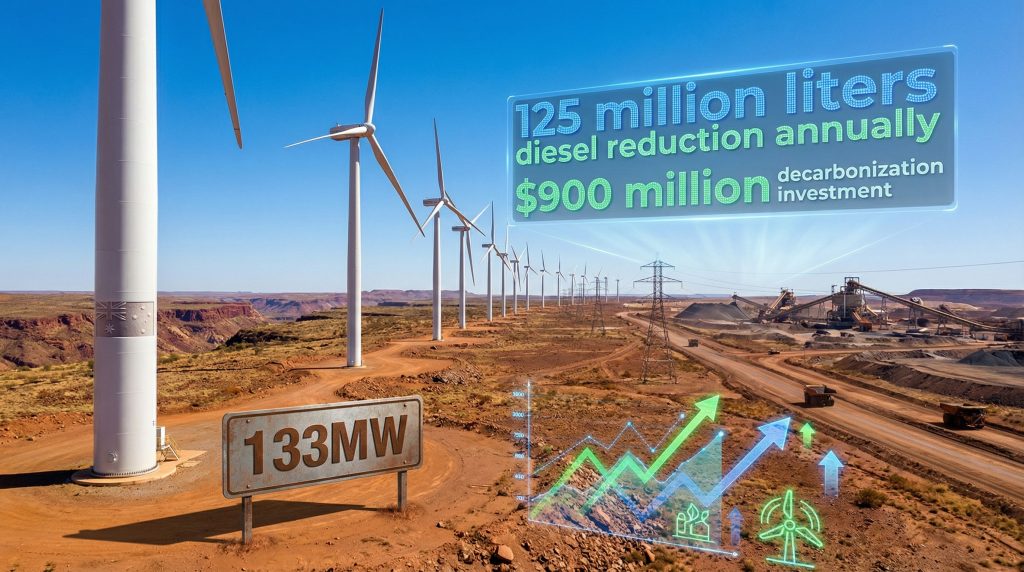
Fortescue's decision to begin construction of a major wind energy project marks a pivotal moment in mining sector decarbonisation. Fortescue starts building 133MW Australian wind farm infrastructure that will fundamentally transform how resource extraction operations approach energy systems. Furthermore, this development reflects broader industry evolution trends reshaping the global mining landscape towards renewable power integration.
Mining operations worldwide face mounting pressure to transition from fossil fuel dependency to renewable energy systems. Heavy industrial facilities require continuous power for processing equipment, haul trucks, and conveyor systems, creating unique challenges for integrating variable renewable sources. Australia's resource extraction sector consumes approximately 18% of the nation's total industrial energy, making decarbonisation efforts critical for meeting national emissions targets.
The integration of renewable power systems into mining operations requires sophisticated load balancing mechanisms and robust backup power infrastructure. Unlike conventional grid-connected facilities, remote mining sites must maintain self-sufficient energy systems capable of supporting 24/7 operations regardless of weather conditions or equipment maintenance schedules.
Australia's position as both a major commodity exporter and renewable energy leader creates strategic advantages for demonstrating industrial decarbonisation technologies. The country produces approximately 50% of global iron ore while possessing exceptional solar irradiance (5.5-7.0 kWh/m²/day) and coastal wind resources (capacity factors exceeding 40% in optimal locations).
Technical Architecture of Modern Mining Wind Systems
Contemporary wind farm integration for heavy industrial applications requires specialised engineering approaches distinct from utility-scale installations. The development incorporates advanced data-driven operations utilising 17 turbines, each rated at approximately 7.8MW capacity, demonstrating the scale necessary for supporting large-scale mining operations.
The Nullagine wind project employs advanced turbine technology designed for variable wind regimes common in Australia's interior regions. These installations feature enhanced yaw control systems enabling automatic repositioning during extreme weather events, critical for operations in cyclone-prone areas where wind speeds can exceed 200 km/h.
| Technical Specification | Standard Utility | Mining Application | Enhancement Factor |
|---|---|---|---|
| Foundation Depth | 15-20 meters | 25-30 meters | 1.5x deeper |
| Grid Connection | AC transmission | DC microgrid hybrid | Islanding capability |
| Maintenance Access | Seasonal scheduling | Continuous availability | 24/7 service roads |
| Weather Resilience | Category 2 cyclones | Category 4-5 cyclones | Enhanced structural rating |
Engineering Specifications for Extreme Conditions
Mining wind installations must withstand environmental stresses exceeding typical utility requirements. The Pilbara region experiences monsoonal wind patterns with seasonal peaks during October through April, requiring turbine designs capable of operating efficiently across wind speed ranges from 3-4 m/s to cut-out speeds near 25 m/s.
Modern turbine foundations in mining applications utilise reinforced concrete designs extending 25-30 meters below surface level, incorporating ground anchoring systems rated for soil bearing pressures up to 500 kPa. These specifications account for additional vibrations generated by nearby heavy mining equipment and blasting operations.
Specialised installation methodologies reduce deployment timelines and equipment requirements for remote locations. Self-erecting tower technology eliminates the need for heavy-lift cranes with capacity exceeding 1,000 tonnes, reducing installation time from 7-10 days per turbine to 3-5 days while lowering transportation costs for remote sites.
When big ASX news breaks, our subscribers know first
Hybrid Power Generation for Continuous Operations
Mining operations require consistent baseload power for critical equipment including crushers, conveyors, and processing plants that cannot tolerate supply interruptions. Hybrid renewable systems combine multiple generation sources to provide reliable power equivalent to traditional diesel generator systems. Additionally, AI in mining operations enables sophisticated power management optimisation.
The integrated approach combines 133MW of wind generation with existing 190MW solar installations and 250MWh battery storage systems featuring five-hour duration capacity. This configuration enables power dispatch optimisation based on real-time demand patterns and weather forecasting, reflecting broader battery storage trends transforming industrial energy systems.
The 250MWh battery installation completed in December 2025 provides critical grid stabilisation services during renewable generation transitions. Five-hour duration storage supports approximately 50MW continuous discharge, sufficient for maintaining essential mining operations during maintenance periods or extreme weather events.
Load Balancing Across Mining Operations
Different mining processes exhibit distinct power demand profiles requiring sophisticated energy management systems. Haul truck charging stations create intermittent high-power demands (1-2MW per vehicle), while processing plants maintain steady baseload requirements (20-50MW continuous).
Critical Integration Point: Mining operations consume 85% of total power during daylight hours when solar generation peaks, creating natural complementarity with renewable sources during primary operational periods.
The Pilbara's wind patterns provide optimal generation during evening and night hours when solar output declines. Historical data shows wind capacity factors averaging 35-40% during overnight periods (8 PM to 6 AM) compared to 25-30% during peak solar hours, enabling continuous renewable power availability.
Advanced forecasting systems integrate weather prediction models with mining production schedules to optimise power dispatch decisions. These systems predict renewable generation up to 72 hours in advance, enabling proactive battery charging and diesel generator coordination for seamless operations.
Economic Drivers Transforming Mining Energy
Capital investment requirements for mining decarbonisation reflect the scale necessary for heavy industrial applications. Fortescue's commitment of $900 million to $1.2 billion for 2025-26 decarbonisation initiatives demonstrates the financial magnitude required for comprehensive renewable transitions, as detailed in renewable energy construction analysis.
Wind farm capital costs for mining applications typically range from $1.2-1.5 million per MW installed capacity, reflecting enhanced engineering requirements for remote locations and extreme weather resilience. Fortescue starts building 133MW Australian wind farm representing approximately $160-200 million in wind generation infrastructure alone.
Operational Cost Transformation
Diesel consumption elimination provides immediate operational savings for remote mining sites. The Nullagine project targets reduction of 125 million litres annually in diesel consumption, representing potential savings of $137-168 million per year based on current Australian diesel pricing ($1.10-1.35 per litre).
Annual Operational Cost Comparison:
• Diesel Generation: $0.15-0.20 per kWh (fuel + maintenance)
• Wind Power: $0.01-0.02 per kWh (maintenance only)
• Solar PV: $0.005-0.01 per kWh (minimal maintenance)
• Battery Storage: $0.008-0.015 per kWh cycled
Long-term economic analysis over 20-year project lifecycles shows cumulative savings potential exceeding $3 billion from diesel avoidance alone. Additional benefits include reduced maintenance costs, supply chain risk mitigation, and compliance with increasingly stringent carbon pricing mechanisms.
The Australian Safeguard Mechanism requires facilities emitting more than 100,000 tonnes CO2 equivalent annually to purchase carbon credits for excess emissions. Fortescue's requirement to surrender 240,000 Australian Carbon Credit Units for 2024-25 reflects baseline emissions of 2.6 million tonnes, valued at approximately $14-19 million annually at current carbon pricing.
Strategic Integration with Broader Decarbonisation
Fortescue's Real Zero implementation targets complete elimination of scope 1 and scope 2 emissions from terrestrial iron ore operations by 2030. This ambitious timeline requires deployment of 2-3GW renewable generation capacity across multiple mining sites throughout the Pilbara region, exemplifying the comprehensive sustainability transformation occurring across the sector.
The comprehensive strategy encompasses fleet electrification for 280+ haul trucks, drill rigs, and auxiliary equipment currently operating on diesel fuel. Electric haul trucks require 1-2MW charging infrastructure per vehicle, creating substantial additional power demand that renewable systems must accommodate.
Infrastructure Development Timeline
Coordinated infrastructure expansion includes 750 kilometres of new transmission lines connecting renewable generation sites with mining operations across the Pilbara. This network enables power sharing between facilities and provides redundancy during maintenance or extreme weather events.
Key Project Milestones:
• 2025: 250MWh battery system operational
• 2026: Cloudbreak 190MW solar farm completion
• 2027: Nullagine 133MW wind farm commissioning
• 2028-29: Additional renewable sites development
• 2030: Complete scope 1 and 2 emissions elimination
The integration approach demonstrates scalability for other major mining operations globally. Similar renewable integration projects are under development by Rio Tinto, BHP, and international mining companies seeking to reduce operational costs and carbon footprints, as outlined in Fortescue's technology partnership announcements.
Technical Challenges in Remote Wind Development
Wind power integration in remote mining environments faces unique engineering and operational challenges distinct from conventional utility installations. Extreme temperature variations in the Pilbara (5°C to 50°C annually) require specialised turbine components and enhanced cooling systems for electrical equipment.
Dust infiltration presents ongoing maintenance challenges for rotating equipment in mining environments. Advanced filtration systems and positive-pressure nacelle designs prevent abrasive particles from affecting critical bearings and electrical components, extending operational life and reducing maintenance frequency.
Remote Location Logistics
Transportation logistics for wind turbine components to remote mining sites require specialised heavy-haul equipment and road infrastructure modifications. Turbine blades exceeding 80 metres in length necessitate route planning around geographic obstacles and coordination with mining traffic patterns.
Maintenance infrastructure development includes permanent service facilities, spare parts inventory management, and skilled technician housing. Remote locations require higher spare parts inventory levels (180-day supply vs. 30-60 days for grid-connected facilities) to ensure continuous operations.
Communication systems enabling remote monitoring and control rely on satellite connectivity due to limited terrestrial telecommunications infrastructure. Real-time performance monitoring and predictive maintenance systems require high-bandwidth data transmission capabilities for optimal performance.
Global Context and Competitive Positioning
Australia's mining sector renewable adoption outpaces most international competitors due to exceptional resource availability and supportive regulatory frameworks. Comparative analysis shows Australian mining companies leading decarbonisation timelines compared to operators in Canada, Chile, and South Africa.
International mining operations face different challenges including higher renewable energy costs, limited grid infrastructure, and varied carbon pricing mechanisms. Australia's carbon pricing through the Safeguard Mechanism provides clear economic incentives for emissions reduction compared to voluntary programmes in other jurisdictions.
Technology Transfer and Export Opportunities
Successful demonstration of mining wind integration creates export opportunities for Australian engineering expertise and renewable energy technologies. Mining companies globally monitor Australian projects for scalable solutions applicable to their operations in different climatic and regulatory environments.
The development of specialised turbine technologies for extreme weather conditions and dust-prone environments creates intellectual property and manufacturing opportunities. Australian renewable energy companies benefit from proven performance records in some of the world's most challenging operational environments.
The next major ASX story will hit our subscribers first
Future Market Development and Scaling
The success of the wind integration project demonstrates commercial viability for renewable power in heavy industrial applications, potentially accelerating adoption across Australia's broader mining sector. Industry analysis suggests total renewable capacity requirements of 10-15GW for complete mining sector decarbonisation by 2035.
Technology advancement continues reducing costs and improving performance for mining-specific renewable applications. Next-generation wind turbines optimised for low-wind conditions and enhanced dust resistance will further improve economic returns for mining installations.
What Market Expansion Opportunities Exist?
Additional mining companies are evaluating renewable integration following leadership in the sector. Rio Tinto's Gudai-Darri mine solar installation and BHP's renewable energy partnerships demonstrate growing industry commitment to decarbonisation initiatives.
International markets including Chile's Atacama Desert mining operations and Canadian oil sands facilities represent significant expansion opportunities for Australian-developed mining renewable technologies. These regions share similar challenges of remote locations, extreme weather, and heavy power demands.
The emergence of "green commodity" markets where customers pay premiums for low-carbon metals and minerals creates additional economic incentives for renewable energy adoption. Steel producers and electric vehicle manufacturers increasingly specify low-carbon raw materials in supply contracts.
Carbon border adjustment mechanisms implemented by the European Union and planned by other jurisdictions will create competitive advantages for mining operations with verifiably low carbon footprints. Australian producers with renewable-powered operations will benefit from preferential market access and pricing.
Investment and operational projections involve inherent uncertainties and should be evaluated considering commodity price volatility, regulatory changes, and technological developments. Past performance and current announcements do not guarantee future results.
Fortescue starts building 133MW Australian wind farm represents a fundamental shift in mining energy systems, proving that large-scale renewable integration can support the most demanding industrial operations. As mining companies worldwide face increasing pressure to reduce carbon footprints while maintaining operational efficiency, Australia's pioneering approach provides a roadmap for sustainable resource extraction in the 21st century.
Searching for the Next Breakthrough in Renewable Mining Technology?
Discovery Alert's proprietary Discovery IQ model delivers real-time alerts on significant ASX mineral discoveries, including breakthrough developments in renewable energy and sustainable mining technologies that could transform the sector. Understand why major mineral discoveries can lead to substantial market returns by exploring examples of companies that have revolutionised their industries, then begin your 30-day free trial today to position yourself ahead of the market.