June 12, 2026
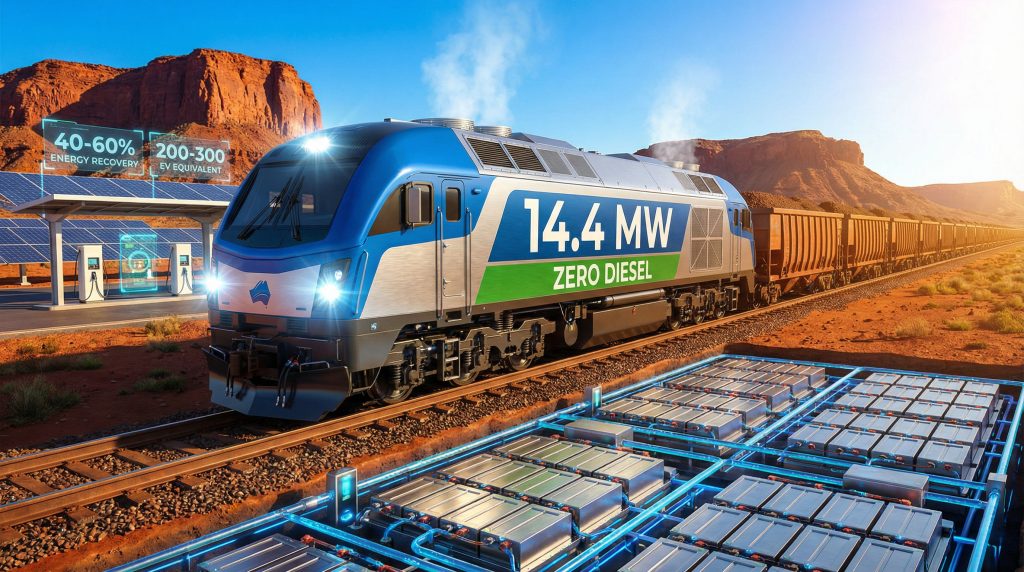
Fortescue battery-electric locomotives represent a groundbreaking advancement in mining rail electrification, challenging decades of diesel dependence in heavy-haul operations. The company's deployment of two battery-electric units in the Pilbara demonstrates how cutting-edge technology can transform industrial transportation while supporting sustainable mining transformation initiatives across the sector.
The Engineering Revolution Behind Fortescue's Electric Rail Technology
Breaking Free from Two-Stroke Diesel Dependency
Traditional mining locomotives have relied on combustion engine technology refined over more than two centuries. These two-stroke diesel engines consume approximately one million litres of diesel annually per locomotive, creating both environmental and economic vulnerabilities for mining operations. Fortescue battery-electric locomotives eliminate this fuel dependency entirely through sophisticated energy storage and power delivery systems.
The transition represents a fundamental departure from established powertrain architecture rather than incremental improvement. Each 14.4-megawatt battery system stores energy equivalent to powering 200-300 residential electric vehicles simultaneously. This demonstrates the massive scale required for heavy-haul mining applications.
Advanced Battery Architecture for Extreme Conditions
The locomotive battery systems utilize liquid cooling technology specifically engineered for Pilbara temperature variations. Daily temperature swings exceeding 35°C, from overnight lows of 15°C to daytime peaks above 50°C, create substantial thermal management challenges. Standard battery systems cannot withstand these extreme conditions.
Key technical specifications include:
• Battery capacity: 14.4 megawatts peak power delivery
• Charging duration: 2-3 hours for full capacity
• Operating range: 300-400 kilometres per charge cycle
• Haul capacity: 40,000-tonne train configurations
• Thermal management: Liquid cooling with Pilbara-specific temperature controls
The battery technology employs lithium iron phosphate (LFP) chemistry, providing enhanced safety characteristics. This configuration enables 3,000-5,000 charge cycles at 80% depth of discharge, supporting multi-year operational lifecycles.
Regenerative Braking Systems in Mining Applications
Regenerative braking technology converts kinetic energy from loaded train descent into electrical energy for battery storage. This process can recover 40-60% of energy during downhill operations, significantly extending operational range. Consequently, it reduces grid charging requirements substantially.
The system operates through traction motors functioning in reverse as generators during braking phases. Electric motors provide constant torque characteristics across entire operating ranges. This enables simplified transmission systems compared to diesel locomotives requiring complex gearbox configurations.
When big ASX news breaks, our subscribers know first
Performance Comparison: Electric Versus Diesel Mining Locomotives
Power Output and Operational Metrics
Battery-electric locomotives deliver superior power characteristics compared to traditional diesel units. The 14.4MW peak capacity significantly exceeds typical diesel locomotive output of 2,000-2,500 kilowatts. This provides enhanced acceleration and hill-climbing capabilities for heavy-haul operations.
Comparative Performance Analysis:
| Metric | Diesel Locomotives | Battery-Electric |
|---|---|---|
| Annual Fuel Consumption | ~1 million litres | Zero diesel |
| Peak Power Output | 2,000-2,500 kW | 14,400 kW |
| Charging/Refueling Time | 20-30 minutes | 2-3 hours |
| Noise Generation | 100-110 decibels | <90 decibels estimated |
| Maintenance Intervals | 1,000-2,000 hours | Extended due to fewer moving parts |
Total Cost of Ownership Framework
Economic viability requires battery-electric locomotives to achieve cost parity or advantage over diesel alternatives. This calculation encompasses initial capital investment, operational costs, maintenance expenses, and fuel price exposure throughout ownership lifecycle.
Annual diesel cost exposure for Fortescue's 70-locomotive fleet approximates $119-140 million AUD at current fuel pricing. Battery-electric units eliminate this commodity price volatility whilst introducing different cost structures including electricity procurement. Furthermore, battery replacement cycles become new considerations in operational planning.
The shift delivers operational benefits including reduced maintenance requirements due to fewer moving parts. Moreover, it provides elimination of engine overhaul intervals and protection from diesel price fluctuations affecting mining operation budgets.
Maintenance Architecture Transformation
Electric locomotives require fundamentally different maintenance approaches compared to diesel units. Traditional locomotives demand regular servicing of combustion components including pistons, cylinders, fuel injectors, and turbochargers requiring significant scheduled downtime.
Battery-electric maintenance focuses on:
• Thermal management system servicing (coolant circulation, pump maintenance)
• Electric motor bearing inspections (simplified compared to engine overhauls)
• Battery monitoring system calibration (software-based diagnostics)
• Power electronics maintenance (inverter and controller systems)
• Traction system checks (direct-drive or simplified transmission)
This maintenance transformation reduces both scheduled downtime and emergency repair incidents. Consequently, it improves overall fleet availability for mining operations significantly.
Technical Specifications and Infrastructure Requirements
Battery System Engineering Details
The 14.4-megawatt capacity converts to approximately 43.2-86.4 megawatt-hours depending on charging duration and operational protocols. This massive energy storage requires sophisticated battery management systems to monitor individual cell performance. Additionally, it tracks temperature distribution and charge balancing across thousands of battery cells.
Thermal Management Architecture:
• Liquid cooling circulation through battery pack cooling plates
• Power electronics cooling for inverter and controller components
• Motor cooling circuits for traction system thermal management
• Ambient temperature compensation maintaining 20-35°C optimal battery range despite 50°C+ external conditions
The cooling system utilizes glycol-water coolant mixture circulated by electric pumps. This follows similar architecture to passenger electric vehicles but scaled for industrial power requirements.
Charging Infrastructure and Grid Integration
Charging operations occur through renewable grid connections in Port Hedland, supported by Fortescue's expanding solar, wind, and battery storage infrastructure. The system requires high-voltage connections capable of delivering multi-megawatt power levels during 2-3 hour charging windows.
Infrastructure components include:
• High-voltage transformers (capacity specifications undisclosed)
• DC charging systems supporting locomotive voltage platforms
• Grid connection interfaces with renewable energy sources
• Power management systems coordinating charging schedules with mining operations
• Safety systems including isolation, circuit protection, and emergency shutdown protocols
The renewable energy integration eliminates grid carbon emissions, achieving true zero-emission rail operations. This alignment supports broader energy transition dynamics across the mining sector.
Power Electronics and Control Systems
Electric locomotives employ sophisticated power electronics to convert stored battery energy into traction motor drive signals. These systems include inverters, DC-DC converters, and control architectures managing power delivery across varying operational demands.
Each locomotive features power electronics handling variable demand from traction systems, with regenerative braking capability enabling electrical motors to operate as generators during descent phases.
The control systems coordinate battery management, motor control, regenerative braking, and safety systems through integrated software platforms. These are designed for mining environment reliability requirements.
Dual-Mode Energy Recovery and Charging Operations
Grid Connection Charging Methodology
Primary charging occurs through stationary connections to Fortescue's renewable energy grid in Port Hedland. The 2-3 hour charging duration requires high-power delivery systems capable of transferring 43.2-86.4 MWh. This depends on operational protocols and battery state of charge.
Charging operations coordinate with mining schedules to minimise operational disruption. The system likely employs automated charging protocols initiating when locomotives return to depot facilities. This operates similar to electric bus fleet operations but scaled for mining power requirements.
Regenerative Energy Capture Systems
Regenerative braking recovers kinetic energy during loaded train descent, particularly valuable in Pilbara operations. Trains climb significant elevations during haul cycles in this region. The 40-60% energy recovery rate substantially extends operational range whilst reducing grid charging frequency.
Energy recovery optimisation factors:
• Load weight (40,000-tonne configurations maximise recovery potential)
• Gradient percentages (steeper descents increase energy capture)
• Braking duration (extended descent phases optimise recovery efficiency)
• Battery state of charge (recovery limited by available battery capacity)
• Motor efficiency (traction motors operating as generators)
This dual charging methodology creates operational flexibility, enabling extended range missions. Furthermore, it reduces dependence on stationary charging infrastructure for remote mining routes.
Integration with Pilbara Renewable Grid
Fortescue's renewable energy ecosystem supports 100% renewable charging through coordinated solar, wind, and battery storage projects. This integration eliminates well-to-wheel carbon emissions whilst providing cost-predictable energy sourcing. Additionally, it offers protection compared to volatile diesel markets.
The energy management system coordinates locomotive charging demands with renewable energy generation patterns. It potentially utilises battery storage systems to buffer supply-demand variations and ensure consistent locomotive availability.
Operational Challenges and Environmental Performance
Extreme Climate Resilience in Pilbara Conditions
Pilbara operations present unique environmental stresses including temperature extremes, dust contamination, and humidity variations. These challenge both battery performance and cooling system effectiveness. The liquid cooling systems maintain optimal battery temperature ranges (20-35°C) despite ambient conditions exceeding 50°C during summer operations.
Environmental adaptation features:
• Sealed battery compartments protecting against dust ingress
• Corrosion-resistant cooling components for humid coastal conditions near Port Hedland
• Thermal insulation systems reducing cooling energy requirements
• Vibration isolation protecting battery modules from track-induced stress
• Emergency thermal management preventing thermal runaway during extreme conditions
Noise Reduction and Worker Safety Enhancement
Electric locomotives generate significantly less noise compared to diesel units, reducing workplace noise exposure for rail crews. The estimated <90 decibel operation compares favourably to diesel locomotive 100-110 decibel ratings. This improvement enhances working conditions and reduces hearing protection requirements.
Heat generation reduction correlates with improved efficiency and reduced cooling system burden. This creates more comfortable working environments for maintenance crews and operators in already challenging Pilbara temperatures.
Supply Chain Risk Mitigation
Battery-electric operations eliminate diesel supply chain vulnerabilities including fuel transportation logistics, storage requirements, and price volatility exposure. This transformation reduces operational complexity whilst improving cost predictability for long-term mining planning.
Risk mitigation benefits:
• Fuel price volatility elimination (diesel pricing fluctuations)
• Supply chain simplification (reduced diesel transportation and storage)
• Strategic autonomy (reduced dependence on petroleum products)
• Grid connection reliability (renewable energy with battery backup)
• Maintenance supply chains (electric components versus diesel engine parts)
Strategic Integration with Fortescue's Decarbonisation Timeline
Real Zero Implementation Phases
The two operational battery-electric locomotives represent initial validation phase within Fortescue's broader Real Zero emissions strategy. These units operate alongside conventional diesel locomotives whilst performance data validates technology readiness for full-scale deployment.
Implementation methodology:
• Phase 1: Two-unit pilot operation with performance monitoring
• Phase 2: Technology validation and optimisation based on operational data
• Phase 3: Scaled production orders for fleet replacement
• Phase 4: Complete 70-locomotive fleet conversion to electric propulsion
CEO Dino Otranto emphasised that technology decisions must meet strict financial criteria. Total cost of ownership including upfront capital and operating costs must achieve cost competitiveness versus diesel alternatives.
Fleet Transition Strategy and Timeline
Converting Fortescue's entire 70-locomotive fleet represents a multi-year undertaking requiring coordinated production schedules. This includes infrastructure development and operational integration requirements. Manufacturing lead times of approximately two years per locomotive order create timeline constraints for complete fleet electrification.
The staged transition enables continuous operational capability whilst validating technology performance across diverse operational scenarios. These include varying load configurations, route profiles, and seasonal conditions.
Economic Validation Requirements
Financial viability assessment encompasses multiple cost categories beyond initial locomotive acquisition. This includes charging infrastructure, renewable energy grid expansion, maintenance facility modifications, and workforce training requirements.
All decarbonisation investments must meet strict financial hurdles, with total cost of ownership calculations demonstrating economic advantage versus continuing diesel operations.
The validation process considers diesel price volatility protection, maintenance cost reductions, and operational efficiency improvements. Additionally, potential carbon credit revenue streams support overall economic justification.
The next major ASX story will hit our subscribers first
Economic Implications for Mining Rail Operations
Capital Investment Versus Long-Term Savings
Battery-electric locomotive acquisition requires higher initial capital compared to diesel equivalents. However, operational savings include fuel elimination, reduced maintenance costs, and diesel price volatility protection. The economic analysis spans locomotive operational lifetime typically exceeding 20-30 years.
Cost structure transformation:
• Increased CAPEX: Higher initial locomotive and charging infrastructure costs
• Reduced OPEX: Eliminated fuel costs and reduced maintenance requirements
• Risk mitigation: Protection from diesel price volatility and supply disruptions
• Efficiency gains: Improved power delivery and regenerative energy recovery
• Infrastructure investment: Renewable energy grid expansion and charging facilities
Manufacturing Timeline and Delivery Considerations
Progress Rail partnership facilitates locomotive manufacturing with delivery timelines approximately two years from order placement to operational deployment. This extended timeline necessitates advance planning for fleet replacement scheduling and operational continuity during transition periods.
The manufacturing capacity constraints require coordinated ordering strategies to maintain operational locomotive availability. This ensures service continuity whilst transitioning to electric propulsion across the entire fleet.
Diesel Price Volatility Protection
Eliminating one million litres annual diesel consumption per locomotive provides substantial protection from commodity price fluctuations. Current diesel pricing of $1.70-2.00 AUD per litre creates $1.7-2 million annual fuel exposure per locomotive.
Fortescue battery-electric locomotives substitute predictable electricity costs for volatile diesel pricing. This enables more accurate long-term cost forecasting and budgeting for mining operations. Cost stability particularly benefits long-term mining project economics and financing arrangements.
Global Mining Industry Scaling Potential
Applicability to Other Bulk Commodity Operations
The technology framework developed for Fortescue's iron ore operations potentially applies to other bulk commodity mining. This includes coal, copper, and mineral sands operations requiring heavy-haul rail transport. Key applicability factors include haul distances, elevation profiles, climate conditions, and renewable energy availability.
Global deployment considerations:
• Route characteristics (distance, gradient, operational frequency)
• Climate conditions (temperature ranges, humidity, dust exposure)
• Renewable energy availability (solar, wind resources for charging infrastructure)
• Grid connection feasibility (electrical infrastructure development requirements)
• Economic justification (diesel costs, carbon pricing, operational efficiency)
Infrastructure Requirements for Widespread Adoption
Scaling battery-electric locomotives across global mining operations requires substantial charging infrastructure development. This includes high-voltage grid connections, renewable energy generation, and energy storage systems. Remote mining locations often lack existing electrical grid infrastructure necessitating dedicated power generation facilities.
The infrastructure investment extends beyond locomotive acquisition to encompass entire energy ecosystems. These support reliable, cost-effective charging operations across mining transportation networks.
Regulatory and Environmental Compliance Advantages
Battery-electric locomotives provide compliance advantages for mining operations facing increasing environmental regulations. These include carbon pricing mechanisms and sustainability reporting requirements. Zero direct emissions support corporate decarbonisation commitments whilst reducing local air quality impacts in mining communities.
Regulatory benefits include:
• Carbon emissions reduction supporting national and corporate climate targets
• Local air quality improvement eliminating diesel particulate emissions
• Noise pollution reduction improving community relations in mining areas
• ESG compliance supporting sustainable investment criteria and reporting requirements
• Future-proofing against strengthening environmental regulations
Learning Framework for Mining Industry Implementation
Partnership Development Models
Fortescue's collaboration with Progress Rail demonstrates the importance of established rail technology partnerships for successful electric locomotive development. Progress Rail brings locomotive manufacturing expertise whilst Fortescue contributes mining operational requirements and integration capabilities.
Partnership framework elements:
• Technology development (battery systems, power electronics, control software)
• Manufacturing capability (production capacity, quality systems, delivery timelines)
• Operational integration (mining-specific requirements, extreme environment adaptation)
• Maintenance support (service networks, parts availability, technical expertise)
• Financial structures (equipment financing, performance guarantees, risk sharing)
Pilot Testing and Performance Validation
The two-locomotive pilot programme provides critical performance data across operational scenarios before full fleet commitment. This staged approach enables technology optimisation, operational procedure development, and economic validation whilst maintaining operational continuity.
Testing methodology encompasses:
• Performance monitoring across varying load and route configurations
• Reliability assessment under extreme Pilbara environmental conditions
• Economic validation comparing actual costs versus projected savings
• Operational integration with existing diesel fleet and mining schedules
• Maintenance procedure development for electric locomotive service requirements
Integration with Existing Infrastructure
Successful implementation requires seamless integration with existing rail infrastructure including tracks, signalling systems, loading facilities, and maintenance depots. Electric locomotives must operate on identical infrastructure whilst accommodating different power, weight, and operational characteristics.
The integration process addresses compatibility with existing rail control systems, loading procedures, and operational protocols. This minimises disruption during transition phases.
Future Implications for Heavy-Haul Transportation
Technology Maturation and Commercial Viability
Fortescue's deployment represents technology maturation from prototype development to commercial operational reality. This transition demonstrates battery-electric locomotives achieving production-grade reliability and economic viability. Previously, heavy-haul mining applications were considered technically unfeasible for electric propulsion.
Technology readiness indicators:
• Operational deployment in production mining environment
• Performance validation meeting 40,000-tonne haul requirements
• Economic justification achieving cost competitiveness versus diesel alternatives
• Environmental performance delivering zero-emission operations with renewable charging
• Reliability demonstration operating under extreme Pilbara conditions
Autonomous Electric Rail Integration Potential
Battery-electric locomotives provide enhanced capability for autonomous operations through simplified control systems. This includes precise power management and integrated sensors supporting automated navigation systems. Electric propulsion eliminates combustion engine variables complicating autonomous control algorithms.
The technology platform potentially supports future autonomous mining rail operations. This combines electric propulsion with artificial intelligence navigation systems, remote monitoring, and predictive maintenance capabilities.
Global Decarbonisation Impact
Successful scaling of battery-electric locomotives across global mining operations could significantly impact supply chain decarbonisation. This affects steel production, renewable energy manufacturing, and infrastructure development. Mining transportation represents a substantial component of scope 1 and 2 emissions for major mining corporations.
Industry-wide implications:
• Corporate decarbonisation supporting mining industry climate commitments
• Supply chain emissions reducing carbon intensity of steel, copper, and critical mineral production
• Technology transfer enabling electric locomotive adoption across other heavy industries
• Renewable energy integration supporting grid-scale renewable energy deployment in remote areas
• Economic transformation creating new technology markets and employment opportunities
What Does This Mean for the Mining Industry?
The deployment establishes proof of concept for heavy-haul electric rail technology, potentially catalysing broader adoption. This extends across mining, port operations, and freight transportation sectors requiring high-power, long-distance rail capabilities.
Furthermore, the success demonstrates how electric mining transportation solutions can scale from concept to commercial reality. The technology validates that mining industry trends towards electrification are not merely aspirational but economically viable.
Moreover, the battery systems showcase potential for sustainable battery recycling programmes once these units reach end-of-life. This creates circular economy opportunities within mining operations.
The Australian Broadcasting Corporation reported that Fortescue battery-electric locomotives mark a significant milestone in industrial rail decarbonisation. This achievement demonstrates how innovative partnerships between mining companies and rail manufacturers can deliver commercially viable solutions.
This analysis is based on publicly available information and industry knowledge. Mining operations involve inherent risks, and technology deployment outcomes may vary based on operational, economic, and environmental factors. Readers should conduct independent research before making investment or operational decisions.
Ready to Capitalise on Mining Innovation Breakthroughs?
Fortescue's revolutionary battery-electric locomotives demonstrate how technological breakthroughs can transform mining companies overnight. Discovery Alert's proprietary Discovery IQ model identifies these game-changing developments instantly, delivering real-time notifications when ASX-listed companies announce major technological innovations or mineral discoveries that could reshape entire sectors. Start your 14-day free trial and position yourself ahead of the market when the next mining industry transformation unfolds.