June 4, 2026
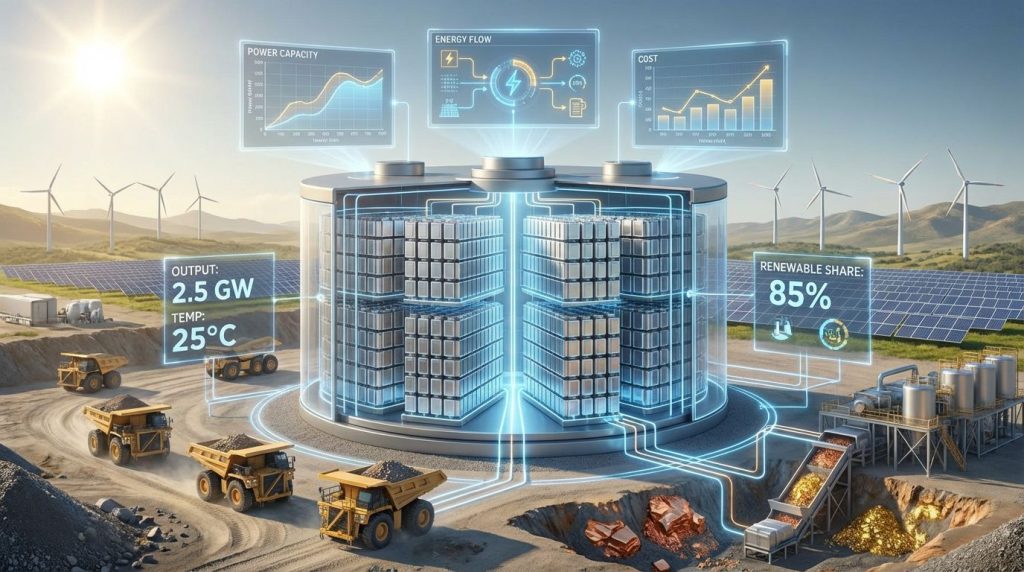
Fortescue battery energy storage for mining decarbonization represents a pivotal advancement in industrial energy transformation, demonstrating how large-scale battery systems can replace fossil fuel dependency in remote mining operations. The successful deployment of 50 MW / 250 MWh battery energy storage at North Star Junction illustrates the technical feasibility and economic viability of grid-scale storage systems in Australia's demanding Pilbara mining environment. However, understanding the complexities of integrating renewable generation with mining industry trends requires examination of both technical specifications and operational requirements that distinguish mining applications from conventional grid-scale storage deployments.
Understanding the Technical Foundation of Mining Battery Storage Systems
Battery energy storage systems in mining environments must meet significantly more demanding specifications than typical grid-scale installations. The harsh operating conditions, continuous power requirements, and remote locations create unique technical challenges that drive specific design decisions and technology selections.
Power Capacity vs Energy Storage Requirements in Remote Operations
Mining operations require careful balancing between instantaneous power delivery and sustained energy storage capacity. Fortescue's recent deployment at North Star Junction demonstrates this principle with a 50 MW / 250 MWh configuration, providing 5 hours of continuous operation at full capacity. This duration specification addresses the critical operational window between peak solar generation and overnight mining activities.
The system architecture includes 48 energy storage containers utilising modular design principles that enable scalable deployment across multiple mine sites. Furthermore, this approach allows mining operators to match storage capacity directly to operational demand profiles rather than adopting one-size-fits-all solutions.
Mining BESS Specifications Comparison
| System Parameter | North Star Junction | Typical Grid-Scale BESS | Mining-Specific Requirements |
|---|---|---|---|
| Power Output | 50 MW | 10-200 MW | Matched to processing loads |
| Energy Capacity | 250 MWh | 50-400 MWh | 4-8 hour duration typical |
| Discharge Duration | 5 hours | 1-4 hours | Extended for overnight ops |
| Container Count | 48 units | Variable | Modular for remote assembly |
| Operating Environment | Pilbara (extreme heat) | Controlled conditions | Enhanced thermal management |
Battery Chemistry Selection for Harsh Environmental Conditions
The selection of Lithium Iron Phosphate (LFP) chemistry through BYD's Blade Battery technology reflects specific performance requirements in extreme environments. In addition, LFP chemistry offers superior thermal stability and cycle life compared to alternatives, critical factors in the Pilbara region where temperatures regularly exceed 40°C (104°F) and can reach 50°C (122°F) during summer months.
Liquid cooling systems engineered specifically for these conditions represent a fundamental design requirement rather than an optimisation. The cooling infrastructure must maintain battery cell temperatures within operational parameters while consuming minimal parasitic power that would reduce overall system efficiency.
Critical Design Factor: Mining battery storage systems must operate continuously in environments where grid-scale installations would require protective shutdowns, making thermal management the primary technical constraint in system design.
The BYD MC Cube BESS platform provides standardised container integration that simplifies deployment logistics in remote locations. Each container operates as an independent energy storage unit with integrated thermal management, enabling phased commissioning and simplified maintenance protocols.
When big ASX news breaks, our subscribers know first
What Are the Key Operational Integration Challenges for Mining BESS?
Successful battery energy storage integration in mining operations requires sophisticated coordination between renewable generation, energy storage, and variable industrial loads. The operational challenges extend beyond simple energy arbitrage to encompass grid stability, load balancing, and system reliability in isolated networks.
Load Balancing Between Renewable Generation and Mining Demand
Mining operations present uniquely challenging load profiles characterised by high baseline consumption and significant peaks during ore processing cycles. The 100 MW solar farm at North Star Junction generates peak power during midday hours, while mining operations require consistent power availability across 24-hour cycles.
The 250 MWh storage capacity enables temporal shifting of solar generation to match operational demand patterns. This creates operational windows where:
• Morning startup sequences can utilise stored solar energy from the previous day
• Ore processing cycles receive consistent power regardless of weather conditions
• Evening operations continue without diesel backup generation
• Maintenance windows can be scheduled during peak solar generation hours
The system architecture must accommodate rapid load changes as mining equipment cycles on and off throughout operational shifts. Consequently, processing equipment, conveyor systems, and ore handling facilities create dynamic power demands that require responsive storage systems capable of millisecond-level adjustments.
Grid Stability in Isolated Mining Networks
Remote mining operations typically operate as islanded microgrids with limited or no connection to utility-scale transmission infrastructure. The 629 km transmission network being constructed through Fortescue's Pilbara Energy Connect project represents a novel approach to mining grid integration, connecting multiple mine sites into a unified electrical system.
Power quality requirements in mining environments often exceed utility-scale standards due to the sensitivity of processing equipment and the high costs associated with power interruptions. Twelve Gamesa Electric Proteus PCS-E inverters provide the power conversion interface between DC battery storage and AC mining loads, with specifications that must address:
Critical Power Quality Parameters:
• Frequency regulation: ±0.1 Hz tolerance for sensitive processing equipment
• Voltage stability: ±3% variation limits during load changes
• Harmonic distortion: <5% total harmonic distortion (THD) for motor drives
• Response time: <100 millisecond adjustment for grid-forming applications
The inverter systems must operate in grid-forming mode rather than grid-following configuration typical of utility-connected storage systems. This requires sophisticated control algorithms that maintain frequency and voltage stability independent of external grid reference signals.
How Do Economics Drive Battery Storage Adoption in Mining?
The economic case for mining battery energy storage extends beyond simple fuel displacement calculations to encompass operational reliability, logistics costs, and carbon compliance requirements. Mining operations in remote locations face significantly higher energy costs than grid-connected facilities, creating favourable conditions for storage system deployment.
Diesel Displacement Cost Analysis
Remote mining operations traditionally rely on diesel generation for baseload power and backup capacity. Diesel fuel costs in remote Australian locations can exceed $1.50 per litre ($5.68 per gallon), not including transportation and storage infrastructure costs. Converting fuel costs to energy equivalent terms, diesel generation in remote locations typically costs $300-400 per MWh, substantially higher than grid electricity prices.
The 250 MWh storage system at North Star Junction can displace approximately 1,250 MWh of diesel generation annually assuming one complete cycle per day. At current diesel pricing, this represents $375,000-500,000 in annual fuel cost savings before considering transportation and handling costs.
10-Year Cost Comparison Analysis
| Cost Category | Diesel Generation | Battery Storage + Solar |
|---|---|---|
| Fuel Costs (10 years) | $4.0-5.0 million | $0 |
| Transportation/Logistics | $800,000-1.2 million | $0 |
| Maintenance & Operations | $600,000-1.0 million | $200,000-400,000 |
| Carbon Compliance | $300,000-600,000 | $0 |
| Total Operating Costs | $5.7-7.8 million | $200,000-400,000 |
Note: Analysis excludes capital expenditure comparisons and assumes current pricing trends. Actual costs vary significantly based on location, operational profiles, and regulatory frameworks.
Capital Investment Recovery Models
While specific capital costs for the North Star Junction system have not been disclosed, industry benchmarks suggest large-scale mining BESS installations range from $600-800 per kWh for complete systems including infrastructure and integration costs. For instance, for the 250 MWh system, this implies capital investment of $150-200 million.
Investment recovery calculations must account for multiple value streams beyond fuel displacement:
• Operational reliability: Reduced downtime from power interruptions
• Grid services: Frequency regulation and voltage support within the PEC network
• Carbon credits: Potential revenue from Australian Carbon Credit Units (ACCUs)
• Fuel logistics: Elimination of diesel transportation and storage infrastructure
• Insurance reduction: Lower operational risk profiles for clean energy systems
Mining operations typically require payback periods of 5-7 years for major infrastructure investments, making energy storage economically viable only when fuel costs exceed $250 per MWh on a sustained basis.
What Scale of Battery Deployment Is Required for Full Mining Decarbonisation?
Achieving complete decarbonisation of mining operations requires massive scaling of battery energy storage capacity beyond current deployment levels. Fortescue's commitment to 4-5 GWh of large-scale storage systems illustrates the magnitude of infrastructure required for a single mining company's operations.
Energy Demand Profiling for Large-Scale Mining Operations
Iron ore mining and processing operations consume enormous amounts of energy across multiple operational categories. While specific consumption data for Fortescue's Pilbara operations remains proprietary, industry benchmarks provide insight into the scale of energy requirements.
Typical Energy Consumption by Mining Process
| Mining Process | Power Requirement | Daily Consumption | Annual Energy |
|---|---|---|---|
| Ore Extraction & Haulage | 80-120 MW | 1,920-2,880 MWh | 700-1,050 GWh |
| Crushing & Processing | 40-60 MW | 960-1,440 MWh | 350-525 GWh |
| Beneficiation & Concentration | 20-40 MW | 480-960 MWh | 175-350 GWh |
| Support Infrastructure | 10-20 MW | 240-480 MWh | 90-175 GWh |
| Total Operations | 150-240 MW | 3,600-5,760 MWh | 1,315-2,100 GWh |
Note: Estimates based on typical iron ore mining operations. Actual consumption varies significantly based on ore grades, processing complexity, and equipment efficiency.
The current 250 MWh deployment represents approximately 4-7% of daily energy requirements for a large mining operation, indicating that complete decarbonisation requires deployment scaling of 15-25x current capacity at individual mine sites.
Transmission Infrastructure Requirements
The 629 km transmission network planned for the Pilbara Energy Connect project represents one of the largest private transmission developments in Australian history. This infrastructure enables centralised renewable generation to serve distributed mining loads across multiple sites.
Key infrastructure requirements include:
• High-voltage transmission lines: 132-220 kV for long-distance power delivery
• Substation infrastructure: Voltage transformation and switching capabilities
• Grid protection systems: Fault detection and isolation across extended networks
• Load dispatch systems: Centralised control for renewable generation and storage
• Communication networks: Real-time monitoring and control across 600+ km distances
With 460+ km already completed as of late 2025, the project demonstrates feasible timelines for large-scale transmission infrastructure in remote locations, though lead times of 3-5 years remain typical for major transmission projects.
Which Battery Technologies Offer the Best Performance for Mining Applications?
Battery technology selection for mining applications requires evaluation across multiple performance parameters including cycle life, energy density, safety characteristics, and environmental tolerance. The harsh operating conditions and continuous duty cycles in mining environments eliminate many technologies suitable for grid-scale applications.
Lithium-Ion Variants and Their Mining Suitability
Lithium Iron Phosphate (LFP) chemistry dominates mining battery deployments due to superior thermal stability and cycle life characteristics. The BYD Blade Battery technology utilised at North Star Junction represents advanced LFP design optimised for industrial applications.
Battery Technology Comparison for Mining Applications
| Battery Chemistry | Cycle Life | Energy Density | Thermal Stability | Mining Suitability |
|---|---|---|---|---|
| LFP (LiFePO₄) | 6,000-8,000 cycles | 90-120 Wh/kg | Excellent (>70°C) | Optimal |
| NMC (Li-ion) | 3,000-5,000 cycles | 150-220 Wh/kg | Good (60°C limit) | Acceptable |
| LTO (Lithium Titanate) | 15,000+ cycles | 50-80 Wh/kg | Excellent (>70°C) | Premium applications |
| Sodium-Ion | 4,000-6,000 cycles | 70-100 Wh/kg | Excellent (>70°C) | Emerging option |
Cycle life expectations become critical in mining applications where systems may complete 300-365 cycles annually compared to 150-250 cycles typical of grid-scale installations. LFP chemistry provides 15-20 year operational life under these demanding duty cycles.
Safety considerations in explosive atmospheres and remote locations favour chemistries with minimal thermal runaway risk. Furthermore, LFP technology demonstrates superior safety profiles with thermal runaway temperatures exceeding 270°C compared to 150-180°C for NMC variants.
Emerging Storage Technologies for Long-Duration Applications
Mining operations increasingly require storage durations exceeding the 4-8 hour capacity typical of lithium-ion installations. Extended duration requirements drive evaluation of alternative storage technologies for specific applications.
Flow battery systems offer potential advantages for applications requiring 8-12 hour discharge durations at relatively modest power levels. Vanadium redox flow batteries provide unlimited cycle life and complete depth of discharge capability, though energy density limitations require larger installation footprints.
Compressed Air Energy Storage (CAES) represents a potential solution for very large-scale applications requiring 10+ hour discharge capability. Underground mining operations may offer suitable geology for CAES development, though surface plant requirements and complexity limit near-term deployment prospects.
Future Technology Outlook: Mining operations may ultimately deploy hybrid storage portfolios combining short-duration lithium-ion capacity (2-6 hours) with long-duration technologies (8-24 hours) to optimise both power delivery and energy capacity requirements across varying operational cycles.
How Does Renewable Integration Maximise Battery Storage Value?
Battery storage systems achieve maximum value when integrated with renewable generation in optimised configurations that minimise curtailment and maximise diesel displacement. Consequently, the coordination between solar generation, wind power, and storage systems creates synergistic effects that exceed the sum of individual components.
Solar-Battery Hybrid System Optimisation
The 100 MW solar farm paired with 250 MWh storage at North Star Junction demonstrates optimal sizing relationships for mining applications. The 2.5:1 energy-to-power ratio enables complete capture of solar generation during peak irradiance periods while providing extended discharge capability for overnight operations.
Solar Generation vs Mining Load Profiles
| Time Period | Solar Generation | Mining Load | Battery Operation |
|---|---|---|---|
| 6:00-9:00 AM | 20-80 MW | 40-60 MW | Charging begins |
| 9:00 AM-3:00 PM | 80-100 MW | 40-60 MW | Peak charging |
| 3:00-6:00 PM | 40-80 MW | 40-60 MW | Charging continues |
| 6:00 PM-6:00 AM | 0 MW | 40-60 MW | Discharging |
Oversizing strategies become critical for maximising diesel displacement in mining applications. Solar capacity exceeding peak mining demand by 40-60% enables full battery charging even during suboptimal weather conditions, ensuring consistent energy availability for overnight operations.
Seasonal variation impacts require careful system design considerations. Pilbara region solar irradiance varies from 7.5 kWh/m²/day in winter to 9.5 kWh/m²/day in summer, creating 25% seasonal variation in energy generation that must be accommodated through storage sizing or backup generation capacity.
Wind-Solar-Battery Portfolio Approach
Complementary generation patterns between solar and wind resources can optimise storage utilisation and reduce required battery capacity. Wind generation typically peaks during evening hours when solar production declines, creating natural load-following characteristics beneficial for mining operations.
While specific wind resources have not been detailed for the North Star Junction site, the broader Pilbara region demonstrates average wind speeds of 6-8 m/s suitable for commercial wind development. Wind-solar correlation coefficients typically range from 0.2-0.4 in Australian mining regions, indicating modest but valuable complementarity.
Portfolio benefits include:
• Reduced storage requirements: 15-25% smaller battery capacity for equivalent reliability
• Improved capacity factors: Higher overall renewable energy utilisation
• Enhanced grid services: Diversified generation profiles support frequency regulation
• Risk mitigation: Reduced weather-dependent generation variability
The 190 MW Cloudbreak Solar Farm under construction represents additional renewable capacity that will enhance the overall system reliability and enable further diesel displacement across Fortescue's operations.
The next major ASX story will hit our subscribers first
What Are the Technical Specifications for Successful Mining BESS Projects?
Mining battery energy storage systems require specifications that exceed typical grid-scale requirements across multiple technical parameters. The combination of harsh environmental conditions, continuous operation, and islanded grid operation drives unique design requirements that influence equipment selection and system architecture.
Power Conversion System Requirements
The twelve Gamesa Electric Proteus PCS-E inverters specified for North Star Junction represent industrial-grade power electronics designed for demanding applications. Each inverter unit provides approximately 4.2 MW capacity with specifications optimised for grid-forming operation in isolated networks.
Critical inverter specifications for mining applications:
• Grid-forming capability: Independent frequency and voltage control without external reference
• Overload tolerance: 110-120% rated capacity for 10-30 minutes during peak demands
• Environmental rating: IP54 or higher for dust and moisture protection
• Operating temperature: -10°C to +50°C ambient without derating
• Altitude performance: Full capacity up to 1,000 metres elevation
• Harmonic performance: <3% total harmonic distortion (THD) for motor drives
Grid-forming vs grid-following capabilities become critical in mining applications where the battery storage system may represent the primary source of grid stability. Grid-forming inverters provide black-start capability and can establish grid frequency and voltage independent of external references, essential for isolated mining operations.
However, response time requirements for mining applications typically demand sub-second adjustment capability to accommodate rapid load changes from mining equipment. Processing equipment startups can create 20-50% instantaneous load increases requiring immediate storage system response to maintain grid stability.
Monitoring and Control System Integration
SCADA system integration enables centralised monitoring and control of the storage system within existing mining operations infrastructure. The system must interface with existing operational technology (OT) networks while maintaining cybersecurity requirements for industrial control systems.
Key Performance Indicators for Mining BESS
| Performance Metric | Target Range | Monitoring Frequency | Critical Thresholds |
|---|---|---|---|
| State of Charge | 20-95% | Continuous | <15% Low / >98% High |
| Round-Trip Efficiency | >85% | Daily average | <80% Investigation |
| Temperature Delta | <15°C across system | Real-time | >20°C Alarm |
| Inverter Availability | >99.5% | Continuous | <95% Critical |
| Response Time | <500 milliseconds | Per event | >1 second Fault |
Predictive maintenance protocols utilise continuous monitoring data to optimise maintenance scheduling and prevent unplanned outages. Machine learning algorithms analyse battery cell voltage patterns, temperature trends, and performance degradation to predict component failures 2-6 months in advance.
Integration with existing mining operational systems enables optimised charging and discharging schedules based on production planning, equipment maintenance windows, and renewable generation forecasts.
How Do Safety and Regulatory Factors Impact Mining Battery Storage Design?
Safety requirements for mining battery installations exceed typical energy storage standards due to the presence of explosive atmospheres, remote locations, and limited emergency response capabilities. Regulatory frameworks governing mining operations impose additional requirements beyond standard electrical codes.
Fire Safety Systems for Large-Scale Battery Installations
Thermal runaway prevention and containment represents the primary safety design driver for mining battery systems. The 48 containerised units at North Star Junction incorporate multiple layers of fire safety protection designed for the unique risks of LFP battery installations.
Critical Safety Design Requirement: Mining battery installations must prevent fire propagation between containers while enabling safe evacuation of personnel during emergency scenarios, requiring specialised detection and suppression systems not typical in grid-scale deployments.
Essential fire safety features include:
• Early warning detection: Multi-spectrum flame detectors and gas sensors for each container
• Automatic suppression systems: Water mist or inert gas systems activated by thermal sensors
• Containment barriers: Fire-rated separation between containers preventing cascade failures
• Emergency ventilation: Automated smoke evacuation systems for enclosed spaces
• Remote monitoring: 24/7 monitoring with automatic emergency service notification
Emergency response protocols must account for the remote location of mining operations where professional fire services may be 30-60 minutes away. On-site emergency response teams require specialised training for battery fire scenarios distinct from traditional industrial fire suppression.
Environmental and Permitting Considerations
Mining operations in Australia operate under comprehensive environmental management frameworks that extend to ancillary infrastructure including battery storage systems. The Pilbara region's environmental sensitivity requires careful consideration of installation impacts.
Regulatory approval requirements encompass:
• Environmental impact assessment: Flora and fauna surveys for installation sites
• Aboriginal heritage clearance: Cultural site identification and protection protocols
• Groundwater protection: Spill containment and monitoring for battery materials
• Noise assessment: Inverter and cooling system sound levels during operation
• Visual impact analysis: Landscape integration requirements for large installations
• Decommissioning planning: End-of-life battery disposal and site remediation
Community consultation processes require engagement with local Aboriginal communities and pastoralists regarding land use impacts and ongoing operational activities. These processes typically require 6-12 months for completion and can influence final system design and siting decisions.
The Western Australian Department of Water and Environmental Regulation governs environmental approvals for mining-related infrastructure, requiring demonstration of environmental management capability and ongoing monitoring commitments.
What Does the Future Hold for Battery Storage in Mining Decarbonisation?
The trajectory toward complete mining decarbonisation requires scaling battery storage deployment by orders of magnitude beyond current levels while simultaneously advancing technology performance and reducing costs. Industry transformation timelines depend critically on supply chain development and manufacturing capacity expansion.
Scaling Pathways to Multi-GWh Deployments
Fortescue's commitment to 4-5 GWh of storage capacity represents early-stage deployment relative to complete decarbonisation requirements. Industry analysis suggests 20-50 GWh of storage capacity may be required across major Australian iron ore operations to achieve net-zero emissions targets.
Projected Battery Storage Deployment Timeline
| Deployment Phase | Timeline | Cumulative Capacity | Technology Focus |
|---|---|---|---|
| Pioneer Projects | 2025-2027 | 1-2 GWh | LFP optimisation |
| Scale Deployment | 2027-2030 | 10-15 GWh | Cost reduction |
| Mass Adoption | 2030-2035 | 40-60 GWh | Technology diversification |
| Complete Integration | 2035-2040 | 100+ GWh | System optimisation |
Manufacturing capacity constraints represent the primary limitation to rapid scaling. Current global lithium-ion battery manufacturing capacity of approximately 1,000 GWh annually must expand significantly to accommodate simultaneous demand from electric vehicles, grid storage, and mining applications.
Supply chain considerations for large-scale mining deployments include:
• Lithium supply: Australian spodumene resources provide domestic supply security through lithium industry innovations
• Battery manufacturing: Local production capability development through government incentives
• Installation capacity: Specialised workforce development for remote deployments
• Transportation logistics: Heavy equipment movement to remote mining locations
Integration with Hydrogen and Other Clean Technologies
Battery-hydrogen hybrid systems represent potential solutions for applications requiring multi-day energy storage capability. Hydrogen production during periods of excess renewable generation creates long-term energy storage while batteries provide short-term grid stability and load following.
Electric vehicle charging infrastructure for mining fleets creates additional demand for battery storage systems while providing potential vehicle-to-grid services during stationary periods. Mining operations typically operate 200-500 heavy vehicles that could be electrified over the next decade.
Complete mining decarbonisation timeline extends beyond battery storage to encompass:
• Process electrification: Electric haul trucks and processing equipment (2025-2035)
• Green hydrogen production: Ammonia and steel production applications (2030-2040)
• Carbon capture systems: Direct air capture powered by excess renewable capacity
• Synthetic fuel production: Aviation and marine fuel for logistics operations
Technology integration challenges require sophisticated energy management systems capable of optimising multiple energy vectors simultaneously while maintaining operational reliability and economic performance.
Frequently Asked Questions About Mining Battery Storage
How Long Do Mining Battery Storage Systems Last?
LFP battery systems utilised in mining applications typically provide 15-20 years of operational service under continuous duty cycles. Warranty periods commonly extend 10-12 years with capacity retention guarantees of 70-80% of original capacity at end-of-warranty.
Degradation expectations follow predictable patterns with 2-3% annual capacity loss during initial years declining to 1-2% annually after year five. Mining applications with daily cycling experience faster degradation than grid-scale systems with weekly cycling patterns.
Replacement strategies typically involve modular component replacement rather than complete system replacement, extending total system life to 25-30 years with appropriate maintenance and component upgrades.
Can Battery Storage Handle Mining's Variable Power Demands?
Load following capabilities of modern battery storage systems provide millisecond-level response to changing power demands, exceeding the performance of traditional fossil fuel generation. Mining equipment load changes typically occur over 5-30 second intervals, well within battery system response capabilities.
Response Time Requirements for Different Mining Processes
| Mining Process | Load Change Rate | Required Response | Battery Capability |
|---|---|---|---|
| Conveyor Startup | 10-20 MW / 30 seconds | <5 seconds | Excellent |
| Crusher Operation | 5-15 MW / 10 seconds | <2 seconds | Excellent |
| Processing Equipment | 2-8 MW / 5 seconds | <1 second | Excellent |
| Emergency Shutdown | Full load / <1 second | Immediate | Excellent |
Power quality maintenance during rapid load changes represents a key advantage of battery storage over diesel generation, providing stable frequency and voltage during industrial load transients.
What Happens During Extended Cloudy Periods?
Backup generation integration provides essential reliability during extended periods of limited solar generation. While battery storage can handle 1-3 days of reduced solar output, longer weather events require supplementary generation capacity.
Hybrid system failover protocols include:
• Automatic backup start: Diesel generators activate when battery SOC drops below 20%
• Load priority management: Critical operations receive priority power allocation
• Weather forecasting integration: Predictive charging during forecast clear periods
• Demand reduction protocols: Non-essential loads shed during extended outages
• Grid interconnection: Power import from connected facilities when available
Statistical analysis of Pilbara weather patterns indicates 95% reliability can be achieved with 3-day battery capacity combined with backup generation representing 30-50% of peak demand. This hybrid approach minimises diesel consumption while maintaining operational certainty.
The successful implementation of Fortescue battery energy storage for mining decarbonisation demonstrates the convergence of energy transition drivers with practical mining requirements. However, achieving complete mining decarbonisation requires coordination across multiple technologies including critical raw materials sourcing and battery recycling breakthrough developments to ensure sustainable supply chains for these massive-scale deployments.
This analysis is based on publicly available information and industry reports. Battery energy storage technology and costs continue to evolve rapidly, and specific project economics depend on location-specific factors including renewable resources, fuel costs, and regulatory frameworks. Readers should consult with qualified energy system engineers and financial analysts for project-specific evaluations.
Ready to Invest in the Next Major Mining Technology Breakthrough?
Discovery Alert's proprietary Discovery IQ model delivers real-time alerts on significant mining and technology discoveries, instantly empowering subscribers to identify actionable opportunities ahead of the broader market in sectors like battery storage, renewable energy, and mining decarbonisation. Begin your 30-day free trial today to position yourself ahead of the market and capitalise on the transformative opportunities driving Australia's energy transition.