June 6, 2026
What Makes Fortescue an Attractive Mining Investment Right Now?
Global mining markets operate within complex cyclical patterns that reward patient investors who understand fundamental value drivers. When commodity prices experience volatility and geopolitical tensions create supply chain uncertainties, established producers with low-cost operations often emerge as compelling investment opportunities. This dynamic creates an interesting proposition for those considering whether to buy Fortescue shares in the current market environment.
The Australian iron ore sector has witnessed significant capital flows throughout 2025, with institutional investors reassessing portfolio allocations amid changing global trade patterns. Mining companies with diversified operational footprints and strong balance sheets have attracted renewed attention from fund managers seeking inflation hedges and commodity exposure. Understanding these macro trends becomes essential when evaluating individual mining stocks within this broader context.
When big ASX news breaks, our subscribers know first
Current Market Position and Valuation Metrics
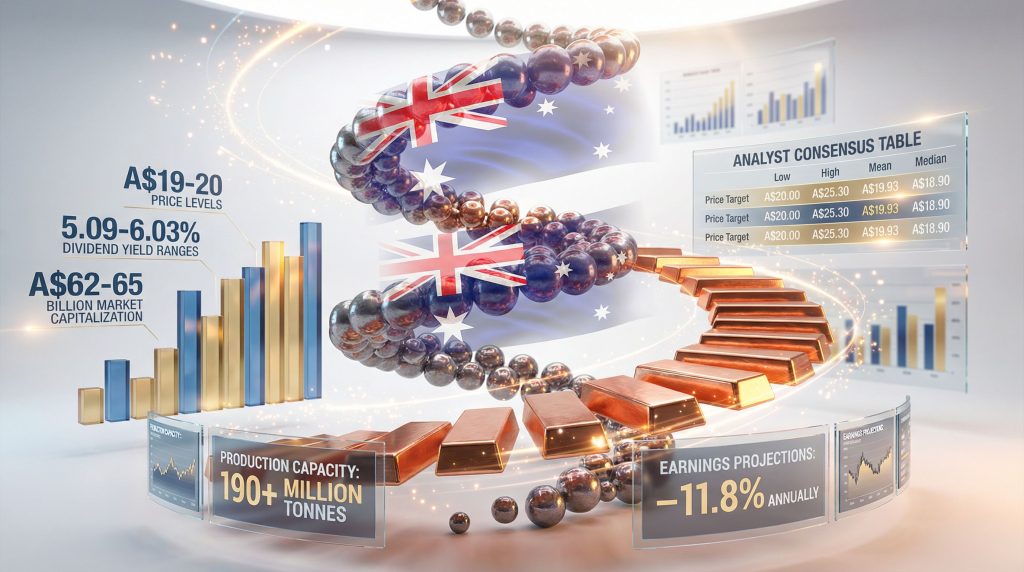
Fortescue Limited currently trades within a A$19-20 price range, representing a notable consolidation following the 35% surge experienced in late 2025. This price action reflects broader market sentiment toward resource companies while maintaining relative stability compared to smaller mining operators.
The company's trailing price-to-earnings ratio of 12.70 positions it competitively within the ASX 200 materials sector, where valuation multiples have compressed due to earnings concerns. Market capitalisation fluctuates between A$62-65 billion, establishing Fortescue as the third-largest iron ore producer globally by market value, behind only BHP Group and Rio Tinto.
Historical volatility patterns suggest the current trading range represents a technical consolidation zone, with support levels identified around A$19.00-19.50. Professional traders monitor these levels closely, as breakouts often signal sustained directional moves in commodity-linked equities.
Dividend Yield Competitiveness in Rising Rate Environment
Income-focused investors examining Fortescue find a dividend yield range of 5.09-6.03%, enhanced by Australia's franking credit system that provides additional tax benefits for domestic shareholders. This yield compares favourably against major ASX dividend miners:
| Company | Dividend Yield | Franking Level | Payout Sustainability |
|---|---|---|---|
| Fortescue (FMG) | 5.09-6.03% | Fully franked | Moderate risk |
| BHP Group (BHP) | 4.85% | Fully franked | Low risk |
| Rio Tinto (RIO) | 5.20% | Fully franked | Low risk |
| South32 (S32) | 6.40% | Fully franked | Higher risk |
The projected annual dividend per share for FY26 stands at $1.02, which translates to a grossed-up yield exceeding 7% including franking credits at current price levels. This income stream becomes particularly attractive during monetary tightening cycles, when traditional fixed-income alternatives may offer limited real returns after inflation adjustment.
Ex-dividend calendar timing affects entry strategies, with quarterly payment schedules providing regular income distribution throughout the fiscal year. Payout ratio sustainability depends heavily on commodity price maintenance and operational cost management.
How Do Global Commodity Dynamics Support Fortescue's Investment Case?
Iron Ore Price Trajectory and Supply-Demand Fundamentals
Current iron ore price trends maintain stability near the US$100 per tonne benchmark, a level that supports healthy margins for low-cost Australian producers. Medium-term forecasts suggest gradual decline toward US$90 per tonne by 2027, reflecting anticipated supply increases from African mining projects and moderated Chinese steel demand.
Chinese infrastructure spending cycles remain the primary demand driver, with government policy announcements regarding construction and urbanisation projects creating price volatility. Steel production capacity utilisation rates currently operate at sustainable levels, supporting baseline demand for high-grade iron ore feedstock.
African supply expansion presents the most significant challenge to Australian producers over the next decade. New mining projects in Guinea, Liberia, and Sierra Leone could add substantial tonnage to global markets, though infrastructure development and political stability concerns may delay some projects.
Key Supply-Demand Factors:
- Chinese steel demand projected to stabilise at current levels through 2026
- Indian infrastructure development creating additional demand growth
- African supply additions may reach 150 million tonnes annually by 2030
- Australian producers maintain cost advantages due to established infrastructure
Geopolitical Risk Premium in Resource Allocation
Middle East conflicts have introduced supply chain complications affecting global energy and logistics costs. Diesel price volatility directly impacts mining operations worldwide, with fuel representing 15-25% of total operational expenses for major iron ore producers.
These geopolitical tensions create potential scenarios where established producers with secure supply chains command premium valuations. Australian mining companies benefit from stable political environments and well-developed export infrastructure, reducing operational risks compared to emerging market alternatives. Furthermore, the tariffs impact on investments adds another layer of complexity to global trade dynamics.
Supply chain disruption scenarios favour producers with diversified transportation options and long-term shipping contracts. Port capacity and rail infrastructure become critical competitive advantages during periods of logistical uncertainty.
Australia's strategic resource security positioning enhances the country's appeal as a reliable supplier to major steel-producing nations, potentially supporting price premiums during geopolitical stress periods.
What Role Does Copper Diversification Play in Long-Term Value Creation?
Strategic Transition Beyond Iron Ore Dependency
Fortescue's Alta Copper Corp acquisition represents a strategic pivot toward multi-commodity operations, reducing dependence on iron ore price cycles. This transaction provides immediate copper production capacity alongside exploration upside in proven mining districts.
Global electrification trends drive copper demand growth projections of 2-3% annually through 2035, supported by renewable energy infrastructure development and electric vehicle adoption. However, the global copper supply outlook suggests supply constraints from aging mines and declining ore grades create favourable long-term pricing dynamics.
Peer diversification strategies offer instructive comparisons:
- BHP Group: Successfully divested petroleum assets to focus on "future-facing commodities"
- Rio Tinto: Maintains aluminium exposure while expanding battery materials portfolio
- Anglo American: Restructuring toward copper, platinum, and diamonds
- Glencore: Leverages integrated trading and mining operations
Revenue stream diversification reduces commodity concentration risk while providing exposure to different economic cycles. In addition, copper demand patterns typically lag iron ore by 6-12 months, potentially smoothing earnings volatility.
Green Energy Infrastructure Investment Implications
Fortescue Future Industries represents the company's commitment to hydrogen project development, though commercial viability remains several years away. Capital allocation toward renewable energy transition metals aligns with institutional investor ESG criteria and regulatory frameworks encouraging decarbonisation.
Copper exposure provides direct participation in global electrification trends:
- Electric vehicles: Require 4x more copper than internal combustion engines
- Renewable energy: Wind and solar installations are copper-intensive
- Grid infrastructure: Smart grid development increases copper demand
- Energy storage: Battery technologies require significant copper content
ESG investment criteria increasingly favour mining companies with clear decarbonisation pathways and exposure to energy transition metals. This trend influences institutional capital allocation decisions and potentially supports valuation premiums for appropriately positioned companies within the evolving mining industry evolution.
How Do Analyst Projections Compare Across Different Valuation Models?
Professional Analyst Consensus Breakdown
| Source Category | Price Target | Methodology | Risk Assessment |
|---|---|---|---|
| Investment Banks (11 analysts) | A$20.00 | DCF/NAV models | Neutral to Bearish |
| Technical Analysis Platforms | A$25.30 | Chart patterns/momentum | Moderately Bullish |
| Fundamental Value Models | A$19.93 | Asset-based valuation | Fair Value |
| Macro-Economic Models | A$18.90 | Commodity cycle analysis | Conservative |
Professional analyst sentiment reflects cautious optimism tempered by commodity price concerns. Investment bank coverage emphasises discounted cash flow models incorporating conservative iron ore price assumptions, while technical analysts identify potential momentum catalysts from chart pattern formations.
Fundamental value models suggest current pricing approximates fair value based on asset replacement costs and reserve quality assessments. These models typically incorporate long-term commodity price assumptions and production cost escalation factors.
Earnings Forecast Reconciliation and Sensitivity Analysis
Consensus earnings projections indicate an 11.8% annual decline reflecting anticipated commodity price normalisation from recent peaks. This forecast incorporates several key assumptions:
- Production volume: 190+ million tonnes annual capacity utilisation
- Iron ore pricing: US$95 per tonne average for FY26-27
- Cost inflation: 4-6% annually for labour and energy inputs
- Currency impact: AUD/USD exchange rate stability around 0.65-0.70
Sensitivity Analysis – Iron ore price impact on earnings per share:
- $110/tonne: +15% above consensus EPS
- $100/tonne: Consensus EPS baseline
- $90/tonne: -12% below consensus EPS
- $80/tonne: -25% below consensus EPS
These sensitivities demonstrate the significant earnings leverage to commodity price movements, emphasising the importance of timing and price cycle positioning for investment returns.
The next major ASX story will hit our subscribers first
What Are the Key Investment Risks and Mitigation Strategies?
Commodity Cycle Volatility Management
Historical iron ore price analysis reveals cyclical patterns with 7-10 year major cycles and 2-3 year minor fluctuations. Understanding these patterns helps investors time entry and exit points while managing portfolio volatility exposure.
Risk Mitigation Strategies:
- Hedging programmes: Forward sales contracts provide price certainty
- Cost structure flexibility: Variable cost components allow margin protection
- Balance sheet strength: Low debt levels enable counter-cyclical investments
- Operational efficiency: Continuous improvement reduces breakeven costs
Fortescue's operational cost structure includes significant variable components, allowing production adjustments during unfavourable price environments. This flexibility provides defensive characteristics not available to higher-cost producers with fixed cost structures. Consequently, investors analysing Fortescue's share performance often highlight this operational flexibility as a key competitive advantage.
Regulatory and Environmental Compliance Considerations
Australian mining taxation frameworks continue evolving, with state governments seeking increased revenue sharing from resource extraction. Mining companies face ongoing compliance costs and potential tax rate changes affecting profitability projections.
Environmental approval processes have become increasingly complex, requiring comprehensive impact assessments and community consultation programmes. These requirements extend project development timelines and increase capital expenditure for new mining operations.
Regulatory Risk Factors:
- Carbon pricing mechanisms: Potential cost increases for high-emission operations
- Water usage restrictions: Seasonal limitations in arid mining regions
- Indigenous land rights: Negotiation complexities for expansion projects
- Export licence conditions: Government oversight of resource exports
Established producers with existing operations face lower regulatory risks than development-stage projects, providing competitive advantages in permitting and community relations.
How Should Investors Position Fortescue Within Portfolio Construction?
Sector Allocation and Risk-Adjusted Returns
Materials sector allocation typically ranges from 5-15% for diversified portfolios, depending on investor risk tolerance and commodity cycle positioning. Fortescue's position within this allocation requires consideration of correlation with other mining holdings and overall portfolio diversification objectives.
Correlation analysis shows strong relationships between Fortescue and broader commodity indices, with correlation coefficients of:
- ASX 200 Materials Index: 0.85 correlation
- Global mining ETFs: 0.72 correlation
- Iron ore futures: 0.91 correlation
- Australian dollar movements: 0.65 correlation
Volatility metrics position Fortescue as a higher-volatility investment compared to defensive dividend alternatives, with annual volatility typically ranging 35-50% versus 15-25% for utility or infrastructure investments. Therefore, understanding iron ore demand insights becomes crucial for proper portfolio positioning.
Entry Strategy and Timing Considerations
Technical analysis identifies support levels around A$19.00-19.50, representing potential entry zones for value-oriented investors. These levels coincide with longer-term moving averages and previous resistance zones that may provide price support.
Investment Timing Approaches:
- Dollar-cost averaging: Reduces timing risk through systematic purchases
- Lump-sum investment: Capitalises on specific valuation opportunities
- Seasonal patterns: Historical strength during Chinese construction seasons
- Earnings announcement timing: Volatility around quarterly results
Quarterly reporting calendar creates predictable volatility periods, with production and sales results driving significant price movements. Strategic investors may time purchases around these events to optimise entry prices.
Dividend capture strategies require careful timing around ex-dividend dates, considering share price adjustments and holding period requirements for franking credit eligibility. For instance, detailed market analysis and insights can help inform these timing decisions.
What Alternative Investment Approaches Exist for Resource Exposure?
Direct Ownership vs ETF/Managed Fund Alternatives
Direct share ownership provides specific exposure to Fortescue's operational performance and strategic decisions, while exchange-traded funds offer diversified mining sector exposure with reduced single-company risk.
VanEck Vectors Australian Resources ETF (MVR) includes Fortescue as a significant holding alongside BHP, Rio Tinto, and other mining companies. This approach provides sector exposure while reducing idiosyncratic risks associated with individual company operations.
Actively managed mining funds employ professional stock selection and portfolio management, potentially adding value through sector expertise and tactical allocation decisions. These funds typically charge higher fees but may provide superior risk-adjusted returns during volatile market conditions.
International diversification through global mining ETFs reduces geographic concentration risk while maintaining commodity exposure. These funds include North American, South African, and South American mining companies alongside Australian producers.
Synthetic Exposure Through Derivatives and Structured Products
ASX-listed warrants and options provide leveraged exposure to Fortescue shares with limited capital requirements. These instruments amplify both gains and losses, requiring sophisticated risk management approaches.
Derivative Investment Options:
- Call options: Leveraged upside participation with limited downside
- Put options: Portfolio hedging or bearish positioning strategies
- Covered call writing: Income enhancement on existing shareholdings
- Protective puts: Downside protection for long positions
Commodity exchange-traded commodities (ETCs) provide direct iron ore price exposure without company-specific operational risks. These products track commodity futures prices and may include contango or backwardation effects affecting returns.
Structured notes linking returns to mining sector performance offer customised risk-return profiles, though complexity and counterparty risks require careful evaluation. These products may provide enhanced yields or capital protection features not available through direct equity investment.
Strategic Investment Decision Framework
Investment Thesis Summary
Base Case Scenario: Fortescue offers stable dividend yield potential with modest capital appreciation opportunities, supported by low-cost iron ore production and strategic copper diversification initiatives. This scenario assumes iron ore prices stabilise around US$95 per tonne with gradual margin normalisation.
Bull Case Drivers: Commodity price recovery driven by supply constraints and unexpected demand strength could generate significant returns. Successful copper acquisition integration and hydrogen project commercialisation provide additional upside catalysts beyond base case assumptions.
Bear Case Risks: Chinese demand deterioration combined with African supply increases could compress margins substantially. Environmental compliance costs and regulatory changes may reduce profitability while limiting expansion opportunities.
Time horizon considerations favour 3-5 year holding periods allowing full commodity cycle participation and strategic initiative implementation. Shorter-term trading approaches require sophisticated timing and risk management capabilities.
Action Steps for Prospective Investors
Portfolio allocation sizing should reflect individual risk tolerance and existing commodity exposure, with suggested weightings of 2-8% for balanced portfolios. Conservative investors may prefer lower allocations, while growth-oriented portfolios could justify higher weightings.
Investment Implementation Process:
- Risk Assessment: Evaluate commodity cycle positioning and portfolio diversification
- Entry Optimisation: Use technical and fundamental analysis for timing decisions
- Monitoring Framework: Track quarterly production reports and commodity trends
- Exit Planning: Establish valuation targets and sector rotation triggers
Entry point optimisation combines fundamental valuation metrics with technical chart analysis to identify favourable risk-reward opportunities. Support level breaks or momentum confirmations may signal optimal timing for position establishment.
Ongoing monitoring requires attention to Chinese steel demand indicators, African supply development progress, and company-specific operational metrics. Quarterly production reports provide key performance indicators for investment thesis validation.
Exit strategy planning should incorporate valuation targets based on commodity price assumptions and relative sector performance metrics. Systematic rebalancing approaches may optimise long-term risk-adjusted returns while maintaining desired portfolio allocations.
For investors seeking comprehensive Australian mining sector exposure with income generation potential, those looking to buy Fortescue shares face a significant opportunity within current market conditions. The combination of established operations, diversification initiatives, and attractive dividend yields creates a compelling investment proposition for those willing to accept commodity cycle risks and volatility.
This analysis contains general investment information and does not constitute personalised financial advice. Commodity investments carry significant risks including price volatility and operational uncertainties. Investors should conduct independent research and consider professional advice before making investment decisions.
Looking to Stay Ahead of ASX Mining Discoveries?
Discovery Alert's proprietary Discovery IQ model delivers instant notifications on significant mineral discoveries across the Australian Stock Exchange, transforming complex geological data into actionable investment insights. Understand why historic discoveries can generate substantial returns by exploring Discovery Alert's dedicated discoveries page, showcasing exceptional outcomes from major finds, and begin your 14-day free trial today to position yourself ahead of the market.