June 24, 2026
France's nuclear dependency on imported uranium has reached a critical juncture where geopolitical tensions necessitate comprehensive supply chain restructuring across multiple African jurisdictions. The dramatic loss of Niger's uranium supplies following military intervention demonstrates vulnerabilities that extend beyond commodity procurement into national energy security. France's uranium supply diversification in Africa represents a strategic imperative driven by the urgent need to reduce single-supplier dependencies whilst maintaining the nuclear fuel requirements for 68.1% of France's electricity generation.
Contemporary uranium market volatility reflects broader shifts in energy security priorities, where diversification strategies must balance immediate supply needs against long-term operational sustainability. This market environment demands sophisticated risk assessment across geological, political, and economic factors that influence project feasibility in diverse African jurisdictions.
Political Instability Transforms Nuclear Fuel Procurement Architecture
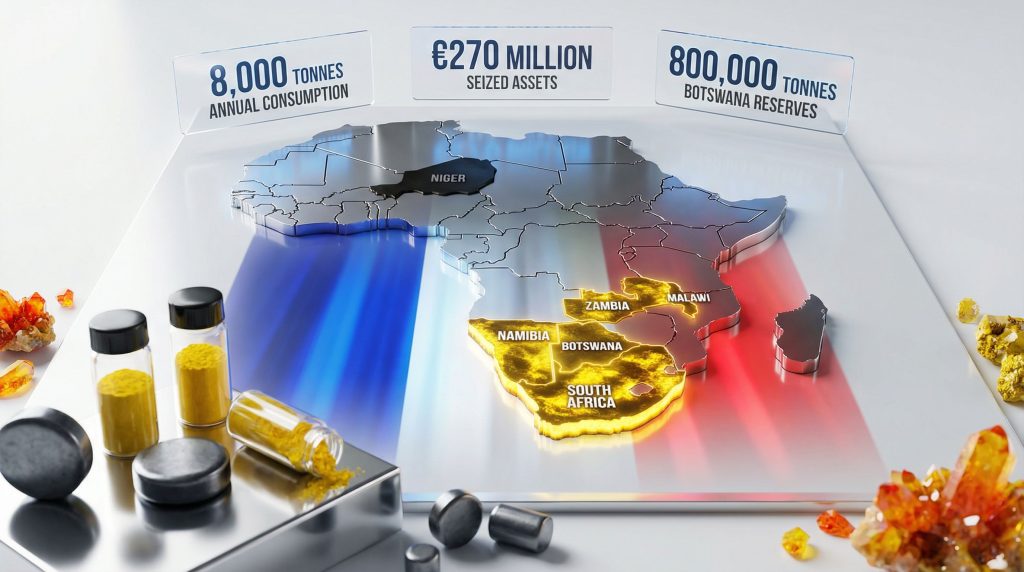
France's uranium supply transformation began with Niger's military intervention in July 2023, effectively ending exports from what had been the country's second-largest uranium supplier. The nationalisation of Orano's Nigerien subsidiary, Somaïr, in June 2025 formalised the conclusion of a relationship that had provided approximately 20% of France's uranium supply for decades.
Nuclear energy accounted for 68.1% of France's electricity mix in 2025, establishing uranium procurement as a fundamental national security concern rather than merely a commodity purchasing decision. France's annual uranium consumption requirements total approximately 8,000 tonnes of natural uranium, creating substantial exposure to supply chain disruptions when major suppliers are eliminated from the procurement portfolio.
The timeline from initial political disruption (July 2023) to formal asset nationalisation (June 2025) demonstrates how geopolitical risks can evolve over extended periods, creating uncertainty for long-term supply planning. Furthermore, the US Senate uranium ban has created additional market pressures that compound France's supply challenges.
Strategic Vulnerability Assessment in Nuclear Dependencies
The Niger supply chain collapse exposed fundamental vulnerabilities in concentrated supplier arrangements, where political shifts can instantly eliminate historical partnerships. Orano's response strategy involving simultaneous engagement across multiple African jurisdictions reflects institutional recognition that single-supplier relationships create unacceptable energy security risks for nations with France's level of nuclear dependency.
The speed of transition from operational partnership to complete asset seizure demonstrates compressed timelines in which geopolitical risks manifest in critical infrastructure sectors. Unlike conventional commodity markets where supply disruptions can be managed through inventory adjustments, uranium's strategic nature and regulatory requirements create limited substitution flexibility when major suppliers are eliminated.
Comparative Analysis of Supply Disruption Impacts
France's uranium procurement challenges differ significantly from conventional energy security threats due to nuclear fuel's unique characteristics:
- Long-term contracting requirements that cannot be rapidly adjusted to market changes
- Regulatory compliance obligations limiting supplier substitution flexibility
- Strategic stockpiling limitations due to material handling and security requirements
- Technical specifications that restrict interchangeability between uranium sources
The Niger disruption occurred simultaneously with global uranium price increases, where nuclear fuel prices nearly doubled since 2023, complicating procurement strategies that must balance supply security against cost optimisation objectives. In addition, uranium spot price trends continue to influence strategic planning decisions.
When big ASX news breaks, our subscribers know first
Botswana Emerges as Primary Long-Term Strategic Partner
Botswana's uranium reserves, estimated at 800,000 tonnes, position the country as the 5th largest African uranium reserve holder and France's most promising long-term supply source. President Duma Boko's diplomatic engagement with French President Emmanuel Macron during recent bilateral meetings demonstrates political commitment to uranium investment attraction at the highest governmental levels.
Orano's formal declaration that uranium exploration in Botswana represents a strategic objective for 2026, with necessary permits already obtained from Botswanan authorities, indicates institutional commitment beyond preliminary assessment. The company's exploration footprint covers approximately 15,000 km² in the Ghanzi region, representing France's largest African exploration commitment in terms of geographic scope.
Production Capacity Modelling and Development Timelines
Lotus Resources' preliminary feasibility study, published in March 2025, projects the Letlhakane project could deliver 3 million pounds of uranium annually over 10 years. This production profile would partially offset Niger's historical contribution while providing operational flexibility for France's diversification strategy.
| Development Metric | Botswana Assessment | Strategic Implications |
|---|---|---|
| Estimated Timeline | 2030-2035 commercial production | Long-term supply solution |
| Resource Base | 800,000 tonnes reserves | Sustained operation potential |
| Exploration Status | Permits secured, active exploration | Advanced development stage |
| Competitive Landscape | Multiple international operators | Market validation |
The competitive environment includes Australia's Pioneer Minerals, which obtained uranium exploration permits in Botswana during 2024, demonstrating international confidence in the jurisdiction's investment fundamentals. This multi-operator presence provides market validation while potentially creating competitive pressure for optimal development timelines.
Geological Assessment and Resource Quality
Botswana's geological formations in the Ghanzi region present characteristics suitable for large-scale uranium extraction, though specific ore grades and metallurgical properties require detailed technical evaluation. The involvement of experienced international operators suggests preliminary geological assessments support commercial viability, though comprehensive resource definition awaits advanced exploration results.
Economic diversification benefits for Botswana extend beyond immediate mining revenues, as uranium operations could establish technical expertise and infrastructure supporting broader mineral sector development in the post-diamond economy transition.
Namibia Functions as Immediate Supply Bridge Strategy
Namibian uranium supply represents a crucial component of France's diversification efforts, given Namibia's status as the world's third-largest uranium producer with Africa's largest reserves. This creates immediate procurement opportunities for France while longer-term alternatives develop. The country's established uranium infrastructure and stable regulatory environment provide operational advantages compared to greenfield development scenarios.
Orano's Trekkopje mine, located 70 kilometres north of Swakopmund, represents France's most immediate restart potential in the African uranium sector. The facility operated briefly between 2008 and 2012 before suspension due to low uranium prices, but market conditions have fundamentally changed since the original closure decision.
Trekkopje Restart Economics and Market Conditions
Nuclear fuel prices have nearly doubled since 2023, creating economic justification for Trekkopje restart consideration that began in 2024. The Namibia Chamber of Mines estimates Trekkopje possesses a remaining mine life of 19 years, suggesting substantial resource base despite extended dormancy.
The transportation advantage of 70km proximity to Swakopmund port provides efficient export logistics to international markets, reducing shipping costs and timeline compared to landlocked African sources. Existing infrastructure including milling equipment, security systems, and environmental management facilities could accelerate restart timelines compared to greenfield development.
Alternative Procurement Through Third-Party Suppliers
France's strategy includes sourcing uranium from Chinese and Australian companies active in Namibia while evaluating Trekkopje restart feasibility. This approach provides immediate supply access through market purchases rather than direct operational involvement, offering flexibility in volatile political environments.
Paladin Resources operates the Langer Heinrich mine in Namibia and maintains active production as one of the world's largest independent uranium producers. This operational capacity represents potential indirect supply sources for France through commercial arrangements rather than direct operational control.
The multi-supplier approach reduces dependence on any single operational asset while maintaining access to Namibian uranium market dynamics through various commercial structures. This strategy demonstrates pragmatic risk management in uncertain geopolitical environments.
Regional Diversification Across Multiple African Jurisdictions
Malawi's return to uranium production through Lotus Resources' Kayelekera mine restart in August 2025 adds another diversification option to France's procurement matrix. The operator targets annual production of 2.4 million pounds over 10 years with first commercial sales planned for the second quarter of 2026.
Identified buyers for Kayelekera production include uranium trader Curzon Uranium and an undisclosed North American electricity company, demonstrating market demand for the project's output. France maintains no direct operational presence in Malawi, but uranium market liquidity allows indirect procurement through supply contracts held by market participants.
South African Reserve Potential and Structural Limitations
South Africa holds 5% of global uranium reserves, positioning just behind Namibia and Niger on the African continent according to World Nuclear Association data. However, these reserves are largely tied to gold mines in the Witwatersrand Basin, making uranium a byproduct extracted in modest volumes rather than primary production focus.
| Country | Reserve Share | Production Status | French Access |
|---|---|---|---|
| South Africa | 5% global reserves | Byproduct extraction | Market procurement |
| Zambia | Muntanga development | Feasibility stage | No direct presence |
| Malawi | Kayelekera restart | Commercial production Q2 2026 | Market contracts |
The structural integration with gold mining operations constrains independent uranium sector development, as production depends on gold mine profitability and operational schedules rather than uranium market dynamics. This creates supply uncertainty that limits strategic planning reliability for large-scale procurement requirements.
Zambian Development Projects and Future Supply
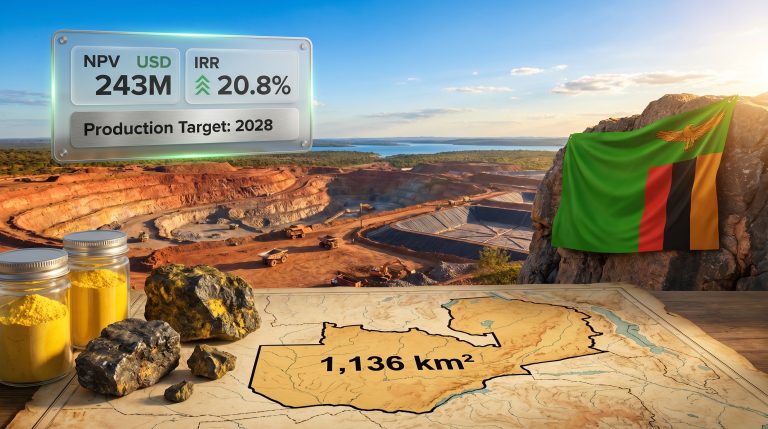
Atomic Eagle's development of the Muntanga project in Zambia represents another emerging supply option, with feasibility studies published in March 2026 projecting average annual production of 2.2 million pounds over a 12-year mine life. The recent completion of feasibility studies indicates near-term development potential, though operational startup requires substantial capital investment and regulatory approvals.
France maintains no direct operational presence in Zambian uranium development, positioning the country as a potential market procurement source rather than direct investment target. The diversification strategy emphasises multiple supply options rather than concentrated operational control in any single jurisdiction.
Political Stability Assessment Across Target Jurisdictions
Geopolitical risk evaluation requires comprehensive assessment of political stability, regulatory frameworks, and infrastructure development across potential supply jurisdictions. France's uranium supply diversification in Africa must balance immediate supply needs against long-term political risk exposure in multiple African countries simultaneously.
| Risk Factor | Botswana | Namibia | Malawi | South Africa | Zambia |
|---|---|---|---|---|---|
| Political Stability | High | High | Moderate | Moderate | Moderate |
| Regulatory Clarity | Strong | Strong | Developing | Established | Developing |
| Infrastructure | Limited | Excellent | Minimal | Good | Minimal |
| Investment Climate | Attractive | Proven | Emerging | Complex | Uncertain |
Colonial Legacy Impact on Investment Relationships
France's historical relationships across Africa create complex dynamics for uranium investment, where colonial legacy can generate both advantages and disadvantages depending on specific country contexts. Neutral positioning by Chinese and Australian operators demonstrates alternative approaches that avoid historical political complications.
Local content requirements and partnership structures vary significantly across jurisdictions, creating different operational models for international uranium companies. Botswana's emphasis on economic diversification creates opportunities for comprehensive partnership arrangements, while other countries may prioritise revenue generation over technology transfer.
Infrastructure Development and Operational Requirements
Transportation infrastructure represents a critical factor in uranium project economics, particularly for landlocked countries like Botswana and Zambia where export logistics require regional coordination. Namibia's coastal access and established mining infrastructure provide immediate operational advantages, while other jurisdictions require substantial infrastructure investment before commercial production.
Security considerations for uranium transport and storage create additional complexity in infrastructure planning, requiring specialised equipment and personnel training that may not exist in emerging uranium jurisdictions. These operational requirements influence project development timelines and capital requirements across different countries.
International Benchmarking and Strategic Comparisons
France's uranium supply diversification in Africa operates within a global context where other nuclear powers pursue similar supply security objectives through different approaches. The United States maintains domestic uranium production capacity while supplementing with international suppliers, creating strategic reserve flexibility unavailable to countries without domestic resources.
China's state-controlled vertical integration approach contrasts sharply with France's market-based procurement strategy, where Chinese companies secure long-term supply through direct investment and operational control rather than commodity purchasing arrangements. This approach provides supply certainty whilst requiring substantial capital deployment across multiple jurisdictions.
Market Concentration Risks and Global Supply Dynamics
Kazakhstan's dominance with approximately 40% of global uranium market share creates systemic concentration risks for all uranium consumers, including France. Uzbekistan and Canada represent alternative non-African sources, though each presents different geological, political, and economic considerations for long-term supply planning.
Strategic reserve policies vary significantly among nuclear powers, with some countries maintaining substantial stockpiles whilst others rely on supply chain flexibility and long-term contracting. Uranium investment strategies emphasise diversification over stockpiling, though this approach requires successful development of multiple supply sources to achieve intended risk reduction.
Demand Growth Projections and Market Evolution
Global uranium demand projections indicate 30% growth through 2035, driven by nuclear capacity expansion and reactor life extensions across multiple countries. This demand growth creates competitive pressure for securing long-term supply arrangements, particularly as new nuclear programs in Asia and the Middle East enter procurement markets.
African uranium production diversification could stabilise pricing dynamics by reducing dependence on Central Asian suppliers, though actual price impacts depend on successful project development and operational reliability across multiple jurisdictions simultaneously.
The next major ASX story will hit our subscribers first
Economic Development Opportunities for African Nations
Uranium mining operations create substantial economic opportunities for host countries through direct employment, government revenues, and technology transfer arrangements. Revenue generation varies significantly based on production scales, ore grades, and fiscal arrangements negotiated with operating companies.
Employment creation extends beyond direct mining operations to include transportation, security, technical services, and community support functions that generate broader economic activity in mining regions. Furthermore, French mining partnerships in Africa demonstrate commitment to technology transfer opportunities that include geological expertise, mining engineering, environmental management, and regulatory development supporting broader mineral sector development.
Regional Integration and Infrastructure Development
Cross-border transportation corridor development could benefit multiple uranium projects simultaneously, particularly for landlocked countries requiring export infrastructure. Shared processing facilities and regional uranium market coordination mechanisms represent potential efficiency improvements, though political coordination across multiple jurisdictions creates implementation challenges.
Regional integration approaches must account for different development timelines, regulatory frameworks, and competitive considerations that may limit cooperation between countries pursuing similar market opportunities simultaneously.
Environmental and Social Governance Considerations
Mining impact assessment across multiple jurisdictions requires comprehensive environmental monitoring and community engagement programmes tailored to local conditions and regulatory requirements. Community benefit-sharing models vary significantly across African countries, creating different expectations and obligations for international uranium companies.
Environmental rehabilitation and closure planning represent long-term obligations that extend decades beyond active mining operations, requiring financial provisioning and technical planning that influences project economics and risk assessment.
Long-Term Market Implications and Strategic Scenarios
France's uranium supply diversification in Africa operates within broader global energy transition dynamics where nuclear power demand faces both growth opportunities and competitive challenges from renewable energy technologies. Supply chain resilience investments must account for evolving nuclear technology requirements and potential demand volatility.
Best-case scenario outcomes include successful development across multiple African jurisdictions, creating redundant supply options that reduce procurement risks whilst supporting African economic development objectives. This scenario requires sustained political stability, successful project execution, and coordinated international investment across several countries simultaneously.
Risk Scenarios and Contingency Planning
Further African political instability could disrupt development timelines and operational reliability across multiple projects, recreating concentration risks in different jurisdictions. Climate change impacts on water resources, extreme weather events, and environmental regulations may influence uranium mining feasibility in various African locations.
Contingency planning considerations include domestic uranium exploration potential, alternative supplier development in other regions, and strategic stockpiling policies that provide supply security during transition periods. These alternatives require different investment approaches and longer development timelines than African diversification strategies.
Investment Disclaimer: This analysis contains forward-looking statements regarding uranium market dynamics, political stability assessments, and project development timelines that involve inherent uncertainties. Uranium markets are subject to geopolitical risks, regulatory changes, and technological developments that may materially differ from projections presented. Investors should conduct independent due diligence and seek professional advice before making investment decisions related to uranium or nuclear energy sectors.
Looking to Capitalise on Africa's Uranium Market Transformation?
France's strategic pivot across African uranium jurisdictions highlights the critical importance of real-time intelligence in rapidly evolving mineral markets. Discovery Alert's proprietary Discovery IQ model delivers instant notifications on significant ASX mineral discoveries, including uranium opportunities, ensuring subscribers stay ahead of market-moving announcements as they unfold. Explore historic examples of exceptional discovery returns and begin your 14-day free trial today to secure your competitive edge in this dynamic sector.