
June 24, 2026
The Race to Build Africa's Next Uranium Mine Has Quietly Reached a Turning Point
Uranium project development has always been a discipline of patience. Unlike base metals, where permitting timelines can sometimes be measured in months, uranium projects carry a unique regulatory burden shaped by public perception, nuclear non-proliferation considerations, and the environmental complexity of radioactive material management. In Africa particularly, the gap between a geologically promising resource and a fully permitted development asset can span years, sometimes decades. Against that backdrop, the completion of dual regulatory clearances at the Muntanga Uranium Project in Zambia represents something the uranium development sector rarely sees: a genuine compression of the timeline.
Atomic Eagle Limited, the Australian-listed mineral exploration and development company advancing the Muntanga Uranium Project, has secured two foundational approvals that together remove the most structurally challenging non-technical barriers to project construction. The Zambia Environmental Management Agency (ZEMA) has granted formal approval for the project's Environmental and Social Impact Assessment (ESIA), while the Office of the Vice President's Resettlement Division has issued a "No Objection" determination for the project's Resettlement Action Plan (RAP). Both clearances were secured by June 2026, nine months after the ESIA was first submitted to ZEMA in September 2025.
For those tracking the Muntanga Uranium Project Zambia approvals process closely, this milestone carries weight well beyond the regulatory checkbox it represents.
When big ASX news breaks, our subscribers know first
Understanding What These Two Approvals Actually Mean
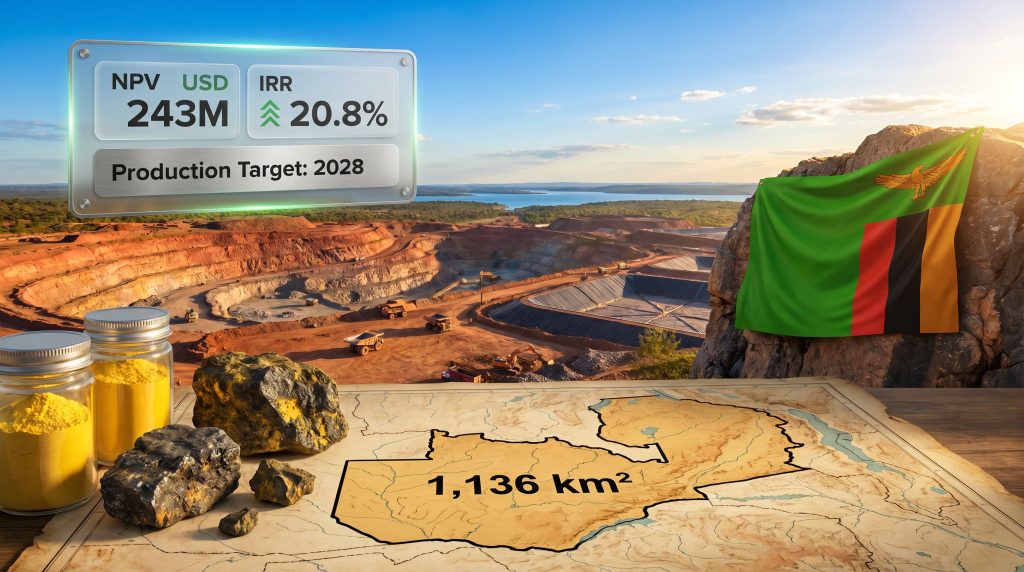
In African mining jurisdictions, environmental and social approvals are almost universally the longest lead-time items on a project's critical path. They involve multi-agency coordination, community engagement processes that cannot be rushed, and technical reviews that frequently uncover issues requiring supplementary studies. The fact that both approvals were obtained within a nine-month window, covering a project area of 1,136 square kilometres across one of the more environmentally sensitive corridors in Zambia (the project sits near Lake Kariba), speaks to the quality of the underlying assessment work.
The two clearances serve distinct but complementary functions:
| Approval Type | Issuing Authority | Core Function |
|---|---|---|
| Environmental and Social Impact Assessment (ESIA) | Zambia Environmental Management Agency (ZEMA) | Confirms that environmental and social impact management measures satisfy regulatory standards |
| Resettlement Action Plan (RAP) "No Objection" | Office of the Vice President's Resettlement Division | Authorises the community relocation and livelihood restoration framework |
The ESIA process was not a formality. It proceeded through formal technical review panels, multiple rounds of stakeholder consultation involving community representatives and independent technical reviewers, and on-site inspections by ZEMA officers who verified field conditions against submitted assessments. A nine-month timeline from submission to clearance, for a project of this scale and environmental complexity, reflects thorough institutional scrutiny rather than an expedited pathway.
The RAP approval carries particular significance for the project's financing prospects. It has been developed in alignment with the International Finance Corporation's (IFC) Performance Standards, which represent the globally recognised benchmark for environmental and social risk management in project finance. Development finance institutions (DFIs) and a growing proportion of commercial lenders now treat IFC PS compliance as a prerequisite, not a preference. By satisfying this standard at the RAP level, the project's community resettlement framework is effectively pre-qualified for DFI participation in the eventual financing structure.
"The IFC Performance Standards have become the de facto access credential for African mining projects seeking institutional debt. A project that cannot demonstrate IFC PS alignment at the resettlement stage will find its financing universe materially narrowed before it even reaches a credit committee."
The Bankable Feasibility Study: How the Economics Stack Up
The regulatory approvals do not exist in isolation. They build on a Bankable Feasibility Study (BFS) completed in January 2025, prepared to NI 43-101 compliance standards, which established the following economic parameters:
| Metric | Value |
|---|---|
| After-Tax Net Present Value (NPV) | USD 243 million |
| Internal Rate of Return (IRR) | 20.8% |
| Targeted Production Commencement | 2028 |
| Compliance Standard | NI 43-101 (Canadian) |
An after-tax IRR of 20.8% is a meaningful figure in the context of global uranium development. Furthermore, uranium projects are capital-intensive by nature, and heap-leach processing infrastructure, while more capital-efficient than conventional pressure leach or solvent extraction milling circuits, still demands substantial upfront investment. Projects in the 15–20% IRR range are generally considered viable; clearing 20% signals a project that retains economic robustness under moderate stress scenarios involving uranium price softening or cost escalation.
Letters of Intent (LOIs) from financing institutions have already been received, indicating that institutional lenders have assessed the project's fundamentals and expressed preliminary commitment. Converting those LOIs into binding facility agreements is the next material catalyst. The feasibility study results provide the technical and financial foundation underpinning those discussions.
Why Heap-Leach Processing Is the Right Method for Muntanga
The choice of heap-leach uranium processing over conventional milling is not arbitrary. It reflects the geological character of the Muntanga and Dibbwi East deposits, where the mineralisation profile suits a lower-capital, larger-footprint processing approach.
- Capital efficiency: Heap-leach circuits require significantly less upfront capital than conventional pressure leach or acid tank leach mills, making them better suited to projects where resource tonnage is the advantage rather than high grade.
- Operational precedent: Heap-leach uranium extraction has a demonstrated track record at operations in Namibia and the United States, providing engineering and operational templates applicable to Zambian conditions.
- Environmental management complexity: The proximity to Lake Kariba introduces specific requirements around lined pad design and leachate containment. These are manageable engineering challenges, but they are reflected in the ESIA's impact management conditions.
- Processing cycle trade-offs: Heap-leach circuits operate over longer recovery cycles than conventional milling, which affects working capital requirements and production ramp-up profiles. However, for a project of Muntanga's scale, the capital efficiency advantage typically outweighs the recovery rate differential.
The authorised development plan covers the full operational lifecycle: open-pit mining at Muntanga and Dibbwi East, construction of a centralised processing plant, ongoing production operations, and eventual site rehabilitation.
The Licence Portfolio and the Chisebuka Growth Vector
The Muntanga Uranium Project holds a licence package that gives it both near-term development assets and medium-term resource expansion potential.
| Licence Type | Number of Licences | Key Assets |
|---|---|---|
| Mining Licences | 4 | Muntanga, Dibbwi, Chirundu, associated deposits |
| Exploration Licences | 2 | Chisebuka and additional prospective targets |
| Total Project Area | 6 licences | 1,136 km² across a 146 km strike length |
The Chisebuka deposit is the project's most actively developing resource extension story. Located within the exploration licence portfolio, Chisebuka has recently returned resource extension drilling results confirming the continuation of uranium mineralisation beyond previously defined boundaries. The deposit has attracted targeted drilling activity from multiple operators over its history, validating the geological prospectivity of the broader licence corridor.
What makes Chisebuka particularly interesting from a resource development perspective is its position within the same 146-kilometre mineralised corridor that hosts the main Muntanga deposits. Strike continuity along corridors of this length is a well-established geological indicator of system-scale mineralisation, and the corridor's full potential remains incompletely tested. Additional resource definition drilling at Chisebuka ahead of the financing process could materially strengthen the project's total resource inventory.
Zambia in the African Uranium Landscape: An Underappreciated Position
Zambia has historically sat in the shadow of Namibia in African uranium production discussions. Namibia hosts two of the continent's largest operating uranium mines, the Rössing and Husab operations, which together produce approximately 5,000 to 6,000 tonnes of uranium oxide per year in combined output. Niger, prior to the political disruptions that affected its mining sector, contributed a further estimated 2,000 tonnes annually from the Arlit and Akouta operations.
Zambia has not featured in this production profile. However, that absence reflects historical under-investment in permitting and development rather than a lack of geological endowment. Understanding the broader global uranium reserves picture helps explain why Zambia's position is increasingly significant — Africa holds an estimated 20% of global uranium reserves, yet its contribution to annual production has been structurally disproportionate to that reserve base.
| Country | Key Project(s) | Status | Approximate Annual Output |
|---|---|---|---|
| Namibia | Rössing, Husab | Operating | ~5,000-6,000 tU/year combined |
| Niger | Arlit, Akouta | Historically operating; disrupted post-2023 | ~2,000 tU/year (pre-disruption) |
| Tanzania | Mkuju River | Development stage | TBD |
| Zambia (Muntanga) | Muntanga, Dibbwi, Chirundu | Permitting complete; pre-financing | 2028 production target |
The geopolitical dimension amplifies Zambia's potential significance. Western nuclear utilities have been systematically building alternatives to Russian-enriched uranium supply chains following the geopolitical disruptions of 2022 and subsequent years. In this context, uranium supply challenges facing the global market make African projects with transparent permitting histories, IFC-compliant governance frameworks, and stable host jurisdiction characteristics increasingly attractive to utilities in Europe, North America, and Asia-Pacific seeking long-term offtake security. Zambia's political stability relative to parts of the Sahel, combined with its established mining regulatory framework, gives Muntanga a differentiated positioning that purely geological comparisons would miss.
The Critical Path from Approval to First Uranium Production
The regulatory clearances are necessary but not sufficient for reaching first production. The critical path forward involves several sequential steps:
- Satisfy implementation conditions attached to the ESIA and RAP approvals, including finalising environmental management plans, establishing community liaison structures, and confirming monitoring framework specifications.
- Execute the project financing package, converting existing LOIs from financing institutions into binding facility agreements and finalising equity co-investment structures.
- Advance detailed engineering, progressing from feasibility-level design documentation to full engineering and procurement planning.
- Commence construction, targeting a schedule consistent with the 2028 production start.
- Commission processing infrastructure, including heap-leach pad construction, centralised processing plant installation, and reagent supply chain establishment.
Key Risk Factors Worth Monitoring
- Uranium price sensitivity: The project economics in the BFS are built on specific long-term contract price assumptions. Structural movements in the uranium market volatility above or below those assumptions will flow directly into financing terms and project returns.
- Resettlement execution complexity: RAP approval authorises the framework; physically executing community relocation and delivering livelihood restoration outcomes on the ground is a more operationally challenging task that requires sustained community engagement beyond the approval stage.
- Financing market conditions: DFI appetite for African uranium projects and commercial lender terms for mining project finance will influence both the cost of capital and the timeline to financial close.
- Implementation condition scope: Any conditions attached to the ESIA approval requiring supplementary studies or additional monitoring infrastructure could introduce variability into the construction timeline.
Disclaimer: This article contains forward-looking statements regarding project timelines, economic projections, and financing outcomes. These involve inherent uncertainty and should not be construed as financial advice. Past performance of uranium markets or comparable projects is not indicative of future outcomes. Readers should conduct independent due diligence before making investment decisions.
The next major ASX story will hit our subscribers first
What the Next 18 Months Will Reveal
The Muntanga Uranium Project Zambia approvals have transformed the project's risk profile in a single regulatory step. An asset that carried environmental and social approval uncertainty now carries a different, more tractable set of risks centred on financing execution and operational planning. For observers of African uranium development, three developments in the coming 18 months will be most instructive:
- Conversion of financing LOIs into binding facility agreements, the single most consequential near-term catalyst.
- Progress reports on community resettlement implementation, which will signal whether the RAP's framework is translating effectively into ground-level outcomes.
- Further drilling results at Chisebuka, which could expand the project's resource inventory and strengthen its financing case before facility agreements are finalised.
The uranium market dynamics entering the second half of the 2020s are structurally different from those that existed when many of Africa's prospective projects were first explored. Global nuclear capacity additions are accelerating across Europe, Japan, and emerging economies in South and Southeast Asia. Furthermore, the spot uranium price has undergone significant structural repricing since 2021, and long-term contract markets have followed.
Consequently, the broader uranium market trends point to sustained demand growth that rewards projects clearing their permitting milestones early. A project that demonstrates NI 43-101 compliant economics above 20% IRR, holds IFC-aligned governance, and sits within a politically stable African mining jurisdiction with established regulatory processes, occupies a materially stronger position in that market than it would have at any point in the past decade. The Muntanga project now sits at exactly that intersection.
Want to Catch the Next Major Mineral Discovery Before the Broader Market Does?
Discovery Alert's proprietary Discovery IQ model scans ASX announcements in real time, instantly identifying significant mineral discoveries — including uranium and other energy commodities — and delivering actionable insights to subscribers ahead of the crowd. Explore how historic discoveries have generated substantial returns on Discovery Alert's dedicated discoveries page, and begin your 14-day free trial today to position yourself at the forefront of the next major find.