May 20, 2026
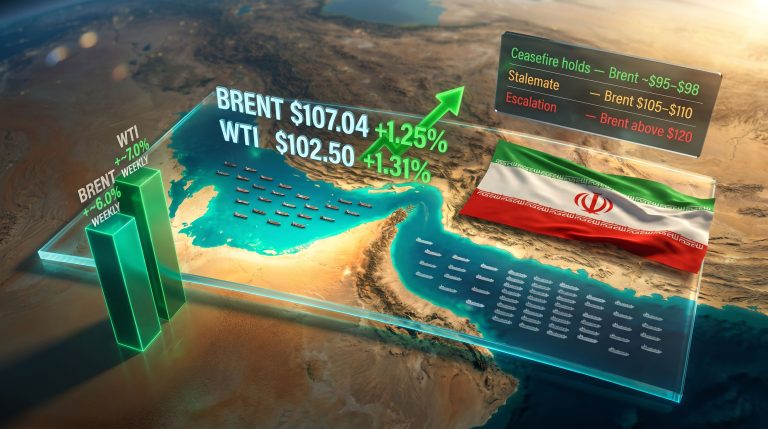
Global energy markets face unprecedented uncertainty as maritime chokepoints become focal points of geopolitical tension. The intersection of international law, energy security, and regional stability creates complex scenarios that demand careful analysis of transit rights, alternative infrastructure, and economic resilience. Understanding these dynamics requires examining multiple layers of risk, from immediate supply disruptions to long-term structural changes in global energy architecture, particularly regarding free passage through the Strait of Hormuz.
Understanding Maritime Transit Rights in Critical Energy Corridors
The legal framework governing navigation through international straits establishes fundamental principles that transcend regional conflicts. Under the United Nations Convention on the Law of the Sea (UNCLOS), free passage through the Strait of Hormuz represents more than a commercial convenience; it constitutes a cornerstone of international maritime law that protects global energy flows.
Legal Framework Governing International Strait Navigation
Transit passage rights under UNCLOS Article 37 provide vessels with guaranteed access through straits used for international navigation. These provisions specifically address waterways connecting high seas or exclusive economic zones, ensuring that coastal states cannot unilaterally restrict passage for political purposes. The framework distinguishes between innocent passage and transit passage, with the latter offering stronger protections for commercial shipping.
Customary international law reinforces these protections, establishing precedents that even non-signatory states generally recognize. The principle of freedom of navigation has evolved through centuries of maritime practice, creating legal obligations that extend beyond formal treaty commitments. Coastal states retain authority over safety regulations and environmental protection but cannot leverage these powers to achieve political objectives.
Economic sanctions present a particular challenge within this legal framework. While individual nations may impose restrictions on specific vessels or cargoes, international law prohibits blanket closures of strategic waterways. The distinction between legitimate security measures and unlawful interference often becomes a matter of interpretation and enforcement capability.
The Strait of Hormuz: Geographic and Strategic Overview
Physical constraints make the Strait of Hormuz uniquely vulnerable to disruption. The waterway narrows to approximately 21 miles at its narrowest point between Iran and Oman, with shipping channels concentrated in even smaller areas. Two-mile-wide shipping lanes separate inbound and outbound traffic, creating natural bottlenecks that amplify security concerns.
Traffic separation schemes implemented by the International Maritime Organization designate specific routes for different vessel types. Tankers carrying crude oil and LNG follow prescribed paths that can accommodate the largest commercial vessels, but alternative routing options remain limited by depth and width constraints.
The strait handles an extraordinary volume of energy cargo daily. Current disruptions have affected approximately one-fifth of global oil and LNG shipments, according to recent industry assessments. This concentration reflects the geographic reality that major Gulf producers have few alternatives for reaching international markets efficiently.
Regional maritime infrastructure includes sophisticated navigation aids and monitoring systems, but these same technologies can become tools of control during conflicts. Radar installations, communication networks, and port facilities represent critical points where political decisions translate into operational impacts on commercial shipping.
When big ASX news breaks, our subscribers know first
How Much Global Energy Supply Depends on Hormuz Transit?
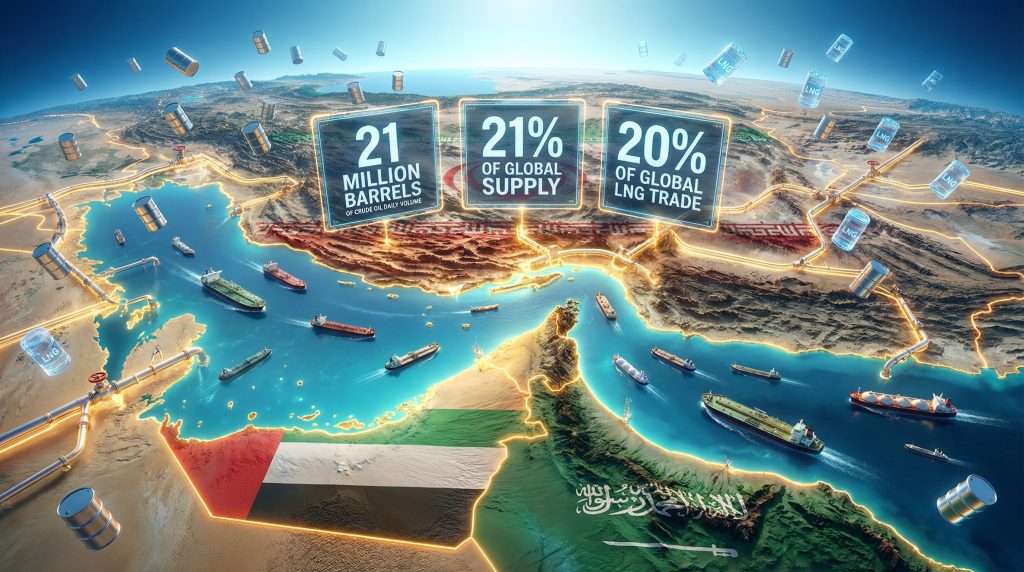
The scale of energy flows through this single chokepoint reveals the depth of global dependence on Middle Eastern production. Recent assessments indicate that disruptions have affected approximately 21% of global oil supply and 20% of LNG trade, confirming the strait's role as an irreplaceable component of international energy infrastructure. Furthermore, understanding these trade war oil impact dynamics becomes crucial for predicting market responses.
Oil and LNG Flow Statistics Through the Strait
| Energy Type | Estimated Daily Volume | Global Share | Primary Exporters |
|---|---|---|---|
| Crude Oil | 21+ million barrels | 21% of global supply | Saudi Arabia, UAE, Kuwait, Iraq |
| Liquefied Natural Gas | 3.5+ billion cubic feet | 20% of global LNG trade | Qatar, UAE, Iran |
| Refined Products | 2.5+ million barrels | 8% of global trade | Regional refineries |
These volumes represent more than statistical abstractions; they form the backbone of industrial economies worldwide. Japan imports approximately 85% of its oil through Hormuz-related routes, while South Korea relies on the strait for 70% of its petroleum needs. China, despite diversified supply sources, still depends on Hormuz for roughly 45% of its oil imports.
The concentration of LNG exports amplifies vulnerability for countries pursuing cleaner energy transitions. Qatar's position as a dominant LNG supplier means that Hormuz disruptions directly impact decarbonisation strategies in Asia and Europe. Recent force majeure declarations by QatarEnergy on some LNG contracts illustrate how quickly geopolitical tensions translate into contractual disruptions.
Economic Impact of Supply Disruptions
Price volatility during transit disruptions follows predictable but severe patterns. Current tensions have prompted warnings that oil prices could reach $150 per barrel under extreme scenarios, according to major financial institutions. Such increases would trigger widespread economic consequences, potentially including global recession conditions.
Strategic petroleum reserve systems provide temporary buffers, but their effectiveness depends on disruption duration and global coordination. Japan maintains reserves exceeding 180 days of normal consumption, while most developed economies target 90-day minimum stockpiles. However, these reserves cannot indefinitely compensate for sustained supply disruptions from such a critical source.
Insurance markets respond immediately to transit risks, with premium increases for tankers transiting disputed waters often reaching double-digit percentage points. These costs ultimately flow through to consumers via refined product pricing, amplifying the economic impact beyond direct commodity price effects.
Alternative route capacity limitations create additional price pressures. While some infrastructure exists to bypass Hormuz, total alternative capacity covers only 60-70% of normal flows, ensuring that any significant disruption creates lasting market imbalances.
What Are the Alternative Energy Transport Routes When Hormuz Access Is Restricted?
Infrastructure alternatives to Hormuz transit reveal both the foresight of strategic planning and the limitations of geographic reality. The SUMED pipeline offers one key alternative for Gulf oil exports, providing a direct connection between Red Sea and Mediterranean terminals. However, even this major infrastructure asset cannot handle the full volume of Hormuz-dependent flows.
Pipeline Bypass Options
Saudi Arabia's East-West Pipeline, known as Petroline, represents the most significant single alternative to Hormuz transit. With capacity exceeding 5 million barrels per day, this system can handle substantial volumes but cannot accommodate the full range of Gulf exports. The pipeline's strategic importance has grown as regional tensions have intensified.
The UAE's Habshan-Fujairah pipeline system provides another crucial alternative, linking Abu Dhabi's onshore production directly to the Indian Ocean. This infrastructure bypasses both the Strait of Hormuz and the Persian Gulf entirely, offering genuine supply security for UAE exports. However, capacity constraints limit its ability to serve broader regional needs.
Iraq's pipeline infrastructure presents more complex challenges. The Iraq-Turkey pipeline offers potential export alternatives, but political instability and technical limitations have historically constrained reliable operations. Recent assessments suggest that Iraq border crossings could export 200,000 barrels per day by truck, according to local officials, though this represents a fraction of the country's total production.
Iranian pipeline alternatives remain largely theoretical due to international sanctions and political isolation. While Iran possesses significant pipeline infrastructure connecting to Central Asian markets, these routes cannot replace Persian Gulf export terminals for global market access.
Maritime Alternative Routes
Cape of Good Hope routing provides the primary maritime alternative when Hormuz access becomes unavailable. This route adds approximately 2-3 weeks to transit times for shipments to Asian markets, significantly increasing transportation costs and reducing supply chain flexibility. Larger tankers can utilise this route more efficiently, but port infrastructure limitations constrain overall capacity.
Suez Canal capacity becomes critical when alternative maritime routes experience increased utilisation. The canal can accommodate substantial additional traffic, but congestion risks increase when normal shipping patterns are disrupted. Egyptian authorities have historically maintained flexible policies during supply emergencies, but physical constraints ultimately limit throughput.
Red Sea security considerations add complexity to alternative maritime routing. Recent regional conflicts have demonstrated that alternative routes may face their own security challenges, potentially compounding rather than resolving supply disruptions.
Emergency Transport Mechanisms
Trucking capacity provides flexibility for emergency situations but cannot scale to replace maritime volumes. Regional road networks can handle increased traffic, but 200,000 barrels per day represents near maximum capacity for cross-border trucking operations, according to Iraqi officials. Fuel costs, border procedures, and vehicle availability create additional constraints.
Rail transport infrastructure remains underdeveloped across much of the Middle East, limiting its utility as an emergency alternative. While some countries have invested in railway expansion, current capacity cannot meaningfully supplement maritime transport for energy exports.
Strategic reserve drawdown protocols become essential when alternative transport proves insufficient. International Energy Agency coordination mechanisms can help manage reserve releases, but these measures provide temporary relief rather than sustainable solutions to prolonged disruptions.
Which Countries Face the Greatest Energy Security Risks?
Energy import dependency patterns reveal stark vulnerabilities across different regions and economic systems. Asian economies face particularly acute risks due to their heavy reliance on Middle Eastern energy supplies combined with limited alternative sources and geographic constraints. Additionally, these economies must navigate energy transition challenges while maintaining energy security.
Import Dependency Analysis by Region
| Region/Country | Hormuz Dependency | Alternative Supply Options | Strategic Reserve Capacity |
|---|---|---|---|
| Japan | 85% of oil imports | Australia, North Sea, Americas | 180+ days |
| South Korea | 70% of oil imports | Americas, North Sea, Russia | 90+ days |
| China | 45% of oil imports | Russia, Central Asia, Americas | 90+ days |
| India | 60% of oil imports | Americas, Africa, Russia | 74+ days |
| European Union | 25% of oil imports | North Sea, Russia, Africa | 90+ days |
These dependency ratios translate directly into economic vulnerability during supply disruptions. Japan's industrial economy faces immediate pressure when Middle Eastern supplies become uncertain, despite maintaining the world's largest strategic petroleum reserves relative to consumption.
Kuwait's position as both an exporter and potential victim of disruptions creates unique challenges. Recent statements from Kuwait Oil CEO describe Iran as holding the world's economy hostage, reflecting the perspective of regional producers who depend on Hormuz for market access. Kuwait Petroleum Corporation's production cuts during recent tensions illustrate how quickly geopolitical events translate into supply decisions.
GCC financial markets have already shown stress indicators, with liquidity of GCC US dollar sukuk and bonds falling since the start of regional conflict, according to credit rating agencies. This financial market reaction demonstrates how energy security concerns immediately affect broader economic confidence.
Industrial Sector Vulnerability Assessment
Petrochemical manufacturing represents a particularly vulnerable industrial sector due to its dual dependence on crude oil feedstocks and energy for processing. Regional petrochemical complexes in Asia process substantial volumes of Middle Eastern crude, creating supply chain dependencies that extend well beyond simple energy consumption.
Power generation systems in oil-dependent countries face immediate operational constraints when supply disruptions occur. Countries that rely heavily on oil-fired power plants cannot quickly substitute alternative fuels, creating potential for electrical grid instability during prolonged supply interruptions.
Transportation sectors experience cascading effects as refined product availability becomes constrained. Airlines, shipping companies, and trucking operations all face immediate cost pressures and potential supply shortages when crude oil disruptions affect refinery operations globally.
How Do Geopolitical Tensions Affect Transit Passage Rights?
Current tensions have created a practical test of international maritime law principles. The U.S.-Israeli conflict with Iran has effectively halted shipments of approximately one-fifth of global oil and LNG through the strait, demonstrating how geopolitical disputes can override legal frameworks through practical enforcement mechanisms. Consequently, this has prompted detailed oil price rally analysis to understand market responses.
Legal Precedents for Strait Closure Attempts
Historical precedents provide limited guidance for current situations due to the unprecedented scale of modern energy flows. The 1980s Tanker War between Iran and Iraq established some principles regarding neutral shipping protection, but current conflicts involve different legal and political dynamics.
International Court of Justice jurisdiction over strait closure disputes depends on state consent and specific treaty obligations. While UNCLOS provides dispute resolution mechanisms, enforcement ultimately requires political will and practical capability from the international community.
Diplomatic Mechanisms for Ensuring Passage
High-level diplomatic engagement continues despite ongoing conflicts. Recent meetings between ADNOC CEO Sultan Al Jaber and U.S. Vice President JD Vance focused specifically on free passage through the Strait of Hormuz as the only durable solution to stabilising global markets. Such direct communications between energy leaders and political authorities underscore the critical nature of maintaining transit access.
Regional organisations play important roles in coordinating responses to transit threats. The GCC Secretary-General's welcome of UNHRC resolutions condemning Iranian aggression demonstrates institutional frameworks for collective diplomatic action, though enforcement mechanisms remain limited.
Multilateral naval cooperation provides practical support for diplomatic initiatives. Freedom of navigation operations by international coalitions help maintain actual transit capabilities while diplomatic solutions are pursued, though these operations carry inherent escalation risks.
Military Contingency Planning
Naval escort operations represent the most direct military response to transit threats. Coalition naval forces maintain presence in regional waters specifically to protect commercial shipping, but the effectiveness of these operations depends on the scale and nature of threats encountered.
Mine-clearing capabilities become essential when physical barriers threaten navigation channels. Specialised naval units maintain equipment and expertise for rapid mine clearance operations, but such activities require weeks or months to complete thoroughly after deployment.
Port security enhancements provide additional layers of protection for energy infrastructure. Terminal facilities, loading systems, and storage capabilities all require security measures that extend beyond simple naval patrols to comprehensive area denial systems.
What Economic Scenarios Emerge from Different Closure Duration Models?
Economic modelling of strait closure scenarios reveals escalating consequences as disruption duration extends. Short-term impacts focus primarily on price volatility and inventory management, while longer disruptions trigger structural changes in global energy systems. Moreover, these scenarios must consider the broader implications for energy security insights.
Short-Term Disruption Impacts (1-30 Days)
Immediate price responses follow established patterns of supply shock reactions. Current warnings suggest oil prices could reach $150 per barrel under severe disruption scenarios, representing increases of $80-100 above normal trading ranges. Such dramatic price movements would trigger automatic responses across financial markets and government policy mechanisms.
Strategic reserve coordinated releases provide the primary policy response to short-term disruptions. International Energy Agency protocols enable synchronised reserve deployments across member countries, potentially offsetting 2-4 million barrels per day of lost supply for limited periods.
Shipping route diversification costs escalate rapidly as alternative routes reach capacity constraints. Charter rates for available tankers increase exponentially when normal supply chains face disruption, with some routes experiencing triple normal transportation costs.
Medium-Term Adaptation Strategies (1-6 Months)
Supply contract renegotiations become necessary as force majeure declarations proliferate. QatarEnergy's announcement of force majeure on some LNG contracts exemplifies how extended disruptions require legal and commercial restructuring of energy supply relationships.
Pipeline capacity utilisation reaches maximum levels as alternative infrastructure absorbs displaced volumes. The SUMED pipeline's role as a key alternative for Gulf oil exports becomes critical, though capacity constraints limit total throughput regardless of demand.
Industrial production adjustments reflect demand destruction as energy costs reach unsustainable levels. Manufacturing sectors reduce operations, transportation systems implement rationing measures, and power generation shifts toward alternative fuels where technically feasible.
Long-Term Structural Changes (6+ Months)
Permanent supply chain reconfiguration emerges as companies and countries reduce dependence on vulnerable chokepoints. New long-term contracts emphasise supply security over cost optimisation, fundamentally altering global energy trade patterns.
Infrastructure investment acceleration focuses on alternative transport capacity. Pipeline projects, storage facilities, and alternative port development receive emergency funding and expedited regulatory approval to reduce future vulnerability.
Energy transition programmes gain political and economic momentum as supply security concerns override traditional cost-benefit analyses. Renewable energy deployment, efficiency improvements, and alternative fuel development receive increased investment priority.
The next major ASX story will hit our subscribers first
How Are Energy Companies and Investors Responding to Transit Risks?
Corporate risk management strategies have evolved rapidly as transit vulnerabilities become operational realities. Kuwait Petroleum Corporation's production cuts and QatarEnergy's force majeure declarations represent immediate tactical responses, while longer-term strategic adjustments focus on supply chain resilience and diversification. Additionally, companies are closely monitoring OPEC oil production increase decisions to inform their strategies.
Corporate Risk Management Strategies
Production optimisation has become a primary tool for managing supply chain uncertainty. ADES reports that a handful of offshore rigs in the GCC are temporarily suspended, reflecting how drilling contractors adjust operations based on regional security assessments. These operational adjustments help companies minimise exposure while maintaining flexibility for rapid resumption when conditions improve.
Inventory management strategies now emphasise security of supply over traditional just-in-time efficiency. Companies are rebuilding buffer stocks at multiple points in their supply chains, accepting higher carrying costs in exchange for operational flexibility during disruptions.
Long-term contract restructuring incorporates force majeure provisions specifically addressing geopolitical risks. Energy companies are renegotiating supply agreements to include clearer language about disruption scenarios and alternative performance mechanisms.
Infrastructure Investment Trends
Alternative pipeline development has accelerated as companies seek to reduce chokepoint dependencies. The SUMED pipeline's enhanced importance during current disruptions has triggered increased investment in similar bypass infrastructure across other vulnerable regions.
Strategic storage facility construction focuses on locations that provide maximum supply chain flexibility. New storage projects emphasise sites with multiple transportation options, allowing companies to optimise logistics based on prevailing security conditions.
Renewable energy project acceleration reflects both supply security concerns and economic considerations. As traditional energy costs become more volatile, renewable alternatives gain competitive advantage while providing energy independence benefits.
Financial Market Implications
Credit markets have shown immediate sensitivity to regional energy companies' exposure to transit risks. Liquidity of GCC US dollar sukuk and bonds has fallen since the start of regional conflict, according to credit rating agencies, reflecting investor concerns about revenue stability for Gulf-based energy companies.
Equity valuations reflect differentiated risk assessments based on companies' geographic exposure and supply chain flexibility. Energy companies with diversified transport options command premium valuations compared to those heavily dependent on single chokepoints.
Commodity futures markets exhibit increased volatility as uncertainty about supply continuity creates wider trading ranges and reduced market depth. Professional traders require higher risk premiums for positions exposed to geopolitical supply disruption scenarios.
What Role Do International Organisations Play in Maintaining Free Passage?
International organisations provide crucial coordination mechanisms for addressing transit security challenges, though their effectiveness depends ultimately on member state cooperation and enforcement capabilities.
United Nations Maritime Governance
The International Maritime Organisation maintains oversight functions for strait navigation safety and environmental protection, but lacks direct enforcement authority over political disputes. IMO guidelines on traffic separation and navigation safety provide technical frameworks that remain relevant regardless of political tensions.
UNCLOS dispute resolution mechanisms offer theoretical pathways for addressing transit restrictions, but practical resolution requires acceptance of jurisdiction by disputing parties. The complexity and time requirements of formal international legal processes often make them unsuitable for addressing immediate supply disruptions.
Security Council intervention protocols can authorise enforcement actions when transit restrictions threaten international peace and security. However, reaching consensus among permanent members remains challenging when major powers have conflicting interests in regional disputes.
Regional Cooperation Frameworks
Gulf Cooperation Council coordination provides a platform for collective action among regional energy exporters. The GCC Secretary-General's support for international resolutions addressing regional conflicts demonstrates institutional frameworks for diplomatic coordination, though enforcement capabilities remain limited.
International Energy Agency emergency response protocols enable coordinated action among major energy-consuming countries. IEA mechanisms for strategic reserve releases and demand management provide tools for managing supply disruptions, but require member country political commitment for effectiveness.
NATO and allied naval cooperation agreements support freedom of navigation operations through formal alliance structures. These arrangements provide military capabilities for protecting commercial shipping, though they also carry escalation risks that require careful political management.
Frequently Asked Questions About Strait of Hormuz Transit Rights
Can Iran Legally Close the Strait of Hormuz?
Under international maritime law, Iran cannot legally prevent free passage through the Strait of Hormuz for commercial shipping. The strait constitutes an international waterway where transit passage rights apply under UNCLOS provisions, and customary international law recognises innocent passage even for non-treaty parties. However, enforcement of these legal principles requires international political will and practical capability.
How Long Would It Take to Reopen the Strait After a Closure?
Reopening timelines vary dramatically based on closure methods employed. Physical obstacles like sunken vessels could require 2-8 weeks for clearance operations, while naval mine deployment might necessitate 4-12 weeks for comprehensive removal. Diplomatic resolutions could restore passage within days if political agreements are reached, but technical verification of safety conditions adds additional time requirements.
What Happens to Oil Prices During Transit Disruptions?
Historical evidence suggests oil prices typically spike 15-30% immediately following credible closure threats, with sustained increases reaching 40-80% during actual supply disruptions. Current warnings indicate prices could reach $150 per barrel under severe disruption scenarios, potentially triggering global recession conditions. Price impacts depend critically on disruption duration, alternative supply activation speed, and strategic reserve utilisation coordination.
Which Alternative Routes Can Handle Redirected Energy Shipments?
The Cape of Good Hope route provides the primary maritime alternative for large tankers, accommodating most vessel types despite adding 2-3 weeks transit time and substantial additional costs. Regional pipeline systems like Saudi Arabia's East-West Pipeline and the SUMED system can handle significant volumes but have limited aggregate capacity. Total alternative infrastructure can accommodate approximately 60-70% of normal Hormuz flows under optimal conditions.
Future Implications for Global Energy Security Architecture
The current crisis in the Strait of Hormuz represents more than a temporary supply disruption; it signals fundamental changes in how global energy systems must be designed for resilience and security.
Technology Solutions for Transit Resilience
Autonomous vessel navigation systems offer potential solutions for maintaining shipping operations in contested waters. Advanced satellite guidance and remote operation capabilities could reduce human risks while maintaining cargo flows, though regulatory and insurance frameworks for such operations remain underdeveloped.
Real-time maritime threat detection systems using satellite imagery, radar networks, and artificial intelligence can provide early warning of potential disruptions. These technologies enable more rapid response to emerging threats and better coordination of protective measures.
Digital supply chain transparency platforms help companies and governments track energy flows across multiple routes and anticipate disruptions before they become critical. Blockchain-based systems for cargo tracking and smart contracts for automatic rerouting represent emerging tools for supply chain resilience.
Policy Recommendations for Stakeholders
Enhanced international cooperation frameworks must address the gap between legal principles and practical enforcement mechanisms. New multilateral agreements specifically focused on critical energy chokepoints could provide stronger tools for maintaining free passage during political disputes.
Strategic reserve coordination mechanisms require updating to address modern supply disruption scenarios. Current national reserve systems were designed for different threat patterns and may need restructuring to provide maximum effectiveness during chokepoint closures.
Alternative infrastructure investment incentives should recognise the strategic value of supply security alongside traditional economic metrics. Government policies that support pipeline development, storage capacity expansion, and transport diversification provide collective benefits that justify public sector involvement.
Long-Term Energy Transition Considerations
Renewable energy deployment acceleration gains additional justification from supply security considerations beyond climate benefits. Energy independence through domestic renewable resources eliminates exposure to foreign chokepoint vulnerabilities while supporting decarbonisation objectives.
Regional energy independence strategies must balance security benefits against economic efficiency losses. Policies that encourage local energy production and reduced import dependence carry economic costs but provide strategic benefits during supply disruptions.
Hydrogen economy development offers potential for creating new energy trade patterns less dependent on traditional chokepoints. Green hydrogen production in politically stable regions with abundant renewable resources could reshape global energy geography over coming decades.
Critical mineral supply chain diversification becomes essential as energy transition technologies require materials that may face their own geographic concentration risks. Learning from current oil supply vulnerabilities should inform policies for securing transition mineral supplies.
Furthermore, recent developments show India-Iran agreements on shipping demonstrate how bilateral arrangements can help maintain some transit access even during regional tensions. Such diplomatic solutions illustrate the importance of maintaining dialogue channels during crises.
"No permission required to sail through Strait of Hormuz" was the reassuring message from government officials, highlighting the continued importance of international law despite practical challenges.
Disclaimer: This analysis is based on current market conditions and available information as of March 2026. Energy market dynamics, geopolitical situations, and international legal interpretations can change rapidly. Readers should consult current official sources and seek professional advice before making investment or policy decisions based on this analysis. Price projections and timeline estimates represent scenarios based on historical precedents and current conditions rather than definitive predictions.
Further Exploration: Those interested in deeper analysis of maritime energy security can find additional educational resources through international maritime organisations, energy policy institutes, and academic research centres that specialise in transportation chokepoint analysis and global supply chain resilience studies.
Ready to Navigate the Next Energy Security Crisis?
Discovery Alert's proprietary Discovery IQ model delivers real-time alerts on significant mineral discoveries that could reshape global energy supply chains, instantly empowering subscribers to identify actionable opportunities ahead of market volatility. Begin your 14-day free trial today and discover why historic mineral discoveries can generate substantial returns during periods of geopolitical uncertainty.