
May 13, 2026
How Do Fuel Subsidies Amplify Global Energy Market Volatility?
The global energy landscape faces extraordinary challenges as the International Monetary Fund (IMF) warning on fuel price subsidies highlights critical risks associated with widespread price intervention policies. Furthermore, escalating geopolitical tensions and supply chain vulnerabilities create an environment where traditional policy responses may inadvertently destabilise markets rather than provide the intended consumer relief.
The Price Signal Transmission Mechanism
Energy markets operate through sophisticated feedback mechanisms where price signals coordinate consumption decisions across billions of consumers worldwide. When supply constraints emerge, elevated prices naturally encourage demand reduction, creating the equilibrium adjustments necessary for market stabilisation. However, when governments intervene to suppress these price signals through subsidies or caps, they fundamentally disrupt this coordination process.
The economic theory underlying this mechanism centres on price-demand elasticity in commodity markets. Under normal conditions, higher energy costs trigger behavioural changes including reduced consumption, increased efficiency investments, and substitution toward alternative energy sources. These adjustments collectively reduce pressure on constrained supply chains and allow inventories to rebuild.
During supply-constrained shocks, mathematical modelling demonstrates that artificial price floors prevent natural market corrections. When retail prices remain stable despite supply disruptions, consumers continue consuming as if supply conditions remain unchanged. This demand rigidity maintains elevated pressure on global supply networks, preventing the inventory relief that typically facilitates market rebalancing.
Aggregate Global Demand Distortion Effects
The amplification effect becomes particularly pronounced when multiple large importing economies implement coordinated price suppression policies simultaneously. Individual country interventions aggregate into systemic market distortions that fundamentally alter global consumption curves.
Statistical analysis of consumption persistence during supply shocks reveals how subsidised markets exhibit artificially rigid demand patterns. Instead of the natural demand destruction that typically accompanies scarcity, subsidised economies maintain elevated consumption levels that exhaust available supplies more rapidly than market mechanisms would allow.
This dynamic creates a cascading effect where:
• Accelerated inventory depletion occurs as demand fails to respond to scarcity signals
• Spot market tightening intensifies due to sustained consumption pressure
• Price volatility increases as markets struggle to find equilibrium without functioning demand response mechanisms
• Supply chain stress magnifies as distribution networks face sustained high-volume demands during constrained availability
The 2022 energy crisis provides a comparative baseline demonstrating how coordinated government interventions can sustain consumption levels that exceed available supply capacity, contributing to prolonged market instability rather than facilitating adjustment.
When big ASX news breaks, our subscribers know first
What Are the Fiscal Sustainability Risks of Energy Price Interventions?
Debt-to-GDP Trajectory Analysis Under Subsidy Scenarios
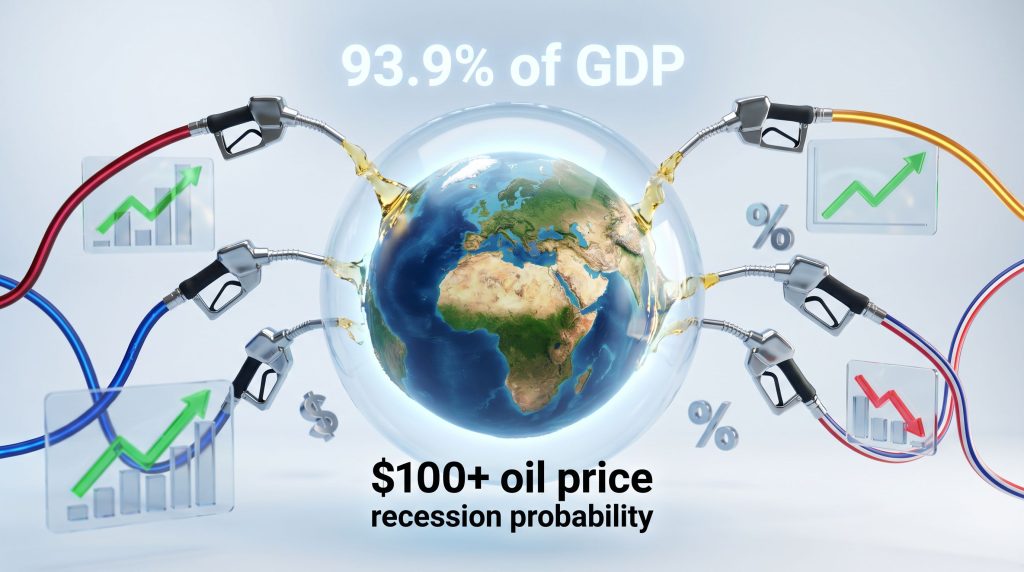
Global sovereign debt levels have reached concerning thresholds, with current measurements indicating debt-to-GDP ratios of 93.9 percent across major economies. Projections suggest these ratios will approach or exceed 100 percent by the end of the decade, creating substantial constraints on fiscal flexibility precisely when energy price shocks demand policy responses.
Interest cost escalation compounds these challenges significantly. As borrowing costs rise across both advanced and emerging economies, debt servicing requirements consume increasing portions of government revenues. This environment severely limits the fiscal space available for absorbing new expenditures, including energy subsidies.
The interaction between rising debt burdens and subsidy commitments creates particularly dangerous scenarios for emerging market economies. Consequently, currency pressures and external financing constraints amplify fiscal stress during commodity price shocks, further highlighting the IMF warning on fuel price subsidies.
Self-Reinforcing Subsidy Trap Dynamics
Energy subsidies create perverse feedback loops that can escalate fiscal burdens beyond initial projections. When governments stabilise domestic prices through subsidies while global prices remain elevated, they effectively commit to absorbing the full differential between domestic and international price levels.
This mechanism becomes self-reinforcing through the following process:
- Initial subsidy commitment to maintain stable domestic energy prices
- Sustained global demand due to suppressed price signals across multiple economies
- Elevated international prices resulting from insufficient demand destruction
- Expanding subsidy burden as the price differential widens
- Increased fiscal pressure requiring either subsidy expansion or abrupt policy reversal
Economic modelling demonstrates how this cycle can spiral beyond sustainable fiscal limits, particularly when multiple large importing economies pursue similar policies simultaneously. The subsidy burden grows not just with consumption volume but with the expanding gap between suppressed domestic prices and rising international benchmarks.
Historical precedents indicate that fiscal crises triggered by unsustainable energy subsidy commitments often develop rapidly once the self-reinforcing dynamics reach critical thresholds. For instance, our tariffs and debt outlook reveals how fiscal pressures can compound when trade policies intersect with energy subsidies.
Why Do Targeted Cash Transfers Outperform Broad Price Subsidies?
Behavioural Economics of Consumer Response Mechanisms
The fundamental distinction between broad fuel subsidies and targeted cash transfers lies in their impact on consumer decision-making processes. Subsidies directly reduce energy prices, eliminating conservation incentives and maintaining consumption patterns despite supply constraints. Cash transfers preserve price signals while providing income support, allowing market mechanisms to function effectively.
Policy Intervention Comparison Matrix
| Intervention Type | Price Signal Preservation | Demand Response | Fiscal Efficiency | Global Market Impact |
|---|---|---|---|---|
| Broad Fuel Subsidies | ❌ Completely Distorted | ❌ No Reduction | ❌ High Cost/Benefit | ❌ Elevates Global Prices |
| Price Caps | ❌ Artificially Suppressed | ❌ Consumption Maintained | ❌ Revenue Loss + Shortages | ❌ Demand Rigidity |
| Targeted Cash Transfers | ✅ Fully Preserved | ✅ Conservation Incentive | ✅ Direct Support | ✅ Natural Adjustment |
This comparison demonstrates the superior performance of targeted transfers across multiple evaluation criteria. Price signal preservation remains crucial for maintaining market adjustment mechanisms, while direct income support addresses equity concerns without distorting consumption incentives.
Income vs. Substitution Effects in Energy Consumption
Microeconomic analysis reveals how cash transfers optimise the balance between income and substitution effects during energy price shocks. When governments provide income support while maintaining high energy prices, consumers receive compensation for the financial burden while retaining incentives to reduce consumption through efficiency improvements and behavioural changes.
Under subsidy regimes, substitution effects disappear entirely as artificial price reduction eliminates conservation incentives. Consumers face no pressure to adjust consumption patterns, preventing the demand destruction necessary for market rebalancing. Cash transfer programmes preserve these crucial substitution effects while mitigating negative income impacts through direct support.
Empirical evidence from economies implementing targeted transfer programmes demonstrates superior outcomes in terms of both consumer protection and market function preservation. These programmes achieve social protection objectives without compromising the price signal transmission essential for global market stability.
What Macroeconomic Scenarios Could Trigger Global Recession?
Oil Price Threshold Analysis and Growth Projections
International Monetary Fund forecasting models indicate that sustained oil prices above $100 per barrel significantly increase recession probability calculations across major economies. These threshold effects result from the interaction between energy costs, inflation expectations, and monetary policy constraints, reinforcing the urgency behind the IMF warning on fuel price subsidies.
Regional economic vulnerability assessments reveal differential impacts across geographic areas and development levels. Advanced economies with diversified energy sources and established strategic reserves demonstrate greater resilience, while emerging markets face compounded pressures from currency depreciation and external financing constraints during energy price shocks.
Supply disruption duration correlates strongly with global GDP impact severity. Short-term spikes allow inventory drawdowns and temporary demand management, while sustained disruptions exhaust strategic reserves and force fundamental consumption adjustments that can trigger widespread economic contraction.
The IMF warns countries to let oil prices hurt rather than protecting consumers through subsidies, emphasising the importance of allowing market forces to operate during energy crises.
Interconnected Crisis Risk Factors
Contemporary macroeconomic conditions create dangerous intersections between multiple crisis vectors that could amplify recession risks beyond historical precedents:
• Simultaneous fiscal stress from elevated debt levels and rising interest costs
• Energy supply shortages due to geopolitical disruptions and infrastructure constraints
• Monetary policy constraints from persistent inflationary pressures requiring continued tightening
• Emerging market vulnerability to capital flight and currency instability
• Advanced economy stagflation risks from persistent commodity inflation combined with growth deceleration
The convergence of these factors creates particularly challenging policy environments where traditional stimulus measures may prove counterproductive, while austerity approaches could accelerate economic contraction.
How Are Major Economies Currently Managing Energy Price Volatility?
India's Mixed Intervention Strategy Assessment
India's response to recent energy price volatility demonstrates the challenges of balancing consumer protection with market function preservation. Following geopolitical disruptions affecting global energy supplies, Indian authorities implemented a complex intervention framework designed to maintain retail price stability while managing fiscal costs.
India's approach of maintaining stable retail prices through excise duty reductions and state oil company absorption represents partial price signal suppression, creating a disconnect between global scarcity conditions and domestic consumption incentives.
The specific mechanisms employed included:
• Excise duty reductions to offset international price increases
• Under-recovery absorption by state-run petroleum companies including Indian Oil Corporation Limited, Bharat Petroleum Corporation Limited, and Hindustan Petroleum Corporation Limited
• Selective price adjustments with different approaches for petrol, diesel, and liquefied petroleum gas
• Commercial versus domestic differentiation allowing greater pass-through for industrial users while protecting household consumers
This approach achieved short-term price stability but created fiscal pressures for state-owned enterprises and prevented natural demand adjustment mechanisms from functioning effectively. Furthermore, analysts studying trade war oil movements have noted how protectionist policies can compound these market distortions.
Comparative Policy Response Analysis Across Large Importers
Major energy-importing economies have adopted varying strategies for managing price volatility, each with distinct implications for global market dynamics:
European Union mechanisms focus on emergency intervention authorities and coordinated strategic reserve releases, while maintaining greater price signal transmission to end consumers compared to broad subsidy approaches.
Chinese state-controlled pricing systems allow authorities to moderate domestic price movements through centralised decision-making, though this approach risks significant demand rigidity during extended supply disruptions.
United States responses emphasise strategic petroleum reserve deployments and temporary regulatory adjustments rather than broad consumer subsidies, preserving market price signals while providing supply-side relief.
The effectiveness of these approaches varies significantly based on economic structure, fiscal capacity, and integration with global energy markets. In addition, our oil price rally analysis reveals how geopolitical factors continue to influence these policy choices.
What Alternative Policy Frameworks Could Balance Consumer Protection with Market Function?
Progressive Subsidy Phase-Out Mechanisms
Graduated transition models offer pathways for economies currently employing broad subsidies to migrate toward more market-compatible support mechanisms without creating abrupt adjustment shocks. These frameworks typically involve:
• Staged price liberalisation with predetermined adjustment schedules
• Automatic stabiliser designs that activate targeted support during extreme price spikes while maintaining baseline market function
• Regional cooperation frameworks for coordinated energy market responses that prevent beggar-thy-neighbour policy competitions
• Institutional capacity building to develop targeted transfer system infrastructure
Successful implementation requires careful calibration of adjustment speeds and support mechanisms to maintain political sustainability while preserving economic efficiency objectives.
Strategic Reserve Utilisation vs. Demand Management
Alternative approaches to managing energy price volatility include strategic reserve deployment and coordinated demand response programmes that can provide market relief without permanent subsidy commitments:
Cost-benefit analysis of strategic petroleum reserve releases demonstrates effectiveness for temporary price moderation during acute supply disruptions, though sustained releases risk depleting emergency stockpiles needed for more severe contingencies.
Temporary consumption reduction incentive programmes can achieve demand destruction objectives through positive incentives rather than price suppression, maintaining market adjustment mechanisms while providing targeted relief.
Industrial sector demand response coordination leverages the flexibility of large energy users to reduce consumption during peak scarcity periods, providing system-wide relief while preserving household consumption priorities.
The next major ASX story will hit our subscribers first
What Are the Long-Term Structural Implications for Global Energy Markets?
Supply Chain Resilience and Diversification Imperatives
Recent energy market disruptions highlight critical vulnerabilities in global energy supply networks that require structural adjustments to enhance resilience. Geographic concentration risks in production, refining, and transportation infrastructure create systemic vulnerabilities that amplify the impact of localised disruptions.
Investment flow redirection toward alternative energy infrastructure accelerates during periods of fossil fuel price volatility, as economic incentives shift toward renewable energy adoption and storage technology development. These transitions require substantial capital commitments but offer long-term supply security benefits.
Geopolitical stability requirements for sustained market function become increasingly apparent as energy infrastructure faces growing security threats and diplomatic tensions affect trade relationships. However, diversification strategies must balance economic efficiency with supply security considerations.
Transition Economics: Fossil Fuel Dependency Reduction Pathways
High fossil fuel price environments create natural incentives for accelerated energy transition investments, though the transition process itself presents complex economic challenges requiring careful management:
• Consumer behaviour shifts toward efficiency improvements and electrification accelerate during sustained high energy price periods
• Economic modelling indicates substantial investment requirements for comprehensive energy transition infrastructure
• Technology deployment benefits from improved economic competitiveness during high fossil fuel price periods
• Grid modernisation requirements expand as renewable energy integration increases
The interaction between short-term price management policies and long-term transition objectives requires careful coordination to avoid undermining structural change incentives while maintaining economic stability. The renewable energy transition presents both challenges and opportunities that intersect with traditional energy market management policies.
Frequently Asked Questions About IMF Energy Policy Recommendations
Why doesn't the IMF support helping consumers during energy crises?
This represents a common misunderstanding of International Monetary Fund policy positions. The organisation distinguishes between targeted support mechanisms that preserve market function and broad interventions that distort price signals essential for global market adjustment.
The IMF supports providing temporary cash transfers to consumers during energy price shocks, as these mechanisms offer income support while maintaining conservation incentives. The organisation's concern focuses specifically on policies that suppress retail energy prices, preventing the demand destruction necessary for market rebalancing during supply-constrained periods.
This distinction reflects economic analysis demonstrating that price signal preservation facilitates faster market adjustment and reduces the duration of supply-demand imbalances that drive sustained price volatility.
How long should governments maintain hands-off energy pricing policies?
Duration considerations for market-driven adjustment periods depend on multiple factors including the nature of supply disruptions, inventory levels, alternative supply availability, and broader economic conditions. The IMF framework emphasises allowing natural adjustment mechanisms to function rather than prescribing specific timeframes.
Criteria for determining when intervention becomes necessary include assessment of supply disruption duration, evaluation of strategic reserve adequacy, analysis of broader economic stability risks, and consideration of social protection requirements for vulnerable populations.
The organisation generally advocates for maintaining market pricing mechanisms while providing targeted support to affected consumers, rather than broad price suppression that prevents demand adjustment across entire economies.
What evidence supports the IMF's position on global price impacts?
Historical analysis of coordinated subsidy policies demonstrates clear correlations between widespread price suppression and sustained global commodity price elevation. When multiple large importing economies implement broad subsidies simultaneously, aggregate demand rigidity prevents the natural consumption reduction that typically accompanies supply constraints.
Quantitative studies examining demand elasticity across major consuming nations indicate that price signal preservation enables significant consumption adjustment during supply disruptions. Countries maintaining market pricing typically achieve 10-15% demand reduction during major supply shocks, while subsidised economies show minimal consumption response.
The 2022 energy crisis provides compelling evidence of these dynamics, where economies implementing more market-oriented approaches demonstrated faster adjustment and contributed to eventual price stabilisation. Consequently, the current focus on natural gas market trends reflects similar principles regarding market-driven adjustments.
Investment and Policy Implications
Understanding these macroeconomic dynamics proves essential for investors, policymakers, and industry participants navigating volatile energy market environments. The interaction between fiscal policy choices and global commodity markets creates complex feedback effects that influence both short-term price movements and long-term structural developments.
Disclaimer: This analysis contains forward-looking statements and economic projections that involve inherent uncertainties. Energy market dynamics depend on numerous geopolitical, economic, and technological factors that may develop differently than anticipated. Readers should conduct independent research and consult qualified advisors before making investment or policy decisions based on this information.
The IMF cautions countries against broad fuel subsidies to deal with war-driven energy crisis, reinforcing the importance of market-based approaches during global supply disruptions. Further exploration of International Monetary Fund fiscal policy recommendations and global energy market dynamics can enhance understanding of these complex economic interactions and their implications for sustainable energy security frameworks.
Want to Stay Ahead of Energy Market Disruptions?
Discovery Alert's proprietary Discovery IQ model delivers real-time alerts on significant ASX mineral discoveries, helping investors identify energy and commodity opportunities before broader market recognition. With geopolitical tensions reshaping global energy markets, subscribers gain critical insights into resource companies positioned to benefit from supply chain diversification and strategic mineral demand. Begin your 14-day free trial today to secure your market-leading advantage in volatile commodity markets.