August 24, 2026
Global maritime commerce operates through a complex web of interdependent supply chains, where strategic chokepoints control the flow of essential commodities across continents. When critical infrastructure nodes experience disruption, the ripple effects extend far beyond regional boundaries, fundamentally reshaping how international trade networks function. Furthermore, UAE's Fujairah bunker suppliers force majeure declarations demonstrate how these vulnerabilities require examining the legal, operational, and economic mechanisms that govern emergency responses in maritime fuel supply systems.
Understanding Force Majeure in Maritime Fuel Markets
Force majeure provisions in maritime fuel contracts represent sophisticated legal instruments designed to address extraordinary circumstances that prevent normal commercial operations. These contractual mechanisms operate within established international maritime law frameworks, requiring specific evidence of unforeseeable events beyond commercial control.
The legal threshold for invoking force majeure in bunker fuel contracts typically demands demonstration of four critical elements:
• Unforeseeability criterion – Events must be genuinely unexpected rather than routine commercial risks
• External control limitation – Circumstances must be completely beyond contracting parties' influence
• Performance impossibility – Contractual obligations must become genuinely impossible rather than merely difficult
• Mitigation demonstration – Invoking parties must prove reasonable attempts to minimize disruption
Recent market events illustrate how these thresholds operate in practice. When Mediterranean Eastern Enterprise and Pearl Marine declared UAE's Fujairah bunker suppliers force majeure in March 2026, they cited multiple convergent factors including missile strikes on commercial shipping, regional hostility escalation, and transit route closures.
This demonstrates that force majeure invocation typically requires extraordinary circumstances rather than isolated incidents. Moreover, oil price rally insights reveal how geopolitical tensions amplify market volatility during supply disruptions.
The contractual framework governing bunker fuel supply distinguishes between commercial impracticality and genuine force majeure events. Market participants must navigate regulatory oversight mechanisms that evaluate whether supply disruptions justify contractual suspension.
According to Uniper's force majeure declaration, storage facilities at Fujairah sustained fire damage while operators suspended operations due to regional security situations. This illustrates how infrastructure damage combines with security assessments to trigger force majeure protocols.
Regulatory compliance during crisis events involves maintaining international maritime fuel quality standards even when emergency protocols are active. Port state control inspections continue operating during disruptions, requiring vessels and suppliers to meet environmental protection standards despite damaged facilities or restricted operations.
When big ASX news breaks, our subscribers know first
What Triggers Force Majeure in Strategic Bunkering Ports?
Security-based supply chain interruptions represent qualitatively different risks from weather-related disruptions, requiring distinct assessment protocols and response mechanisms. Military conflict zones create immediate operational hazards that affect fuel logistics networks through multiple pathways simultaneously.
Security-Based Supply Chain Interruptions
Geopolitical escalation thresholds that justify contractual suspensions operate through cascading risk assessments. The March 2026 Fujairah situation demonstrates how multiple concurrent factors trigger force majeure declarations.
Infrastructure damage assessment revealed storage facilities sustained damage with fires requiring emergency response. Meanwhile, port authorities implemented security-based personnel restrictions. Market participants noted that Iranian missile strikes and subsequent US-Israeli military actions created the immediate catalyst for force majeure declarations.
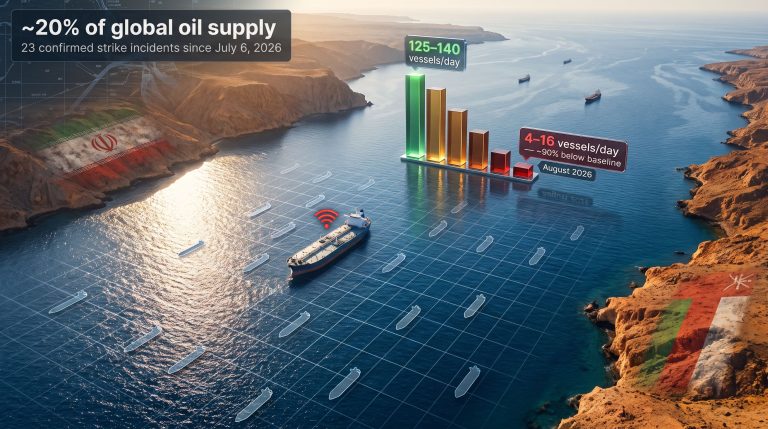
Transit route uncertainty emerged as traffic through the Strait of Hormuz ground to a halt following military escalation. This critical shipping lane, handling 20% of global oil transit, became effectively impassable for commercial vessels due to attack risks.
Port security classifications shifted from normal operations to restricted access protocols. While Fujairah port remained nominally open, satellite imagery and trader reports confirmed minimal commercial activity due to security concerns affecting vessel movements and cargo operations.
Weather and Natural Disaster Protocols
Emergency response procedures for barge and terminal operations incorporate both immediate damage control and longer-term resilience planning. Climate adaptation measures for coastal fuel infrastructure must account for increasing frequency and severity of extreme weather events.
Flooding damage assessments at fuel storage terminals require specialised protocols for hazardous material containment during natural disasters. Emergency response teams must coordinate environmental protection with operational continuity requirements.
Infrastructure resilience planning involves distributed storage network development and alternative energy transition impacts on bunker demand patterns. Policy frameworks supporting supply chain diversification help reduce single-point-of-failure vulnerabilities.
How Maritime Fuel Hubs Manage Supply Disruptions
Alternative sourcing strategies during primary hub outages reveal the sophisticated network dependencies underlying global maritime fuel supply chains. Price discovery mechanisms adjust rapidly when major suppliers suspend operations, creating immediate market responses across multiple geographic regions.
Regional Hub Interconnectivity Analysis
The interconnected nature of global bunkering hubs becomes evident during supply disruptions. When UAE's Fujairah bunker suppliers force majeure declarations occurred, market effects rippled across continents within days.
Americas market response showed immediate price escalation as buyers competed for alternative supplies:
| Location | Fuel Type | Price ($/MT) | Increase from Previous |
|---|---|---|---|
| North American ports | MGO | Approaching $1,000 | Highest since Oct 2023 |
| Panama | VLSFO | $588 | Highest since Feb 2025 |
| New Orleans | MGO ex-wharf | $803 | Highest since Apr 2024 |
| Panama | MGO | $923 | Highest since Oct 2023 |
Freight rate escalation reached near all-time highs as shipping companies scrambled for alternative routing:
• Chevron Europe-bound voyage: Worldscale 365 ($72.39/MT), only $3.20 below highest recorded level
• ATMI Caribbean-bound voyage: $2 million lumpsum, up 67% from late February
• US Gulf Coast diesel: Rose 10.9¢/USG to $3.598/USG
Furthermore, these disruptions demonstrate how tariffs and market effects compound during global supply chain stress events.
Alternative Supply Route Development
Multi-source procurement strategies emerged as refiners and traders adapted to constrained supply availability. Indonesia's energy ministry announced shifting crude oil imports from Middle Eastern countries to alternative suppliers including the United States.
This demonstrates national-level supply diversification in response to regional instability. Additionally, trade war oil impacts analysis shows how geopolitical tensions accelerate supply chain reconfiguration.
Inventory management across distributed networks became critical for operational continuity. Industry participants noted that some Fujairah deliveries continued in anchorage areas using existing barge supplies. However, experts warned that bunkering would cease once these inventories depleted.
Refinery run rate adjustments provided another adaptation mechanism. At least one Singapore refinery reduced operations while others considered scaling back production to match constrained supply availability.
Why Fujairah's Strategic Position Amplifies Global Impact
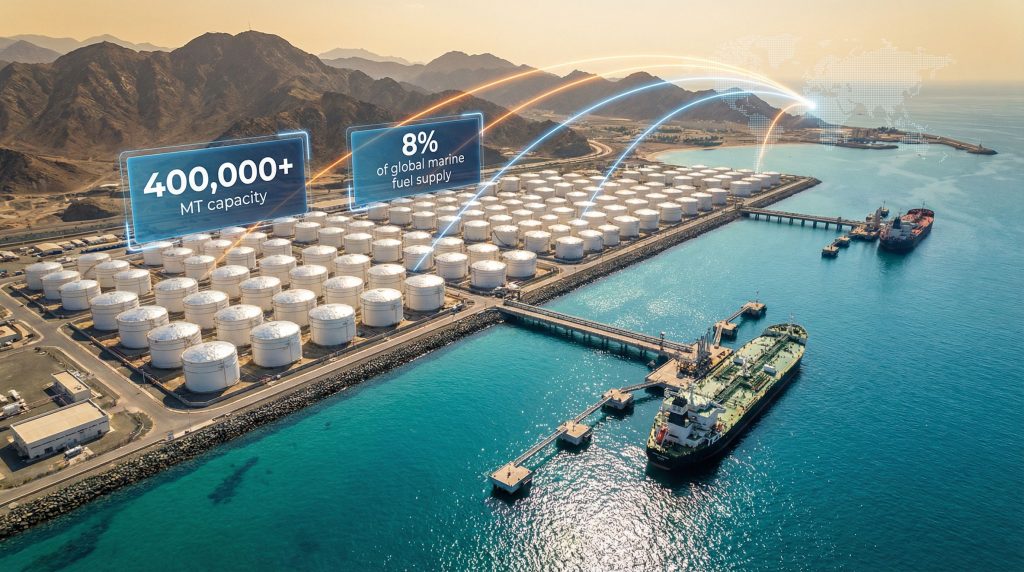
Fujairah's concentration of global marine fuel supply creates systemic vulnerabilities that extend far beyond regional conflicts. The hub's strategic metrics demonstrate why disruptions at this single location generate worldwide maritime fuel market impacts:
| Metric | Fujairah Hub | Global Significance |
|---|---|---|
| Daily bunker volume | 400,000+ MT capacity | ~8% of global marine fuel supply |
| Strategic location | Strait of Hormuz gateway | 20% of global oil transit route |
| Storage capacity | 10+ million barrels | World's 3rd largest oil storage hub |
| Supplier concentration | 25+ major bunker companies | Critical supply chain node |
Market Concentration Evidence
The force majeure declarations revealed how supplier concentration creates potential total supply cessation rather than gradual capacity reduction. Industry reporting indicated that almost all Fujairah bunker suppliers stopped offering marine fuels.
Additional suppliers potentially declared force majeure as well, according to Fujairah bunkering disruption reports. This concentration risk highlights the importance of OPEC production impact analysis for understanding supply chain vulnerabilities.
Operational cascading effects demonstrated the vulnerability of concentrated supply chains. Market participants explained that while some deliveries continued using existing barge supplies in anchorage areas, complete bunkering cessation would occur once terminal loading remained suspended.
Global Financial Market Response
UAE's Fujairah bunker suppliers force majeure disruptions propagated beyond maritime fuel markets into macroeconomic currency and equity markets across Asia-Pacific.
Currency market impacts affected major oil-importing economies:
• Indian rupee: Fell 0.9% to record low against dollar
• Indonesian rupiah: Continued decline accelerated further
• Chinese yuan: Central bank set stronger reference rate to counter weakness
Equity market responses showed dramatic declines:
• South Korea's Kospi index: Slumped almost 13%, appearing to be biggest single-day decline since global financial crisis
• Thailand's Set 50 index: Dropped more than 8%
• Regional markets: Japan, Indonesia, and Taiwan fell 3-4%
Unexpected Geographic Impacts
The disruption's reach extended to seemingly unconnected markets. Myanmar announced restrictions on private vehicle use, allowing drivers to use cars only on alternate days to conserve fuel.
This impoverished, conflict-affected country relies heavily on imports from Thailand, which banned oil exports to ensure domestic supplies. Consequently, global commodity tariffs analysis becomes crucial for understanding these interconnected vulnerabilities.
What Alternative Supply Routes Emerge During Disruptions?
Indian Ocean bunkering capacity expansion opportunities become critical when primary hubs face extended outages. Red Sea corridor utilisation for vessel refueling operations provides another alternative routing option, though these routes involve increased voyage times and transportation costs.
Atlantic basin supply chain reconfiguration showed immediate activation during the Fujairah disruption. US Gulf Coast refineries maintained elevated utilisation despite typical first-quarter maintenance season, with utilisation at 91.1% representing the lowest delta in first-quarter utilisation since 2020.
Price Discovery and Market Mechanisms
Premium calculations for alternative hub sourcing involve complex adjustments for extended voyage routing and additional transportation costs. Freight rate adjustments reached near-record levels as buyers competed for available capacity.
Contract renegotiation frameworks during force majeure periods require sophisticated legal and commercial arrangements. Indonesia's Pertamina concluded second-quarter term tenders with volumes around 9 million barrels monthly.
This slightly exceeded first-quarter negotiations, demonstrating contract term adjustments rather than spot market reliance.
How Shipping Companies Adapt Fuel Procurement Strategies
Multi-hub sourcing agreements for operational continuity become essential risk management tools during supply disruptions. Shipping companies must develop inventory positioning strategies across global routes while maintaining diversified supplier portfolios.
Operational Impact Assessment Framework
Voyage planning modifications during supply disruptions require real-time route optimisation considering fuel availability, security risks, and cost implications. Charter market implications of bunkering hub limitations create additional complexity for vessel operators.
Fuel efficiency optimisation for extended routing becomes critical when alternative bunkering locations require significant voyage deviations. Ships must balance fuel consumption optimisation with schedule maintenance and cargo delivery commitments.
"The concentration of global marine fuel supply in strategic hubs creates systemic vulnerabilities that extend far beyond regional conflicts, fundamentally reshaping how the shipping industry approaches fuel procurement and risk management in an interconnected world economy."
The next major ASX story will hit our subscribers first
Regulatory Response to Critical Infrastructure Vulnerabilities
International maritime organisation guidelines for hub resilience emphasise distributed storage network development and cross-border cooperation frameworks for emergency fuel provision. National energy security policies affecting marine fuel supply increasingly recognise the importance of supply chain diversification.
Long-term Infrastructure Resilience Planning
Alternative energy transition impacts on bunker demand patterns require forward-looking infrastructure investments. Climate adaptation measures for coastal fuel infrastructure must account for both acute disruption risks and long-term environmental challenges.
Regional hub development priorities for risk mitigation focus on reducing over-dependence on single-point-of-failure locations. Policy frameworks supporting supply chain diversification include strategic petroleum reserve coordination and emergency sharing arrangements.
What This Means for Global Shipping Economics
Supply chain cost implications of hub concentration risks extend beyond immediate fuel price increases to fundamental changes in maritime logistics planning. Insurance market responses to geopolitical supply disruptions include premium adjustments and coverage modifications for vessels transiting high-risk regions.
Investment flows toward alternative bunkering infrastructure accelerate when major hubs experience extended outages. The Fujairah situation demonstrates how quickly market participants recognise the need for supply chain redundancy and geographic diversification.
Future-Proofing Marine Fuel Supply Networks
Technological solutions for supply chain transparency include real-time monitoring systems and predictive analytics for disruption risk assessment. Blockchain-based tracking and automated contract execution could improve response times during emergency situations.
Regional hub development priorities must balance efficiency gains from concentration against resilience requirements for distributed networks. Investment decisions should consider both normal operations optimisation and crisis response capabilities.
Policy frameworks supporting supply chain diversification require international coordination and standardised emergency response protocols. Cross-border cooperation mechanisms can help ensure fuel availability during localised disruptions.
Disclaimer: This analysis is based on publicly available market data and industry reports. Maritime fuel market conditions remain highly volatile and subject to rapid change due to geopolitical developments, weather events, and other factors beyond predictable control. Investment and operational decisions should incorporate comprehensive risk assessment and professional consultation.
Building resilient marine fuel supply systems requires coordinated efforts across industry, regulatory, and policy domains. The lessons learned from recent force majeure declarations at critical bunkering hubs highlight the urgent need for supply chain diversification and improved emergency response capabilities.
As global trade continues expanding while facing increasing geopolitical and climate-related disruptions, the maritime industry must prioritise infrastructure resilience and operational flexibility to maintain reliable fuel supply networks worldwide.
Looking to Navigate Volatile Maritime Commodity Markets?
Understanding supply chain disruptions like the UAE's Fujairah bunker crisis provides crucial insights for commodity investment decisions. Discovery Alert's proprietary Discovery IQ model delivers real-time alerts on significant ASX mineral discoveries, helping investors identify opportunities across the resources sector whilst global infrastructure vulnerabilities create market volatility. Begin your 14-day free trial today to gain immediate access to actionable insights that keep you ahead of rapidly changing commodity markets.