May 20, 2026
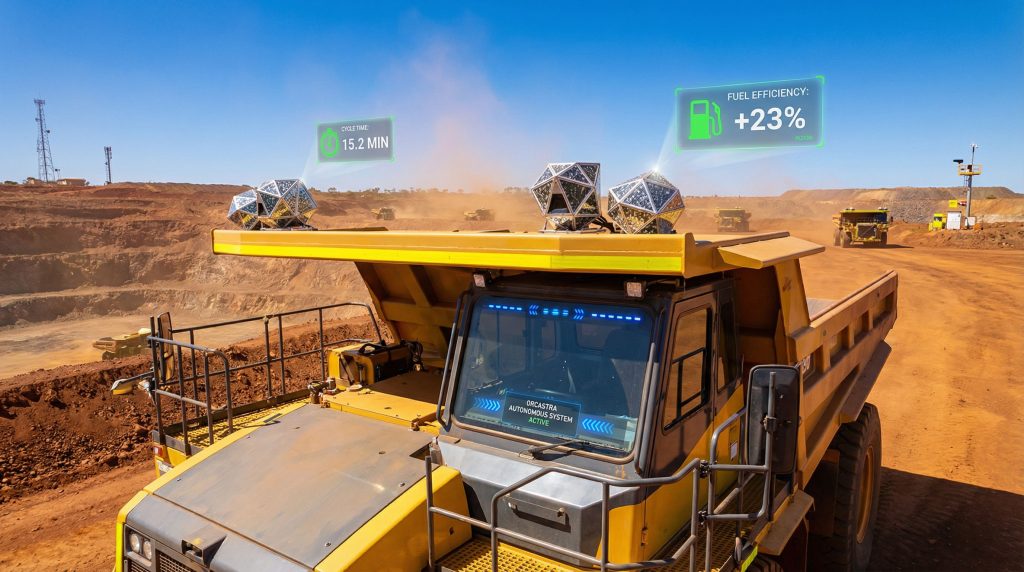
Advanced sensor arrays and precision mapping systems form the technological backbone of modern autonomous mining operations. The implementation of fully autonomous truck testing has revolutionised mining industry practices, where sophisticated platforms integrate multiple detection technologies including radar-based positioning, computer vision networks, and algorithmic decision-making frameworks to navigate complex industrial environments without human intervention.
The evolution from manual to automated haulage represents a fundamental shift in mining industry evolution, where traditional driver-operated vehicles undergo systematic conversion to self-navigating platforms capable of operating continuously in challenging conditions.
Understanding the Technical Foundation of Fully Autonomous Mining Truck Systems
Core Components of Autonomous Driving Technology
Contemporary fully autonomous truck testing relies on integrated sensor ecosystems that provide 360-degree environmental awareness. LiDAR arrays generate precise three-dimensional maps of surrounding terrain, while computer vision systems process visual data to identify obstacles, personnel, and operational hazards in real-time.
GPS precision mapping enables centimetre-level positioning accuracy, essential for maintaining designated haul routes and avoiding restricted zones. Machine learning algorithms continuously process incoming data streams to make split-second navigation decisions, while redundant fail-safe mechanisms ensure operational safety through multiple backup systems.
Furthermore, 3D geological modelling enhances route optimisation by providing detailed terrain mapping capabilities. This integration significantly improves autonomous vehicle navigation accuracy.
Critical Safety Architecture:
- Dual-processor control systems with independent verification
- Emergency stop protocols activated by multiple trigger conditions
- Communication redundancy through cellular and radio frequency networks
- Manual override capabilities accessible to remote operators
Drive-by-Wire Retrofit Technologies
The ORCASTRA system represents a manufacturer-agnostic approach to autonomous conversion, enabling compatibility across multiple truck brands and models. This retrofitting technology addresses the challenge of integrating modern autonomous capabilities with existing fleet assets, extending operational life beyond conventional expectations.
Control algorithm tuning becomes critical when adapting autonomous systems to specific vehicle characteristics. Each truck model requires customised calibration to match native operating behaviours, ensuring seamless transition from manual to autonomous operation modes.
At the Norton Gold Fields' Paddington project, a Komatsu HD1500 with approximately 20,000 operating hours underwent successful retrofit conversion, demonstrating the viability of autonomous technology integration on high-utilisation mining equipment. This approach supports data-driven mining operations through comprehensive performance monitoring.
When big ASX news breaks, our subscribers know first
What Are the Key Phases of Autonomous Truck Testing Programs?
Phase 1: Controlled Environment Validation
Initial testing protocols focus on validating core autonomous functions within controlled parameters. Performance stability assessments measure system consistency across repeated operational cycles, while safety verification procedures confirm proper functioning of all protective mechanisms.
The validation phase at Mulgarrie open pit mine successfully demonstrated performance, stability, and safety metrics of the autonomous driving system on a retrofit platform. This structured approach ensures each critical system component operates reliably before progressing to advanced testing stages.
Vehicle behaviour consistency evaluation examines how the autonomous system responds to standardised scenarios, measuring response times and decision accuracy under various operational conditions. In addition, AI in drilling and blasting technologies complement autonomous trucking systems for comprehensive mine automation.
Phase 2: Supervised Autonomous Operations
Transitional testing maintains safety operator presence while exposing autonomous systems to real-world mining environments. This phase collects comprehensive operational data while maintaining human oversight capabilities for immediate intervention when necessary.
Risk mitigation strategies during supervised operations include:
- Continuous monitoring of system performance metrics
- Predetermined intervention protocols for unexpected scenarios
- Communication systems between autonomous vehicles and control centres
- Environmental condition logging for algorithm refinement
Phase 3: Fully Autonomous Deployment
The achievement of driver-free operation represents the culmination of systematic testing and validation. At the Paddington project, the retrofitted truck successfully met criteria for fully autonomous operation after completing structured testing activities.
Remote monitoring capabilities enable operators to oversee multiple autonomous vehicles simultaneously from centralised control facilities. Emergency response protocols provide immediate intervention options, while operational efficiency benchmarks measure productivity improvements compared to conventional operations.
However, successful implementation requires coordination with AI-enhanced exploration programmes to optimise route planning and resource allocation.
Which Mining Operations Are Leading Autonomous Truck Testing?
Australian Mining Sector Developments
The Mulgarrie open pit mine at Norton Gold Fields' Paddington gold project in Western Australia serves as a current operational example of autonomous truck deployment. This tri-partite collaboration between technology providers, mining contractors, and mine operators demonstrates the partnership model driving autonomous technology adoption.
Project Specifications:
| Parameter | Details |
|---|---|
| Location | Paddington gold project, Western Australia |
| Operator | Norton Gold Fields |
| Contractor | Thiess |
| Technology Provider | EACON Mining Technology |
| Vehicle | Retrofitted Komatsu HD1500 |
| Pre-retrofit Hours | Approximately 20,000 |
Western Australia's regulatory framework accommodates autonomous vehicle testing in active mining operations, providing a practical environment for validating technology performance under real-world conditions. Furthermore, companies like Anglo American have reached significant milestones in autonomous truck testing programmes.
Global Autonomous Mining Fleet Implementations
International mining automation trends indicate growing adoption of autonomous haulage systems across major mining regions. Technology transfer between operations enables knowledge sharing and accelerated deployment timelines.
Scalability lessons from early adopters demonstrate that successful autonomous implementations require careful consideration of site-specific factors including terrain characteristics, operational workflows, and existing equipment compatibility. For instance, Transurban's automated truck trial provides valuable insights into safety protocols and operational efficiency.
How Do Retrofit Solutions Compare to Purpose-Built Autonomous Trucks?
Retrofit Technology Advantages
| Aspect | Retrofit Benefits | Implementation Challenges |
|---|---|---|
| Cost Efficiency | Lower capital investment compared to new vehicle purchase | Complex integration with existing control systems |
| Fleet Utilisation | Extends asset life beyond conventional expectations | Vehicle-specific compatibility requirements |
| Deployment Speed | Faster implementation than new equipment procurement | Customisation needs for algorithm tuning |
| Flexibility | Cross-manufacturer compatibility through agnostic systems | Performance limitations of older platforms |
Economic Impact Analysis
Retrofit solutions provide a practical pathway for upgrading existing mining fleets while avoiding the substantial capital expenditure associated with purpose-built autonomous vehicles. The manufacturer-agnostic approach enables standardised autonomous technology deployment across mixed equipment fleets.
Return on investment calculations must consider:
- Retrofit conversion costs versus new autonomous vehicle pricing
- Extended operational life of converted equipment
- Productivity improvements through 24/7 autonomous operation
- Reduced labour costs and enhanced safety metrics
- Maintenance requirements for retrofit components
The transition from greenfield deployments to scalable brownfield and retrofit operations represents a strategic shift toward broader autonomous technology adoption across the mining industry. Consequently, fully autonomous truck testing becomes essential for validating these economic benefits.
What Safety Protocols Govern Autonomous Truck Testing?
Regulatory Framework Requirements
Mining safety authorities require comprehensive documentation before approving autonomous vehicle testing programmes. Risk assessment documentation must demonstrate thorough analysis of potential failure modes and corresponding mitigation strategies.
Emergency response procedures include:
- Immediate manual override activation protocols
- Personnel evacuation procedures for autonomous zones
- Communication systems for emergency coordination
- Equipment shutdown sequences for various scenarios
Technical Safety Systems
Collision avoidance technologies utilise multiple sensor inputs to detect and respond to potential impact scenarios. Environmental hazard detection systems monitor for dangerous conditions including slope stability, weather changes, and equipment malfunctions.
Communication system redundancies ensure continuous connectivity between autonomous vehicles and control centres through multiple transmission pathways. Manual override capabilities provide immediate human control restoration when automated systems encounter unexpected situations.
How Does Autonomous Technology Handle Complex Mining Environments?
Environmental Challenge Solutions
Dust and visibility management systems utilise specialised sensors capable of operating effectively in high-particulate environments common to mining operations. Advanced filtering algorithms process sensor data to maintain navigation accuracy despite reduced visibility conditions.
Uneven terrain navigation requires sophisticated algorithms capable of processing real-time topographical data and adjusting vehicle dynamics accordingly. The adaptability to the Australian mining environment demonstrated by systems like ORCASTRA indicates successful environmental challenge resolution.
Dynamic route optimisation enables autonomous vehicles to adjust pathways based on:
- Real-time traffic conditions with human-operated equipment
- Temporary obstacles or hazardous areas
- Operational priority changes for different mining zones
- Weather-related accessibility modifications
Operational Integration Considerations
Interaction protocols between autonomous and human-operated equipment require carefully designed communication systems and standardised operational procedures. Traffic management systems coordinate movement patterns to prevent conflicts and optimise overall site productivity.
Loading and dumping sequence coordination ensures autonomous vehicles integrate seamlessly with existing operational workflows, maintaining productivity levels while enhancing safety through predictable behaviour patterns.
The next major ASX story will hit our subscribers first
What Are the Key Performance Metrics for Autonomous Truck Testing?
Operational Efficiency Indicators
Key Performance Benchmarks:
- Cycle time consistency compared to human operators
- Fuel consumption optimisation through algorithmic route planning
- Equipment utilisation improvements via 24/7 operational capability
- Safety incident reduction statistics through automated hazard avoidance
Technical Reliability Measurements
System uptime percentages measure autonomous platform reliability across extended operational periods. Consistent and responsive vehicle behaviour serves as a primary indicator of successful algorithm tuning and system integration.
Performance validation metrics include:
- Response time to environmental changes and obstacle detection
- Navigation accuracy under various terrain and weather conditions
- Communication system reliability and latency measurements
- Sensor accuracy validation across different operational scenarios
Maintenance requirement analysis compares autonomous system upkeep needs with conventional vehicle maintenance schedules, providing insights into long-term operational costs and reliability expectations.
How Do Mining Companies Evaluate Autonomous Truck Technology?
Technology Assessment Criteria
Mining operations evaluate autonomous systems based on integration complexity with existing infrastructure and operational procedures. Scalability across different mine sites becomes crucial for companies operating multiple locations with varying geographical and operational characteristics.
Long-term technology support availability influences adoption decisions, as mining companies require confidence in ongoing system maintenance, updates, and technical assistance throughout extended operational periods.
Customisation capabilities enable autonomous systems to accommodate site-specific requirements including unique haul routes, load capacities, and environmental conditions specific to individual mining operations.
Financial Evaluation Framework
Total cost of ownership calculations encompass initial retrofit or purchase costs, ongoing maintenance expenses, operator training requirements, and potential productivity improvements over the equipment's operational lifespan.
Productivity improvement projections consider:
- Increased operational hours through autonomous capability
- Reduced labour costs and associated overhead expenses
- Enhanced safety metrics potentially reducing insurance costs
- Fuel efficiency improvements through optimised routing algorithms
Risk mitigation value assessment examines how autonomous technology reduces operational hazards, personnel exposure to dangerous conditions, and potential accident-related costs.
What Future Developments Are Expected in Autonomous Mining Trucks?
Emerging Technology Trends
Advanced artificial intelligence capabilities will enhance decision-making algorithms, enabling autonomous vehicles to handle increasingly complex scenarios without human intervention. Enhanced sensor fusion technologies will improve environmental perception accuracy and expand operational capability ranges.
Improved human-machine interface systems will streamline monitoring and control processes, allowing operators to oversee multiple autonomous vehicles more effectively from centralised locations.
Predictive maintenance integration will enable autonomous systems to monitor their own operational status and schedule maintenance activities proactively, reducing unexpected downtime and optimising equipment availability.
Industry Transformation Implications
Workforce transition strategies become increasingly important as autonomous technology adoption expands across mining operations. Skills development requirements will shift toward technical roles focused on system monitoring, maintenance, and optimisation rather than direct equipment operation.
Operational model evolution will emphasise remote monitoring capabilities and centralised control systems, potentially reducing on-site personnel requirements while maintaining or improving productivity levels.
Supply chain optimisation opportunities emerge through coordinated autonomous vehicle networks capable of real-time route adjustment and load optimisation based on operational priorities and resource availability.
Frequently Asked Questions About Autonomous Truck Testing
How long does autonomous truck testing typically take?
Testing phase duration varies significantly based on system complexity and site-specific requirements. Validation requirements and safety protocols establish minimum testing periods, while regulatory approval timelines depend on documentation completeness and authority responsiveness.
Site-specific customisation needs influence testing duration, as each mining operation presents unique challenges requiring algorithm tuning and performance verification under local conditions.
What happens if autonomous systems fail during operations?
Fail-safe mode activation procedures immediately engage protective protocols when system malfunctions occur. Remote monitoring intervention capabilities enable operators to assume manual control or initiate emergency stop sequences from centralised control facilities.
Emergency stop mechanisms provide multiple activation pathways including automatic triggers based on sensor inputs and manual activation by remote operators or on-site personnel.
Can existing mining trucks be converted to autonomous operation?
Retrofit feasibility assessment considers vehicle age, condition, and compatibility with autonomous system requirements. Technical compatibility requirements include adequate electrical systems, hydraulic capabilities, and structural integrity for sensor installation.
Cost-effectiveness analysis compares retrofit expenses with new autonomous vehicle acquisition costs, while performance limitation analysis examines potential capability restrictions of converted versus purpose-built autonomous platforms.
Disclaimer: The autonomous mining truck industry continues evolving rapidly, with technological capabilities, regulatory requirements, and operational best practices subject to ongoing development. Performance metrics and cost projections represent current industry trends and should be verified with specific technology providers and regulatory authorities for individual applications.
Looking to Capitalise on Mining Technology Advancements?
Discovery Alert's proprietary Discovery IQ model delivers real-time notifications on significant ASX mineral discoveries from companies pioneering autonomous mining technologies and operational innovations. Discover why historic mining technology breakthroughs have generated substantial returns for early investors by exploring our dedicated discoveries page showcasing exceptional market outcomes.